

HIV drug prices are too high, says UNAIDS Caribbean director
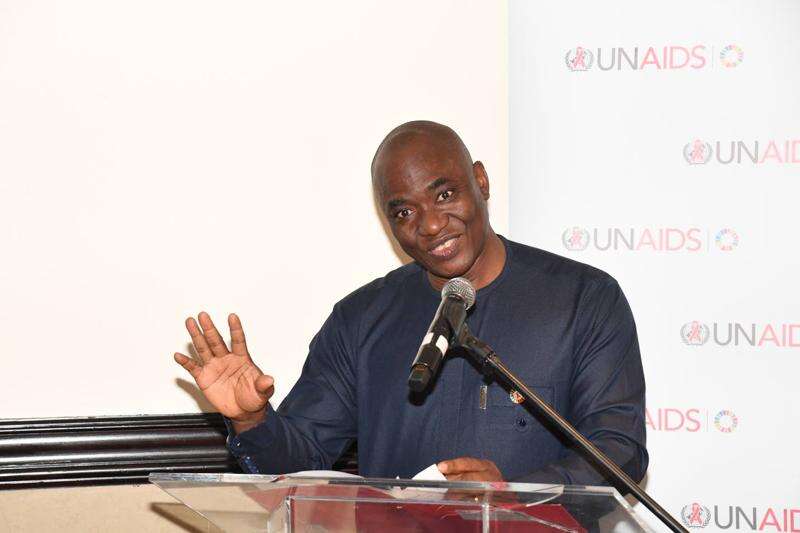
A recent article from the Jamaica Observer has highlighted the daunting issues faced by Caribbean and Latin American countries, relating to the soaring costs of healthcare in economically disadvantaged nations. This surge in costs further complicates the management of chronic diseases, including HIV.
Dr Richard Amenyah, director of UNAIDS Multi-County Office in the Caribbean, is calling for a reassessment of the World Trade Organization’s (WTO) Trade-Related Aspects of Intellectual Property Rights (TRIPS) agreement, terming it as an unjust health practice.
TRIPS mandates a 20-year intellectual property right protection for pharmaceutical manufacturers, barring the development of generic counterparts.
In a conversation exclusive to the Jamaica Observer, Dr. Amenyah indicated that such pacts have resulted in a significantly elevated expenditure on HIV medications within the Caribbean region compared to the rest of the world.
He further stated that leveraging cutting-edge medical technology and ensuring its affordability, availability, and accessibility for everyone is a crucial strategy to reach universal health coverage and eradicate AIDS as a public health threat by 2030.
Dr. Amenyah underscored the access to essential medicines for public welfare but highlighted the obstacles that governments face in the Caribbean and Latin America due to strained resources that are allocated towards higher-priced HIV medications compared to other regions.
The financial disparity in global HIV drug pricing
The 2023 Global AIDS update stated that in the Caribbean and Latin America, the average annual cost per patient for antiretroviral medications stands at US$160, a stark contrast to the mere US$67 in West and Central Africa.
Dr Amenyah sees this as an equity issue among those living with HIV, questioning the high cost of life-saving medications in the Caribbean and Latin American nations.
He emphasized the urgency of bringing attention to this disparity, given that numerous Latin American and Caribbean nations, burdened by soaring debt, are prioritizing debt servicing over investing in social programs for their populations.
This he said was reported in the recent publication, “A World of Debt: A Growing Burden to Global Prosperity,” by the UN Global Crisis Response Group.
He further mentioned to the Jamaica Observer that the global public debt stands at US$92 trillion, with developing nations shouldering 30 per cent of this amount.
More on HIV in the Caribbean
Potential strategies for negotiating lower-cost HIV medications
In light of this situation, Dr Amenyah urges the exploration of potential strategies that Caribbean and Latin American countries could adopt to negotiate for lower-cost essential HIV medications, to improve accessibility of life-saving treatments and to address financial inequalities.
Moreover, the enforcement of pharmaceutical product patents, a commitment of WTO members that spans 20 years, can inhibit the production and import of generic drugs, restricting competition and inflating prices.
He explained that such obligations often result in a constrained competitive landscape in the region’s pharmaceutical market, causing price hikes for certain indispensable medications.
He added that the consequence of these patent monopolies and rigorous intellectual property laws is the inaccessibility to cheaper, generic variants of antiretroviral drugs.
The way forward: Pooled procurement, local production, and partnerships
Dr Amenyah also pointed out that the patent for Dolutegravir which is set to expire around 2026, prevents countries from acquiring generic versions until the original patent is void, leading to higher costs for these medications in the Latin American and Caribbean regions.
He recognizes, however, the benefits of navigating stringent TRIPS rules by utilizing flexibilities in intellectual property laws, like compulsory or voluntary licensing and parallel importation, as these strategies have led to significant price reductions.
He also mentions the Strategic Fund of the Pan American Health Organization as a model for lowering essential medicine costs through pooled procurement.
Dr. Amenyah is challenging the Caribbean and Latin American governments to begin local manufacturing of antiretroviral drugs and encourages price reductions for improved accessibility and affordability.
The latest news from the Caribbean
Read more articles about the Caribbean region from Caribbean National Weekly





.jpg&w=3840&q=75)