Venezuela dismisses Guyana, CARICOM concerns over Essequibo brooch
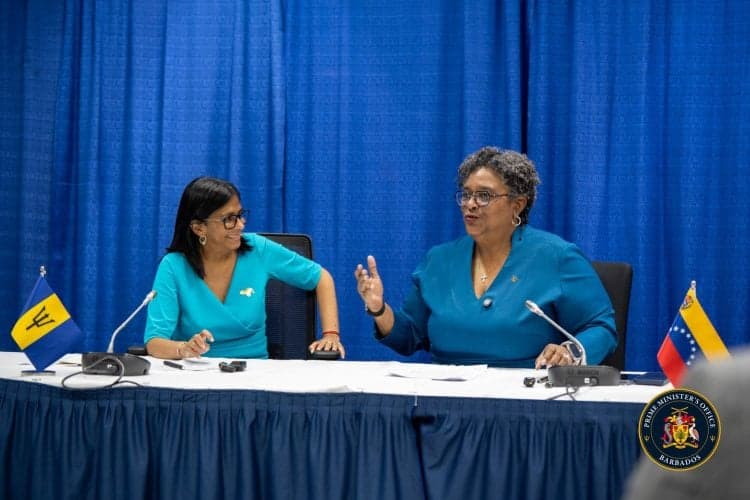
Venezuela has brushed aside concerns raised by Guyana and the Caribbean Community (CARICOM) over a brooch worn by Acting President Delcy Rodríguez depicting a map that includes Guyana’s Essequibo region.
The 15-member regional bloc said earlier this week it had taken note of recent official engagements where material asserting Venezuela’s claim to the disputed territory was on public display, cautioning that CARICOM platforms should not be used to “legitimize” claims currently before the International Court of Justice.
Guyana’s President Irfaan Ali had expressed “grave concern” over Rodríguez’s use of the brooch during meetings with Caribbean leaders in Barbados and Grenada earlier this month, describing the display as “deeply regrettable.”
In a letter to CARICOM Chairman Terrance Drew, Ali said while Georgetown respects the right of member states to engage Venezuela diplomatically, such engagements should not feature symbols asserting claims over Guyanese territory.
But addressing an anti-sanctions rally in Carabobo, Rodríguez dismissed the criticism and insisted Caracas would continue to assert its claim to the Essequibo region.
“We will soon be at the International Court of Justice… to reaffirm our historic position,” she said, adding that the controversy over the brooch was misplaced. “You know that the President of Guyana is now causing a scandal because I always wear the pin… Now they are even bothered by how I dress.”
Venezuela’s Foreign Minister Yván Gil also defended the move, saying the country’s territorial sovereignty “cannot be erased with letters,” while accusing Guyana of attempting to deflect from the substantive dispute.
Meanwhile, President of Venezuela’s National Assembly Jorge Rodríguez reaffirmed Caracas’ position, describing the Essequibo as a “historical, legal and moral right” of the Venezuelan people.
The dispute over the resource-rich Essequibo region—comprising about two-thirds of Guyana’s landmass—remains before the ICJ, where Guyana is seeking validation of the 1899 Arbitral Award that established the boundary between the two countries.
The controversy is being addressed under the 1966 Geneva Agreement, which outlines mechanisms for a peaceful resolution. After bilateral efforts failed, the matter was referred to the court by the United Nations Secretary-General.
The ICJ has already ruled that it has jurisdiction to hear the case, clearing the way for full hearings on the merits, even as tensions continue to simmer between the two South American neighbors.