

St. Vincent PM outlines rules-based plan to tackle debt and stabilize economy
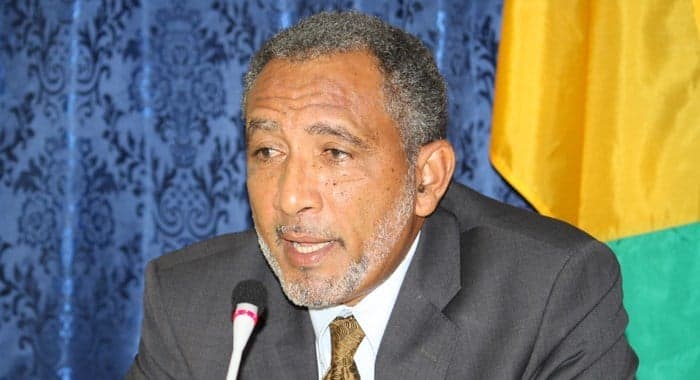
Prime Minister Godwin Friday says his administration will pursue a rules-based fiscal strategy to address Saint Vincent and the Grenadines’s mounting debt and fragile economic position, warning that the country can no longer rely on hope that its challenges will resolve on their own.
Speaking at a news conference on Tuesday, Friday—who also holds the finance portfolio—said the government is charting a new course to stabilize the economy while ensuring fairness for vulnerable citizens.
“We cannot continue on the course that we have been going for the past several years and still expect that somehow the challenges will resolve themselves,” he said.
Friday outlined plans for a homegrown economic stabilization program, developed with technical support from the International Monetary Fund but rooted in national ownership. He was joined at the briefing by IMF mission chief Sergei Antoshin, who recently led a delegation to Kingstown.
“We will develop our own program… that will ensure national ownership of the recovery journey on which we are embarking,” Friday said, welcoming what he described as a balanced approach from international partners.
He emphasized that any adjustment measures must take into account the social impact of economic reforms, particularly amid high oil prices and inflation.
“It is not just a balance sheet matter—it involves people’s lives,” he said. “The costs… will not be borne disproportionately by those who are most vulnerable.”
Friday stressed that protecting low-income households will be central to the reform agenda, as the country grapples with rising debt and external shocks, including the lingering effects of recent natural disasters.
According to government data, the country’s debt-to-GDP ratio stood at 113 percent in 2025 and could climb to 145 percent by 2031 if current policies remain unchanged. St. Vincent and the Grenadines has also been classified as at high risk of debt distress since 2016.
“The present course has gotten us to where we are… a very difficult fiscal situation,” Friday said, noting that the country is still recovering from multiple crises.
To address the issue, the government plans to introduce a rules-based fiscal framework with legal backing, clear targets, and greater transparency. Among the key goals is achieving a primary surplus of three percent of GDP by 2029.
“It’s challenging… but we have to set ambitious targets,” Friday said, noting that similar fiscal turnarounds have been achieved in other countries.
He added that the administration aims to realign with Eastern Caribbean Currency Union benchmarks, including a debt-to-GDP target of 60 percent.
Friday also signaled a break from past fiscal practices under the former Unity Labour Party administration, which governed from 2001 until last November.
“We are prepared to do what is necessary… to set our country on a path toward fiscal responsibility, while also generating growth in a way that is responsible and sustainable,” he said.




.jpg&w=3840&q=75)