Jamaica House passes NaRRA bill after marathon debate, amid opposition concerns
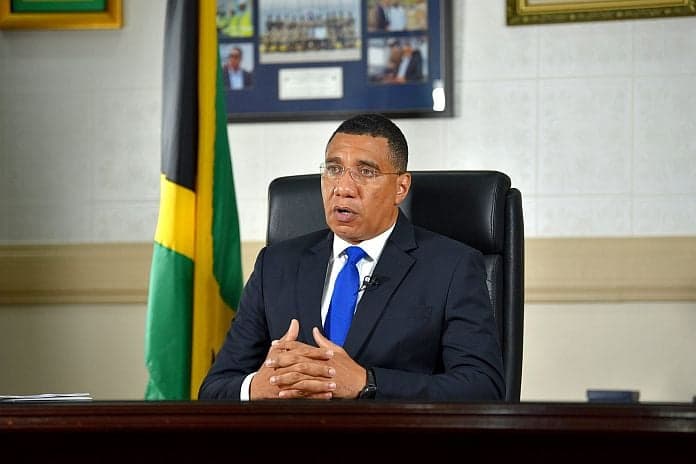
The Jamaica Labour Party government led by Andrew Holness used its parliamentary majority in the early hours of Wednesday to pass the National Reconstruction and Resilience Authority (NaRRA) Act, paving the way for a new body to coordinate rebuilding efforts following Hurricane Melissa.
The legislation cleared the House of Representatives of Jamaica at about 1:30 a.m. after more than eight hours of debate, with the government securing 31 votes to the Opposition’s 15. Sixteen lawmakers were absent.
Proceedings were overshadowed by the earlier removal and suspension of Opposition MP Angela Brown Burke for what was described as “unparliamentary behavior,” following a tense exchange involving the ceremonial mace.
Opposition legislators attempted to delay passage of the bill by calling multiple votes, but each effort was defeated as the government pressed ahead using its majority.
The bill will now move to the Senate for further consideration.
The NaRRA legislation has faced intense public and political scrutiny since its introduction, with the Opposition warning that it grants sweeping powers without adequate checks and balances. More than 28 civil society groups and governance advocates also called for broader consultation and stronger safeguards, arguing that efficiency in recovery efforts must not come at the expense of accountability.
The government, however, has defended the measure as critical to accelerating reconstruction and improving coordination following Hurricane Melissa, which caused an estimated US$9.9 billion in damage and left 45 people dead when it struck the island on October 28.
During the debate, Opposition members argued that the legislation concentrated too much authority in the Office of the Prime Minister and lacked sufficient oversight mechanisms.
Leader of Government Business Floyd Green countered that the proposed authority mirrors international models, including the structure used by New Zealand following its devastating 2011 earthquake.
But Opposition MP Omar Newell argued that governance conditions differ, noting that New Zealand ranks more favorably on global corruption indices.
Prime Minister Holness pushed back on concerns, telling lawmakers that previous administrations, including the People’s National Party government, had pursued major reforms with bipartisan participation.
Despite objections, the government approved a series of amendments it said were designed to strengthen transparency and accountability within the new authority. These include requirements for regular consultations with affected communities, biannual reporting by the chief executive officer to the responsible minister, and the tabling of those reports in Parliament.
The legislation is expected to play a central role in Jamaica’s long-term recovery strategy as the country continues to rebuild from one of the most destructive hurricanes in its history.