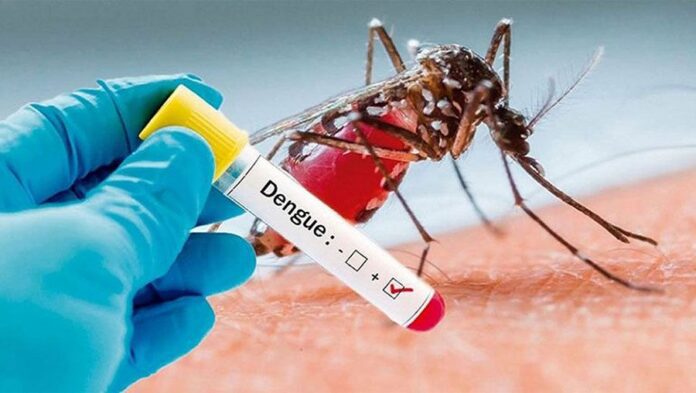
Puerto Rico’s health secretary on Monday declared an epidemic in response to a concerning surge in dengue fever cases across the country.

With a population of 3.2 million, Puerto Rico has already documented 549 cases of dengue fever this year.
This figure starkly contrasts with the entirety of last year’s count, which tallied at 1,293 cases. Most of the cases have been reported in the capital of San Juan.

Hospitalizations surge
The gravity of the situation becomes even more apparent with over 340 individuals requiring hospitalization due to the mosquito-borne virus, as reported by the island’s health department.
This is not Puerto Rico’s first encounter with a dengue epidemic. The last such declaration occurred in 2012.
Global perspective
Zooming out, the global context reveals a broader concern. Last year, over five million cases of dengue were reported worldwide, with a significant 80 per cent concentration in the Western Hemisphere, according to data from the World Health Organization (WHO).
This year, the region has already registered approximately three million cases. Health officials attribute this surge to climatic factors, emphasizing the role of increased rainfall, humidity, and heat—symptoms of climate change—in fostering optimal conditions for the proliferation of dengue-carrying mosquitoes.
Symptoms and severity
Dengue fever is characterized by a range of debilitating symptoms, including severe headaches, fever, vomiting, and a distinctive rash.
While many infected individuals may remain asymptomatic, severe cases can progress to potentially fatal complications, such as plasma leakage.