Home Blog Page 83

Guyana’s Road March Queen Omaiah Hall sets sights on Trinidad Carnival 2026

Guyana’s reigning Road March Queen, 24-year-old Omaiah Hall, is in Trinidad and Tobago ahead of Carnival 2026, as she works to build regional connections and expand her presence on the Soca circuit.

Hall, who placed third in the Senior Soca Monarch competition last year, says Guyanese Soca artistes must have a deep love for the genre to remain authentic. Though she is now firmly rooted in Soca, Hall admitted her musical journey did not begin there.

“I was never a person who sang Calypso or Soca music. My father is a pianist and jazz musician. I just never found an appeal for being on stage and wining up,” she said. Her passion, she explained, was originally R&B.

Hall’s perspective shifted after she won the Junior Calypso Monarch competition in 2020 during Mashramani, Guyana’s annual Republic Day festival held on February 23. A few years later, she began experimenting with Soca music, and by 2023, she said the genre had completely captured her.

“In 2022, I realized I only wanted to do Soca music. Soca found me!” she said.

That transition quickly paid off. Hall released “We Fetting” in 2023, followed by “R” in 2024, both of which gained strong local traction. “I was booked and busy and one year later in 2025, I won the Road March title, with ‘Breakway’ — dethroning Melissa ‘Vanilla’ Roberts, who had been the Road March Queen for a decade,” she said.

As she continues to build her catalogue, reputation and fanbase, Hall has released a 2026 Soca track, “Happy Feeling,” which she says has been receiving strong support in Trinidad and Tobago. She has also released a second single, “Foreva,” accompanied by a music video, which she has positioned as her Road March contender for Guyana Carnival 2026.

While Guyana’s official Carnival takes place annually in May, Hall believes both Guyana’s festivities and Trinidad’s Carnival offer unique experiences. “Guyana is becoming more open to Soca now because of the younger generation’s involvement in the genre,” she said.

She noted, however, that Dancehall remains dominant in Guyana, prompting Mashramani organizers to introduce a Dancehall Monarch competition over the past three years. “Guyana is all dancehall. Many say Soca music is too happy of a genre,” she said, adding that artistes such as O.K.C, Pahjo and Vinel Hinds have consistently represented and popularized Soca in the country.

During her current stay in Trinidad and Tobago, Hall has been actively performing and networking. She appeared at Nailah Blackman’s concert in January and also performed at A-Team Fridays, Vice Nightclub and the Eye Slam concert series.

“When it comes to my music, and my performance style, I’ll say, Omaiah Hall will always bring vocals. Added to that, I’m a strong performer. I will wine up!” she said.

Those attributes, she said, may have contributed to her being named Guyana’s Female Soca Artiste of the Year in 2025.

Hall credits several regional artistes for inspiring her career, including Machel Montano and Trinidad and Tobago’s Fay Ann Lyons. “I love Fay Ann. I have been compared to her many times. She is powerful—the way she commands the stage, the way she is unapologetic about who she is,” she said.

She also acknowledged the influence of the late Dexter “Blaxx” Stewart, whom she said helped open doors for younger artistes. While she has met Montano previously in Guyana at CPL events and at Super Concert backstage, Hall said she hopes for deeper professional collaborations in the future.

“I haven’t been able to make that solid, professional connection with Machel just yet but I am optimistic,” she said.

Now fully immersed in Trinidad’s Carnival season, Hall says she plans to take part in street festivities in costume for 2026, after a quieter stay in 2025 following her Road March victory.

Her Road March title, she emphasized, carries particular significance. “The title holds weight because the people want to hear the song and that was the moment when I said, it wasn’t for the judges, or me, it was for the people. The people loved it!”

Though she has not yet traveled internationally, Hall says opportunities are emerging. “I’m yet to travel internationally but I will soon. My music travels more than I have and that’s actually creating room for me to travel because I have a few places to go this year,” she said.


Opinion: Black history will always be relevant

Black history i

Since 1976, February has been commemorated as Black History Month in the United States. That year, former President Gerald Ford officially recognized Black History Month, stating it was “time to seize the opportunity to honor the too-often neglected accomplishments of Black Americans.” In 1986, the U.S. Congress passed a law designating February as National Black History Month. Since 1976, every U.S. president has formally recognized February as Black History Month.

Despite these designations, a significant percentage of the U.S. population does not honor the nation’s Black history or consider it relevant.

But Black history is American history. The history of the United States literally cannot be explained without it.

The economy of early America was built in large part on enslaved African labor. Major democratic ideals were tested, challenged, and expanded through Black resistance—through the abolition of slavery, Reconstruction, the Civil Rights Movement, voting rights struggles, and labor organizing. Black Americans shaped music, sports, language, food, religion, military service, science, medicine, and law.

Even the Constitution, Supreme Court rulings, and the expansion of federal power evolved because of conflicts involving slavery, segregation, and racial equality.

Minimizing Black history does not make America more “neutral” or “unifying”; it makes the nation’s history incomplete and dishonest.

In recent years, there have been renewed efforts to restrict how race and racism are taught in schools, label certain historical discussions as “divisive,” and defund or discourage diversity-focused programs. But this is not new. Every period of Black progress in American history has been followed by backlash. That pattern itself is part of Black history.

Black History Month exists because Black contributions were excluded from textbooks and public memory for generations. Many Americans still graduate without learning about important events, achievements, individuals, and struggles central to Black American history.

Teaching Black history tells Black Americans—especially young people—that their ancestors mattered and that their presence in this country is foundational, not optional.

Ideally, Black history should be fully integrated year-round. But until that happens, Black History Month still serves a real purpose.

The discomfort some people feel about Black history is not really about the past, but about what the past reveals about the present. History does not accuse individuals; it explains systems. Ignoring Black history does not heal divisions. Understanding it does.

One common criticism is that Black history should be taught all year, not confined to one month. If Black history were fully taught year-round, Black History Month would not be necessary. But outside of February, Black history is often reduced to a narrow curriculum—from slavery to the achievements of the Rev. Martin Luther King Jr.—with little depth or context.

Black History Month does not limit Black history; it forces institutions to engage with what they might otherwise avoid. The month functions like a museum spotlight—not the entire museum, but a necessary focus because certain rooms remain locked.

Another argument claims Black History Month “divides Americans by race.” Highlighting history does not divide people; ignorance does. Ignoring Black history does not create unity—it creates misunderstanding. Division comes from unresolved injustice, not from learning about it.

Germany teaches the Holocaust every year not because modern Germans are guilty, but because remembrance prevents repetition. Unity built on ignorance is fragile. Unity built on truth is stronger.

Others argue that Black history is outdated—that the country is “past all that now.” If that were true, Americans would not still be debating access to voting, policing, housing segregation, or disparities in healthcare. Black history is not “past.” It explains why these issues persist.

American democracy did not expand smoothly; it expanded because Black Americans forced it to. Enslaved Africans challenged the contradiction between freedom and slavery. The 13th, 14th, and 15th Amendments reshaped the Constitution more profoundly than any period since the nation’s founding. Birthright citizenship and equal protection exist because of formerly enslaved people.

The Voting Rights Act of 1965 did not just protect Black voters; it strengthened democracy itself. Techniques first used to suppress Black voters were later applied to other groups, making Black history an early warning system for democratic erosion.

Black workers were central to labor organizing, particularly in the South. Free speech, protest rights, and federal oversight of states were strengthened through civil rights struggles.

In a very real sense, Black Americans served as the conscience of American democracy, pushing it to live up to its own promises.

Black History Month will remain relevant because Black history is still debated, democratic progress remains unfinished, and the collective memory of this history is still fragile. The goal was never to center Black history forever, but to integrate it fully into America’s story. Until that happens honestly and consistently, February still matters.

Black history has endured because generations of Black people preserved records, stories, religion, music, and memory. Black history will never disappear—regardless of resistance or attempts to dismiss it—because it is an inseparable part of American history.

US judge blocks termination of TPS for Haitians one day before expiration

Haitian American Professionals Coalition responds to TPS termination

A federal judge on Monday blocked the US government from revoking legal protections for Haitians enrolled in the Temporary Protected Status (TPS) program, granting a last-minute reprieve to an estimated 350,000 immigrants who were set to lose their deportation protections on Tuesday.

US District Court Judge Ana Reyes indefinitely paused the planned termination of Haiti’s TPS designation, explicitly barring the federal government from invalidating the legal status and work permits of active enrollees, as well as from arresting and deporting them.

In an opinion accompanying her order, Reyes sharply criticized Homeland Security Secretary Kristi Noem’s decision to end the TPS policy for Haitians. The judge concluded that Noem’s action was “arbitrary and capricious” and in violation of the Administrative Procedures Act.

Reyes wrote that the decision failed to adequately consider “overwhelming evidence of present danger” in Haiti, a country facing ongoing political instability, rampant gang violence, and widespread poverty.

The judge also found that Noem’s decision was “in part” rooted in “racial animus,” citing disparaging remarks that have been made about Haiti and immigrants.

In response, Department of Homeland Security spokeswoman Tricia McLaughlin said the Trump administration is considering asking the Supreme Court to intervene in the case.

The blocked termination would have had a significant impact on communities such as South Florida, which is home to tens of thousands of Haitian immigrants who rely on TPS to live and work legally in the United States.

Guyana president Says CARICOM differences should not be seen as divisive

Guyana’s President Dr. Mohamed Irfaan Ali

Guyana’s President, Dr Irfaan Ali, on Monday said that differences of opinion within the 15-member regional integration grouping, Caricom, should not be viewed as “divisive,” as he sought to soften the impact of recent tensions within the regional movement.

“While we must strive earnestly for consensus, a plurality of views, and at times divergence in perspectives are essential to the vitality of our deliberations,” Ali said while addressing a joint session of the Belize Parliament.

Ali, who is on a three-day state visit to the Caricom country, said that differing positions among member states can strengthen the regional bloc rather than weaken it.

“Such diversity sharpens analysis, strengthens decision-making, and ensures that outcomes are more inclusive and reflective of our lived realities. Respectful disagreements are not a source of fragmentation,” he said.

The Guyanese leader noted that Caricom has remained resilient and relevant for more than 50 years, despite a rapidly changing global environment, but acknowledged that reforms are necessary to ensure its continued effectiveness.

“It is now incumbent upon us to make the community stronger, more responsive, and better equipped to serve both the collective and national interests of our peoples. This requires renewal, commitment, and a shared sense of purpose,” Ali said.

Caricom leaders are scheduled to meet in St Kitts and Nevis from February 24–27. In recent months, however, the integration movement has faced renewed scrutiny, particularly from Trinidad and Tobago Prime Minister Kamla Persad-Bissessar, who has been critical of the bloc following her country’s support for the United States’ war on drugs in the Caribbean.

Last December, Persad-Bissessar said the regional organisation was “not a reliable partner at this time,” arguing that every sovereign state must be prepared to accept the consequences of its foreign and domestic policy choices. Her comments came as she defended the United States’ announcement of partial entry restrictions on nationals of Antigua and Barbuda and Dominica.

“Caricom cannot continue to operate in this dysfunctional and self-destructive manner,” Persad-Bissessar said, citing what she described as poor management, lax accountability, factional divisions, destabilising policies, and inappropriate meddling in domestic politics by some member states.

She also said that the organisation’s support for the then Nicolas Maduro regime in Venezuela — which has been accused of human rights violations and threatening Caricom members — further undermines its credibility. Persad-Bissessar insisted that the Caribbean cannot be described as a zone of peace, pointing to the region’s violent and deadly crime levels.

Belize PM calls for urgent talks to avert humanitarian crisis in Cuba

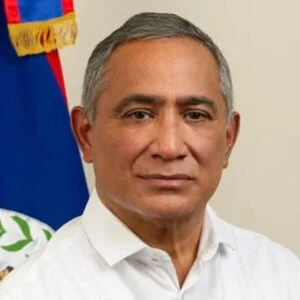
Belize Prime Minister John Briceño.

Prime Minister of Belize John Briceño on Monday called for immediate international talks to prevent what he warned could become a humanitarian crisis in Cuba, driven by severe shortages of petroleum products.

Briceño made the appeal while addressing a joint sitting of the National Assembly held in honour of a visit by Guyanese President Dr Irfaan Ali. He reiterated Belize’s long-standing position that the Caribbean should remain a zone of peace and emphasized his government’s commitment to the principle of non-interference in the internal affairs of states.

“We view with serious concern recent events in our region which clearly undermined this principle. More concerning for us is the recently proclaimed executive order which is likely to have grave consequences for the people of Cuba. The government of Belize stands in full solidarity with the Cuban people,” Briceño said, warning that reduced oil supplies could trigger a “manufactured humanitarian disaster” on the island.

“We call for urgent good faith talks to avert a humanitarian crisis which is likely to emerge in the Republic of Cuba if there is ever decreasing deliveries of petroleum products. A manufactured humanitarian disaster is neither moral nor is it illegal,” he told legislators.

Oil supplies to Cuba have dwindled in recent weeks following the United States’ invasion of Venezuela and the detention of its leader, Nicolas Maduro, and his wife on drug trafficking and weapons-related charges.

“The government of Belize stands in full solidarity with the Cuban people,” Briceño added.

Meanwhile, Mexico’s President Claudia Sheinbaum has announced that her government will send humanitarian aid to Cuba this week, despite increasing pressure from Washington to cut off oil supplies to the island.

In his wide-ranging address to the Belizean Parliament, Guyanese President Irfaan Ali made no mention of the situation facing Cuba, despite Guyana having benefited for years from Cuba’s health brigade programme — an initiative Washington has equated to modern-day slavery and has urged Caribbean countries to discontinue.

Guyana has, in recent years, strengthened ties with the United States as it pushes back against Venezuela’s militarily aggressive claim to the Essequibo region.

US wants St. Lucia to stop sending nationals to study medicine in Cuba

St. Lucia PM calls on gun manufacturers to live up to their commitments

Prime Minister Phillip J. Pierre has confirmed that the United States has called on St Lucia to stop sending its nationals to Cuba to study medicine, a move he says poses a serious challenge for the island’s already strained health sector.

“I have a big problem. Many of our doctors got trained in Cuba, and now the great United States has said we can’t do that any longer,” Pierre told a weekend meeting of the second World Congress on Racial and Ethnic Health Disparities.

“This is a major problem I have to face,” Pierre said.

The prime minister also raised concerns about the wider implications for cooperation with Cuban medical professionals. “We also have Cubans who come over to work. So the American government has said we can’t even train them in Cuba. So I have a major issue on my hands,” Pierre told the conference.

Pierre said many of St Lucia’s doctors received their medical training in Cuba and that Washington has now taken the position that this long-standing arrangement can no longer continue, increasing pressure on the country’s healthcare system. He attributed the shift to United States geopolitical pressures and urged the diaspora, along with innovative local initiatives, to help the country navigate the emerging challenges.

The issue has been gaining prominence across the region. Last month, the US Embassy in Barbados said the Cuban regime’s “medical missions” programme, which has benefited several Caribbean countries, “relies on coercion and abuse.”

“Cuban medical workers face withheld wages, confiscated passports, forced family separation and exile, restriction of movement through curfews and surveillance, intimidation and threats, and even pressure to falsify medical records and fabricate procedures. Many also endure excessive work hours and unsafe conditions,” the embassy said.

Despite the concerns, the chair of the Congress, Sir Cato Laurencin, an orthopedic surgeon and senior academic based in the United States, said St Lucia is not without alternatives.

“Those of us in the diaspora with St Lucian roots need to work more closely with St Lucia. There are physicians here who want to be part of the new hospital system and support the country’s healthcare development,” Laurencin said, pointing to initiatives linked to the University of Connecticut’s institute as possible models.

Laurencin also highlighted programmes focused on fitness, healthy lifestyles, and local food cultivation, noting that such efforts are becoming increasingly important as Washington has outlined concerns about Cuban medical missions through official diplomatic channels in the Eastern Caribbean.

Pierre also addressed the financial strain facing the health sector, particularly the long-delayed re-opening of the St Jude Hospital in Vieux Fort. He said commissioning the facility is expected to cost about US$50 million, an amount the national budget cannot absorb.

The prime minister said his administration has explored using the Citizenship by Investment Programme (CBI) — which grants citizenship to foreign investors in exchange for substantial contributions to national development — as one option to help bridge the funding gap.

“These disparities, apart from social and economic, must filter down into our health care system. We have tried in St. Lucia to have a school feeding programme where we try to ensure that our kids get at least one nutritious meal a day.

“But sometimes the funders determine that you have to buy certain foods. I have no choice,” he said, urging Caribbean people to rethink lifestyles and long-term approaches as the region confronts mounting health and economic pressures.

US gov’t approves nearly 65,000 more H-2B visas for 2026 to address labor shortage

visa

The U.S. government will temporarily increase the number of H-2B nonimmigrant visas available for fiscal year 2026, adding up to 64,716 supplemental visas to help U.S. employers facing severe labor shortages.

The expansion was announced Jan. 30 through a joint temporary final rule issued by the Department of Homeland Security (DHS) and the Department of Labor (DOL). The additional visas are intended for U.S. businesses that can demonstrate they are suffering, or will imminently suffer, irreparable harm without the ability to employ the H-2B workers requested in their petitions.

Under the rule, employers must attest to permanent and severe financial loss on a newly required attestation form to qualify for the supplemental visas.

Who Qualifies for the Additional Visas

Only U.S. employers experiencing irreparable harm if they cannot hire the requested H-2B workers may petition under the temporary increase. The rule does not apply to H-2B petitions that are already exempt from the cap, including extension-of-stay requests or petitions filed on behalf of certain fish roe processors, which remain subject to standard program rules.

Of the 64,716 additional visas, 46,226 are reserved exclusively for returning workers—those who held H-2B status or were issued an H-2B visa during one of the previous three fiscal years (2023, 2024, or 2025). The remaining 18,490 visas are not limited to returning workers and are designated for employers with late-season labor needs.

Visa Allocations and Filing Windows

To accommodate varying employment start dates, the supplemental visas will be released in three separate allocations:

  • First allocation (Jan. 1–March 31, 2026):
    18,490 visas limited to returning workers. Petitions must be filed no later than 14 days after the second half of the statutory H-2B cap is reached.

  • Second allocation (April 1–April 30, 2026):
    27,736 visas, plus any unused visas from the first allocation, also limited to returning workers. Petitions may be filed between 15 and 44 days after the second half statutory cap is reached.

  • Third allocation (May 1–Sept. 30, 2026):
    18,490 visas, plus any unused visas from the first two allocations. These visas are not restricted to returning workers. Employers may file petitions beginning 45 days after the second half statutory cap is reached and no later than Sept. 15, 2026.

USCIS will stop accepting petitions under the temporary rule once the applicable cap is reached, the allocation filing window closes, or after Sept. 15, 2026—whichever comes first. Any pending petitions not approved by Oct. 1, 2026, will be denied without fee refunds.

Statutory Authority and Limits

The temporary increase is authorized under Section 101 of the Continuing Appropriations Act, 2026 (Public Law 119-37), which extended authority previously granted in earlier appropriations legislation. DHS said the decision followed consultation with the Department of Labor and considered business needs, impacts on U.S. workers, and the integrity of the H-2B program.

The expanded cap applies only to fiscal year 2026 and does not extend to future years.

Petitions requesting employment start dates after Sept. 30, 2026, will be counted toward the first half of the fiscal year 2027 H-2B cap, subject to standard eligibility requirements.

Olivia Dean claims Best New Artist at the 2026 Grammys

Olivia Dean

Olivia Dean’s remarkable rise reached a defining peak this weekend as the singer-songwriter was crowned Best New Artist at the 2026 Grammy Awards, capping off a breakout year that has firmly established her as one of soul music’s most compelling new voices.

The 26-year-old artist, born March 14, 1999, took home just one trophy on the night despite entering the ceremony with multiple nominations. Still, the win proved momentous. Dean is the first British artist to claim the Best New Artist title since Dua Lipa’s victory in 2019, marking a significant return for UK talent in one of the Grammys’ most closely watched categories.

In an emotional acceptance speech, Dean used the global stage to highlight her Jamaican heritage and honour the immigrant roots that shaped her life.

“I want to say I’m up here as a granddaughter of an immigrant,” she told the audience. “I’m a product of bravery and I think these people deserve to be celebrated.”

Dean is British with Guyanese and Jamaican parentage. Her mother is Jamaican and Guyanese, while her father is English. Her words struck a resonant chord, drawing applause both inside the arena and across social media, where fans praised her for spotlighting the contributions of immigrant families within the arts and beyond.

The Grammy win arrives amid a stunning surge in Dean’s career. Her debut album, The Art of Loving, has been widely praised for its warmth, emotional honesty, and soulful production, positioning her as a distinctive voice in contemporary pop and R&B. The project’s success has been amplified by her breakout single, Man I Need, which is now surging toward a potential No. 1 spot on the Billboard Hot 100.

Dean’s ascent has been anything but overnight. Known for her thoughtful songwriting and rich, expressive vocals, she has steadily built momentum over recent years, earning acclaim for music that blends vulnerability with confidence. This past year, however, marked a turning point, transforming her from a rising talent into a global force.

While she walked away with only one Grammy, the significance of the award was undeniable. Best New Artist has historically signalled long, influential careers, and Dean’s win suggests she is just getting started.

With a Grammy now in hand, chart-topping momentum behind her, and a growing international fanbase, Olivia Dean’s future looks as luminous as the moment she stepped onto the Grammy stage proudly carrying her story, her Jamaican heritage, and a new chapter for soul music.


Haitian American Physician Dr. Alister Martin appointed NYC Health Commissioner

Alister Martin

New York Mayor Zohran Kwame Mamdani has appointed Haitian American emergency physician Dr. Alister Martin as commissioner of the New York City Department of Health and Mental Hygiene (DOHMH), placing a nationally recognized public health leader at the helm of one of the largest public health systems in the world.

The appointment was announced Jan. 31. Martin, an emergency room physician at Massachusetts General Hospital and an assistant professor at Harvard Medical School, will oversee New York City’s public health system, including disease surveillance and response, prevention initiatives, and community health programs across the city’s five boroughs.

“Dr. Martin will help oversee the city’s public health apparatus, monitor and manage disease outbreaks, and advance the Mamdani Administration’s vision for a city where every New Yorker can find affordable, accessible, world-class healthcare,” City Hall said in a statement.

The Department of Health and Mental Hygiene operates with an annual budget of approximately $1.6 billion and employs more than 7,000 workers, making it one of the largest public health agencies globally.

Martin said the appointment carries deep personal meaning and reflects a commitment to the communities that shaped his upbringing.

“As a kid from Jackson Heights, nothing means more to me than coming home to serve the city I was born in,” Martin said in the announcement. “I’ve spent my career building programs that turn healthcare settings into launchpads for opportunity.”

He said the role also reconnects him to his immigrant roots and to the experiences that influenced his career in medicine and public service.

“My mother raised me as a single parent in Jackson Heights,” Martin said. “She worked her way up from a fry cook at McDonald’s to a consultant at the United Nations.”

In a separate statement, Martin further emphasized his background and upbringing.

“My mother raised me as a single parent in Jackson Heights, a Haitian immigrant doing her level best,” he said. “She worked her way up from a fry cook at McDonald’s to a consultant at the United Nations.”

Martin previously served as an adviser to Vice President Kamala Harris and worked in the White House Office of Public Engagement. He is also the founder of Vot-ER, a nonpartisan nonprofit organization that promotes civic participation through healthcare settings, and leads A Healthier Democracy, a healthcare organizing incubator based at Northeastern University.

According to the mayor’s office, Martin’s work has focused on expanding access to services beyond traditional medical care, including opioid addiction treatment, vaccine access, financial assistance, and civic resources. His initiatives have partnered with more than 1,700 hospitals nationwide and trained tens of thousands of clinicians.

“From the emergency room to the White House, he has built programs that deliver at scale,” said Michael Collins, former White House director of public engagement for the vice president’s office. “He will bring that same results-driven approach to improving the health of all New Yorkers.”

Martin was one of five new commissioners announced in the mayor’s latest round of appointments. The others include Stanley Richards as commissioner of the Department of Correction — the first formerly incarcerated person to hold that role — Yesenia Mata as commissioner of the Department of Veterans’ Services, Sandra Escamilla-Davies as commissioner of the Department of Youth and Community Development, and Vilda Vera Mayuga as commissioner of the Office of Administrative Trials and Hearings.

Former PNP MP Jolyan Silvera pleads guilty to manslaughter in wife’s death

Melissa-Silvera Jolyan Silvera

Former People’s National Party (PNP) Member of Parliament Jolyan Silvera has pleaded guilty to manslaughter in connection with the 2023 shooting death of his wife, Melissa Silvera.

Melissa Silvera, a land developer and mother of four, was found dead in the couple’s Stony Hill, St. Andrew home on November 10, 2023. Initially reported to have died in her sleep, a post-mortem later revealed that she had suffered at least three gunshot wounds, prompting authorities to launch a murder investigation. Jolyan Silvera, 52, was arrested on January 18, 2024, and charged with the murder of his wife the following day. He has remained in custody since his arrest.

In addition to the murder charge, authorities also indicted him for using a firearm to commit a felony under the Firearms (Prohibition, Restriction and Regulation) Act.

The Silveras’ family tragedy is compounded by the loss of their third son, Justin, who drowned in the family pool in 2017 at the age of two. The couple also have twins, Adam and Aden, and their youngest son, Axel, born in 2019. Jolyan and Melissa had been married since 2015.

The case, which has attracted significant public attention due to Silvera’s political profile, was originally scheduled to begin in court earlier but was postponed for further examination of ballistic evidence. The trial is now set to proceed in the Gun Court. Silvera’s legal team includes King’s Counsel Peter Champagnie and attorney Patrice Riley, while the Crown is represented by prosecutors Dwayne Green and Latoya Bernard.

A murder charge means the person is accused of intentionally and unlawfully killing someone, usually with premeditation or malice, while manslaughter is when a person causes someone’s death without the same intent, either through recklessness, negligence, or in the heat of the moment.

Trinidad government moves to tax Carnival artists

Trinidad Carnival

The Government of Trinidad and Tobago is introducing taxes on earnings by local artists during Carnival 2026.

The Inland Revenue Division (IRD) of the Ministry of Finance on January 12 advised promoters, bandleaders, and local and foreign artistes of their obligations, which include income tax, corporation tax, health surcharge, green fund levy, and VAT registration for promoters with gross receipts of $600,000 or more.

Foreign artistes will be subject to withholding tax, which must be deducted and remitted by promoters. Bandleaders are also required to comply with similar tax obligations.

The Trinbago Unified Calypsonians Organisation (TUCO) said it will address the issue after Carnival. Its president, Ainsley King, acknowledged that implementing new taxes during the busy Carnival season could be challenging and that discussions with stakeholders will follow once the festival concludes. Some promoters confirmed they have already been VAT-registered and compliant with tax laws, while smaller bands expressed concern over the additional financial burden, noting that declining band participation and rising costs may affect their operations.

Although the IRD has announced field visits to ensure compliance, none of the stakeholders contacted so far reported being visited. This marks the first serious government attempt in over a decade to enforce taxes on Carnival earnings, with previous efforts in 2011 ultimately failing to take hold.

Jamaican composer Gavin Chuck wins Grammy for Best Chamber Music Performance

Gavin Chuck, left, and Alan Pierson of Alarm Will Sound pose in the press room with the award for best chamber music/small ensemble performance for "Dennehy: Land of Winter" during the 68th annual Grammy Awards on Sunday, Feb. 1, 2026, in Los Angeles. Richard Shotwell - Invision

Jamaican-born composer and music theorist Gavin Chuck has won a Grammy for Best Chamber Music/Small Ensemble Performance for “Dennehy: Land of Winter”, performed by Alan Pierson and Alarm Will Sound, at the 68th Annual Grammy Awards on Sunday.

Chuck, the Managing Director and a founding member of Alarm Will Sound, grew up in Kingston, Jamaica, “a place that bursts at the seams with music.” He states in his bio that in his youth, radios played constantly during the day, while at night dancehall street parties and church choirs filled the streets with sound. “I still wonder about how the music from one half of my life is connected to the other,” he has said, reflecting on the mix of local sounds and the classical music he pursued after moving to the U.S. for college.

Alarm Will Sound is a contemporary music ensemble based in the U.S., known for performing new, avant-garde, and experimental music, often blending classical, electronic, and popular influences. They’re highly respected for tackling challenging modern compositions and bringing them to life with precision and energy.

Founded in 1996, the group is made up of about 20 musicians, all classically trained, who perform as a chamber orchestra without a conductor on most pieces, though they sometimes collaborate with guest conductors like Alan Pierson. They’ve recorded albums, toured internationally, and premiered works by many living composers.

As a composer, Chuck has written original works and arrangements for Alarm Will Sound, blending his Caribbean roots with contemporary classical music. A scholar as well as a musician, he has taught music theory at the Eastman School of Music, the University of Michigan, and Northwestern University, exploring the intersection of music theory and cognitive science.

Chuck’s journey from Kingston’s vibrant streets to the Grammy stage illustrates the global reach of his work. “Ultimately, I love that I’m bursting at the seams with music: teaching music, writing about music, composing, and putting on concerts and producing records of new music. All fantastic connections,” he says. His win highlights both his personal dedication and the growing presence of Jamaican artists on the international classical music stage.

Other nominees in the category included French Piano Trios’ La Mer, Lili Haydn & Paul Cantelon’s Lullabies For The Brokenhearted, Mak Grgić & Mateusz Kowalski’s Slavic Sessions, and Third Coast Percussion’s Standard Stoppages.

US Embassy in Jamaica limits updates amid US gov’t shutdown

The U.S. Embassy in Jamaica has announced that its social media updates will be limited due to the ongoing lapse in U.S. government appropriations.

In a notice on X, the embassy said the account “will not be updated regularly until full operations resume, with the exception of urgent safety and security information.” This move comes as the partial federal shutdown in Washington affects a range of government operations.

While essential embassy functions continue, routine communications and public announcements have been temporarily paused.

A partial U.S. federal government shutdown began on January 31, after Congress failed to pass all the annual funding bills before the deadline. The Senate approved a funding deal that would keep most departments open and temporarily extend funding for the Department of Homeland Security (DHS), but the House had not voted on it by deadline, triggering the lapse. Lawmakers are working to pass the deal this week, with the House expected to vote — and possibly end the shutdown — around Tuesday, February 3.

The embassy advised the public to monitor official channels for critical safety updates and travel advisories while routine services remain on hold.

Reinstated public sector workers in St. Vincent protest reduced bonuses

Godwin Friday

Some reinstated public sector workers in St. Vincent are accusing the government of reneging on campaign promises after discovering they received far smaller bonuses than expected.

Workers who returned to their posts under the New Democratic Party (NDP) administration said they were promised EC$1,500 to EC$2,000 (US$555–740) during last year’s election campaign, but salary slips show payments as low as EC$125 to EC$166.67. Close to 100 reinstated workers appear worst affected, receiving as little as one-twelfth of the promised amounts.

The discrepancy comes after a January 26 government memo clarified that public servants who did not work the full year in 2025 were ineligible for the full bonus — a detail absent from the NDP’s news conference announcing the payments. Prime Minister Dr. Godwin Friday, Attorney General Louise Mitchell, and Minister of Health Daniel Cummings all spoke at the announcement.

The controversy touches on a wider issue dating back to November 2021, when more than 500 public servants lost their jobs for failing to take the COVID-19 vaccine. During last year’s campaign, the NDP pledged to reinstate the workers with all benefits intact, citing a March 2023 High Court ruling by Justice Esco Henry, which found the mandate unconstitutional and awarded full pay, benefits, and pension rights to affected employees.

Despite the Court of Appeal overturning Justice Henry’s ruling, the NDP maintained its position that reinstated workers should be treated as if their service had never been interrupted. Unions have appealed the matter to the London-based Privy Council, where it remains pending.

Attorney General Mitchell said the government is enforcing its policy of reinstatement with full benefits, noting that 92 of 100 returning workers have been placed in positions equivalent to their prior roles. However, the reduced bonus payments have caused frustration among the reinstated employees, who say the government is treating them as if their service had been broken.

“Beyond being government policy, it’s the right thing to do, and we want to make sure that those persons who have suffered so much in the past don’t continue to suffer when the government has made a commitment,” Mitchell told reporters.

Bermuda gov’t pushes 10-year plan to tackle growing housing waitlist

Deputy Premier and Minister of Housing and Municipalities Zane Desilva

The Bermuda government says it is working “hard” to deliver the housing solutions the island needs, as the Bermuda Housing Corporation (BHC) waitlist grew to more than 350 households over the last two months of 2025.

Deputy Premier and Minister of Housing and Municipalities Zane Desilva told reporters the BHC waitlist rose from 333 in November to 357 in December, with increases across all priority categories. Urgent cases still make up the largest share, but the fastest growth is among regular applicants, many of whom are working individuals and families struggling with rising market rents.

“Nearly 60 per cent of applicants are seeking studio or one-bedroom units, reflecting pressures on seniors, individuals living alone, and smaller households,” Desilva said. He noted that while BHC data captures only part of the housing picture, it highlights the areas of greatest need.

The government is pursuing a long-term Affordable Housing Strategy for 2025–2035 to address these pressures. The strategy aims to expand and diversify housing supply, rehabilitate underused properties, improve affordability and access, modernize regulations, and strengthen governance across the housing system.

Desilva said consultations with government ministries and technical departments are ongoing, with a public consultation draft expected in February. A technical advisory team, including representatives from the BHC and Bermuda Land Management Corporation (BLMC), is exploring alternative construction methods such as precast concrete, modular, and prefabricated systems to reduce costs and accelerate delivery.

Looking ahead to the 2026–27 financial year, over 30 sites owned by the BHC or BLMC have been identified for potential housing development. Ongoing projects are expected to deliver 37 new affordable units in the coming months, he said.

“Taken together, this strategy provides a clear roadmap for delivering affordable and attainable housing over the next ten years,” Desilva said, emphasizing a balanced approach combining new construction, rehabilitation, private-sector participation, and regulatory reform.

Criminal probe launched after unauthorized access to St. Kitts Electoral Office systems

St. Kitts Electoral Office

Authorities have launched a criminal investigation after unauthorized remote access to the computer systems of the Electoral Office on Central Street, Basseterre, was discovered and shut down, the Office of the Supervisor of Elections confirmed on Thursday.

According to a public notice issued on January 29, the unauthorized access had reportedly been taking place for several months before it was detected. Once identified, the government’s Information Technology Department was immediately engaged and successfully discontinued and disabled the illicit remote connection.

The Supervisor of Elections has since initiated an internal investigation and enlisted the support of the White Collar Crime Unit of the Royal St. Christopher and Nevis Police Force.

Preliminary assessments indicate that the official Registers and Lists of Voters were not compromised, altered, or corrupted. However, officials believe the individual or individuals involved were extracting copies of the electoral list and related information.

“The Office is treating this matter with the utmost seriousness and is taking all necessary steps to safeguard the integrity of the electoral system and its data,” the notice stated, adding that action will be pursued “to the full extent of the law” against those responsible.

The Supervisor of Elections also reminded the public that the preparation, custody, and publication of voter registers are strictly governed by the National Assembly Elections Act. Under the law, only the Chief Registration Officer — the Supervisor of Elections — is authorized to prepare and publish official voter registers and monthly lists, and only through legally prescribed methods and timelines.

Political parties, organizations, and members of the public were urged to respect the legal framework governing electoral information and to rely solely on officially published voter lists.

The Office further advised that the annual Register of Voters as of November 2025 will be posted in each polling division on Friday, January 30, 2026, in accordance with the law. Registered voters are encouraged to review the lists carefully to ensure their information is accurate.

Members of the public were also invited to listen to a recent statement from the Supervisor of Elections, which provides additional clarification on the status of the electoral lists.

Sheriff Tony highlights role of Inspector General in strengthening BSO

broward sheriff

Broward Sheriff Dr. Gregory Tony used his February 2026 message to underscore what he called a core promise of his leadership: keeping Broward County safe while holding the Broward Sheriff’s Office (BSO) to the highest professional and ethical standards.

“From my first day as sheriff, I made a promise the Broward Sheriff’s Office would keep Broward County safe while operating at the highest professional standards,” Tony said. “That commitment led me to establish the Office of Inspector General in 2021, embedding accountability and transparency into every aspect of BSO’s work.”

Tony said the creation of the Office of Inspector General (OIG) was designed to strengthen public trust and reinforce integrity across the agency.

“Upholding these high standards strengthens our organization, reinforces our integrity and makes our communities safer,” he said.

According to Tony, the OIG provides independent oversight through three divisions — Internal Affairs and Public Corruption, Policy and Accountability, and Internal Audit — each staffed by sworn and civilian professionals focused on ethical, efficient and fiscally responsible operations.

“The Division of Internal Affairs and Public Corruption investigates allegations of misconduct, including use of force and firearms discharge incidents, thoroughly and objectively,” Tony said. “These investigations assess whether actions are consistent with BSO standards, ensuring personnel serve the public with integrity and professionalism.”

Tony added that the division’s work goes beyond individual cases.

“By conducting comprehensive, evidence-based reviews, the OIG identifies patterns of misconduct, recommends policy improvements and holds employees accountable when standards are not met,” he said. “This oversight enhances operational effectiveness, reduces risk and ensures public safety operations are conducted efficiently, ethically and in a manner the community can rely on.”

He also highlighted the role of the Division of Policy and Accountability in setting clear expectations for employees.

“The Policy Unit routinely reviews and updates policies to align with state and federal laws, accreditation standards and community expectations,” Tony said, noting that this provides personnel with “clear guidance to perform their duties safely and professionally.”

Within the division, Tony said the Research Unit plays a key role in shaping operations.

“It applies data-driven analysis to identify trends, enhance operations and guide resources where they will have the greatest impact on community safety,” he said.

Tony also pointed to additional safeguards, including the Criminal Justice Information Services Compliance Unit.

“These systems provide deputies with real-time data to identify threats and protect the public,” he said. “Strict compliance requirements ensure that information is accessed, shared and safeguarded appropriately.”

The Division of Internal Audit, Tony said, adds another critical layer of accountability.

“It conducts financial, operational and performance audits across the organization,” he said. “Detailed reports with actionable findings and recommendations help optimize resource allocation while protecting taxpayer dollars.”

Tony said the Office of Inspector General ultimately serves the broader community.

“The OIG plays a vital role in upholding integrity, accountability and transparency at BSO,” he said. “Through oversight and collaboration, these divisions guide policy, support sound decision-making and protect public resources, delivering reliable and trusted service to the residents and visitors of Broward County.”

Residents can learn more about the Office of Inspector General, review the OIG Annual Report or explore employment opportunities by visiting sheriff.org.

Jamaica experiences drop in temperatures as cold front moves across the island

Jamaica is experiencing a notable shift in weather conditions as a strong cold front moves across the island, bringing cooler temperatures, breezy to gusty winds, and scattered showers this week.

According to the Meteorological Service of Jamaica, the cold front entered the western Caribbean on Saturday, with its effects becoming evident across Jamaica from Saturday night through early this week.

As a result, significantly cooler temperatures are being recorded islandwide, with overnight lows ranging from approximately 15°C to 21°C, particularly in higher elevations and rural areas. Daytime conditions are expected to remain generally cloudy, with periods of showers affecting most parishes.

The Met Office also warned of strong to gusty winds, especially across northern parishes and hilly regions, which may further enhance the cool conditions and reduce visibility during showers.

Marine conditions are expected to deteriorate as the system persists. Fishers and other marine operators are being urged to exercise caution, as very strong winds—approaching near gale force— are forecast through this week, leading to hazardous sea conditions.

The Meteorological Service of Jamaica says it will continue to closely monitor the system and issue updates as necessary, advising residents to stay informed and take precautions, particularly those in coastal, mountainous, and marine-dependent communities.

Cold weather advisories remain in effect for all of South Florida

South Florida is facing another unusually cold day on Monday as a Freeze Warning remains in effect for metro and coastal Palm Beach County, as well as metro Broward and Miami-Dade counties.

Students returning to school Monday morning bundled up against the chill, with overnight temperatures once again dropping into the 30s across the region. Forecasters say the greatest concern for frost and freezing conditions in metro Broward and Miami-Dade counties will be in western areas, including Redlands, Davie, Weston, and Homestead, through 9 a.m. Tuesday.

Cold Weather Advisories remain in effect for all of South Florida. Despite sunshine during the day, temperatures are expected to remain cold, with afternoon highs only reaching the upper 50s, keeping conditions chilly throughout the day.

Meteorologists say a gradual warming trend is expected to begin Tuesday as winds shift direction, with temperatures slowly moderating through midweek.

In response to the prolonged cold, Broward County officials announced continued emergency shelter operations for individuals and families experiencing homelessness. The county, working with community partners, will provide overnight shelter through Monday night, February 2, 2026, due to the ongoing low temperatures.

Homeless individuals are advised to report to The Salvation Army for shelter placement beginning at 5:30 p.m. each evening through Monday night. Dinner will be available starting at 4:30 p.m., though participation is optional.

The Salvation Army
1445 W. Broward Blvd.
Fort Lauderdale, FL 33312

Shelter beds will be provided on a first-come, first-served basis, and space is limited. Officials are urging residents to notify anyone experiencing homelessness in their area about the cold-weather shelter availability.

County leaders continue to stress the importance of taking precautions during the cold snap, particularly for vulnerable populations, pets, and those without adequate heating.

Trinidad and Tobago’s Jolene Mendes accepts Grammy Award for Best Music Video

Jolene Mendes
Jolene Mendes, from left, Sophia Sabella, and Pablo Feldman accept the award for best music video for "Anxiety" by Doechii during the 68th annual Grammy Awards on Sunday, Feb. 1, 2026, in Los Angeles. Chris Pizzello - Invision

Trinidad and Tobago–born producer Jolene Mendes was among the winners at the 66th Grammy Awards, accepting the trophy for Best Music Video on February 1 in Los Angeles for Doechii’s “Anxiety.”

Mendes was recognized as one of the producers behind the award-winning visual, which has been widely praised for its emotional depth, striking imagery, and avant-garde approach. While Doechii and the video’s director, James Mackel, were not in attendance at the ceremony, Mendes accepted the Grammy on behalf of the team.

“As a producer, it makes it the best job in the world when we get to work with incredible creators like them,” Mendes said while accepting the award. “They are both once-in-a-lifetime talents. This, of course, could not have been done without the 200 people that worked on it, so thank you all.”

Released in April 2025, “Anxiety” quickly became one of the year’s most talked-about music videos. The visually layered exploration of selfhood is set to a track that pays homage to Gotye and Kimbra’s 2011 hit “Somebody That I Used to Know.” The video has since amassed more than 62 million views on YouTube and earned widespread acclaim for its raw vulnerability and bold creative vision.

Mendes previously worked with director James Mackel on Schoolboy Q’s “YEERN 101,” a collaboration that led to their reunion on “Anxiety.” In an interview last year, she reflected on the production process.

“I produced Anxiety with my business partners Sophia Sabella and Pablo Feldman through our company, More Avenue,” Mendes said. “James had such a clear and beautiful vision for the video. It was a fast-moving production, but the process was deeply intentional and collaborative, which made it special.”

Though she now divides her time between the east and west coasts of the United States, Mendes continues to represent Trinidad and Tobago on the global stage. She credits her upbringing for shaping her creative instincts and storytelling sensibility.

“Growing up, I was always in awe of films and series and the way they made me feel,” she said. “Now I try to pay that forward through the stories I choose to produce.”

“That sensibility always finds its way in,” Mendes added. “I’m drawn to stories that feel deeply specific yet resonate universally. I think that comes from growing up with both a strong local pride and a constant curiosity about the rest of the world.”

Born in Trinidad and Tobago, Mendes is a producer known for She Paradise (2021), Edge of Everything (2023), and Bienvenidos a Los Angeles (2023). She has worked on several critically recognized films, including She Paradise, directed by Trinidad and Tobago filmmaker Maya Cozier, and Bienvenidos a Los Angeles, directed by Lisa Cole.

In 2022, Mendes, alongside fellow producers Vivian Johnson and Cindy Lu, won the Toronto International Women’s Film Festival Award for Best Female Producer for Bienvenidos a Los Angeles, further cementing her reputation as a rising force in film and visual storytelling.

With her Grammy win, Mendes adds another milestone to a career that continues to bridge Caribbean roots with global creative impact.

Danielle Williams leads golden Jamaican night at Millrose Games

Danielle Williams

Jamaican athletes delivered a commanding performance at the 118th edition of the Millrose Games on Sunday, collecting three victories at the iconic Nike Track and Field Center at The Armory in New York and reaffirming the island’s enduring presence on the global indoor circuit.

With sprinting excellence and field-event power on full display, Jamaica’s athletes once again rose to the occasion on one of track and field’s most prestigious stages.

Williams extends her indoor reign in the hurdles

Danielle Williams continued her dominance in the women’s 60-meter hurdles, securing a third consecutive Millrose Games title and underscoring her status as the discipline’s premier indoor performer.

Fresh off her triumph at the New Balance Grand Prix two weeks earlier, the two-time world champion over 100-meter hurdles controlled the race from the gun, stopping the clock at 7.90 seconds. Williams held off a determined challenge from Bahamian star Devynne Charlton, the world indoor record holder, who finished second in 7.96 seconds.

Jamaica’s Megan Simmonds produced a season’s best 8.04 seconds to claim fourth, while nation’s other competitor, Oneika Wilson, representing Clemson University, placed sixth in 8.12 seconds.

Blake delivers sprint authority in men’s 60 meters

Ackeem Blake maintained his strong early-season form with a convincing victory in the men’s 60 meters, clocking 6.55 seconds to top a competitive field.

Puerto Rico’s Eloy Benitez finished second in 6.60 seconds, with American Jordan Anthony close behind in third at 6.64 seconds. Jamaica’s Bryan Levell, the reigning world outdoor bronze medalist at 200 meters, placed fifth in 6.66 seconds, further highlighting the island’s sprinting depth.

Campbell unleashes world-leading throw in shot put

In the field events, Rajindra Campbell produced a moment of brilliance to claim victory in the men’s shot put, delivering a season’s best, and world-leading throw of 21.77 meters on his final attempt.

Campbell opened with a solid 20.96 meters before recording three consecutive fouls. Undeterred, he responded emphatically when it mattered most, surpassing the field to secure the win. American Joe Kovacs finished second with a best of 21.21 meters, while Nigeria’s Chukwuebuka Enekwechi placed third at 20.63 meters.

Nelson posts season’s best as Asher-Smith repeats

In the women’s 60 meters, Kemba Nelson led the Jamaican contingent with a season’s best 7.28 seconds, finishing fourth in a high-quality final.

Great Britain’s Dina Asher-Smith claimed back-to-back Millrose victories, winning in 7.10 seconds. Americans Jacious Sears (7.12) and Mariah Maxwell (7.36) rounded out the podium in second and third, respectively.

Kerolin hat-trick, Shaw strike power City past Chelsea

Bunny Shaw breaks hat-trick record as Man City crush Spurs 4-0
Reggae Girl Khadija “Bunny” Shaw.

Jamaican international Khadijah “Bunny” Shaw continued her prolific scoring run as Manchester City delivered a stunning 5-1 demolition of defending champions Chelsea, tightening their grip on the top of the Women’s Super League standings and sending a powerful message to the rest of the title contenders.

The emphatic victory at the Etihad Stadium not only underlined City’s dominance this season but also marked Chelsea’s third league defeat, a sharp contrast to the near-invincible campaign they enjoyed just one year ago.

Early authority sets the tone

Manchester City wasted little time asserting control, with Brazilian forward Kerolin igniting the contest in the 13th minute through a forceful finish that immediately put Chelsea on the back foot.

City’s momentum gathered pace as Shaw doubled the advantage in the 36th minute, muscling past defender Naomi Girma before finishing with authority. The goal reflected both her physical presence and clinical edge, traits that have made her the league’s most feared striker this season.

Shaw’s scoring streak continues to redefine the league

Shaw’s strike marked her 14th goal in as many league appearances, a remarkable return that leads the WSL by a wide margin. No other player has reached double figures, with the next closest challenger managing just seven goals.

Her consistency has become central to City’s title charge and a recurring nightmare for opposing defenses.

Kerolin steals the show after the break

If the first half belonged to City collectively, the second half was unmistakably Kerolin’s stage.

Just four minutes after the restart, she produced the match’s defining moment, embarking on a lung-bursting run from deep inside her own half, slipping away from midfielder Keira Walsh, and delicately chipping goalkeeper Hannah Hampton to make it 3-0.

Five minutes later, Kerolin completed her hat trick with a close-range tap-in, capping a breathtaking individual performance and extending City’s lead to four goals.

Champions falter as City pulls away

Chelsea, who went 34 matches unbeaten and captured a domestic treble in Sonia Bompastor’s first season in charge, showed brief resistance when Alyssa Thompson netted a consolation goal in the 68th minute.

Any hopes of a late revival were quickly extinguished, however, as Vivianne Miedema rose to head home City’s fifth goal in the 72nd minute, sealing a comprehensive rout.

Title race takes a dramatic turn

With the win, Manchester City moved to 39 points, stretching their advantage to 11 points over second-place Manchester United with eight matches remaining. Chelsea, meanwhile, slipped to third on 27 points, facing a growing challenge to defend their crown.

What once looked like a tightly contested title race now carries the unmistakable imprint of City’s authority, and the relentless scoring touch of Bunny Shaw.


Sammy applauds Motie’s transformation after match-winning spell

Motie nominated for ICC Player-of-the-Month honour
West Indies left-arm spinner Gudakesh Motie.

JOHANNESBURG, South Africa — West Indies head coach Daren Sammy has praised left-arm spinner Gudakesh Motie for his resilience, work ethic, and commitment to self-improvement after the bowler produced a decisive performance in the third and final T20 International against South Africa on Saturday.

Motie’s display not only sealed a narrow six-run West Indies victory under the Duckworth-Lewis-Stern method in a rain-reduced contest, but also marked a personal turning point following months of technical adjustment and renewed confidence building.

From setback to reset

Just three months ago, Motie’s international future appeared uncertain. The 30-year-old was omitted from the West Indies T20I squad for the New Zealand tour in November after a dip in form linked to a technical flaw in his bowling action.

Rather than rushing him back, Cricket West Indies opted for a longer-term solution. Through a collaboration with the Royals Sports Group, Motie was sent to South Africa to work with specialists, refine his mechanics, and rebuild confidence ahead of the upcoming ICC Men’s T20 World Cup, scheduled for February 7 to March 8 in Sri Lanka and India.

Impact when it mattered most

Although Motie went wicketless during the preceding three-match T20I series against Afghanistan, his lone appearance in South Africa proved decisive.

Introduced in a match reduced to just 10 overs per side, Motie delivered a game-changing spell of 3 for 17 from two overs, earning Player of the Match honors and playing a central role in West Indies’ dramatic win.

New skills, new confidence

Speaking at the post-match press conference, Sammy revealed that Motie’s success was the result of deliberate planning and months of focused skill development.

“In 2025 Motie really lacked some confidence. So, we had a plan, myself, with Sangakarra, the director of Royals, and we came up with a plan after Bangladesh that Motie would come down to South Africa to do some skill work before this series here; and I must say that Motie has maximised the time.

“The specific training that he got, that chinaman he’s bowling now, he’s been practising it for a while, and to gain the confidence he came to Abu Dhabi to play against Afghanistan, and we saw he’s slowly getting his confidence back,” Sammy said.

Expanding the arsenal

Sammy emphasized that Motie’s evolving skill set now offers greater tactical flexibility, particularly his ability to challenge batters on both sides of the wicket.

“We had a combination we wanted to play, and just him getting that opportunity, it opens the door for us because now he can challenge both sides of the bat, whether it’s a right- or left-hander. Motie bowls it in the nets, it’s been a while now, but to have the confidence to do it now …”

A bowler central to past and future success

The West Indies coach concluded by highlighting Motie’s importance to the team’s blueprint moving forward, especially recalling the impact of his middle-overs wickets during previous successful campaigns.

“I’m so happy for him because we all know when we were successful, the wickets he took in the middle were crucial for us. So, kudos to Motie for making use of the opportunity and the time to fine-tune his skills and his craft,” Sammy added.

For Motie, the performance represented more than just figures on a scorecard, it was a reaffirmation of trust, preparation, and belief at a crucial juncture in the West Indies’ World Cup journey.


Daren Sammy sounds World Cup call, bowl better or fall short

daren sammy

JOHANNESBURG, South Africa — West Indies head coach Daren Sammy has delivered a clear and uncompromising message ahead of the ICC Men’s T20 World Cup: if the West Indies are to capture an unprecedented third title, their bowlers must rise to extraordinary heights.

Speaking in the aftermath of a 2-1 T20 International series loss to South Africa, Sammy stressed that the team’s fortunes at the global tournament will hinge less on reputation and more on execution, particularly with the ball.

Numbers that tell a hard truth

Across the three-match series, West Indies bowlers endured a difficult stretch, managing just 10 wickets overall. The opening two matches were especially punishing, as South Africa piled up 401 runs while losing only four wickets.

The lone bright spot arrived in Saturday’s series finale, a rain-shortened contest reduced to 10 overs per side. In that match, the bowling unit found its rhythm, restricting the hosts to 118 for six and securing a six-run victory via the Duckworth-Lewis-Stern method.

Six days out, one defining priority

With just six days remaining before West Indies open their World Cup campaign against Scotland, Sammy said the team’s ceiling at the tournament would be defined by the bowling group’s ability to deliver under pressure.

“… Hopefully, we can play a brand of cricket that helps us win. Like I said before, I have a really good feeling.

“I know it’s going to take a massive effort with the ball, but I’m seeing signs that when we execute, and today we executed our plans to different batters more often than not, and that’s something Ravi [Rampaul] has been drilling with the bowling, so I’m looking forward to the World Cup,” Sammy said.

Plans mean nothing without precision

While confident in the preparation, Sammy acknowledged that planning alone would not carry the team deep into the tournament unless execution improved significantly.

“We have all the plans, but we all know we could have all the plans, especially from a bowling standpoint, but a plan is really good when it’s executed, and we as a bowling group have not really executed well.”

The coach noted that Saturday’s improved showing offered encouragement, but warned that isolated performances would not be enough at the highest level.

Fielding under the microscope

Beyond bowling, Sammy identified fielding as an urgent area for correction, emphasizing that lapses could be fatal in a World Cup environment.

“Today I saw more of execution, what we discussed in team meetings, how we want to bowl to different batters. We have to do that really well.

“We have to take the catches, for sure we have to take the catches. We can’t keep giving the opposition’s best batsmen one and two and three chances. We will be punished by that,” Sammy maintained.

Batting offers reassurance ahead of World Cup

Despite the series defeat, Sammy said he was satisfied with the batting unit’s trajectory heading into the tournament.

West Indies posted scores of 173 for seven and 221 for four in the first two matches, before blasting 114 for three in the 10-over finale, evidence of a line-up capable of sustained aggression.

“I’m happy with how the batting is going. Certain areas probably against spin I’d like to see them rotate some more. In the series against South Africa, I think they were probably averaging around 11, 12 runs an over against our spinners while we were averaging around seven against theirs, and that is something teams would try to use against us,” Sammy said.

Middle-order muscle key against spin

Drawing on his experience as a member of the World Cup-winning teams in 2012 and 2016, Sammy pointed to the importance of countering spin through middle-order firepower.

“When we were really good in the World Cup in the Caribbean, we had that [Nicholas] Pooran factor in the middle, and now Hetty [Shimron Hetmyer] is doing that at number three, and that gives us a way to counteract what the opposition’s spinners bring at us, especially wrist spin and left-arm spin.”

As the West Indies prepare to chase history once more, Sammy’s message was unmistakable: the batting may thrill, but it is the bowlers, through discipline, execution, and courage, who will determine whether the trophy returns to Caribbean hands.


Jamaica Women snatch Super50 Cup in one-point thriller

KINGSTOWN, St. Vincent — Jamaica Women authored one of the most dramatic turnarounds in the history of the CG United Women’s Super50 Cup, surging from fifth place entering the final round to clinch their sixth championship in a finish that went down to the finest of margins.

In a tournament defined by parity and late twists, Jamaica seized their opportunity as the standings reshuffled in the final matches, emerging champions by a single point after three fiercely contested rounds.

Final day chaos rewrites the standings

The decisive swing came when previously unbeaten leaders Windward Islands Women stumbled against Guyana Women, opening a narrow door that Jamaica burst through with authority.

Jamaica’s commanding eight-wicket victory over the winless Leeward Islands Women not only secured maximum points but also delivered vital bonus points, propelling them to 21 points overall, just one clear of both Windward Islands and Guyana, who finished locked together on 20.

A title won on margins, earned with conviction

The final table reflected the tournament’s extraordinary competitiveness, with the top four teams separated by a mere two points. Jamaica’s leap from fifth to first encapsulated the unpredictability that defined the competition and underscored the value of finishing strongly when the pressure peaked.

The title marked Jamaica Women’s first Super50 Cup triumph since 2024, restoring them to the summit after a tense and unforgiving campaign.

Defending champions fall just short

Defending champions Trinidad and Tobago Red Force Divas remained in contention until the final day and did their part by defeating Barbados Women in their closing match. However, the broader results left them narrowly outside the podium places, settling for fourth on 19 points.

Barbados’ late slide, Leewards struggle

Barbados Women endured a bitter final round. Starting the day in second position, they slid to fifth following their defeat, closing the tournament on 13 points.

The Leeward Islands Women finished at the bottom of the standings with seven points, unable to register a victory across their three matches.

From start to finish, the CG United Women’s Super50 Cup delivered edge-of-the-seat drama, none more compelling than Jamaica Women’s perfectly timed surge. In a season where consistency was elusive and margins were razor-thin, Jamaica proved that belief, execution, and timing remain the ultimate championship formula.