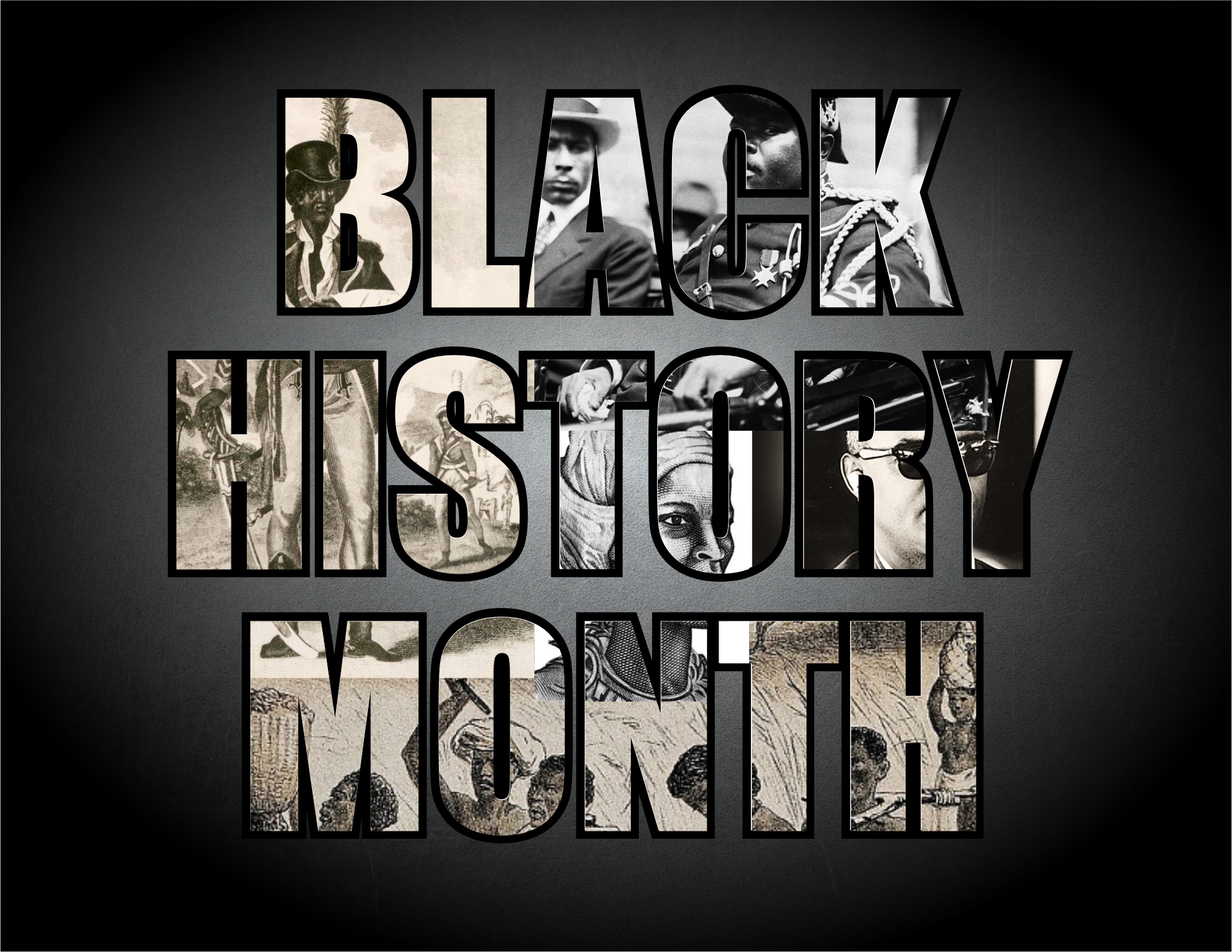
Since 1976, February has been commemorated as Black History Month in the United States. That year, former President Gerald Ford officially recognized Black History Month, stating it was “time to seize the opportunity to honor the too-often neglected accomplishments of Black Americans.” In 1986, the U.S. Congress passed a law designating February as National Black History Month. Since 1976, every U.S. president has formally recognized February as Black History Month.
Despite these designations, a significant percentage of the U.S. population does not honor the nation’s Black history or consider it relevant.
But Black history is American history. The history of the United States literally cannot be explained without it.

The economy of early America was built in large part on enslaved African labor. Major democratic ideals were tested, challenged, and expanded through Black resistance—through the abolition of slavery, Reconstruction, the Civil Rights Movement, voting rights struggles, and labor organizing. Black Americans shaped music, sports, language, food, religion, military service, science, medicine, and law.
Even the Constitution, Supreme Court rulings, and the expansion of federal power evolved because of conflicts involving slavery, segregation, and racial equality.
Minimizing Black history does not make America more “neutral” or “unifying”; it makes the nation’s history incomplete and dishonest.
In recent years, there have been renewed efforts to restrict how race and racism are taught in schools, label certain historical discussions as “divisive,” and defund or discourage diversity-focused programs. But this is not new. Every period of Black progress in American history has been followed by backlash. That pattern itself is part of Black history.
Black History Month exists because Black contributions were excluded from textbooks and public memory for generations. Many Americans still graduate without learning about important events, achievements, individuals, and struggles central to Black American history.
Teaching Black history tells Black Americans—especially young people—that their ancestors mattered and that their presence in this country is foundational, not optional.
Ideally, Black history should be fully integrated year-round. But until that happens, Black History Month still serves a real purpose.
The discomfort some people feel about Black history is not really about the past, but about what the past reveals about the present. History does not accuse individuals; it explains systems. Ignoring Black history does not heal divisions. Understanding it does.
One common criticism is that Black history should be taught all year, not confined to one month. If Black history were fully taught year-round, Black History Month would not be necessary. But outside of February, Black history is often reduced to a narrow curriculum—from slavery to the achievements of the Rev. Martin Luther King Jr.—with little depth or context.
Black History Month does not limit Black history; it forces institutions to engage with what they might otherwise avoid. The month functions like a museum spotlight—not the entire museum, but a necessary focus because certain rooms remain locked.
Another argument claims Black History Month “divides Americans by race.” Highlighting history does not divide people; ignorance does. Ignoring Black history does not create unity—it creates misunderstanding. Division comes from unresolved injustice, not from learning about it.
Germany teaches the Holocaust every year not because modern Germans are guilty, but because remembrance prevents repetition. Unity built on ignorance is fragile. Unity built on truth is stronger.
Others argue that Black history is outdated—that the country is “past all that now.” If that were true, Americans would not still be debating access to voting, policing, housing segregation, or disparities in healthcare. Black history is not “past.” It explains why these issues persist.
American democracy did not expand smoothly; it expanded because Black Americans forced it to. Enslaved Africans challenged the contradiction between freedom and slavery. The 13th, 14th, and 15th Amendments reshaped the Constitution more profoundly than any period since the nation’s founding. Birthright citizenship and equal protection exist because of formerly enslaved people.
The Voting Rights Act of 1965 did not just protect Black voters; it strengthened democracy itself. Techniques first used to suppress Black voters were later applied to other groups, making Black history an early warning system for democratic erosion.
Black workers were central to labor organizing, particularly in the South. Free speech, protest rights, and federal oversight of states were strengthened through civil rights struggles.
In a very real sense, Black Americans served as the conscience of American democracy, pushing it to live up to its own promises.
Black History Month will remain relevant because Black history is still debated, democratic progress remains unfinished, and the collective memory of this history is still fragile. The goal was never to center Black history forever, but to integrate it fully into America’s story. Until that happens honestly and consistently, February still matters.
Black history has endured because generations of Black people preserved records, stories, religion, music, and memory. Black history will never disappear—regardless of resistance or attempts to dismiss it—because it is an inseparable part of American history.