Home Blog Page 82

Lauderhill to honor community leaders during Black History Month recognition

City of Lauderhill
City of Lauderhill

The City of Lauderhill will honor a group of community leaders and trailblazers during its annual Heroes of Change Black History Month recognition on Monday, Feb. 9, 2026, celebrating individuals whose leadership and service have helped shape and uplift the city.

The event will take place at Lauderhill City Hall, located at 5581 W. Oakland Park Blvd. A public reception will be held from 4:00 to 5:30 p.m., followed by a formal recognition ceremony at 6:00 p.m. during the Lauderhill City Commission meeting in the City Hall Chambers.

This year’s Heroes of Change honorees represent a wide cross-section of civic, educational, religious, athletic, and community leadership. Those being recognized include Dr. Hayward J. Benson Jr., Lauderhill’s first Black commissioner; Andrea Braynon, chief financial officer of the Early Learning Coalition of Broward County; and Willie Mae Cooper, a longtime community leader and president of the West Ken Lark Homeowners Association.

Also honored are the Rev. Dr. Marcus D. Davidson, senior pastor of New Mount Olive Baptist Church; Steven Davis, Broward County’s all-time winningest public high school football coach and a Miami Herald Lifetime Achievement Award recipient; and Earl Hall, the city’s first Black city attorney.

Additional honorees include motivational speaker and youth advocate Darrell Hardge, known as Mr. Hardge; community advocate Dr. Ruth Carter Lynch; William C. McCormick Jr., president of Florida Memorial University; Samuel F. Morrison, former director of the Broward County Library System and a key figure in the founding of the African American Research Library and Cultural Center; and former NFL cornerback Asante Tyrell Samuel Sr.

City officials said the recognition highlights individuals whose contributions, advocacy, and dedication have made a lasting impact on the Lauderhill community. Honorees will be formally recognized during the City Commission meeting following the public reception.

Fantasia, Beres Hammond, and Mavado among confirmed acts for St. Kitts Music Festival 2026

When the sun dips into the Caribbean Sea and the trade winds carry basslines across the island, St. Kitts transforms into a global music capital. From June 25–27, 2026, the St. Kitts Music Festival returns under its fitting banner, “Where Music Meets Paradise,” delivering three unforgettable nights of reggae, dancehall, soca, and R&B against one of the most breathtaking backdrops in the world.

This year’s festival lineup is a masterclass in musical diversity, blending Caribbean legends, contemporary hitmakers, and international stars who continue to shape global sounds. Whether you’re a lifelong reggae devotee, a dancehall enthusiast, or an R&B soul seeker, the 2026 edition promises something for every ear.

Headlining the festival is international R&B sensation Fantasia, whose powerhouse vocals and emotionally charged performances have made her one of the most respected voices in modern soul music. Her appearance marks a major crossover moment for the festival, reinforcing St. Kitts’ growing reputation as a destination that attracts elite global talent.

Reggae lovers will be treated to an exceptional lineup. Grammy-winning roots reggae stalwarts Steel Pulse bring decades of revolutionary sound and lyrical depth, while beloved Jamaican crooner Beres Hammond returns with the timeless love songs that have made him an icon. Adding fire to the reggae slate are Tarrus Riley and Dean Fraser with the Black Soil Band, a combination known for musical excellence and soul-stirring live performances. Veteran artist Luciano, often referred to as “The Messenger,” rounds out a reggae roster that balances consciousness, romance, and roots energy.

Dancehall’s presence is equally commanding. Crowd favorites Mavado, Aidonia, Masicka, Valiant, and Shaniel Muir represent the genre’s modern edge, each arriving with recent hits and strong audience momentum. Their performances are expected to deliver the high-energy, lyric-driven excitement dancehall fans crave. Rising talents V’ghn, Zu, and Dyani add fresh voices to the mix, signaling the festival’s commitment to spotlighting the next generation of Caribbean stars.

Soca, the heartbeat of Caribbean culture, will be front and center, with electrifying performances expected from Machel Montano and Voice. Montano, a global ambassador for soca, is renowned for transforming festival grounds into full-blown celebrations, while Voice’s anthemic sound continues to resonate across the region and beyond. Supporting acts Shelly and Signal Band round out the soca segment.

As the festival continues to evolve, its 2026 edition stands as one of its most ambitious yet, pairing legends, chart-toppers, and emerging stars on one stage. From reggae roots to dancehall fire, soca energy to R&B soul, the St. Kitts Music Festival promises additional exciting updates this Friday.

Jamaicans advised to prepare for another cold front later this week

Jamaicans are being advised to prepare for several days of unsettled weather as a trough and a cold front are expected to affect the island, the Meteorological Service of Jamaica (Met Service) said Tuesday.

A trough across the western Caribbean is forecast to move across Jamaica late Tuesday night and linger through Thursday, producing cloudy conditions with periods of showers and thunderstorms, particularly across northern parishes. Some rainfall could be heavy, the Met Service warned.

A second system, a cold front, is projected to impact the island on Friday. While expected to be weaker than the current trough, it could bring cooler temperatures and strong, gusty winds through the weekend, especially in northern parishes.

Marine interests and fishers were urged to exercise extreme caution, as sea conditions are forecast to deteriorate near showers and thunderstorms on Wednesday and Thursday, and again from Friday onward due to strong winds.

The Jamaica Public Service Company (JPS) reported power outages in several parishes as strong winds associated with the cold front disrupted electricity supply. Affected areas include sections of Hanover, St. Ann, the Corporate Area, St. Catherine, and Clarendon.

“Our emergency response teams are already carrying out restoration where it is safe to do so,” JPS Chief Operating Officer Lance Becca said. “Crews were working late into Monday night to restore customers, and we have made significant headway.”

The Ministry of Health and Wellness urged residents to take precautions as cooler temperatures and strong winds sweep across the island. The ministry warned that flying debris and falling objects could increase the risk of injury, advising people to limit outdoor activity and exercise caution when carrying out repairs.

The ministry also cautioned that vulnerable groups — including the elderly and individuals with sickle cell disease — could be particularly affected during Jamaica’s ongoing influenza season. Residents were advised to wear appropriate clothing to regulate body temperature and protect against viral illnesses, and to obtain flu vaccines, available free of cost at health centres islandwide.

Additional safety guidance focused on the safe use of generators, emphasizing that they should not be operated indoors or in enclosed spaces, and must be placed at a safe distance from buildings. Residents were also reminded to avoid using appliances with heating elements, such as toasters or hair dryers, while on generator power, and to ensure outlets match the generator’s voltage output.

Individuals who become ill or injured during the unsettled weather were encouraged to seek medical attention at the nearest health centre or consult a private doctor, the ministry said.

The Met Service confirmed it will continue to monitor both systems and provide updates as conditions evolve.

Saint Lucia government did not approve Uber operations, tourism minister says

St. Lucia tourism
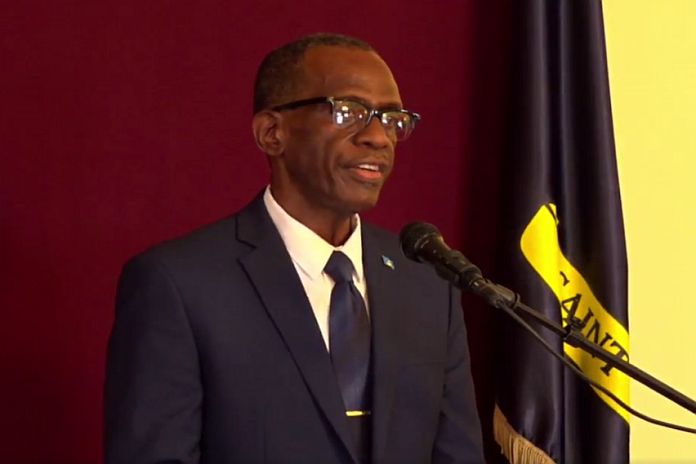
St. Lucia’s Tourism Minister, Dr. Ernest Hilaire

Tourism Minister Ernest Hilaire has insisted that the Government of Saint Lucia did not approve, sanction, or encourage Uber to operate on the island, as public debate intensifies over the ride-hailing company’s recent launch.

Speaking at Monday’s pre-Cabinet press briefing, Hilaire sought to distance the government from Uber’s entry into the local market, which began last week.

“I want to make it very clear that contrary to what you’ve been hearing, reading from various sources, that the government of Saint Lucia has not in any way approved, sanctioned, or encouraged Uber to operate any service in Saint Lucia,” Hilaire said.

Uber’s arrival has sparked widespread discussion across the island, with some residents welcoming the additional transportation option, while others warn that the platform could negatively impact the local taxi industry. Much of the criticism has been directed at the government, which Hilaire said was unfair.

The minister explained that Uber first contacted the government in December, expressing interest in operating in Saint Lucia. At the time, the company described itself as a technology platform facilitating transportation services from point A to point B. Government officials advised Uber that its proposal would need to be reviewed and discussed before any decision could be made.

According to Hilaire, Uber later sent a second letter stating that there was strong interest from local taxi associations and individual drivers. Despite this, the government maintained that broader consultations with stakeholders were required.

“So they were going to move ahead,” Hilaire said. “We again told them that we would want to discuss the matter with the stakeholders and with Uber itself.”

Hilaire said the government was informed last weekend that Uber intended to launch its service the following day, despite being advised not to proceed.

“We indicated to them that we were planning to meet with them to discuss the matter in detail and that they should not proceed,” he said, noting that meetings had already been scheduled with both Uber representatives and the National Taxi Union.

Describing Uber’s move as premature, Hilaire said the company acted before consultations could take place.

“I think Uber launched their service prematurely,” he said. “And I’m not saying prematurely meaning that they would have been given approval. Prematurely from the point of view that we indicated to them that we’d want to discuss their interest to operate in Saint Lucia because they wrote to us.”

Hilaire emphasized that foreign companies must respect national procedures when seeking to operate in Saint Lucia.

“If you say, I want to come to our country to set up a business, and we say to you, ‘well, let’s go through the process,’ you need to respect national processes,” he said. “We’re going to talk to our stakeholders. We’re going to review it, and we’ll have discussions.”

The tourism minister confirmed that meetings with Uber and the National Taxi Union are scheduled for later this week. He said the government is expected to outline its position on the matter following those discussions.

St. Lucia PM says no imminent withdrawal of medical students from Cuba

st lucia philip_pierre

St Lucia Prime Minister Philip J. Pierre said Monday that there are no plans to immediately withdraw St. Lucian medical students currently studying in Cuba, seeking to quell public concern sparked by his recent remarks on the impact of the United States’ embargo on the island.

Speaking at a Cabinet press briefing, Pierre told reporters that students enrolled in Cuban medical programmes will be allowed to continue their studies. “The students, those who are in Cuba, will continue to be in Cuba,” he said. “There’s no imminent withdrawal of students.”

Alarm had arisen after comments Pierre made last week during the Second World Congress on Racial and Ethnic Health Disparities, where he raised concerns about the long-term effects of the U.S. embargo on Cuba, including medical scholarship programmes that have trained generations of Caribbean doctors.

“Many of our doctors got trained in Cuba, and now the great United States said we can’t do that any longer,” Pierre said at the congress. “I have a major issue on my hands.”

Those remarks triggered widespread public reaction and anxiety among students and families, particularly given the importance of Cuban-trained doctors to Saint Lucia’s healthcare system.

Addressing the issue again on Monday, Pierre said his government is monitoring the situation closely and taking a proactive approach amid heightened geopolitical tensions. “As you know, with the whole embargo—last week President Trump declared Cuba a threat to American security—so we’re just being proactive,” he said.

The prime minister also acknowledged Saint Lucia’s efforts to maintain strong diplomatic relations with Washington while safeguarding national interests. “We are friends with the American government, we have an excellent relationship with them, we have to protect our students [and] our health services,” Pierre said. “It will be a tremendous loss to us if Cuban doctors can no longer come to Saint Lucia.”

Pierre noted that his administration is also examining alternative options to strengthen the country’s healthcare system should access to Cuban medical training or personnel become restricted.

“Saint Lucia will be exploring different possibilities—Nigeria, Ghana, Mexico, Brazil—all these countries we’re going to be approaching them to see how they can support us if push really comes to shove,” he said. “But the issue is now we have to prepare for the eventuality.”

MSF warns of surge in sexual violence in Port-au-Prince, Haiti

sexual violence in Port-au-Prince, Haiti

Sexual and gender-based violence has surged dramatically in Haiti’s capital over the past four years and is being used systematically to terrorize communities, particularly women and girls, according to a new report released last Wednesday by Médecins Sans Frontières (MSF).

The report, Sexual and Gender-Based Violence in Port-au-Prince, Haiti, documents a sharp rise in attacks since 2021, unfolding alongside the collapse of public infrastructure, worsening insecurity, and deteriorating living conditions across the city.

MSF says the number of survivors seeking care at its Pran Men’m clinic has nearly tripled, rising from an average of 95 admissions per month in 2021 to more than 250 per month in 2025.

“This shows how the explosion of violence in Haiti in recent years has had a direct impact on the bodies of women and girls in Port-au-Prince,” said Diana Manilla Arroyo, MSF’s head of mission in Haiti.

According to the report, women and girls of all ages are being targeted, with a growing number of survivors forcibly displaced from their homes — a condition that further exposes them to violence. Nearly one in five survivors treated at Pran Men’m reported experiencing multiple incidents of sexual and gender-based violence.

MSF also documented a disturbing escalation in the brutality of attacks. Since 2022, 57 percent of survivors receiving care reported being assaulted by members of armed groups, often in group attacks involving multiple perpetrators. More than 100 patients said they were assaulted by 10 or more perpetrators at once.

One 53-year-old survivor quoted in the report described being beaten and assaulted along with her family. “When I refused to sleep with them, they hit me and I fell,” she said. “After raping me, they raped my daughter and beat my husband.”

The report underscores severe gaps in services available to survivors beyond medical care. MSF says it is often unable to refer patients to essential non-medical support such as safe shelters, relocation options, or livelihood assistance — services that are critical for long-term recovery.

Survivors also face significant barriers to accessing care, including fear of stigma, financial hardship, insecurity, and lack of information. These delays have serious medical consequences. Since 2022, only one-third of survivors arrived at the Pran Men’m clinic within three days of their assault, the window during which HIV prevention treatment is effective. Additionally, 59 percent were unable to access care within five days to prevent unwanted pregnancy.

Against this backdrop, MSF highlighted recent efforts to strengthen sexual and reproductive health services, including the reopening of the Isaïe Jeanty Hospital in Chancerelles — the largest maternal health facility in Port-au-Prince — and the planned launch of a new MSF sexual and reproductive health project in the coming months.

The organization is calling for urgent, coordinated action by Haitian authorities, donors, United Nations agencies, and security actors to implement a survivor-centered response focused on long-term recovery.

“We call for expanded access to comprehensive medical and psychosocial care free of charge, which can only be achieved through a sustainable increase in funding for support services,” Manilla Arroyo said. She also urged recognition of the widespread and deliberate use of sexual violence by armed groups. “These are the challenges that must be addressed to empower survivors to regain control of their bodies and their lives.”

Girona are reviving in La Liga

In the 2023–2024 season, Girona delivered incredible results. Míchel Sánchez’s team finished third in La Liga and qualified for the Champions League. However, as expected, they were unable to maintain such a high pace, and the following season turned out to be disastrous. The team narrowly avoided relegation to the Segunda División and spent a long time this season in the relegation zone.

Even experienced analysts were not ready to confidently say that an accurate btts tips today bet would be a reliable prediction in Girona’s matches. But the last five games have shown that the team is literally rising from the ashes. Together with xGscore analysts, let’s try to take a closer look at the reasons behind this success — still local, but already noticeable — for the Catalan side.

Reasons for the Team’s Decline After a Successful Season

Girona are not a wealthy club. The transfer of Viktor Tsyhankov was the most expensive in the club’s history, yet he joined for only €5 million plus a sell-on clause. However, smart investments made it possible to sign quality players. After the successful season, the downturn occurred due to:

  • the sale of key players;
  • poor investment decisions;
  • weak performances across all lines, from defense to attack.

After the successful campaign, several first-team players left the club. Aleix García moved to Bayer 04, Yan Couto to Borussia Dortmund, Artem Dovbyk to Roma, and Savinho to Manchester City. The players signed as replacements failed to perform at the same level. Only Bryan Gil showed a style of play similar to Savinho’s. Miovski and Abel Ruiz together scored fewer goals than Dovbyk did in the season when he won the Pichichi Trophy. It was also impossible to properly replace Yan Couto to support Tsyhankov on the attacking flank.

But the biggest loss was Aleix García. The team is still searching for a new link between defense and attack, and so far Míchel Sánchez has not found such a player. And when you add defensive failures and the presence of decent but aging players (such as Daley Blind), it becomes difficult to count on success.

How Girona Managed to Restore Their Position in La Liga

At the start of the season, Girona were the worst team in the league. Major defensive lapses and defeats against teams of similar potential led to the club still trying to repair its statistics. However, the last five matches show that the team has overcome its crisis.

Success was achieved thanks to:

  • the signing of a quality striker;
  • improved defensive play;
  • the emergence of a leader and a positive team atmosphere.

In four matches in January 2026, the team earned as many points as they had collected in the entire 2025 part of the current season. This was largely due to the cooperation between Ukrainian attacking players Viktor Tsyhankov and Vanat. Both played together at Dynamo Kyiv and have excellent chemistry. Vanat is already the leader of the attack, and Girona have effectively struck gold for the second time with the signing of a Ukrainian forward.

Things are still not so positive in defense. Regular mistakes by the goalkeeper and central defenders continue to lead to defeats, such as the 0–3 loss to Atlético Madrid. However, after that, the team managed to keep clean sheets in two matches, which shows that they can compete against opponents of their own level.

Most importantly, the team now has a leader on the pitch who can guide his teammates. Many considered Viktor Tsyhankov to be that player after Stuani, but injuries plagued him during his first two years. Now he is the main driving force of the team, helping Girona rediscover their game. And Sánchez is once again celebrating victories on the touchline instead of worrying about being sacked.

Which Positions Need Reinforcement

Of course, there are positions in the team that require strengthening, first and foremost in defense. The goalkeeping position seems well staffed, but Gazzaniga regularly makes mistakes. Krapyvtsov is not yet ready for senior football, while Livaković is looking for a new club and refuses to take the field. A potential arrival of Ter Stegen could solve the issue by bringing in an experienced goalkeeper who is nearing the end of his career but could provide Girona with much-needed calm in the penalty area.

The club also needs to find a player capable of replacing Aleix García. Increasingly, rumors point to players from markets that Girona themselves have opened up for Spain. Former Dynamo Kyiv prospect Mykola Shaparenko has long been on their radar, and his contract with the Kyiv club is nearing its end. Who knows—perhaps the Ukrainian presence at the Catalan club will grow even stronger.

It would also be wise to think about signing a solid center-back. Krejčí’s loan move to Wolverhampton could help him become a leader of the back line in the future. Blind is not getting any younger and clearly needs a replacement. If these three positions are addressed, the team should be able to perform more consistently.

Conclusion

Of course, Girona are unlikely to reach the level of Spain’s top clubs this season. However, returning to the ranks of solid mid-table teams is well within their capabilities. And with smart reinforcements in key problem areas, they could cause plenty of trouble even for La Liga’s giants. Whether they will manage to do so remains unknown. But fans can follow their matches and build predictions together with xGscore analysts.


Nikki Beach and Ayre Group unveil branded residences in Antigua

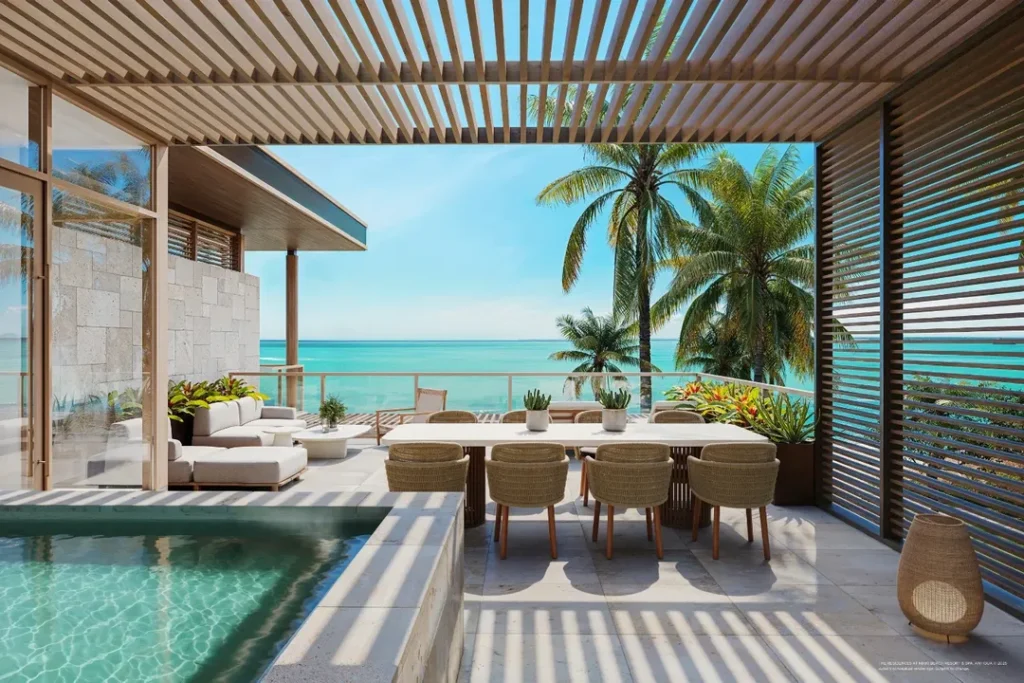
Antigua’s luxury real estate market is set for a major expansion with the unveiling of The Residences at Nikki Beach Resort & Spa Antigua, a USD $400 million branded development planned for the island’s Jolly Beach.

The project, a collaboration between Nikki Beach Hospitality Group and the Ayre Group, will mark the first Nikki Beach resort in the Western Hemisphere and Antigua’s first fully branded resort combining hospitality, real estate and lifestyle living. Residential sales are expected to launch in early 2026, with completion scheduled for the fourth quarter of 2029 and the resort opening planned for 2030.

Developed by White Sand Development Ltd., a subsidiary of the Ayre Group, the resort will include 84 hotel rooms and suites alongside 134 residences. These will comprise 127 branded studio to three-bedroom units and seven four-bedroom beachfront luxury villas. Branded residences are expected to start at USD $1.2 million, while beachfront villas will be priced from USD $5.5 million.

The project is being designed by HKS Architects, with interiors by ROAM Interior Design, and is located directly on Jolly Beach, one of Antigua’s most popular stretches of coastline. Developers say the residences will feature open-plan layouts, expansive terraces, smart home technology and eco-conscious design elements, with views of the sea and marina.

Amenities planned for the resort include direct beach access, oceanfront pools, a beach club with marina tender docking, multiple dining venues, an 11,000-square-foot spa and wellness centre, a private gym, owners’ lounge, children’s club and a teens’ space. Owners will also have access to the broader Nikki Beach lifestyle brand, which centers on music, dining, entertainment, fashion, film and art.

“This is more than premium real estate,” said Nikki Beach Hospitality Group co-founder and CEO Lucia Penrod. “It’s an invitation into a vibrant community and the iconic Nikki Beach lifestyle… a true celebration of life in paradise.”

Ayre Group founder Calvin Ayre described Jolly Beach as an ideal location for the brand’s Caribbean debut, noting Antigua’s international accessibility and reputation as a welcoming destination. Ayre, a naturalized citizen of Antigua and Barbuda, said the development is intended to appeal to lifestyle buyers seeking second homes as well as long-term investment opportunities.

The residences will also qualify under Antigua and Barbuda’s Citizenship by Investment Program, offering eligible buyers access to second citizenship with visa-free or visa-on-arrival travel to more than 150 countries.

Nikki Beach has previously developed branded residences in Dubai, with additional projects underway in Ras Al Khaimah, and future developments planned in Oman and Azerbaijan. The Antigua project is expected to build on that momentum as interest in Caribbean branded real estate continues to grow.

With its beachfront location, branded lifestyle offering and citizenship incentives, developers say the project positions Antigua as an increasingly competitive destination in the global luxury property market.

Kevin Lyttle to headline One Tamarac Multicultural Festival

Kevin Lyttle

International recording artist Kevin Lyttle will headline the City of Tamarac’s annual One Tamarac Multicultural Festival, set for Saturday, Feb. 7, at the Tamarac Sports Complex.

The free community event begins at 4 p.m. at 9901 NW 77th St. and is open to the public. Lyttle, best known for his global hit “Turn Me On,” is expected to cap off an evening celebrating cultural diversity through music, dance, food and family-friendly activities.

The festival will open with a high-energy welcome from host and local entrepreneur Ludil, followed by a Samba Carnival performance on the community stage and a cultural showcase by a flamenco dance troupe. Organizers say the program reflects the city’s commitment to highlighting a wide range of cultural traditions.

Beyond the stage, attendees can enjoy a family attraction zone featuring face painting, teacup and carousel rides, bounce houses and a rock-climbing wall.

This year’s festival will also introduce a sensory-friendly area designed to support children and families who may need a calmer environment. The designated space will offer a quieter setting away from loud music and large crowds, allowing children to relax and decompress. City officials said the initiative aims to make the festival more inclusive and accessible for families with sensory sensitivities or developmental differences.

The event will also feature a Cultural Shop Village with food trucks and artisan vendors, giving guests the opportunity to sample international cuisine and shop while enjoying live performances throughout the evening.

As night falls, a laser light show will close out the festival.

Admission to One Tamarac is free, but there will be no on-site parking at the Tamarac Sports Complex. Attendees must use the city’s free shuttle service, which will operate continuously from 3 to 9 p.m.

Shuttle pickup locations include:

  • Tamarac City Hall (Grenada Lot), 7525 NW 88th Ave.

  • Tamarac Community Center (Barbados Lot), 8501 W. Commercial Blvd.

  • Tamarac Recreation Center (Trinidad and Tobago Lot), 7501 N. University Dr.

The last shuttle drop-off at the Tamarac Sports Complex will be at 7:30 p.m., with return trips resuming at 8 p.m.

Why Keznamdi’s Grammy win matters — and what Jamaicans should know about the Grammys

Keznamdi

Congratulations to Keznamdi, who just won the Grammy Award for Best Reggae Album at the 68th Annual Grammy Awards in Los Angeles for his project Blxxd & Fyah.

The reggae category this year was a Jamaican showcase, with nominations for Lila Iké, Vybz Kartel, Mortimer, Jesse Royal, and Keznamdi, all representing different flavors of our music.

And yet, once again, the Grammy outcomes sparked heated debate among Jamaicans at home and in the diaspora, especially because our most popular local music today isn’t always what the Grammys choose to recognize.

Here’s the crucial truth behind that frustration: The Grammys are not decided by fans, charts, or streaming.

Many people assume the Grammy Awards reflect popularity or streaming success, but that’s not how it works.

The Grammys are run by the Recording Academy, a private nonprofit membership institution, and only approved voting members decide nominations and winners.

That means:

Fans do not vote.
Charts do not vote.
Streams do not determine the winner.
Sales alone don’t decide nominations.

Instead, artists are nominated and judged by industry professionals—peers, producers, engineers, songwriters, and experienced recording artists.

This is a peer recognition system, not a popularity contest.

How an artist gets on the Grammy ballot

Music does not automatically get considered simply by being popular in Jamaica or on global streaming platforms.

To be eligible:

  • A project must be officially released within the eligibility window.
  • It must be properly submitted by the artist, label, or representative.
  • All deadlines and category rules must be followed.

No submission means no ballot, even if the song or album is a local smash.

Unsigned or independent artists can be nominated, and Keznamdi is living proof. But missed deadlines, incomplete submissions, or a lack of industry navigation can halt recognition long before votes are cast.

Familiarity and visibility matter

While streaming figures don’t directly count, the members who vote are human, and they tend to recognize music that has:

Industry buzz.
Press attention.
Critical conversations among peers.

This doesn’t mean popularity in Jamaica alone will win a Grammy, but industry visibility and familiarity with voters certainly help.

Roots reggae vs. dancehall: why confusion happens

Many Jamaicans were puzzled again this year because the Grammy category is called Best Reggae Album, yet nominees span roots reggae, modern conscious styles, and even influences from dancehall culture.

That’s because the Recording Academy uses broad definitions of reggae.

Dancehall and trap, although born from reggae culture, are not given their own distinct Grammy category.

This creates confusion, especially when the music dominating our airwaves—dancehall and its subgenres—is not exactly the type of music Grammy voters tend to reward.

And that’s why I have long said: Dancehall deserves its own category.

Separating dancehall from reggae at the Grammys would better reflect the distinct musical identities we produce in Jamaica and avoid misunderstandings among international fans who hear “reggae” and expect more roots-oriented sounds.

Keznamdi’s win: a big moment for Jamaican music

Even though some Jamaicans might question the category, Keznamdi’s Grammy win is historic.

He beat out established names like:
Vybz Kartel
Jesse Royal
Lila Iké
Mortimer

to take home the top honor.

And that should make us proud, not disappointed.

Because while Jamaicans often talk about the Grammys as if it’s “their choice gone wrong,” the reality is this: winning a Grammy doesn’t mean you were the most streamed or the most popular at home. It means you succeeded within a specific, recognized industry system—and that’s a serious achievement.

This is a call for better industry awareness in Jamaica

We must help artists and managers understand:

How the Grammy submission process works.
How categories are defined.
How industry connections and visibility influence outcomes.

Talent alone is not enough.
Strategy matters.
Preparation matters.
Professional navigation matters.

Keznamdi’s success should inspire young Jamaican artists to pursue both creativity and industry intelligence.

Big up yourself, Keznamdi, and big up all Jamaican music—in every genre and every evolution.

Let’s celebrate our victories, understand the system, and continue pushing Jamaican music to the world with clarity and pride.

Grenada is one of the top Caribbean destination for romance and honeymoons

grenada

The tri-island state of Grenada, Carriacou and Petite Martinique is positioning itself as one of the Caribbean’s most compelling romantic destinations, offering couples a blend of seclusion, adventure, culture and cuisine against a backdrop of uncrowded beaches, lush landscapes and glowing sunsets.

Often referred to as the “Spice Isle,” Grenada’s appeal lies in its range of experiences, from intimate rainforest hikes and candlelit beachfront dining to private yacht charters and even underwater weddings. Whether couples are marking Valentine’s Day, a honeymoon or a milestone anniversary, the destination offers varied ways to celebrate love.

One of the more distinctive romantic experiences is exploring Grenada from the sea. As the gateway to the Grenadines, the island serves as an ideal starting point for private yacht charters, with calm waters, sheltered anchorages and easy sailing routes. Couples can spend their days snorkeling at Molinere Underwater Sculpture Park, anchoring near Grand Anse Beach or relaxing in Prickly Bay before returning to their vessel for sunset dinners on deck. Shore excursions add another layer to the experience, allowing visitors to tour cocoa estates, rum distilleries or local bars that reflect the island’s vibrant culture.

On land, shared adventure takes center stage at Grand Etang National Park. Located in Grenada’s mountainous interior, the protected rainforest offers trails ranging from gentle walks to more challenging hikes. Along the way, couples encounter tropical birds, frogs, lizards and the rare Mona monkey, with cool mountain air and sweeping views providing a tranquil contrast to the coastline. The park has become a popular choice for couples seeking meaningful, unplugged moments together.

For those drawn to quieter escapes, Carriacou offers a distinctly different pace. Accessible by a short flight or ferry ride, the island is known for its colorful streets, uncrowded beaches and laid-back charm. Couples can stroll through Hillsborough before heading out by boat to nearby uninhabited islets such as White Island, Sandy Island and Saline Island. These stops offer shallow turquoise waters ideal for snorkeling among coral gardens, turtles and reef fish. A highlight for many visitors is lunch at Tim’s, a boat-access-only beach bar tucked into a private cove and famed for its grilled lobster and rum punch.

Romance also finds expression through Grenada’s culinary scene. Aquarium Restaurant, set along Magazine Beach, is widely regarded as one of the island’s most atmospheric dining spots. By day it functions as a relaxed beachfront venue, but after dark it transforms into a candlelit retreat carved into the rockface, with waves breaking just feet from the tables. The menu emphasizes fresh seafood and Grenadian spices, and the restaurant’s layout allows for both intimacy and ocean views, making it a popular choice for sunset dinners and special occasions.

Perhaps Grenada’s most unusual romantic offering lies beneath the surface. At Grand Mal, just outside St. George’s, an underwater wedding chapel provides couples with the option of exchanging vows below the sea. The permanent installation features a sculpted archway and pews that accommodate up to six guests, creating an ethereal setting for intimate ceremonies or vow renewals. These underwater celebrations are often paired with broader island experiences, from boutique resort stays and sailing excursions to spice tours and beachfront dinners.

With its mix of natural beauty, cultural depth and unconventional experiences, Grenada and its sister islands continue to carve out a niche as a destination where romance takes many forms—both above and below the waterline.

From the Bronx to the big screen: Dante Hillmedo tells Caribbean diaspora stories rooted in community

Dante Hillmedo

In the Bronx, Caribbean culture is not a destination but a way of life. From block parties and basement studios to church halls and school auditoriums, the borough has long served as a hub for Jamaican, Trinidadian, Haitian, and wider West Indian communities building new lives while staying closely connected to home.

For Bronx-born filmmaker Dante Hillmedo, that environment shaped not only who he is, but how he tells stories.

Raised by Jamaican parents, Hillmedo grew up immersed in the sounds, discipline, and resilience of Caribbean immigrant life in New York City. Those influences are central to his work, which reflects experiences familiar to many Caribbean-American families, including single-parent households, financial pressure, cultural pride, and the quiet strength required to navigate two worlds at once.

Hillmedo’s journey into filmmaking mirrors that of many children of immigrants — marked by ambition, adaptability, and necessity. He enrolled at the School of Visual Arts with plans to become an animator, but financial challenges forced him to leave after his first year. Rather than abandon his creative path, he taught himself videography and secured his first paid opportunity through a Craigslist post, filming Caribbean DJ DJ Mad Out, an early step that embedded him in New York’s Caribbean creative ecosystem.

That entry point led to work with artists such as Shaggy, Ding Dong, and Kranium, allowing Hillmedo to document Caribbean culture from within the community. His visuals extended beyond performances, capturing movement, identity, and collective experience.

“My goal has always been to make people feel seen,” Hillmedo says. “Caribbean stories are layered. We come from strength, sacrifice, and survival. I want that truth to live on screen.”

Hillmedo now leads Team Elite Productions, a visual production company known for discretion, excellence, and cultural respect. His work has brought him into elite spaces, including documenting events for Michael Rubin and capturing moments connected to Jay-Z’s Shawn Carter Foundation, while remaining grounded in the Bronx communities that shaped him. He has also collaborated with outlets such as Essence Magazine, helping bridge mainstream platforms with diaspora-centered storytelling.

His most personal project to date is his debut feature film, Butterfly, which won Best Feature Film at the Big Apple Film Festival in Spring 2025. The film follows a teenage girl growing up in a single-parent immigrant household in New York City who uses dance to cope with identity, pressure, and instability. The story draws heavily from Hillmedo’s own upbringing and reflects the lived realities of many Caribbean-American youth navigating school, home, and self-discovery in the Bronx and beyond.

Rather than relying on spectacle, Butterfly centers emotional realism, focusing on quiet moments, generational tension, and creative expression as a form of survival. The narrative resonates with families across the Caribbean diaspora.

Beyond filmmaking, Hillmedo continues to invest in community development. He recently launched Lunessence, a luxury fragrance brand inspired by memory and mood, and has spent six years teaching film and music production at a Riverdale high school. There, he introduced students — many from Caribbean and immigrant backgrounds — to creative career paths often absent from traditional education pipelines.

As Butterfly prepares for wider distribution and Hillmedo expands his creative ventures, his work stands as an example of Bronx Caribbean excellence, demonstrating that stories rooted in immigrant households and local communities can reach far beyond borough lines without losing their core.

Reggae Month 2026 kicks off with Dennis Brown tributes and church service

Reggae Month officially began on Sunday, February 1, with a church service at the Fellowship Tabernacle on Fairfield Avenue, under the theme “Reggae … A Balm in Gilead”. The event highlighted the healing power of reggae music, particularly in the aftermath of Hurricane Melissa, with praise and worship sessions celebrating the genre’s enduring influence.

Delegations also paid tribute to the late Crown Prince of Reggae, Dennis Emmanuel Brown, at Heroes Park in Kingston, where he is buried. The evening saw a tribute concert at the Edna Manley College of the Visual and Performing Arts.

Sunday also marked the start of the Grounation series at the Institute of Jamaica Lecture Theatre and the Essence of Reggae Festival at the Ranny Williams Entertainment Centre in St. Andrew.

Other upcoming Reggae Month highlights include the annual Bob Marley Tribute Concert at Emancipation Park on Marley’s birthday, February 6, featuring a special appearance from his son, Stephen Marley. Minister of Culture, Gender, Entertainment and Sport Olivia Grange said, “He will be the featured Marley at the celebration, but the concert will [also] bring together overseas acts. They will be standing alongside our local talent in a powerful reminder that reggae is global, but its soul remains Jamaican.”

The younger generation of reggae musicians will be spotlighted at Young Reggae Ambassadors in Negril, Westmoreland, on February 24. Minister Grange emphasized the importance of promoting the next generation as more senior pioneers of Jamaican music pass on. Other activities in Western Jamaica include the Waves One Love Jerk Fest and MoBay Reggae Night in St. James.

Minister Grange noted the significance of the celebration, saying, “It comes at a time when half our country is rebuilding from the devastating hurricane and when we see so much trouble in the world. In all of this, it falls to our composers, our songwriters, singers, players of instruments, and also the soundman, to use their beautiful and powerful reggae music to bring us all together. Our reggae music is therapy. We turn to this music in the good and in the bad times.”

Dancehall Week, running from February 22 to March 1, will also form a key feature of Reggae Month.

The full schedule of activities is available on the free Reggae Jamaica App, downloadable from the App Store and Google Play Store.

Belize and Guyana sign MOUs to strengthen cooperation across key sectors

Belize and Guyana have signed a series of memoranda of understanding (MOUs) aimed at enhancing cooperation across defence, education, tourism, investment, and digital transformation, reaffirming the longstanding friendship and shared Caribbean values between the two nations.

The agreements were finalized as President Dr. Irfaan Ali concluded a three-day state visit to Belize on Tuesday. Officials said the MOUs reflect both governments’ commitment to peaceful collaboration, respect for sovereignty, and practical cooperation that benefits their citizens while promoting regional stability and development.

The MOUs establish broad frameworks for collaboration in areas including defence and security, education and skills development, tourism, economic engagement, and digital transformation. They are guided by principles of mutual respect, equality, reciprocity, and non-interference, and are aligned with both countries’ national laws and obligations under the Caribbean Community (Caricom).

In defence and security, Belize and Guyana agreed to enhance cooperation through capacity-building, information exchange, training, and dialogue to address shared challenges such as transnational organized crime, drug trafficking, terrorism, and other emerging threats. Officials emphasized that this cooperation is defensive, non-binding, and designed to strengthen institutional capabilities while supporting peace and stability across the Caribbean.

The education framework includes commitments to expand scholarships, academic exchanges, and skills development programs, including access to digital learning platforms, with the goal of deepening people-to-people ties and investing in human capital for future generations.

Tourism cooperation aims to promote joint initiatives, knowledge-sharing, multi-destination travel, and sustainable tourism development, while engaging the diaspora and supporting economic growth.

The MOUs also cover digital transformation and artificial intelligence, focusing on improving government efficiency, effectiveness, and implementation capacity. In addition, the two countries issued a Joint Statement of Intent to negotiate a Bilateral Investment Treaty, signaling readiness to begin formal discussions.

Officials stressed that the agreements express mutual intentions and are not legally binding. “All cooperation will be implemented gradually, transparently, and in accordance with available resources and national priorities,” the statement noted.

Belize also confirmed its intention to join the Global Biodiversity Alliance, launched by President Ali in July 2025. The alliance is an open, non-binding platform that seeks to expand financial opportunities and cooperation by raising awareness of the biodiversity crisis and its linkages to climate change.

French Senate approves Martinique’s bid for CARICOM associate membership

CARICOM Martinique
Chairman of Caricom and Prime Minister of Barbados Mia Mottley (left) and Serge Letchimy, president of the Executive Council of the Territorial Collectivity of Martinique, signing the accession agreement in Bridgetown

The French Senate has approved Martinique’s request to become an associate member of the Caribbean Community (CARICOM), following the island’s signing of the accession agreement at last year’s CARICOM summit in Barbados.

French officials stressed that the January 28 vote is not the final step in the process, as the agreement still requires examination and approval by the French National Assembly to complete the country’s legislative procedure. Nonetheless, the Senate’s widely supported decision sends a strong political signal in favor of closer ties between the 15-member regional bloc and the French Caribbean territories.

Created in 1973 under the Treaty of Chaguaramas, CARICOM brings together sovereign states and non-independent territories around common priorities including economic integration, mobility, climate resilience, public health, education, and cultural cooperation.

For French territories, relations with CARICOM have historically been limited to one-off partnerships or technical cooperation without an institutional framework. French authorities say Martinique’s accession as an associate member aims to formalize these ties.

Associate membership, reserved for non-sovereign territories, allows active participation in CARICOM programmes and initiatives but excludes sovereign powers, such as foreign policy decisions or voting rights on binding measures. French officials also emphasized that the accession does not alter Martinique’s status as a French collectivity or its position as an outermost region of the European Union.

“The Senate’s vote on January 28, 2026 opens a new phase for Martinique within CARICOM. The challenge now is to transform this institutional framework into tangible projects and useful cooperation for the territory and its stakeholders,” said Richès Karayib, a French-based media platform showcasing Caribbean culture, heritage, and tourism.

“Membership is not a symbolic achievement, but the starting point for regional participation that will be translated into action in the service of Martinique’s development and integration into the Caribbean,” the platform added.

Five Caribbean leaders honored with 2026 Anthony N. Sabga Excellence Awards

Anthony N. Sabga Excellence Awards

Five Caribbean leaders in science, civic work, entrepreneurship, and the arts have been named the 2026 recipients of the Anthony N. Sabga Caribbean Excellence Awards. The laureates are Professor Tannecia Stephenson, Dr Niven R. Narain, Shamelle Rice, Sheena Rose, and Dean Nevers.

The announcement was made from Port-of-Spain via video stream. Each award carries a local currency equivalent of $500,000 to support ongoing work that benefits the Caribbean region. The official awards ceremony will take place later this year.

Professor Tannecia Stephenson of Jamaica, a climate scientist and co-director of the Climate Studies Group at Mona, was recognized in the Science & Technology category. Her work focuses on regional climate change research and developing tools and digital platforms to support policy decisions across the Caribbean.

Dr Niven R. Narain, a Guyana-born American biotech innovator, also received an award in Science & Technology. Co-founder and president of a Boston-based biotechnology company, Dr Narain developed an artificial intelligence-powered drug discovery platform that has generated around 650 patents, over 100 scientific publications, and numerous global research partnerships.

Shamelle Rice, founder and director of Jabez House in Barbados, was honored for Public & Civic Contributions. Since 2012, her registered charity has provided vocational training, job placement, mental health support, housing, and basic needs assistance to women involved in sex work. The organization has supported more than 1,000 women across the Caribbean, many of whom are mothers.

Sheena Rose, a Barbadian visual artist, received the award in Arts & Letters. Her work spans painting, performance, murals, and mixed media, and has been shown in solo exhibitions in London, New York, Taiwan, and across the Caribbean. A 2014 Fulbright scholar, Rose has received a Distinguished Alumni Award from the University of North Carolina at Greensboro and mentors emerging artists from the region.

Dean Nevers, a Jamaican telecommunications engineer and founder and CEO of Konnex Services Ltd., was recognized in Entrepreneurship. The company provides telecom, renewable energy, and industrial network solutions across ten Caribbean territories and employs hundreds of people. Nevers has led the company from a net loss in its first year to annual revenues exceeding US$20 million and has received the Order of Distinction from the Government of Jamaica.

2026 Anthony N. Sabga Caribbean Excellence Award Laureates

  • Professor Tannecia Stephenson – Jamaica (Science & Technology)

  • Dr Niven R. Narain – Guyana / United States (Science & Technology)

  • Shamelle Rice – Barbados (Public & Civic Contributions)

  • Sheena Rose – Barbados (Arts & Letters)

  • Dean Nevers – Jamaica (Entrepreneurship)

St Vincent PM defends EC$1.5 million allocation for official residence repairs

Opposition suggests giving sailors temporary residence to attract more yachts to SVG

St Vincent and the Grenadines Prime Minister Dr Godwin Friday on Friday defended the EC$1.5 million (US$554,000) allocated in the national budget for repairs to the official residence of the prime minister, insisting the building poses serious safety risks, including fire hazards.

Wrapping up debate on the EC$1.9 billion (US$701.6 million) Estimates of Revenue and Expenditure, Friday — whose New Democratic Party (NDP) returned to office following the November 27 general election after nearly 25 years in opposition — said the residence’s roof, electrical system and guardrails were in a dangerous state.

Former Prime Minister Dr Ralph Gonsalves challenged the scale of the allocation, warning that the cost “is going to balloon.”

“I’m saying to the people of this country, when I left that house, it was liveable. It needed some repairs, but liveable,” Gonsalves told legislators.

Under the previous administration, EC$75,000 was allocated in 2022 for the “Enhancement of the Prime Minister’s Residence,” matching an allocation approved a year earlier. In 2023, a further EC$250,000 was set aside to undertake minor works and procure furniture, fittings and equipment, followed by allocations of EC$75,000 in 2024 and EC$65,000 in 2025. The project was expected to be completed in 2023 at an estimated total cost of EC$437,661.

Gonsalves also criticised the EC$600,000 allocated for the purchase of motor vehicles for the prime minister’s use, noting the vehicles would be imported duty-free but would cost approximately EC$1.3 million if duties were applied. He said the vehicles he used while in office were “perfectly functioning” and had “another couple of years going for them.”

In response, Friday said his predecessor was quick to criticise the residence repairs and the “so-called fleet of vehicles,” maintaining that the official residence was in a “horrible condition” and uninhabitable.

He said that shortly after winning the election, he visited the residence expecting only minor cosmetic work.

“I went there thinking that we’re going to do just some cosmetic work — to paint a little bit here and put some curtains and so forth, and change some linen and some upholstery,” Friday said. “But it’s quite clear that the place is not in a state to move in.”

Friday said a provisional budget was initially prepared for cosmetic repairs, but once the extent of the deterioration became clear, the state agency BRAGSA was called in to assess the property.

“I’m hearing now that all the galvanised sheeting on the roof has to be replaced because it is corroded, and in some places, it may actually be leaking,” he told lawmakers.

He added that the electrical system was deemed a fire hazard and would need to be fully replaced, and that the guardrails surrounding the building were rotting and dangerous.

Friday said while upgrades and remodelling could be considered, decisions were constrained by the building’s heritage status.

“This building is a heritage building,” he said. “This is something that the country should preserve and be proud of.”

He also raised concerns about a separate structure on the grounds used to house members of the prime minister’s security detail, saying conditions there were unacceptable. Friday said National Security Minister St Clair Leacock had observed similar conditions during visits to police stations across the country.

“They’re sleeping in bunks, four to a room,” Friday said. “I would not be comfortable sleeping in the prime minister’s residence knowing that the people who are supposed to be guarding the prime minister are sleeping in those conditions.”

As finance minister, Friday said limited time to prepare the budget contributed to the EC$1.5 million allocation.

“They put $1.5 million there. Initially, it was less than that. But I hope that it can be done for that. I hope it can be done for less,” he said, noting the extensive work required.

Friday stressed that responsibility for the project rests with BRAGSA and that the funds are not intended for personal benefit.

“This is ensuring that the building stays erect and that it’s safe,” he said, suggesting that long-term maintenance of the prime minister’s residence and Government House should fall under a dedicated institution rather than individual occupants.


Bahamas prime minister disappointed as nurses take industrial action

Bahamas PM Philip Davis

Bahamas Prime Minister Philip Brave Davis has expressed disappointment over industrial action taken by public healthcare nurses amid a dispute over unpaid overtime.

“You know, it’s disappointing. When I think of this government, this administration, and me in particular, recognising the value of nurses, recognising the sacrifices they make, and also recognising the fact that we are under siege by other jurisdictions to lure them away from their home jurisdiction,” Davis told reporters.

The overtime dispute intensified last week following an internal memo issued by the Public Hospitals Authority (PHA) on January 14. The memo advised staff that all overtime payments, effective from the January 2026 pay period, would require approval from the managing director’s office before being processed. Just over US$2 million is owed to nurses.

Union leaders have argued that the directive effectively blocked overtime payments and showed a lack of respect for healthcare workers already strained by staff shortages.

Davis said the overtime issue only recently came to his attention and that once informed, the government moved quickly to address it.

“Within that time, we made the arrangements to pay them,” he said, adding that it was unfortunate nurses reacted the way they did and that they should trust him and his administration.

PHA Deputy Financial Controller Ryan Bastian, who authored the memo, said the measure was necessary because the overtime budget had been exhausted as far back as September 2025.

Health and Wellness Minister Dr. Michael Darville questioned why the government had not been informed sooner that the PHA had run out of overtime funds, suggesting a breakdown in communication. He described the delay in payments as severe and said meetings have been held with PHA officials to resolve the issue.

Last Friday, Bahamas Nurses Union (BNU) President Muriel Lightbourne said public health nurses are “fed up and tired of being disrespected.”

“They (nurses) don’t trust PHA simply because they’ve been promising to do things and have not yet done it,” she said.

Authorities have also raised concerns about nurses leaving the country in search of better opportunities due to low wages. Both Lightbourne and Bahamas Public Service Union President Kimsley Ferguson have urged members not to work beyond their scheduled shifts until outstanding payments are made.

“The nurses’ resolve is that until they get their money, they will not go to work. That’s the resolve,” Lightbourne said.

Haitian-American Rep. Sheila Cherfilus-McCormick pleads not guilty to fraud charges

Sheila Cherfilus-McCormick

Haitian-American U.S. Rep. Sheila Cherfilus-McCormick (D-Fla.) pleaded not guilty on Monday to federal charges alleging she conspired to steal $5 million in federal disaster funds during the COVID-19 pandemic and diverted some of the money into her congressional campaign.

Cherfilus-McCormick’s attorney, William Barzee, informed the court of her plea through a docket filing and said the Florida congresswoman would waive her appearance at an arraignment scheduled for Tuesday. She faces 15 federal counts accusing her of retaining Federal Emergency Management Agency (FEMA) funds that were allegedly overpaid to her family’s healthcare company, Trinity Healthcare Services, where she previously served as CEO.

Prosecutors allege that Cherfilus-McCormick and her brother, Edwin Cherfilus, received the funds in July 2021 while Trinity Healthcare Services was working on a FEMA-funded staffing contract related to COVID-19 vaccination efforts. Rather than returning the overpayment, the siblings are accused of routing the money through multiple accounts to disguise its source and retain the funds.

According to the indictment, within two months of receiving the FEMA funds, more than $100,000 was used to purchase a 3-carat yellow diamond ring for the congresswoman.

The ring resurfaced in public discussion late last year after it appeared to have been edited out of a Christmas post shared on Cherfilus-McCormick’s X account, which featured her official congressional portrait.

When the charges were initially announced, Cherfilus-McCormick described them as an “unjust, baseless sham indictment.” She was released on a $60,000 bond after surrendering her passport.

If convicted, the congresswoman could face more than 50 years in prison, though first-time offenders are rarely sentenced to the maximum. Her brother could face up to 35 years in prison.

In addition to the criminal case, Cherfilus-McCormick is facing scrutiny from the Office of Congressional Ethics. The House Ethics Committee released a report last week stating that it found “substantial reason to believe” she violated multiple laws, regulations and standards of conduct.

According to the report, the committee’s investigative subcommittee is bringing charges related to campaign finance laws and regulations, criminal laws implicated by campaign finance misconduct, the Ethics in Government Act, the Code of Ethics for Government Service, and certain House rules.

“The ISC’s investigation has revealed substantial evidence of conduct consistent with the allegations in the indictment, as well as more extensive misconduct as laid out in the following Statement of Facts in Support of Alleged Violations related to violations of federal laws and regulations, as well as ethical standards,” the investigative subcommittee stated.

Attorney Michael Stroud, representing Cherfilus-McCormick in the ethics matter, asked the panel to pause its proceedings while the criminal case is ongoing and to dismiss the investigation, which began in June.

An adjudicatory subcommittee is scheduled to hold a hearing on the matter on March 5.

South Florida leaders welcome court ruling blocking end of TPS for Haitians

US extends TPS for Haitians in the country since November 6, 2022
(AP Photo/Charles Krupa, File)

South Florida leaders are welcoming a federal court ruling that blocked the U.S. government from revoking legal protections for Haitians enrolled in the Temporary Protected Status (TPS) program, granting relief to an estimated 350,000 immigrants who were set to lose deportation protections this week.

On Monday, U.S. District Court Judge Ana Reyes indefinitely paused the planned termination of Haiti’s TPS designation, explicitly barring the federal government from invalidating the legal status and work permits of current enrollees, as well as from arresting and deporting them.

In an opinion accompanying her order, Reyes sharply criticized Homeland Security Secretary Kristi Noem’s decision to end the TPS policy for Haitians, concluding that the action was “arbitrary and capricious” and in violation of the Administrative Procedures Act.

Following the ruling, Haitian-American North Miami Mayor Alix Desulme, Ed.D., said the decision brings relief to thousands of families living under prolonged uncertainty.

“Today’s court decision brings a deep sense of relief and hope to Haitian families who have been living under the weight of uncertainty,” Desulme said. “For more than 350,000 Haitians, Temporary Protected Status is not just a legal designation. It determines whether families can live with stability and hope or face constant fear and uncertainty about their futures.”

Desulme noted that conditions in Haiti remain dire, citing violence, political instability, and an ongoing humanitarian crisis.

“Haiti continues to endure extraordinary levels of violence, political turmoil, and humanitarian crisis,” he said. “Removing protections in the midst of these conditions would have caused real harm to families who have done nothing more than seek safety and contribute positively to the communities they call home.”

He also emphasized the contributions of Haitians to communities across the United States. “The Haitian community is resilient, hardworking, and deeply woven into the fabric of cities across this nation, including our own,” Desulme said. “This ruling affirms the importance of compassion, humanity, and fairness in our immigration policies.”

Miami Mayor Eileen Higgins also praised the ruling, highlighting the potential disruption that would have resulted from a sudden termination of TPS protections.

“I welcome and celebrate today’s court decision protecting Temporary Protected Status for Haitian families who have been living and working legally in our country,” Higgins said in a statement issued Monday. “A last-minute termination would have created unnecessary disruption for workers, employers, schools, and neighborhoods, and this ruling provides much-needed stability while the case moves forward.”

Higgins added that Miami’s identity is closely tied to its immigrant population. “Miami is a city of immigrants, built by immigrants, and our Haitian community is part of what makes our city strong,” she said.

The ruling temporarily preserves protections for Haitian TPS holders as legal challenges to the termination continue.

8 tips for creating the ultimate alfresco dining area

alfresco dining area

There is something undeniably magical about dining outdoors. Whether it’s a sunny brunch with family, a lazy afternoon barbecue, or a sophisticated dinner party under the stars, fresh air seems to make food taste better and conversation flow more freely. However, creating an outdoor space that is both functional and beautiful requires more than just dragging a table onto the patio. To truly elevate your experience, you need to curate an environment that rivals the comfort and style of your indoor dining room.

Transforming your backyard into an alfresco haven is about balancing aesthetics with practicality. You want a space that invites you to linger long after the meal is finished, yet is durable enough to withstand the elements. From choosing the right furniture to mastering the lighting, here are eight essential tips for designing the ultimate alfresco dining area.

1. Choose the Perfect Location

Before you purchase a single piece of furniture, consider the layout of your outdoor space. The ideal location for a dining area is usually close to the house, specifically near the indoor kitchen. This minimizes the distance you have to travel when carrying heavy platters of food, tableware, and drinks. If your yard allows, consider a spot that offers a mix of sun and shade or a pleasant view of the garden. Creating a seamless flow between indoor and outdoor living areas often involves using sliding glass doors or bi-fold doors that open the dining room directly onto the deck or patio.

2. Invest in High-Quality, Weather-Resistant Furniture

Durability is key when selecting outdoor furnishings. Your table and chairs will be exposed to sun, rain, and wind, so materials must be robust. Teak is a popular choice because it naturally repels water and resists rot, aging beautifully into a silvery-gray patina over time. Powder-coated aluminum is another excellent option; it is lightweight, rust-resistant, and modern. For seating, look for cushions made from high-performance outdoor fabrics that are fade-resistant and easy to clean. Comfort is paramount—if the chairs aren’t comfortable, your guests won’t want to stay seated for long.

3. Layer Your Lighting for Ambience

Lighting can make or break the atmosphere of your alfresco area. Once the sun goes down, you want a warm, inviting glow rather than harsh, bright floodlights. Adopt a layered approach similar to indoor lighting design. Start with overhead lighting, such as a statement pendant light weatherproofed for outdoors, hung from a pergola. Add ambient lighting with string lights draped across the ceiling or wrapped around trees to create a starry effect. Finally, use lanterns with LED candles or table lamps to provide soft, intimate task lighting on the dining surface itself.

4. Prioritize Shade and Shelter

To maximize the usability of your dining area, you must protect it from the elements. A blazing sun can make lunch unbearable, while an unexpected drizzle can ruin a dinner party. Permanent structures like pergolas or covered patios offer the best protection and help define the “room” within your garden. If a permanent structure isn’t feasible, high-quality cantilever umbrellas or retractable awnings offer flexibility, allowing you to chase the sun or hide from it as needed. Natural shade from large trees is also invaluable, providing a cooling canopy that lowers the ambient temperature.

5. Incorporate Heating for Year-Round Use

Don’t let the drop in temperature signal the end of alfresco season. Extending the usability of your outdoor space into the cooler months is easily achieved with the right heating solutions. Portable gas patio heaters are effective and easy to move, while electric strip heaters mounted on ceilings or walls provide efficient, directional heat. For a cozier, more rustic vibe, a fire pit or chiminea creates a natural gathering point. The flickering flames add a primal element of comfort that encourages guests to relax and stay warm well into the night.

6. Soften the Hardscapes with Greenery

Patio pavers and decking can feel stark without the softness of nature. Integrating plants into your dining area connects the space to the rest of the garden and creates a sense of enclosure and privacy. Use large potted plants to define the corners of the dining zone or create a green screen to block out neighbors. fragrant herbs like rosemary, basil, or jasmine not only smell wonderful but can also be used as fresh garnishes for your meals. Vertical gardens or trellis climbers are excellent for adding lushness to small spaces without taking up valuable floor area.

7. Create a Dedicated Cooking Zone

The ultimate alfresco experience bridges the gap between cooking and dining. If budget and space allow, an outdoor kitchen prevents the host from being stuck inside while guests enjoy the outdoors. This doesn’t necessarily mean a full stainless-steel setup; even a well-positioned BBQ grill with a dedicated prep table can suffice. Ensure you have ample counter space for plating up food and storage for grilling tools. Keeping a small outdoor fridge or beverage cooler nearby also keeps drinks cold and accessible, reducing foot traffic back into the house.

8. Consider Water Features for Tranquility

Sound plays a huge role in the ambiance of a space. The gentle sound of trickling water can mask traffic noise and create a serene, spa-like atmosphere. Whether it’s a small fountain, a pond, or a swimming pool, water adds a visual and auditory layer of relaxation. When integrating larger water elements like pools into your landscape design, it is crucial to consult with professionals who understand the local terrain and climate. For instance, many pool companies in Utah recommend designing the pool deck to transition naturally into the dining area, ensuring safety and aesthetic harmony. A well-placed water feature reflects light at night and adds a touch of luxury to your dining experience.

Conclusion

Creating an outdoor dining space is about extending your home’s footprint and embracing a lifestyle that values fresh air and good company. By thoughtfully considering layout, comfort, and ambiance, you can build a sanctuary that serves as the backdrop for countless memorable meals. Whether you are hosting a festive gathering or enjoying a quiet morning coffee, a well-designed alfresco area enriches your daily life and connects you with the natural world right outside your back door.


Rural living made easy: Essential tips for property owners

Rural living

Owning a rural property can be incredibly rewarding, offering space, privacy, and a connection to nature that urban living rarely provides. However, managing a country home or acreage comes with unique challenges. From maintaining large areas of land to handling weather-related issues, rural property ownership requires both preparation and practical know-how. Here are essential tips to make rural living easier and more enjoyable.

1. Prioritize Property Maintenance

Rural properties often come with larger areas to maintain, from lawns and pastures to driveways and fences. Establishing a regular maintenance schedule is key. Keep machinery like tractors and mowers in top shape, and inspect fences frequently to prevent livestock or wildlife from wandering. Even small tasks, like trimming trees or clearing brush, can prevent larger problems down the line.

When it comes to structures on your property, don’t overlook roofing. Metal roof panels, for instance, are an excellent choice for rural homes and barns. They are durable, resistant to harsh weather, and require less maintenance than traditional shingles, making them ideal for country living.

2. Understand Land Management

Owning rural land means understanding how to care for it properly. This includes soil management, water drainage, and vegetation control. Regularly test soil quality, especially if you plan to grow crops or maintain gardens. Creating a plan for managing pastures and controlling invasive plants helps keep your property productive and sustainable.

Water management is equally important. Consider installing rainwater collection systems or ponds to ensure you have a reliable water source, especially during dry periods. Proper irrigation and drainage systems prevent erosion and protect your land’s long-term value.

3. Secure Your Property

Rural areas often experience less frequent traffic, which can make security a concern. Installing perimeter fencing, motion-sensor lighting, and even security cameras can help protect your home and livestock. Additionally, maintaining clear sightlines by trimming trees and bushes around your property reduces hiding spots for intruders.

If you have outbuildings or storage sheds, make sure they are securely locked and that keys or access codes are well managed. For larger properties, consider establishing a neighborhood watch or keeping in touch with local law enforcement to stay informed about rural security concerns.

4. Prepare for Emergencies

Living in rural areas often means longer response times for emergency services. Being self-reliant is crucial. Keep first aid kits, fire extinguishers, and emergency supplies on hand. Develop a communication plan with neighbors and ensure that your vehicles are well-maintained in case you need to travel during adverse weather.

Weather-proofing your property is also essential. Reinforce structures to withstand strong winds, heavy snow, or flooding. Regularly check drainage systems and roofs to prevent water damage, and make sure outdoor equipment is securely stored.

5. Embrace Sustainable Practices

Sustainability is especially important for rural property owners. Consider renewable energy options like solar panels or small wind turbines to reduce utility costs. Composting, rainwater collection, and responsible livestock management all contribute to a healthier property and environment.

Sustainable practices also help reduce long-term maintenance. For instance, planting native trees and vegetation prevents erosion and provides natural windbreaks, while responsible grazing practices preserve soil quality.

6. Connect With the Community

Rural living doesn’t have to mean isolation. Connecting with neighbors and local communities can provide support, advice, and resources. Join local agricultural groups, attend community events, or participate in online forums for rural property owners. Networking with others in similar situations can help you stay informed about best practices and local regulations.

Owning a rural property offers freedom and a unique lifestyle, but it comes with responsibilities. By focusing on maintenance, land management, security, emergency preparedness, sustainability, and community engagement, you can make rural living both manageable and rewarding. With a proactive approach and the right knowledge, your rural property can remain a safe, productive, and enjoyable haven for years to come.


Jamaica’s Health Ministry urges precautions as cold front continues this week

Jamaica’s Ministry of Health and Wellness is urging the public to take precautionary measures as the island experiences high winds and cooler temperatures associated with a cold front positioned west of the island.

In a media release, the ministry warned that strong winds could result in flying objects and debris, increasing the risk of injury. Residents are being advised to limit outdoor activity and exercise caution when carrying out repairs.

The ministry also cautioned that cooler temperatures may adversely affect vulnerable groups, including the elderly and individuals living with sickle cell disease, as Jamaica continues to experience its influenza season.

“Persons are asked to wear appropriate clothing that will regulate body temperature while also safeguarding against viral illnesses. The flu vaccine is also available free of cost at health centres across the island,” the ministry said.

Members of the public were also advised to exercise care when using generators. According to the ministry, generators should not be operated indoors or in enclosed spaces and must be placed at a safe distance from buildings due to engine heat. Residents were also urged to avoid using appliances with heating elements, such as toasters or hair dryers, while operating on generator power.

The ministry further reminded users to select outlets with the correct voltage, noting that some generators produce 115/120 volts while others generate 220 volts. Individuals who become ill or injured were encouraged to seek medical attention at the nearest health centre or consult a private doctor.

Meanwhile, the Meteorological Service of Jamaica is forecasting continued cool temperatures and strong winds as the cold front remains west of the island. The weather service said conditions are expected to persist islandwide through Tuesday, with very strong winds affecting northern and south-western parishes, as well as hilly areas.

On Wednesday, isolated morning showers are forecast for sections of northern parishes, while conditions elsewhere are expected to remain mostly cloudy, with increased cloud cover and scattered showers across central and western parishes in the afternoon.

By Thursday, the Meteorological Service expects mostly cloudy afternoon and evening conditions, along with scattered showers and thunderstorms across sections of most parishes. The agency said it will continue to monitor the system and provide updates as necessary.

Miami-Dade Sheriff’s Office launches Distracted Driving Safety Program

The Miami-Dade Sheriff’s Office has launched a Distracted Driving Safety Program aimed at reducing traffic crashes caused by careless and distracted driving, officials announced Monday.

Careless driving—including behaviors such as texting, eating, or interacting with in-vehicle systems—has been identified as the most common cause of traffic crashes in Miami-Dade County. According to the Florida Department of Transportation, Florida recorded 48,537 motor vehicle crashes involving distracted driving in 2021, resulting in 2,756 serious injuries and 308 fatalities.

To address the issue, the Florida Department of Transportation initiated the “Put It Down” Distracted Driving Campaign, which focuses on public education and awareness to promote safer driving practices statewide.

In support of those efforts, the Miami-Dade Sheriff’s Office Motorcycle Units will conduct specialized enforcement operations throughout the county to educate motorists and enforce distracted driving violations. Enforcement locations will be determined using data-driven crash and violation statistics.

Florida law allows officers to stop and cite drivers for certain distracted driving behaviors. Under Section 316.305 of the Florida Statutes, law enforcement may issue citations to motorists who are texting and driving. The law prohibits manually typing or entering multiple letters, numbers, or symbols into a wireless communications device for texting, emailing, or instant messaging while operating a motor vehicle.

Additionally, Section 316.306 of the Florida Statutes prohibits the use of handheld wireless communications devices in designated school zones, school crossings, and active work zones. An active work zone is defined as an area where construction personnel are present or equipment is being operated on or adjacent to the roadway.

The Distracted Driving Safety Program will run from February 2, 2026, through September 30, 2026. Enforcement efforts officially began at 7 a.m. on February 2 and will continue across various areas of Miami-Dade County.

Officials say the initiative is intended to improve roadway safety and reduce preventable injuries and fatalities linked to distracted driving.

Nearly 1,000 seek shelter as Broward County extends cold weather housing

Broward County officials have extended cold weather emergency shelter operations through Friday night, February 6, 2026, as South Florida continues to experience unusually low temperatures.

The Broward County Housing Options, Solutions, and Supports Division (HOSS-D), working alongside local community partners, will continue nightly sheltering for individuals and families experiencing homelessness. Since Monday, January 26, a total of 984 people have been sheltered overnight, with an average of 140 individuals housed per night.

Homeless individuals seeking shelter are advised to report daily to The Salvation Army in Fort Lauderdale for placement beginning at 5:30 p.m. Dinner will be available at 4:30 p.m., though participation is optional. Shelter beds are provided on a first-come, first-served basis, and space is limited.

Shelter location:

The Salvation Army
1445 W. Broward Blvd.
Fort Lauderdale, FL 33312

County officials are urging residents to notify homeless individuals in their communities about the available shelter options.

According to the National Weather Service, a Freeze Warning and Cold Weather Advisory remain in effect for parts of South Florida through 9 a.m. Tuesday. Forecasters warned of sub-freezing temperatures as low as 30 degrees, with wind chills reaching 25 degrees in some inland areas of Broward, Palm Beach, Glades, Hendry and inland Collier counties. Prolonged exposure to these conditions can lead to hypothermia, while frost and freeze conditions may damage crops, sensitive vegetation and unprotected outdoor plumbing.

The region has been experiencing historic low temperatures since last week. At Miami International Airport, temperatures dropped to 38 degrees early Monday morning, narrowly missing the all-time record low of 35 degrees set on February 2, 1942, according to National Weather Service meteorologist Will Redman. Broward County recorded a new low of 36 degrees at Fort Lauderdale-Hollywood International Airport, breaking the previous record of 38 degrees set in 1942 and 1979. Palm Beach International Airport shattered its previous record of 37 degrees, set in 1912 and 1979, with a low of 30 degrees.

While conditions are expected to gradually warm, forecasters say cold mornings are not over. Miami is expected to wake up to 43 degrees Tuesday morning, with a forecast high of 66 degrees. Wednesday morning lows are expected to range from 57 to 60 degrees, with afternoon highs reaching 73. Temperatures are expected to dip again late in the week as another cold front approaches.

“We’re looking at morning temperatures in the 40s again by Friday,” Redman said, noting that wind chills could reach as low as 42 degrees early Friday morning. Weekend forecasts call for morning lows in the upper 40s to 50s, with afternoon highs near 72 degrees.

County officials noted that cold weather emergency shelter nights may be canceled or extended depending on updated forecasts.