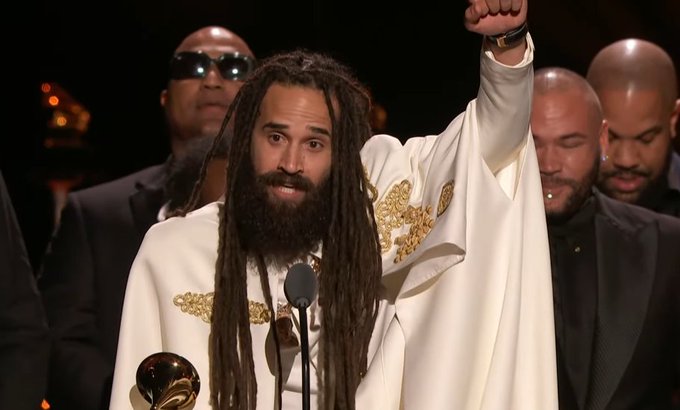
Congratulations to Keznamdi, who just won the Grammy Award for Best Reggae Album at the 68th Annual Grammy Awards in Los Angeles for his project Blxxd & Fyah.
The reggae category this year was a Jamaican showcase, with nominations for Lila Iké, Vybz Kartel, Mortimer, Jesse Royal, and Keznamdi, all representing different flavors of our music.
And yet, once again, the Grammy outcomes sparked heated debate among Jamaicans at home and in the diaspora, especially because our most popular local music today isn’t always what the Grammys choose to recognize.

Here’s the crucial truth behind that frustration: The Grammys are not decided by fans, charts, or streaming.
Many people assume the Grammy Awards reflect popularity or streaming success, but that’s not how it works.
The Grammys are run by the Recording Academy, a private nonprofit membership institution, and only approved voting members decide nominations and winners.
That means:
Fans do not vote.
Charts do not vote.
Streams do not determine the winner.
Sales alone don’t decide nominations.
Instead, artists are nominated and judged by industry professionals—peers, producers, engineers, songwriters, and experienced recording artists.

This is a peer recognition system, not a popularity contest.
How an artist gets on the Grammy ballot
Music does not automatically get considered simply by being popular in Jamaica or on global streaming platforms.
To be eligible:
- A project must be officially released within the eligibility window.
- It must be properly submitted by the artist, label, or representative.
- All deadlines and category rules must be followed.
No submission means no ballot, even if the song or album is a local smash.
Unsigned or independent artists can be nominated, and Keznamdi is living proof. But missed deadlines, incomplete submissions, or a lack of industry navigation can halt recognition long before votes are cast.
Familiarity and visibility matter
While streaming figures don’t directly count, the members who vote are human, and they tend to recognize music that has:
Industry buzz.
Press attention.
Critical conversations among peers.
This doesn’t mean popularity in Jamaica alone will win a Grammy, but industry visibility and familiarity with voters certainly help.
Roots reggae vs. dancehall: why confusion happens
Many Jamaicans were puzzled again this year because the Grammy category is called Best Reggae Album, yet nominees span roots reggae, modern conscious styles, and even influences from dancehall culture.
That’s because the Recording Academy uses broad definitions of reggae.
Dancehall and trap, although born from reggae culture, are not given their own distinct Grammy category.
This creates confusion, especially when the music dominating our airwaves—dancehall and its subgenres—is not exactly the type of music Grammy voters tend to reward.
And that’s why I have long said: Dancehall deserves its own category.
Separating dancehall from reggae at the Grammys would better reflect the distinct musical identities we produce in Jamaica and avoid misunderstandings among international fans who hear “reggae” and expect more roots-oriented sounds.
Keznamdi’s win: a big moment for Jamaican music
Even though some Jamaicans might question the category, Keznamdi’s Grammy win is historic.
He beat out established names like:
Vybz Kartel
Jesse Royal
Lila Iké
Mortimer
to take home the top honor.
And that should make us proud, not disappointed.
Because while Jamaicans often talk about the Grammys as if it’s “their choice gone wrong,” the reality is this: winning a Grammy doesn’t mean you were the most streamed or the most popular at home. It means you succeeded within a specific, recognized industry system—and that’s a serious achievement.
This is a call for better industry awareness in Jamaica
We must help artists and managers understand:
How the Grammy submission process works.
How categories are defined.
How industry connections and visibility influence outcomes.
Talent alone is not enough.
Strategy matters.
Preparation matters.
Professional navigation matters.
Keznamdi’s success should inspire young Jamaican artists to pursue both creativity and industry intelligence.
Big up yourself, Keznamdi, and big up all Jamaican music—in every genre and every evolution.
Let’s celebrate our victories, understand the system, and continue pushing Jamaican music to the world with clarity and pride.