Home Blog Page 8

Canada, Guyana leaders discuss trade and investment opportunities in Toronto

President Irfaan Ali met with Canada’s Prime Minister Mark Carney on the margins of the Canada 2020 Global Progress Summit, at the Royal York Hotel, in Toronto. 8 May 2026. (Photo by Daniel Pereira Office of the Prime Minister of Canada)

The Government of Canada says Prime Minister Mark Carney met with Guyana President Mohamed Irfaan Ali in Toronto on Friday, where both leaders underscored the strong relationship between the two countries.

In a statement, the Canadian government said the relationship is reinforced by more than 100,000 Canadians of Guyanese ancestry.

It also described Guyana as one of Canada’s largest trading partners within the Caribbean Community.

“The leaders discussed Canada’s role as a reliable trade and investment partner, and opportunities to increase Canadian investment in Guyana in a range of sectors, including energy, technology, agriculture, and mining,” the statement said.

According to the Canadian government, Carney also conveyed best wishes for the Canada-Guyana Chamber of Commerce’s Business Forum currently taking place in Toronto to mark Guyana’s 60th anniversary of independence and diplomatic relations with Canada.

“The prime minister looks forward to visiting Guyana in the future,” the statement added. “The prime minister and the president agreed to remain in close contact.”

The Canadian government said the two countries enjoy a close relationship built on more than 50 years of people-to-people ties, trade connections, development cooperation and security partnerships.

Canada opened its High Commission in Georgetown in March 1964 and formally established diplomatic relations with Guyana following the country’s independence in May 1966.

“There is a vibrant Diaspora with close to 100,000 Canadian-Guyanese citizens who call Canada home,” the statement said.

It added that educational ties continue to strengthen relations between the two countries, with hundreds of Guyanese students choosing to study in Canada each year.

The Canadian government also noted that Canada continues to support capacity-building efforts in Guyana through technical assistance provided by Canadian experts to various institutions.

Guyana is represented in Canada through the High Commission of Guyana in Ottawa and a consulate in Toronto.

Four convicted in plot to assassinate Haitian President Jovenel Moïse

Protests in Haiti against budget

A federal jury in Miami has convicted four men for their roles in the July 7, 2021, assassination of Haitian President Jovenel Moïse.

The United States Department of Justice said Friday that Arcangel Pretel Ortiz, Antonio Intriago, Walter Veintemilla, and James Solages were convicted on multiple charges linked to the conspiracy to overthrow and assassinate the Haitian leader.

The convictions include conspiracy to provide material support for acts resulting in death, conspiracy to kill and kidnap a person outside the United States, conspiracy to commit offences against the United States, and expedition against a friendly nation. Intriago was also convicted on additional charges related to smuggling goods from the United States and submitting false export information.

According to prosecutors, the defendants conspired to replace Moïse with a handpicked successor in order to secure lucrative government contracts in Haiti.

“This verdict delivers justice for the assassination of President Jovenel Moïse and holds accountable those who helped turn South Florida into a staging ground for a deadly foreign plot,” said Jason A. Reding Quiñones.

Court records and evidence presented during trial showed that the conspiracy began in early 2021 and involved the recruitment of allies in the United States, Colombia and Haiti, including 22 former Colombian soldiers and Haitian gang leaders.

The Justice Department said the conspirators developed multiple plans between April and July 2021 to kidnap or kill Moïse. One failed plan involved abducting him at his sister’s home and forcing him to resign after drugging him. Another focused on kidnapping him upon his return from an international trip in June 2021.

When those efforts failed, prosecutors said the group decided to launch a direct attack on the president’s residence.

On July 7, 2021, Solages and a team of Colombian mercenaries carried out the assault on Moïse’s home with support from Haitian accomplices.

During the attack, former Colombian special forces soldiers stormed the residence, fatally shooting Moïse in his bedroom and seriously wounding First Lady Martine Moïse.

Trial evidence showed that bullets recovered from both President Moïse and the First Lady matched a rifle used by members of the Colombian assault team.

Federal prosecutors said extensive digital communications presented at trial demonstrated that the defendants spent months coordinating plans to kidnap or kill the Haitian president.

The court heard that Veintemilla played a major role in financing the operation through a US$175,000 loan agreement funded with proceeds tied to CARES Act Paycheck Protection Program and Economic Injury Disaster Loans.

Pretel Ortiz, who allegedly referred to himself as “Colonel Gabriel” and wore fake U.S. military-style uniforms and insignia, was accused of directing tactical operations and coordinating with the Colombian mercenaries.

Intriago was described as handling payroll, equipment and logistical support, including the smuggling of bulletproof vests and tactical gear from Miami to Haiti before the assassination.

Solages, prosecutors said, acted as the main liaison in Haiti, coordinating with gang leaders, obtaining weapons and conducting surveillance on Moïse’s residence.

All four men face maximum sentences of life imprisonment. Sentencing will be determined by U.S. District Judge Jacqueline Becerra after consideration of federal sentencing guidelines and other statutory factors.

The investigation was led by the Federal Bureau of Investigation and Homeland Security Investigations, with assistance from several U.S. government agencies.

CARPHA says hantavirus risk to Caribbean remains low after cruise ship cluster

Hantavirus

The Caribbean Public Health Agency is urging vigilance across the region following reports of a hantavirus cluster aboard a cruise ship, while maintaining that the overall risk to the Caribbean remains low.

In a statement issued Tuesday from Port of Spain, CARPHA said it was alerted on May 3 through its Information Environment and Monitoring platform after the World Health Organization was notified of a cluster of respiratory illness affecting passengers and crew aboard a cruise ship in the Central Atlantic Ocean.

According to WHO, laboratory confirmation of hantavirus was identified in one critically ill patient.

As of May 6, WHO reported eight cases linked to the cluster, including three confirmed cases, five suspected cases and three deaths.

Hantaviruses infect rodents and can be transmitted to humans through contact with contaminated urine, droppings or saliva.

CARPHA Executive Director Lisa Indar said the current threat level for the Caribbean remains limited.

“At this time, the risk to the Caribbean region is considered low. In the Americas, hantaviruses are most commonly transmitted by wild field rodents rather than urban rat populations, where transmission is less likely,” Indar stated.

She also noted that although human-to-human transmission is possible, it is considered rare.

CARPHA said the advisory comes as the Caribbean continues to maintain its position as the world’s leading cruise destination, accounting for approximately 44 per cent of global cruise traffic and an estimated 16.3 million passengers in 2025.

The regional public health body is encouraging member states to remain vigilant and strengthen vessel surveillance systems and public health protocols, particularly at ports of entry.

CARPHA said it will continue supporting safer tourism across the region through enhanced surveillance systems, including the Tourism and Health Information System (THiS) and the Caribbean Vessel Surveillance System (CVSS).

“These systems enable timely information sharing, strengthen decision-making, and support rapid, targeted responses by national health authorities,” Indar said.

According to CARPHA, the CVSS has already shown success in detecting syndromic cases before ships arrive at Caribbean ports, with more than 96 per cent of cruise ship alerts being reported to member states within 24 hours.

The agency said it will continue monitoring the situation closely alongside regional and international partners and will issue updates as necessary.

Saint Lucia hosts Caribbean Investment Summit amid focus on CBI future

Caribbean Investment Summit

Saint Lucia is hosting the 2026 Caribbean Investment Summit (CIS26) from May 6-9, bringing together regional leaders, Citizenship by Investment (CBI) officials, development banks, global investors and industry stakeholders for discussions on the future of investment migration and regional economic development.

According to the Office of the Prime Minister, the summit places Saint Lucia at the centre of key discussions on Citizenship by Investment programmes as small island developing states navigate a changing global regulatory environment.

The event has brought together Heads of Government from CBI territories, CBI chief executive officers and programme directors, as well as representatives from international financial institutions and the private sector.

On Wednesday, Prime Minister Philip J. Pierre and Minister for Tourism, Commerce, Investment, Creative Industries, Culture and Heritage, Ernest Hilaire, delivered remarks during the Leadership Forum at Secrets Resort.

Their presentations positioned CBI programmes as important tools for sustainable development and economic diversification.

Prime Minister Pierre said Citizenship by Investment programmes must continue delivering tangible benefits for the people of Saint Lucia by supporting employment, infrastructure development and economic opportunities across communities.

He also stressed the importance of maintaining strong regulatory standards while ensuring small island developing states have access to development financing.

On May 7, Pierre joined fellow Heads of Government from CBI territories, including Grenada and Saint Kitts and Nevis, for a high-level panel discussion at Royalton Resort moderated by Didicus Jules, director general of the Organisation of Eastern Caribbean States.

During the discussion, Pierre addressed tightening international regulatory requirements and the challenges facing small island economies, including limited access to concessional financing.

He said regional governments must strike a balance between meeting governance expectations and sustaining development initiatives.

The Prime Minister also called for CBI programmes to be viewed within a broader development financing framework while advocating for a more strategic approach to how such programmes are represented internationally.

Held under the theme “The Convergence Advantage in Global Capital and Mobility,” CIS26 is examining issues related to capital flows, regulatory compliance and competitiveness, including harmonisation of regional frameworks and alignment with standards in the United States, United Kingdom and European Union.

The summit is also exploring how investment migration is evolving beyond traditional passport programmes, with greater emphasis on wealth management strategies such as estate planning, asset protection and multi-jurisdictional portfolio structuring.

The three-day event features keynote addresses, expert panels and technical discussions focused on regulatory reform, geopolitical risk, financial system integrity and the use of emerging technologies in due diligence and border security.

The summit is scheduled to conclude with a closing ceremony featuring industry reflections, awards presentations and the announcement of the host country for CIS27.

According to the Saint Lucian government, CIS26 serves as an important platform to strengthen regional cooperation, reinforce international credibility and ensure investment migration programmes continue supporting sustainable national development.

CARICOM, Spain sign agreement to strengthen regional health sector

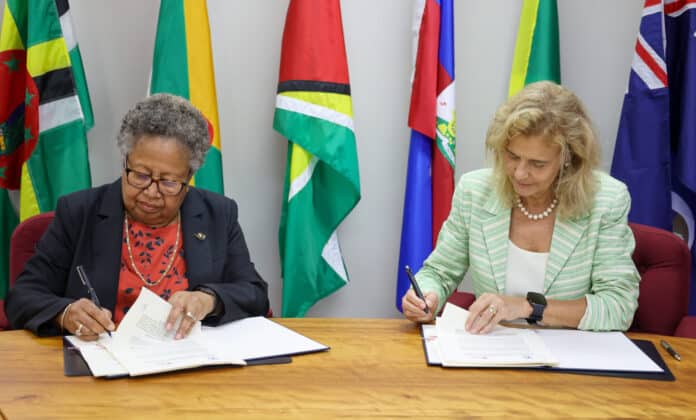
The regional health sector is set to receive a major boost following the signing of a new cooperation agreement between the Caribbean Community and the Government of Spain.

The agreement formalises Spain’s €400,000 contribution toward the project “Strengthening Regional Leadership, Governance and Coordinated Action in Health to Address New and Existing Health Challenges in the Caribbean Community (CARICOM),” which is being implemented by the CARICOM Secretariat and the Caribbean Public Health Agency.

The agreement was signed on Wednesday, May 6, by CARICOM Secretary-General Dr. Carla Barnett and Spain’s Ambassador to CARICOM, María Cristina Pérez Gutiérrez, during the Tenth Meeting of the Joint Technical Committee of the CARICOM-Spain Joint Fund for Scientific and Technical Cooperation.

In opening remarks, Assistant Secretary-General in the Foreign and Community Relations Directorate, Elizabeth Solomon, underscored the importance of the CARICOM-Spain partnership.

“The CARICOM-Spain Joint Fund continues to play an important role in advancing regional priorities through cooperation that has evolved into a results-oriented programme of support that is both practical and responsive, delivering tangible benefits to the people of the Caribbean Community,” Solomon said.

Pérez Gutiérrez also reaffirmed Spain’s commitment to regional cooperation.

“Spain values its partnership with CARICOM and remains committed to supporting initiatives that strengthen resilience, sustainability and regional cooperation,” she stated.

The Joint Technical Committee also considered two new regional project proposals valued at a combined US$700,000.

The first proposal, titled “Greening Caribbean Ports Programme (GCPP): Advancing Sustainable Maritime Infrastructure in Caribbean Small Island Developing States,” is expected to be implemented by the Caribbean Centre for Renewable Energy and Energy Efficiency and the Port Management Association of the Caribbean.

The second proposal, “Strengthening the Caribbean Emergency Response Capabilities through the Next Level Regional Response Mechanism (RRM),” is expected to be implemented by the Caribbean Disaster Emergency Management Agency.

Both sides reaffirmed that the CARICOM-Spain Joint Fund remains an important mechanism for supporting priority regional initiatives and strengthening technical cooperation between CARICOM and Spain.

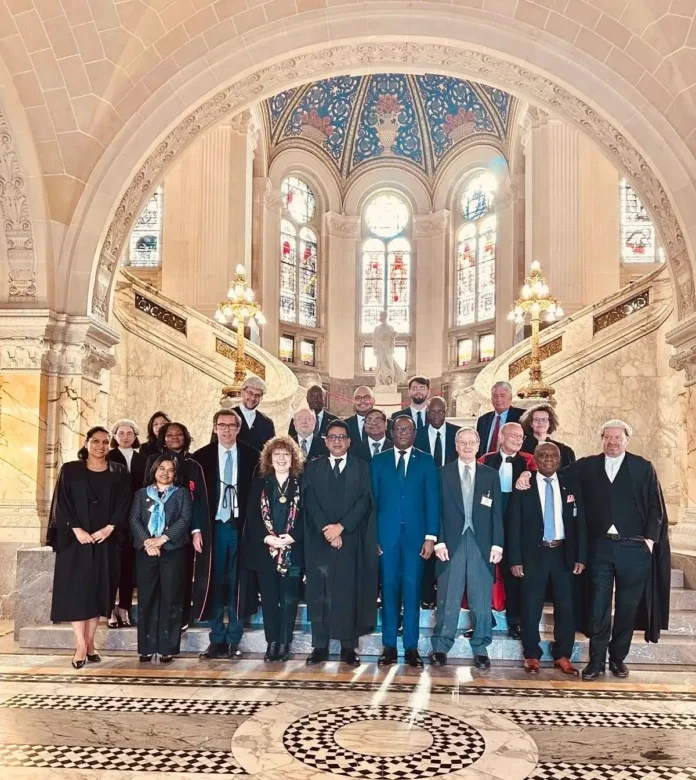
Guyana urges ICJ to issue clear ruling in border controversy with Venezuela

Guyana-Venezuela border

Guyana Attorney General Anil Nandlall on Friday urged the International Court of Justice to issue a clear, explicit and unambiguous judgment in the long-running Guyana-Venezuela border controversy, warning that any ambiguity could allow Venezuela to continue challenging Guyana’s sovereignty over the Essequibo region.

Speaking during Guyana’s final oral submissions before the court, Nandlall rejected Venezuela’s arguments, saying they were legally unfounded, historically inaccurate, and inconsistent with international law and past conduct.

Nandlall told the court the controversy carries an “existential quality” for Guyana, stressing that Venezuela’s longstanding claim to more than 70 per cent of Guyana’s territory has placed generations of Guyanese under what he described as a “long and threatening shadow.”

He said the impact of the controversy on Guyana’s development, security, and prosperity could not be overstated, adding that the country would effectively cease to exist in its current form if the claim were upheld.

Emphasising Guyana’s reliance on international law, the Attorney General said the country’s approach to the case is rooted in a deep institutional and national commitment to the rule of law.

“International law is the bedrock of the international order,” he stated, describing it as the foundation for peaceful relations between states and a core national principle for Guyana.

He added that Guyana entered the proceedings in 2018 with full confidence in the validity of the 1899 Arbitral Award, the authority of the United Nations Secretary-General’s referral to the ICJ, and the impartiality of the court.

A significant portion of Nandlall’s address focused on rejecting Venezuela’s legal and historical claims.

He said Venezuela’s challenge to the 1899 Arbitral Award lacked merit and was unsupported by both the text and history of the 1966 Geneva Agreement.

“The award was and remains valid and binding on the parties,” he told the court, describing it as the “full, perfect and final settlement” of the border between the two states under the 1897 treaty framework.

Nandlall also dismissed arguments questioning the award’s validity, noting that issues such as the absence of written reasons or the timing of the decision do not affect its legal standing.

He further accused Venezuela of attempting to distort historical facts, including what he described as a false claim made during the hearing that the Essequibo River was named after a Spanish explorer.

According to Nandlall, the name is derived from an Indigenous word meaning “fire side,” later adopted by Dutch and British settlers.

He said such assertions formed part of a broader pattern of efforts to “rewrite the history” of the region and undermine Guyana’s sovereignty.

The Attorney General also pointed to Venezuela’s post-independence conduct, alleging continued attempts to assert control over the territory through legislation and administrative actions aimed at incorporating the Essequibo region.

He referenced Venezuela’s creation of administrative structures and renaming efforts as part of what Guyana views as ongoing attempts to assert jurisdiction over the disputed area.

Nandlall stressed that the ICJ’s final decision must be comprehensive and legally conclusive.

“The clarity and specificity of your judgment are vital to the effective resolution of this long-standing dispute,” he said.

He concluded by urging the court to affirm the validity of the 1899 Arbitral Award and confirm the established boundary without qualification, calling it essential to ending the decades-long controversy.

IMF urges fiscal consolidation measures in St. Kitts and Nevis

IMF says economic activity in Antigua and Barbuda on ‘solid recovery path’

The executive directors of the International Monetary Fund say continued fiscal consolidation, backed by a strong fiscal resilience framework, is critical for Saint Kitts and Nevis to stabilise debt, rebuild financial buffers, and reduce vulnerability to external shocks.

The directors made the statement following bilateral discussions under Article IV, noting that a moderately frontloaded consolidation programme combining expenditure rationalisation and revenue mobilisation could stabilise public debt at the regional benchmark by 2031.

They said higher government deposits under such a programme would also help rebuild fiscal buffers.

“Current expenditure requires further rationalization, including streamlining goods and services spending,” the IMF executive directors stated.

The Washington-based financial institution had earlier indicated that economic growth in the twin-island Federation slowed in 2025, but is projected to rebound to two per cent in 2026 and strengthen over the medium term.

According to the IMF, the projected improvement will be driven by construction, agriculture, renewable energy projects, and continued expansion in tourism activities. However, it warned that elevated oil prices linked to the war in the Middle East could weigh on the economy through impacts on tourism and transportation.

Inflation is expected to rise moderately to 2.2 per cent in 2026 due to higher global energy and food prices before stabilising over the medium term. The IMF also said the current account deficit remains high at 14.6 per cent of gross domestic product (GDP) in 2025, well above pre-pandemic levels.

The financial institution said the banking system remains broadly stable despite lingering vulnerabilities, adding that geothermal and solar energy projects are advancing steadily.

The IMF executive board said policy measures aimed at easing the impact of higher oil prices should be targeted and temporary. It also noted that tax revenue could be increased by rolling back COVID-era concessions, broadening the value-added tax (VAT) base, strengthening property taxation, increasing excise taxes, and improving tax administration.

The board said formally adopting fiscal rules anchored by the regional debt benchmark is essential to support fiscal consolidation efforts.

“This would help the authorities’ ongoing efforts to reduce reliance on Citizenship by Investment (CBI) revenues, mitigate fiscal procyclicality, and strengthen policy credibility. The planned Sovereign Wealth Resilience Fund is also welcome; its implementation would help manage CBI revenue volatility, enhance disaster resilience, and support long-term fiscal sustainability,” the executive board stated.

Under the CBI programme, foreign investors are granted citizenship of St. Kitts and Nevis in exchange for making substantial investments in the country’s socio-economic development.

The IMF noted that declining CBI revenues contributed to the overall fiscal deficit widening to 11.7 per cent of GDP in 2025, while public debt edged closer to the regional benchmark of 60 per cent of GDP and government deposits declined further.

It said persistently low CBI revenues are expected to keep fiscal deficits elevated in 2026 and over the medium term, with public debt projected to continue rising. While debt sustainability remains intact, the IMF warned that contingent liabilities from public banks and the Social Security Fund (SSF) pose significant risks.

The executive board also urged immediate parametric reforms to the SSF to prevent reserve depletion by 2040.

The IMF said capital positions within the banking system have strengthened and non-performing loan ratios have continued to decline, while credit growth has remained robust.

“Financial sector policies should focus on resolving legacy NPLs, strengthening provisioning, and further de-risking investment portfolios. Comprehensive reform of the Development Bank is critical to safeguard financial and fiscal stability. The FSRC’s oversight framework for the non-banking sector should be further strengthened,” the executive board added.

Dominica moves to strengthen agro-processing sector with new consultancy initiative

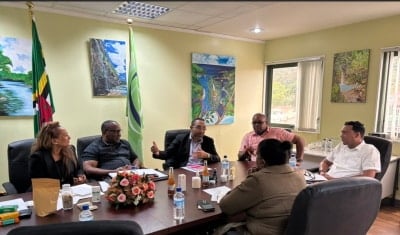
Dr. Poon’s engagement with Dominica Government officials including the Permanent Secretary Ryan Anselm and ministers in the Ministry of Agriculture, Fisheries, Green and Blue Economy; Daren Pinard; Roland Royer; and Jullan Defoe.

The Trinidad-based international consulting firm Leve Global Limited says it has been engaged by the Dominica government to develop the Sustainability Plan and Strategic Framework for the island’s agro-processing facility.

In a statement, the firm said Dominica is taking a major step toward ensuring more of the money spent on food stays in the hands of local farmers and businesses. It noted that while Dominica’s farmers have produced high-quality crops for years, too much produce is either sold raw or lost because of limited processing and market access.

According to the company, the new phase will focus on building the systems needed to process, package, and sell more locally grown products on a larger scale.

The government-led facility is expected to help farmers, cooperatives, and small businesses transform produce into shelf-ready goods, including spices, sauces, herbal products, specialty foods, and value-added flours. Root crops, especially dasheen and cassava, will anchor production because of their strong local supply and potential for composite flours and other processed products.

Under the consultancy, Leve Global will map the agro-food system and design a practical business model aimed at ensuring the facility operates efficiently, reaches the right markets, and delivers returns for local producers.

“Dominica doesn’t have a production problem — it has a value capture opportunity. The missing link has been the systems to consistently process, package, and bring products to market on a scale. This consultancy is about building something that works in real life — for farmers, for small businesses, and for the wider economy,” said Dr. Auliana Poon, founder of Leve Global Limited.

Poon said agriculture accounts for roughly 15 percent of Dominica’s economy, but many farmers are still not earning their full value.

“Strengthening agro-processing is how that changes — by turning what is grown locally into products that generate steady income, create jobs, and compete in regional and export markets,” she added.

Leve Global said stakeholder consultations involving government officials, private sector representatives, farmers, agro-processors, and development partners have already been completed. The engagements also explored opportunities for intra-regional trade, export expansion, and innovation in agro-processing.

“As global supply chains remain uncertain and food costs continue to rise, Dominica is taking practical steps to strengthen what it produces at home and building a more resilient economy rooted in its natural strengths,” the company said.

The best music video generator tools in 2026 for Caribbean independent artists

Secretary of State Cord Byrd announces launch of ¡La Sonada Florida! on Florida Music Tours

For Caribbean and independent artists, music has never been only about sound. A dancehall track carries movement. A reggae song carries atmosphere. A soca release often comes with color, community, and carnival energy. Across the Caribbean diaspora, from South Florida and New York to Toronto and London, a song also carries identity, place, and memory.

That is why the rise of the Music Video Generator matters. For years, music videos were one of the clearest signs that an artist had access to a serious budget. A polished release often required cameras, locations, editors, lighting, styling, and weeks of production planning. For independent artists, that was rarely realistic.

AI video tools are changing that equation. A creator can now generate music video content from audio, text prompts, images, or visual references without starting from a traditional shoot. But after testing the current tools, one thing becomes clear: not every music video maker is solving the same problem.

Some tools create cinematic clips. Some are better for psychedelic visual experiments. Some work best as creative sketchpads. Only a few are truly designed around the needs of musicians who want to turn a finished track into a complete visual release.

Below is a practical review of the best tools for Caribbean, diaspora, and independent artists who need music videos, social clips, cover visuals, and release assets in 2026.

My Criteria for the Best Music Video Generator

I scored each tool based on what matters most to working musicians, not filmmakers with large production teams.

Quick Scorecard: Best Music Video Generator Tools in 2026

Tool Best For Music Workflow Fit Visual Style Manual Editing Required Overall Score
Freebeat Complete music-to-video workflow 9.5/10 Performance, visualizer, narrative, social-ready clips Low 9.2/10
Kaiber Stylized animated visuals 6.5/10 Painterly, surreal, mood-driven loops Medium 7.2/10
Neural Frames Psychedelic visual experiments 6.0/10 Abstract, immersive, visually fluid scenes Medium 6.8/10
Runway Gen-3 Cinematic AI footage 4.0/10 Film-like scenes and visual metaphors High 6.8/10
Pika Short experimental clips 4.0/10 Fast, playful, prompt-based video moments High for full videos 5.8/10
  1. Freebeat — Best Overall Music Video Generator for Music-First Releases

Freebeat is the strongest overall choice because it is built around the problem musicians actually face: how to turn a finished song into a complete visual asset without building everything manually from scratch.

Many AI video platforms can generate attractive clips. The issue is that music often becomes an afterthought. A creator may get beautiful footage, but still has to cut every transition, match every scene to the beat, and make the final video feel connected to the track.

Freebeat takes a different approach. Its ai music video generator begins with the song itself, using an audio-first and audio-reactive workflow that makes it a stronger fit for artists who want visuals to follow the rhythm, emotion, and structure of the track.

For Caribbean artists, that matters. A reggae verse may need warmth and space. A dancehall hook may need sharper motion. A soca chorus may need brightness, speed, and crowd energy. A strong video should not feel like generic animation placed beneath the music. It should feel shaped by the song.

What stood out:

What stood out:

  • Audio-first and audio-reactive workflow that starts with the track

  • Useful for full music videos, short teasers, visualizers, and social clips

  • Over 90% lip-sync accuracy, with support for 100+ languages and smaller language markets

  • Ability to customize any character while maintaining consistent character identity across scenes

  • Strong fit for independent artists, producers, rappers, and AI music creators

  • Better aligned with music promotion than general AI video generators

  • Helpful for artists who need consistent release content across YouTube, TikTok, Instagram, and streaming platforms

The lip-sync and character tools are especially important for artists who want performance-style visuals rather than only abstract scenes. For Caribbean and diaspora musicians working across English, patois, creole, Spanish, French, and other language contexts, multilingual lip-sync support can make AI-generated performance videos feel more accessible and usable.

Freebeat is also useful because modern music promotion is no longer one asset. A single release may need a full video, vertical clips, thumbnails, cover images, and short promotional edits. Independent artists often do not have a separate designer, editor, and social media team. They need one workflow that helps them move quickly.

That is where release branding becomes important. A strong album cover generator can help artists create static artwork for streaming platforms, YouTube thumbnails, and social media posts. When the cover art and video direction feel connected, the release looks more professional across every platform.

Where it works best:

  • Caribbean and diaspora artists building a visual identity

  • Independent musicians releasing singles frequently

  • Producers turning tracks into visualizers and short clips

  • Artists without access to a full production crew

  • Creators who want one song to become several promotional assets

Where it may fall short:

  • It is most useful for music-first creators, so users who only need general cinematic footage may prefer a broader AI video platform.

My score: 9.2/10

Best for: independent musicians who want the most complete music-to-visual release workflow.

  1. Kaiber — Best for Stylized Animated Mood Pieces

Kaiber is one of the more visually distinctive tools in this category. It works well for artists who want their music to live inside a stylized animated world rather than a realistic performance video.

Its outputs often feel painterly, surreal, colorful, and dreamlike. For artists working in alternative, electronic, lo-fi, experimental, or visually expressive genres, that can be useful. A lovers rock track could become a soft animated cityscape. A dancehall single could lean into neon motion. A lo-fi instrumental might become a warm illustrated loop.

Kaiber is especially useful for short-form promotion. It can create visual loops, teasers, and mood pieces that help a song stand out on social platforms.

What stood out:

  • Strong stylized animation

  • Good for mood-driven visuals

  • Useful for short clips and loops

  • Accessible for artists without advanced editing skills

  • Helpful for experimenting with visual identity

Where it falls behind:

  • Limited understanding of full song structure

  • Less effective for verse-to-chorus progression

  • Characters and objects may morph between scenes

  • Not ideal for stable performers or narrative videos

  • Better for atmosphere than complete release storytelling

Kaiber is best understood as a style engine. It can help a song look memorable, but it does not always build a full music video around the emotional shape of the track. For artists who need a quick animated mood piece, it is useful. For artists who need a complete release workflow, it may require additional editing and planning.

My score: 7.2/10

Best for: stylized loops, animated teasers, and artists who want strong visual atmosphere.

  1. Neural Frames — Best for Psychedelic Visual Experiments

Neural Frames is useful for artists who want abstract, psychedelic, and visually fluid content around a track. It is especially relevant for experimental, ambient, electronic, and visually surreal projects where mood and texture matter more than traditional performance.

Its main appeal is atmosphere. Neural Frames can generate shifting colors, dreamlike movement, and immersive abstract scenes that work well when the song does not need a conventional storyline. The output often feels closer to moving digital artwork than a traditional music video.

For certain Caribbean and diaspora artists, this can be useful when the release leans into atmosphere, spirituality, club visuals, or experimental sound design. It may work well for ambient dub, instrumental electronic tracks, or live background visuals.

What stood out:

  • Good for abstract and psychedelic visuals

  • Useful for ambient, electronic, and experimental music

  • Can create visually fluid motion around a track

  • Works well for projections, visualizers, and immersive clips

  • Strong fit for artists who prioritize atmosphere over narrative

Where it falls behind:

  • Not built for traditional storytelling

  • No reliable character consistency

  • Not suitable for lip-sync or performance-based videos

  • Less useful for genres that depend on personality and vocal delivery

  • Output can feel visually dense without a clear concept

Neural Frames is specialized. It works best when the music itself is abstract or atmospheric. For artists who need a performer, a stable identity, or a clear storyline, it may not be the right fit.

My score: 6.8/10

Best for: psychedelic visuals, ambient clips, experimental projects, and abstract visual experiments.

  1. Runway Gen-3 — Best for Cinematic AI Scenes

Runway Gen-3 is one of the strongest AI tools for cinematic footage. Its clips can feature dramatic lighting, realistic environments, expressive camera movement, and visual detail that feels closer to film production than template-based editing.

For musicians, Runway can be useful when the goal is to create standout visual moments. An artist might generate a night street scene, a dreamlike beach sequence, a symbolic image of migration, or a dramatic performance environment. Used well, these clips can add depth to a larger video.

The challenge is workflow. Runway is not primarily a Music Video Generator. It does not begin with the song as the organizing structure. It generates clips from prompts, which means the artist still has to arrange, edit, and sync those clips manually.

What stood out:

  • High-quality cinematic footage

  • Strong lighting, texture, and camera movement

  • Useful for dramatic scenes and visual metaphors

  • Good for artists with editing or directing experience

  • Helpful for generating standout moments within a larger project

Where it falls behind:

  • Does not automatically analyze the track

  • Does not cut clips to beats or song sections by itself

  • Requires external editing for complete music videos

  • Can become time-consuming for solo artists

  • Better for cinematic scenes than full music-video workflows

Runway is powerful, but it asks the musician to become a filmmaker and editor. For artists with visual experience, that can be exciting. For artists who need a fast generate music video workflow, it may be too labor-intensive.

My score: 6.8/10

Best for: cinematic scenes, visual storytelling, and musicians with editing skills.

  1. Pika — Best for Short Experimental Clips

Pika is useful for creators who want quick AI-generated video clips from prompts. It is not built only for musicians, but it can help artists create visual fragments for social media, teasers, or background footage.

Its strength is experimentation. A musician can test surreal visuals, animated scenes, fantasy environments, or stylized motion without filming anything. This can be helpful when an artist is still exploring the visual identity of a release.

Pika works best for short clips rather than full music videos. A few seconds of unusual motion can be enough for a TikTok teaser, Instagram Reel, or intro sequence.

What stood out:

  • Fast AI clip generation

  • Good for creative experimentation

  • Useful for short social media assets

  • Can produce unusual visual moments

  • Helpful for brainstorming visual directions

Where it falls behind:

  • Not a complete Music Video Generator

  • Does not build a full video around a song

  • Does not deeply understand audio structure

  • Requires another editing tool for full production

  • Better for fragments than complete release campaigns

Pika is best used as a creative ingredient. It can generate moments, textures, and short scenes, but the artist still needs to assemble those pieces into a complete video strategy.

My score: 5.8/10

Best for: short AI clips, social teasers, experimental visuals, and early-stage concept testing.

Final Recommendation: What Should Artists Use?

The best music video maker depends on the release.

Pick Freebeat if you want the most complete music-first workflow and need one song to become a full video, teaser clips, visualizers, and release assets.

Pick Kaiber if you want stylized animated visuals and mood-driven loops.

Pick Neural Frames if you mainly want psychedelic or abstract visual experiments.

Pick Runway Gen-3 if you want cinematic footage and are comfortable editing externally.

Pick Pika if you need short visual fragments for social media or early creative testing.

The deeper point is that AI does not replace culture, creativity, or performance identity. For Caribbean and independent artists, those elements are still the center of the music. What AI can do is lower the barrier between having a song and making that song visible.

In 2026, the strongest artists will not simply upload audio and hope it travels. They will build visual worlds around their releases. The right Music Video Generator can help make that possible without requiring a major-label budget.


 

Beres Hammond turns injured-leg setback into Mother’s Day magic at UBS Arena

What was supposed to be a routine explanation about an injured leg became one of the most unforgettable moments of Beres Hammond’s Mother’s Day concert at UBS Arena last night.

The reggae icon, performing at times seated on a couch because of a left leg injury, transformed what could have been a failed engagement into a masterclass in humor and connection with fans.

Thousands of diehard reggae fans had packed the UBS Arena for the Jammins Event-produced Mother’s Day concert, with some coming from New Jersey, Connecticut, Philadelphia and as far as Washington, DC, for a performance featuring Romain Virgo, Stephanie Mills, Lady Da Flame and Hammond as the undisputed headliner. But as fans noticed the lovers rock king’s bandaged ankle and saw him sitting on a couch, curiosity quickly spread.

Beres addressed it head-on.

“Wah gwaan family?” he asked to thunderous applause.

Then, with his trademark gratitude, he reminded fans why nights like these still matter to him.

“You all know that I’ve loved you from then till now because you gave me a platform for me to sing and I will never forget that. You are the ones responsible for my existence.”

Noticing fans eyeing his injured foot, Hammond smiled.

“Me see some people a take picture. Dem a look pon mi foot. But there is a story behind this. Do you want to hear it?”

The arena answered with an emphatic yes. And then came the confession.

“Looking forward to Mother’s Day, I was planning that I wanted to give the mothers and the ladies a different approach on stage,” he explained.

“So I said to myself, let me do a new dance… because you know, I can’t dance still.”

That alone drew laughter. But Beres wasn’t finished.

“The dance that I was planning is… you have to do a flip. You know, like flip forward. At my age it kind of looks stupid. But anyways, I said I’m going to do it for all the ladies.”

The crowd roared. Then came the punchline that sent the arena into hysterics.

“In mid-air, me totally forget whether it’s front flip or back flip!”

More laughter followed.

“I never had a plan!” he confessed.

It was vintage Beres — the consummate performer. As always, he was playful and charismatic.

Even through the injury, the reggae legend delivered a polished, hit-filled performance, proving that even a couch could not diminish his command of the stage. The intimate couch setup became a central part of his storytelling and performance, with some of his chosen friends joining him throughout the night.

The moment peaked when Beres invited “Love Doctor” Romain Virgo to join him for a therapeutic session that included Virgo crooning “Mi Caan Sleep” and “Feel Good” — with five backup singers and the band in tow. Truth be told, it felt less like a guest appearance by Romain and more like a symbolic passing-of-the-torch conversation with the former Digicel Rising Stars alumnus.

Romain and Beres

Virgo — whose soulful delivery, ever-growing catalogue of love ballads, command of the stage, and dedication to craft and discipline have drawn comparisons to Hammond — graciously shared the couch with his mentor. It was a “Moment in Time” that sparked conversations and whispers among fans and music insiders in the house.

Is Romain Virgo the heir apparent to Beres Hammond’s lovers rock palace? It’s a lofty comparison. However, it no longer feels far-fetched.

Dancehall’s “Continent Boss” Nigy Boy, who is making headlines for the release of “Hill & Gully,” also joined the dialogue and sing-along on the couch. Between the chatter, Nigy delivered an emotional performance of Kenny Rogers’ cover of “Write Your Name (Across My Heart).” His short but emotional performance earned rapturous applause and added another layer to the night’s musical diversity.

Nigy Boy
Nigy Boy

Then came another deeply personal family moment as Hammond’s grandson, Kingston, joined him on the couch, giving the audience a touching glimpse into the singer’s legacy beyond music. Young Kingston crooned “No Goodbye” from Beres’ 2008 album A Moment in Time.

By the end of the night, Hammond had treated fans to a rich catalogue of classics including “Rockaway,” “In Love With You,” “What One Dance Can Do,” “She Loves Me Now,” “No Disturb Sign,” “Step Aside,” “Tempted to Touch,” “Golden Touch,” “Double Trouble” and “Putting Up Resistance.”

A failed flip may have caused injury to Beres Hammond’s left leg, but it certainly did not stop him. His performance proved that even seated, the king of lovers rock still knows exactly how to sweep the ladies off their feet.

Why Modern Businesses Prefer AI-Based Automation for Consistent Workflow Outcomes

businesses

Modern organizations aim to maintain precision, speed, and consistency across their operations. Traditional methods that depend heavily on manual effort can introduce delays and inconsistencies that affect performance. As expectations rise across industries, businesses seek dependable systems that ensure stable results without constant supervision.

Artificial intelligence has become a practical solution for organizations that want to standardize their processes. Its ability to analyze patterns, learn from data, and execute tasks with accuracy makes it a valuable addition to workflow management. An intelligent workflow automation plays a crucial role in helping companies achieve reliable and repeatable outcomes while reducing dependency on manual oversight.

Improved Accuracy Across Repetitive Processes

AI-based automation reduces human error in repetitive tasks that require consistent precision. Manual handling of data entry, approvals, and reporting can lead to small mistakes that accumulate over time. Automated systems follow predefined logic, ensuring each step is executed correctly every time.

Consistency becomes easier to maintain when tasks follow structured algorithms. Teams thus gain confidence in outcomes since the system delivers predictable results. This reliability strengthens operational stability and supports better planning across departments.

Faster Decision Making Through Data Processing

AI systems process large volumes of data within seconds, allowing businesses to act quickly on insights. Real-time analysis supports timely decisions that align with current operational needs. This capability enhances responsiveness across departments such as finance, customer service, and logistics.

Speed in decision-making improves coordination among teams and reduces delays in execution. Accurate data interpretation ensures that actions are based on verified information. This approach leads to better outcomes and minimizes risks associated with delayed responses.

Reduced Operational Dependency on Manual Effort

Automation helps organizations reduce reliance on human intervention for routine tasks. This shift allows employees to focus on strategic activities that require creativity and judgment. Productivity improves as teams allocate time to tasks that directly impact growth.

Key Benefits of Reduced Manual Work:

  • Lower chances of errors in repetitive tasks.
  • Faster completion of daily operational activities.
  • Better allocation of employee time toward critical functions.
  • Increased consistency across workflow execution.
  • Clear division between automated and human-driven tasks enhances efficiency. Organizations thus gain better control over workflows while maintaining quality standards.

Enhanced Workflow Transparency and Control

AI-based systems provide clear visibility into each stage of a workflow. Managers can track progress, identify delays, and adjust processes when required. This level of transparency helps maintain accountability across teams.

Consistent monitoring supports better governance and ensures compliance with internal standards. An intelligent workflow automation enables structured tracking mechanisms that keep operations aligned with organizational goals. Clear insights into workflow performance make it easier to refine processes over time.

Adaptability to Changing Business Requirements

Modern businesses require systems that adjust to changing operational demands. AI-driven automation offers flexibility through adaptive algorithms that respond to new patterns and requirements. This capability ensures workflows remain efficient even as processes change.

Features Supporting Adaptability:

  • Ability to learn from historical data and improve performance.
  • Quick updates to workflow rules without major disruptions.
  • Seamless integration with existing business systems.
  • Continuous optimization based on performance metrics.

Adaptability allows organizations to maintain consistency without rebuilding processes from scratch. This ensures long-term efficiency and supports steady operational growth.

So, AI-based automation provides a reliable foundation for consistent workflow outcomes. Organizations benefit from improved accuracy, efficiency, and control across operations. Sustained performance thus becomes achievable through structured and intelligent systems.


IShowSpeed’s Jamaica tour shows how celebrity is changing across generations

IShowSpeed Jamaica

For some Jamaicans, the arrival of internet superstar IShowSpeed sparked excitement usually reserved for music royalty or Olympic champions. For others, particularly older Jamaicans, the reaction was more confusion than celebration.

“But who is this guy anyway? What is he doing in Jamaica? Can he run faster than Usain Bolt, Asafa Powell or even Elaine Thompson-Herah? Dat me wah know!” one bemused observer opined, echoing the skepticism of many older Jamaicans trying to understand the frenzy.

Ask Gen Z, however, and the response is immediate: How do you not know him?

“I’ve never, ever seen the red carpet thrown out to a celebrity in Jamaica before like the one that Speed is getting!” Robb Loague posted on Facebook.

NY Groovin radio host Clement Hume responded, saying, “Robb, this is a clown show in production, bro.”

But younger Jamaicans see it differently.

“How do you not know him, and why don’t you understand what he is doing for Jamaica?” many online supporters argued.

That generational divide has become one of the most fascinating subplots of social media sensation Darren Jason Watkins Jr.’s visit to Jamaica. The 21-year-old content creator has transformed a simple stop on his Caribbean tour into a full-scale social media phenomenon.

American streamer IShowSpeed’s livestream from Kingston on Friday amassed more than 2.8 million views, with a peak of 194,805 live viewers. The broadcast also generated 696,349 live chat messages and brought in 34,692 new subscribers.

His cameraman later shared the figures on X with the caption: “Good stream.”

With nearly 54 million YouTube subscribers, IShowSpeed is a digital-age celebrity with a reach that rivals traditional entertainment powerhouses like NBC, CBS and CNN. Even with that global reach, not everyone in Jamaica was impressed.

For younger Jamaicans, Speed’s visit wasn’t just entertainment — it was validation that Jamaica matters in the new global digital culture.

Reporter Janet Silvera of the The Gleaner captured the magnitude of the moment, writing: “With close to 54 million YouTube subscribers, internet sensation IShowSpeed has turned his visit to Jamaica into a global spectacle, giving the island major visibility among younger travellers.”

The Jamaica Tourist Board clearly saw the opportunity.

“Creators are drawn to places that produce authentic, memorable content, and Jamaica delivers that almost effortlessly,” JTB executive Donovan White said, adding, “The livestream itself is just the starting point. The content keeps generating value long after the broadcast ends.”

Showcasing Jamaican culture in Kingston

As part of the Jamaican leg of his Caribbean tour, Speed visited several iconic locations across Kingston, including Emancipation Park, the Bob Marley Museum, Devon House and the National Stadium.

The tour kicked off at Emancipation Park with a history session led by former Miss Jamaica Universe Yendi Phillipps. Known simply as “Speed,” the streamer received a brief lesson on Jamaica’s national heroes and took part in a traditional Kumina dance alongside a group of local students.

He also interacted with Culture Minister Olivia Grange and several prominent Jamaican entertainers, including Jesse Royal, Sean Paul, Beenie Man, Shenseea, Popcaan, Naomi Cowan and Gyptian. The stream ended with a drone show and dancehall party featuring Ding Dong.

Jamaican-born, Toronto-based media personality Danae Peart described the visit like a producer reviewing a blockbuster.

“IShowSpeed’s live from Jamaica on Friday was awesome. It is clear Jamaica had a plan. It was clear Kingston is the home of culture, food and fun.”

Then she detailed the whirlwind itinerary.

“He did Bob Marley Museum. Later, Romeich and them did a street dance simulation, and he went on stage with Ding Dong. They took him to Devon House, where there was lots of food, but his belly was full from eating at least three Tastee patties and coco bread beforehand. They made him do a relay at the stadium, and his team lost. Shenseea taught him how to make ackee and saltfish. He did a freestyle with Sean Paul at Haile Selassie school. Of course, he tried KFC. The stream ended with one of the lovely drone shows dedicated to him. Lots happened, and it was well planned.”

For supporters, it was brilliant nation branding.

“This is free tourism advertisement! Speed is doing a Caribbean tour … I don’t know why my people want to throw cold water on this!” Robb Loague shared on Facebook.

John Wick offered a more business-minded perspective in response to Loague’s post.

“What you are seeing is social marketing at play. Not many media personalities provide an audience of 160 million live views. What you saw in Jamaica was everyone capitalizing on IShowSpeed’s 160 million social media followers and viewers. The last Super Bowl is said to have had 124 to 125 million viewers, and it costs US$10 million for a 30-second ad spot. The ‘clowns’ at the ‘clown show’ all got the equivalent of a US$10 million ad buy for free. Don’t discount what’s happening in the new world of social media,” he wrote.

Andrew Price framed the cultural shift even more bluntly.

“Who are his supporters? Who is he? An influencer on social media. That’s where the masses in Jamaica live and exist. They see him as one of them. It’s the social media era, my brother.”

Novlette Dias saw the visit as evidence that Jamaica understands the changing landscape.

“A de new generation ting dis. Streaming is huge.”

She later added, “Proud of him. I’ve been following him since his African tour. He opened up Africa like never before. Black people understood the assignment.”

But the skepticism remains. For many older Jamaicans, celebrity still means singers, athletes and actors — people whose fame was built through traditional pathways. IShowSpeed represents a new kind of fame: instant, interactive, borderless and powered by algorithms instead of television executives.

And in Jamaica, a country that has always understood the value of cultural export, the debate may not really be about IShowSpeed at all. It may instead be about whether the older generation is ready to accept that global influence no longer looks the way it used to.

South Florida tax preparer admits to wire fraud in $4.1 million PPP loan scheme

sentenced

A South Florida tax preparer has pleaded guilty in federal court to participating in a scheme that involved submitting falsified documents to fraudulently obtain millions of dollars in pandemic relief loans under the Paycheck Protection Program (PPP).

A federal judge accepted the guilty plea of Roody Metelus, 47, of Westlake, who owned and operated JRS Tax Services, LLC in Dania Beach. Court documents show that between January 2021 and January 2022, Metelus worked with others to create false tax records used to support more than 200 PPP loan applications.

Prosecutors said Metelus fabricated tax forms for clients—many of whom were wage earners—to falsely present them as self-employed business owners eligible for relief under the Coronavirus Aid, Relief, and Economic Security (CARES) Act program.

“Pandemic relief programs were created to help small businesses survive an economic crisis, not to enrich tax preparers through fraud,” U.S. Attorney Jason A. Reding Quiñones for the Southern District of Florida said in a statement. He added that Metelus “exploited his clients’ trust” and helped generate more than $4.1 million in fraudulent applications targeting taxpayer-funded relief.

IRS Criminal Investigation (IRS-CI) officials also condemned the conduct. “Tax fraud is fraud, and this defendant is now a felon,” said Special Agent in Charge Ron Loecker of the IRS-CI Florida Field Office, warning that anyone submitting false documents to federal programs would face similar consequences.

Authorities said the fraudulent applications sought more than $4.1 million in PPP funds, with approximately 116 loans approved and roughly $2.3 million ultimately disbursed. Metelus allegedly required clients to pay him a percentage of the proceeds once funds were received.

Metelus pleaded guilty to one count of conspiracy to commit wire fraud and faces up to five years in federal prison. His sentencing will be determined by a U.S. district court judge following consideration of federal sentencing guidelines and other statutory factors.

The case was investigated by IRS-CI’s Florida Field Office. Assistant U.S. Attorney Aimee Jimenez is prosecuting, while Assistant U.S. Attorney Daren Grove is handling asset forfeiture.

Gospel singer David ‘Kukudoo’ McDermott dies at 56 after battle with cancer

Kukudoo

Gospel singer David “Kukudoo” McDermott has died at the age of 56 after battling non-Hodgkin lymphoma (NHL), a type of blood cancer.

His family confirmed his passing in a statement shared on his official social media pages on Friday.

“It is with a heavy heart that we, the family of David ‘Kukudoo’ McDermott, have to tell the public that he passed this morning… at this time we ask for grace and respect in our time of grief,” the message said.

McDermott, a beloved figure on the Jamaican gospel scene, was diagnosed with the illness in late February.

He is survived by his three children.

A former machine operator at the now-defunct Bernard Lodge Sugar Estate, McDermott’s journey into music began in humble circumstances, performing at nine nights—locally known as “dead yards”—under the name King David.

His early breakthrough came unexpectedly when a church band performance at a nine-night event was recorded by a sound engineer and later pressed onto a CD. The recording circulated widely, and songs such as See People Business and Leave It Alone quickly gained traction across Jamaica’s public transport system, turning him into a household name.

From there, McDermott transitioned into a full-time music career, becoming a regular performer overseas and a fixture at Jamaica’s annual Independence Gala. His energetic, mento-infused gospel performances earned him a reputation as one of the genre’s most engaging live acts.

Non-Hodgkin lymphoma, the illness he battled, is a cancer of the lymphatic system that develops when lymphocytes—either B-cells or T-cells—mutate and multiply uncontrollably, often forming tumours in lymph nodes.

Tributes have begun pouring in, including from Minister of Culture and Entertainment Olivia Grange, who described McDermott as “a cultural force whose work celebrated African-derived spiritual traditions within Jamaican society.”

“Kukudoo was a strong performer who resonated across generations and social backgrounds,” Grange said, adding that his passing is “a great loss and he would be sorely missed.”

McDermott’s death has sparked an outpouring of grief across Jamaica’s gospel and cultural communities, where he was widely admired for both his powerful voice and his grassroots rise to prominence.

Questions to ask a truck accident lawyer

Truck accidents in Fort Lauderdale pose serious risks due to the size and weight of commercial vehicles. Broward County reports more than 1,000 truck-related crashes each year, with thousands occurring across Florida annually. These collisions often cause severe injuries such as traumatic brain injuries, spinal damage, fractures, and internal bleeding. Because of the force involved, truck crashes are more likely to result in long-term disability or fatal outcomes. Common causes include driver fatigue, poor maintenance, overloaded cargo, and limited visibility. These figures show how quickly serious harm can occur on busy roads.

When consulting an attorney, asking the right questions is essential. People seeking help with commercial truck crash in Fort Lauderdale often ask about liability, insurance coverage, and evidence such as driver logs or maintenance records. It is also important to discuss experience, timelines, and negotiation strategies. Clear guidance can help injured individuals pursue fair compensation and manage complex claims more effectively.

First Meeting

Before signing anything, injured people should ask how fault will be examined, which records need protection, and what deadlines control the case. Many families seek help from a commercial truck crash lawyer after learning that these claims can involve driver logs, dispatch messages, maintenance files, cargo records, and safety rules that do not appear in a routine car wreck. A useful meeting should convert uncertainty into a clear action plan.

Case Experience

One useful opening question is simple: How often has the lawyer handled truck injury cases in the past year? These claims differ from ordinary traffic matters. Carrier hiring files, inspection histories, and electronic data may shape liability. National crash reports continue to show a high number of deadly large truck collisions each year. That pattern matters. A lawyer should explain how prior case work informs the present strategy.

Liability Scope

Another important question asks who may bear legal responsibility for the event. The driver may be only one part of the chain. A trucking company, freight broker, loading crew, repair vendor, or parts maker may also share blame. Florida cases often turn on control over scheduling, training, maintenance, or cargo balance. Early identification matters because each party may hold different insurance coverage and different evidence.

Evidence Plan

Injured people should ask what proof must be preserved within days, not weeks. Road marks fade fast, camera footage gets deleted, and electronic logs may be replaced during normal operations. A strong response should include witness accounts, police files, treatment records, phone data, repair histories, and onboard recorder information. Speed is critical here. Preservation letters can prevent key material from being lost before formal discovery begins.

Damages Review

A careful consultation should address more than emergency room bills and vehicle damage. Clients can ask how future harm will be measured over time. Ongoing rehabilitation, surgical care, wage loss, reduced earning capacity, pain, and changes in daily function may all affect value. Truck crashes often cause orthopedic injury, spinal trauma, or brain impairment because of extreme force. Those effects can extend well past the first recovery stage.

Insurance Pressure

Many people want to know who will handle insurer calls and settlement pressure after the first intake. That concern deserves a direct answer. Insurance representatives may request recorded statements before symptoms stabilize or imaging is complete. Early offers can also ignore future treatment needs. A dependable lawyer should explain who manages communication, how proposals are evaluated, and when litigation may be the safer course.

Timeline

Families often ask how long a truck injury claim is likely to take. No careful lawyer should promise an exact finish date. Still, the answer should cover major phases, investigation, medical review, demand, negotiation, filing, discovery, and trial preparation. Multi-party disputes can lengthen the process when each insurer shifts blame elsewhere. Realistic timing helps households plan treatment schedules, work leave, and monthly expenses with less strain.

Trial Readiness

Another smart question asks whether the lawyer is prepared to try the case if settlement efforts fail. Some firms prefer quick resolutions because they seldom present disputed evidence in court. The defense counsel knows that. Trial preparation can influence negotiation value from the start. A lawyer should describe courtroom work and expert support. They should also explain how records, testimony, and technical evidence would be used before a jury.

Fee Terms

Fee terms deserve close review before representation starts. Many injury firms use contingency arrangements, yet percentages and case costs may vary. Clients should ask who covers filing fees, expert invoices, medical records, and deposition expenses if recovery does not occur. Written language matters here. A plain explanation is far more useful than a rushed assurance given during a brief conversation at the end of a meeting.

Communication

Communication style can shape a client’s stress level almost as much as the legal process itself. Families should ask who provides updates, how often contact occurs, and whether calls are returned within a reasonable time. Truck claims generate paperwork, treatment questions, and financial pressure. Silence makes each burden harder. A reliable office should explain its system for status reports, document requests, and major decisions.

Conclusion

The right consultation is defined by clear answers, careful listening, and sound judgment under pressure. Strong questions can expose weak preparation, limited truck case experience, or poor communication before valuable time is lost. They can also identify a lawyer who understands commercial safety rules, serious injury valuation, and insurer tactics. For injured people and those close to them, this level of clarity supports steadier recovery planning and better legal decisions after a life-altering crash.


Sandals Ochi team brings books, supplies and reading support to Exchange Primary students

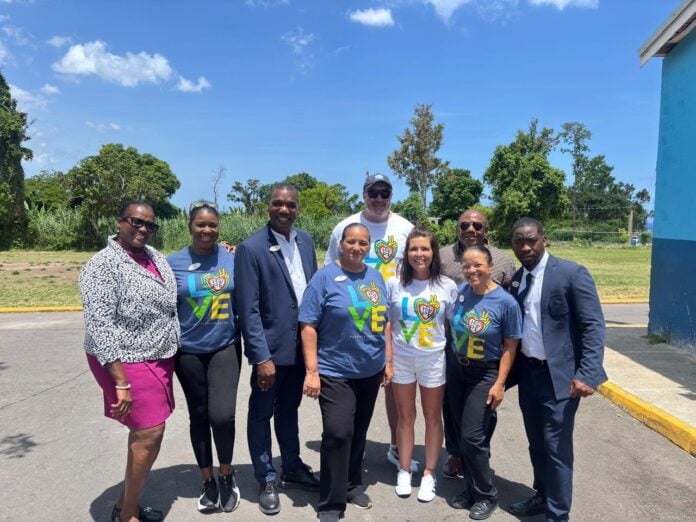
Earlier this week, Carol Bourke, General Manager of Sandals Ochi Beach Resort in Ocho Rios, St. Ann—one of Sandals Resorts International’s flagship properties known for its expansive hillside and beachfront layout—along with several members of staff and two guests, visited Exchange Primary School in Ocho Rios, St. Ann.

Sandals Ochi, which forms part of the wider Sandals Resorts portfolio across the Caribbean, is known for its split-level design that stretches from lush hillside villas down to a beachfront section, offering a mix of guest experiences while maintaining strong ties to surrounding communities through outreach initiatives.

The visit was carried out under the Sandals Foundation, the charitable arm of Sandals Resorts International, which focuses on education, community development, and environmental preservation across the region. Since its establishment in 2009, the foundation has supported hundreds of schools across the Caribbean through literacy programmes, school supplies donations, volunteer reading sessions, and infrastructure support aimed at strengthening learning environments.

During the visit, the Sandals team and guests read books with students and presented them with educational supplies designed to support classroom learning and encourage literacy development. The engagement formed part of ongoing efforts by the foundation to promote early reading and provide hands-on support in schools serving local communities.

“This today falls within the Sandals Foundation core to make a massive impact on the children as it brings a little fun in their daily activities,” Bourke said.

“These kids are our future and we will do whatever we can for them to make them better citizens,” she added.

Exchange Primary School has distinguished itself for its strong commitment to education and a vibrant sports programme. The institution was among the first in the area to reopen following the disruption caused by Hurricane Melissa, which affected sections of the island last October, and had previously benefited from a major infrastructure upgrade during the 2023–2024 school term.

Writing creator briefs that deliver on-brand content: The secret to influencer marketing success

social media

If you’re trying to get the best out of every creator partnership, your brief is the key that unlocks everything: message clarity, visual consistency, claims safety, call-to-action accuracy, and turnaround speed. Most underwhelming content from creators isn’t a creator problem, but a brief that’s missing something. A strong brief involves stripping away ambiguity so the creator can focus on making something that actually works.

A good brief is what helps you achieve repeatable output that looks and sounds like your brand and performs like your benchmarks. That’s how top teams produce influencer marketing success at scale, without turning the process into some corporate, overly complex mess.

What’s Wrong with Creator Briefs

The gap between what brands say and what creators hear

Brands often write briefs like they’re internal strategy documents, and then wonder why creators can’t make the content work. Often, the translation step is where consistency dies. A creator reads “premium, modern, bold” and thinks “dark lighting, edgy music, trendy audio”, while your brand thinks “clean visuals, calm confidence, great product framing”. If you want success with your influencer marketing, you can’t rely on vague adjectives. You have to actually tell the creator what you mean.

The fix is to write your brief like you’re briefing someone who has never worked with your brand before. Use examples, boundaries, and non-negotiables to define what you mean by the terms you use. “Modern” becomes “bright daylight, minimal clutter, a neutral background, no more than 2-3 quick cuts, and no heavy filters”. That’s how you get consistent results from creator to creator.

Consistency is about the core message

Consistency shouldn’t involve every creator reading the same script. It should mean your audience gets the same message but in different and eye-catching ways. For success with your influencer marketing, define consistency in five areas:

  1. Message: what the viewer should remember
  2. Visuals: what your brand actually looks like
  3. Claims: what can and can’t be said to avoid compliance issues
  4. CTA: exact action and tracking rule
  5. Formatting: length, pacing, caption structure, and where to put the disclosure

If any of these areas are fuzzy, you’ll end up with pretty content that doesn’t convert — and you’ll be left wondering why success with your influencer marketing is so hard to find.


One-Page Creator Brief Structure

Here’s the key: you can build a whole influencer marketing campaign around just one page — but it’s got to be the right page. Your brief should be skimmable in under two minutes.

Campaign Goal + Primary KPI

Best to include just one clear KPI, such as:

  • Goal: Get new customers to make their first purchase with Product X
  • Primary KPI: Purchases tracked using link and code within a 7-day window

Don’t list 8 different KPIs, as creators will just focus on the easiest metric (which is usually views, not the one you actually care about).

Audience + Positioning (who we’re talking to and why)

Define your audience in language that creators can understand:

  • Who they are
  • What problem they’ve got
  • What they do now
  • Why your brand is different

The more specific you are, the better the content is going to be. For example: Busy professionals who need fast results without making their lives even more complicated.

Key Message Pillar

Pillars are what makes content consistent across different styles. Keep it to three.

  • Pillar 1: “Setup takes under 5 minutes”
  • Pillar 2: “Results are visible within X timeframe — no exaggerating”
  • Pillar 3: “Feels premium, but still fits real life”

When creators know what the pillars are, you’ll get more consistent results and fewer off-topic storylines.

Offer + CTA

Don’t write ‘include a CTA’ — write the CTA itself.

  • CTA wording: “Use my code for X% off at checkout”
  • Link rule: Specify whether the link goes in the caption or not
  • Tracking rule: Code must be visible on screen for at least 2 seconds

That’s the difference between random content and results that your team can actually attribute.

Deliverables + Posting Requirements (formats, dates, tags)

Just list the deliverables like a checklist:

  • 1 x Reel (30-45 seconds, vertical, 9:16)
  • 3 x Story frames (with link sticker)
  • Caption: hook line, 2 value lines, CTA, and disclosure
  • Tag: @brand and required hashtag
  • Post date/time window

Ditch the uncertainty and you’ll get way more brilliant influencer marketing examples with fewer rounds of revisions.

Creative direction

Tell creators what you want. Don’t expect them to read your mind. Give them clear execution guidance, like in these examples:

  • Pacing: get the hook by second 2 and aim for 6-10 cuts total.
  • Vibe: bright, calm, confident and minimal.
  • Do: show the product in action, in a real setting, one clear outcome at a time.
  • Don’t: make it look like a dodgy circus, with loads of filters, a chaotic background and competitor products all over the shop.

That’s how you prevent content that performs from being a lucky fluke — and start producing top-notch influencer marketing examples on purpose.

Compliance and claims

Give creators a simple safe claims list they can refer to:

  • Allowed claims: (give 3-5 exact phrases to use)
  • Prohibited claims: (list them out clearly and don’t beat around the bush)
  • Disclosure requirement: make sure they use #ad at the start of the caption and slap a bit of text on-screen.

When compliance is clear-cut, creators will get on with it faster and you won’t lose all those brilliant influencer marketing examples to last-minute takedown notices.

Usage rights and whitelisting

Spell out what you plan to do with the content:

  • Organic use on brand channels: yes/no and timeframe
  • Paid usage/whitelisting: yes/no and all the details on duration and platforms
  • Do you need raw files or will stills be enough?

When the rights are transparent, there are fewer disputes, smoother operations and more influencer marketing examples you can reuse.


Creative direction that actually works for creators

Must-have scenes/shots

If you want the best influencer marketing examples, define the bare minimum you need in terms of footage.

Must-have shot categories:

  1. Hook visual: show the problem moment or ‘before’ context
  2. Product in action: show the product being used, step by step
  3. Outcome: what changes, but don’t overdo it
  4. Proof cue: texture, close-up, interface, receipt or unboxing detail
  5. CTA moment: show the code or link clearly

Creators can still put their own spin on things but with a baseline quality, you’ll get more consistent results — exactly what you need to build influencer marketing examples that cut through the noise across different niches.

Script prompts without rigidity

Rigid scripts sound like boring ads. Prompts sound like real people talking.

Use prompts like:

  • “Show the moment you realized you needed a better option.”
  • “Explain what surprised you after trying it for X days.”
  • “Teach the viewer one quick trick to get the best result.”

Prompts give you variation while still keeping the message pillars intact — exactly what top-notch influencer marketing examples need.

Examples of on-brand and off-brand patterns

Rather than telling creators to be on-brand, show them what you mean:

On-brand patterns:

  • clean framing and natural lighting
  • one main idea per video
  • benefits phrased simply, no hype language
  • direct and confident CTA

Off-brand patterns:

  • that overtly dramatic ‘life changed overnight’ tone
  • too many trends drowning out the product value
  • claims you can’t back up
  • CTA that’s hidden, rushed or missing

The clarity represented by the first list reduces rework and ups your hit rate for top-notch influencer marketing examples.


Guardrails that stop brand damage in its tracks

Prohibited claims and sensitive topic list

Guardrails should be blunt and to the point. Don’t leave room for misinterpretation.

  • Prohibited claims: medical, financial, guaranteed outcomes, unsafe comparisons are a no go.
  • Sensitive topics: politics, health conditions, body shaming, restricted products should be avoided
  • Competitor mentions: allowed/not allowed — spell it out.

Teams that keep their brand safety on lock consistently churn out more top-notch influencer marketing examples because they don’t get derailed by last-minute crises.

Visual do/don’t list

Real life is where the creators are filming — and that means real risks too.

Do:

  • neutral background or tidy environment
  • clear product visibility
  • safe, everyday settings

Don’t:

  • competitor logos in frame
  • unsafe settings — no driving, dodgy tools or restricted locations
  • misleading “before/after” formats

These rules keep you from going viral for all the wrong reasons and protect your influencer marketing examples pipeline.

Comment and DM handling guidelines

Creators get questions, and if they wing it, your messaging will start to drift.

Give them a mini playbook with the following type of instructions:

  • If asked about price: reply with the code and where to get it.
  • If asked for medical/guarantee questions: reply with an approved safe line.
  • Escalate complaints to brand email/support, rather than arguing with the user yourself.

This keeps your brand voice on track beyond the post and is a large part of what makes top-notch influencer marketing examples actually scalable.


Approval workflow that doesn’t slow everything down

When to require pre-approval or post-review

You can over-approve and kill speed, or under-approve and create risk.

To keep the middle ground, use the following simple rules:

  • Pre-Approval Needed for: first time creators, claims that need regulating, paid campaigns and big budgets
  • No Pre-Approval Needed for: trusted creators, low risk messaging and only organic campaigns

Quick turnaround times are great for saving creative energy and churning out a lot of good influencer marketing examples in a quarter.

Revision Rules

To help creators plan their time, you need to make it clear how you want them to approach revisions.

Define things such as:

  • Max. number of revision rounds
  • The deadline for revisions
  • What the finished product looks like: for example, you want to see the main message, call to action, disclosure, required shots all included and looking good

When you can clearly define what this looks like, you waste way less time arguing and can spend more time making great influencer marketing examples.

Versioning and File Naming Conventions

It’s a pain, but these rules save you a lot of heartache down the line.

Example convention:

  • Brand_Creator_Platform_Deliverable_V1_Date
  • Brand_Creator_Reel_V2_2026-02-11

Clean versioning helps stop you posting the wrong version and means you can keep a clean library of influencer marketing examples you can reuse.


Make Consistency Something You Can Measure

Brief Scorecard

If you don’t have a way to score how well they did, you can never really improve.

Use a scorecard with metrics that can be graded on a 0–2 point scale:

  • How well did they hit the main message?
  • Was the CTA clear and visible?
  • Did they get the visual style right?
  • Were they compliant and had the right disclosure?
  • Did they follow the formatting requirements?

Over time, you can turn going with your gut into real data and start making great influencer marketing examples a lot more systematically.

Feedback Loop with Your Creators

Once a post is live, send a super quick feedback note with:

  • What worked well
  • What needs adjusting
  • One thing you’d like to see them try out differently next time

Creators who get a bit of feedback from you become your go-to teams for consistently making great influencer marketing examples.

Reusable Brief Templates by Creator Type

One brief can’t fit every kind of creator, so you need to build separate lanes:

  • UGC lane: makers who do product demos, storytelling and tutorials
  • Local lane: people who focus on the location, a community angle and making it clear that it’s “near to you”
  • Sales-driven lane: teams who focus on direct offers, proof cues and making the CTA super clear

Having these lanes means you can reduce cognitive load and make great influencer marketing examples a whole lot easier to repeat.


The Most Common Brief Mistakes

Too Many Messages → No Message Ever Lands

Mistake: you try to cram every feature into one post.

Fix: pick just one message to get across in that one post. Save the other features for the next post. The fastest way to make great influencer marketing examples is to be crystal clear, not to try to cover everything.

Vague Aesthetic

Mistake: you tell them to make it look aesthetic — but that’s a subjective criterion.

Fix: make it clear what you mean by aesthetic — e.g what shots, lighting, pace and examples you want to see. Clear creative direction means fewer reshoots and more great influencer marketing examples.

No CTA Wording or Tracking Rules

Mistake: you assume your creators already know how to track.

Fix: give them the exact CTA wording and tracking requirements. If you want great influencer marketing examples, you need to make it easy for them to track.

Forgetting Disclosure & Rights

Mistake: you deal with the legal stuff at the end.

Fix: put it in the brief upfront. When it’s clear what they need to comply with, they’re way more likely to do it — and your great influencer marketing examples stay usable for paid amplification.


Template You Can Use

One-Page Brief Template

Simply copy and paste the following, then fill it out with your influencer campaign specifics:

Campaign name:
Goal:
Primary KPI:
Who’s your audience:
Where do you stand:
Main message (max 3):
1)
2)
3)

What’s the offer:
Exact CTA wording:
What’s the link/code:
Tracking rules (must follow):

Deliverables:

Posting requirements (tags, hashtags, dates):

Creative direction:

Must-have shots:

Do:

Don’t:

Compliance and disclosure:

Allowed claims:

Prohibited claims:

How you want disclosure to be formatted:

Usage rights and whitelisting:

This template is your go-to for making great influencer marketing examples happen. When brands are shopping from a library like this, that’s when you see consistency really start to pick up, along with your overall volume of top-notch influencer marketing examples.

Approval Checklist

Lastly, before you hit post, just take a quick glance sure that:

  • You’re got at least two out of three of your key messaging pillars coming across clearly
  • The CTA in your post matches the exact wording from your brief
  • You’ve got that all important code or link clearly displayed
  • You’ve included all the tags and hashtags that are required
  • Your disclosure is in the right place and is accurate
  • You’re not making any claims that are prohibited
  • You’re not slapping your competitors’ logos all over the post
  • And you’ve got all the must-have shots included
  • Your file name or version is correct

This simple checklist is what keeps your brand safe and lets you churn out a steady supply of top influencer marketing examples.

Top Creator Content by Design

You don’t get good creator content by luck. It’s about having a system in place, so if you want a solid flow of top influencer marketing examples, your brief needs to be able to translate brand strategy into actionable creator tasks. 

Use a simple one-page format, make it clear what your message pillars are, give your creators some real direction and clear guidelines, and then score the results so the next brief is even better. The end result is fewer revisions, less risk, stronger attribution, and a library of top influencer marketing examples that you can reuse across all your channels.


Barbados says migration central to growth, unveils regional free movement push at UN forum

Barbados has told an international conference on migration that its participation is aimed at turning commitment into progress, stressing that for small island developing states (SIDS), migration is central to sustainability, economic resilience, and national identity.

Addressing the second session of the International Migration Review Forum at the United Nations, Barbados Minister of Home Affairs and Information Gregory Nicholls said Bridgetown’s commitment to the Global Compact for Safe, Orderly and Regular Migration (GCM) remains unwavering, and is closely aligned with the 2030 Agenda for Sustainable Development.

He said Barbados views its migration policy commitments as foundational to peace and prosperity.

“Where Barbados has made promises, it has acted,” Nicholls said. “On 1 October 2025, Barbados, Belize, Dominica, and St. Vincent and the Grenadines launched full free movement, granting nationals the right to live, work, and reside indefinitely across all four states, with guaranteed healthcare and education for their children.”

“This is not generosity. It is an obligation built on political will, regional solidarity, and human rights. We offer it not as a boast, but as a blueprint,” he added.

Nicholls said Barbados is also developing a comprehensive National Migration Policy guided by the GCM and Caribbean Community (CARICOM) frameworks, aimed at modernizing migration pathways, strengthening border systems, and supporting economic growth while protecting labor and human rights.

He said migration and climate change are increasingly intertwined challenges for small island states.

“For Small Island Developing States, climate change and migration are not parallel agendas; they are the same agenda,” he said. “Displacement is already here: straining borders, threatening food security, and eroding the stability that safe migration depends on.”

Nicholls said Barbados, through the Bridgetown Initiative, continues to advocate for global climate finance reform, arguing that migration should be viewed as a choice rather than an act of survival. He called for increased access to financing, stronger cross-border cooperation, and full resourcing of the Migration Multi-Partner Trust Fund.

“Accessible finance, cross-border cooperation, and the Migration Multi-Partner Trust Fund are not optional. They are the infrastructure of humane governance,” he said.

He also outlined efforts to deepen engagement with the Barbadian diaspora in the United Kingdom, Canada, and the United States through investment opportunities, skills transfer, and return migration initiatives, noting that legislative reforms are expected to further strengthen those ties.

“Our diaspora is not peripheral to development; it is the heartbeat of it,” he said.

Nicholls said Barbados is committed not only to participating in global dialogue but to building practical partnerships that make safe, orderly, and dignified migration a reality.

“Migration, managed well, is not a burden. It is an engine for creativity, innovation, and growth,” he said.

“We are a small island with an unshakeable commitment. This Compact is the cornerstone of our present and the architecture of our future,” he told the international community.

Guyana-Brazil trade surges to US$1 billion as economic ties deepen

Guyana’s trade relationship with Brazil has expanded sharply, rising from about US$58 million in 2020 to an unprecedented US$1 billion in 2026, according to Brazil’s Ambassador Maria Cristina de Castro Martins.

The growth reflects increasing economic integration between the two South American neighbours, as both countries prepare for a high-level business forum aimed at boosting investment, strengthening trade links, and advancing Guyana’s engagement with the regional bloc MERCOSUR.

Speaking in an interview on 104.1 Guyana Lite FM on Wednesday, Castro Martins described the increase as a “significant expansion” in trade flows over the past four years, driven largely by complementary sectors and rising demand tied to energy, mining, and infrastructure development.

She said Guyana’s exports to Brazil remain heavily concentrated, with crude oil accounting for about 98 per cent of shipments. In contrast, Brazil’s exports to Guyana are dominated by industrial inputs, with roughly 80 per cent made up of machinery and equipment for construction, extractive industries, oil production, and mining.

“The trade relations between both countries have been expanded significantly in recent years. The trade flow, which was around US$58 million in 2020, now reached US$1 billion,” the ambassador said.

The comments come ahead of a high-level business forum scheduled for Monday, May 11, hosted by the World Trade Centre Georgetown in collaboration with the Embassy of Brazil. The event is expected to highlight new trade and investment opportunities while reinforcing Brazil’s support for deeper economic and institutional engagement between Guyana and MERCOSUR, where Guyana currently holds associate status.

Castro Martins said a visiting Brazilian delegation will attend the forum to signal support for strengthening bilateral relations and encouraging structured discussions on Guyana’s potential deeper integration into MERCOSUR. She added that Brazil would support exploratory talks among member states and Guyana aimed at developing a balanced and mutually beneficial trade arrangement, should Georgetown pursue closer integration.

“The seminar next week will be held to better understand the trade and investment opportunities that MERCOSUR can offer to Guyana’s businessmen,” she said, noting that the initiative is intended to broaden awareness within the private sector.

Beyond trade figures, the ambassador framed the relationship within a broader strategic context, pointing to Guyana’s position as a “gateway to the Caribbean” and Brazil’s role as a natural bridge to South American markets. She argued that improved connectivity could benefit both economies and support diversification of trade flows.

“We need to profit from this position, which is very strategic for both countries,” she said, adding that trade has historically been concentrated in limited sectors and regions. “It’s time to expand, to have new provinces in our trade relations.”

Castro Martins also referenced Brazil’s wider international relationships, including its ties with the United States, while stressing the importance of respecting differing political systems and maintaining cooperation across the Americas.

She said, however, that regional diversification remains a priority, with increased emphasis on strengthening ties within South America and the Caribbean through expanded commercial and institutional engagement.

The upcoming forum is expected to serve as a key platform for advancing these goals, with government and private sector stakeholders anticipated to explore new opportunities for investment, logistics integration, and market expansion between the two rapidly growing economies.

BVI Premier warns importers to pass on savings from government concessions

Natalio Wheatley
Natalio Wheatley. (Photo via The Virgin Islands Consortium.

British Virgin Islands Premier Dr. Natalio Wheatley has warned supermarkets and importers across the territory that government concessions introduced to ease rising living costs must benefit consumers and not be absorbed through excessive markups.

Speaking on the government’s Virgin Islands Voice programme, Wheatley said the administration introduced a series of relief measures after global fuel prices increased amid geopolitical tensions involving the United States, Iran, Israel, and Hezbollah.

“It was important that we take mitigating measures to ensure that the most vulnerable among us, especially, are protected,” the Premier said.

Wheatley explained that the government consulted with the business community before rolling out the package, which includes electricity subsidies, reduced import duties, lower port fees, and duty concessions on selected essential goods.

He stressed that businesses receiving these concessions are expected to pass savings on to consumers through reasonable pricing.

“If we charge you zero duty on chicken, you can’t just charge what you want. You have to keep it reasonable and affordable for the people,” he said.

The Premier also announced that Cabinet has approved the Consumer Protection Amendment Bill 2026, which is scheduled for its first reading in the House of Assembly. He said the legislation will empower the government to regulate prices on items included in a protected basket of goods.

According to Dr. Wheatley, the proposed law will also establish a broader consumer protection framework, including systems for complaints, investigations, and dispute resolution. Officials said it would strengthen the government’s ability to monitor pricing using data from Customs and the Central Statistics Office.

During the programme, officials noted that the basket of goods initiative is primarily aimed at stabilizing prices rather than significantly reducing them, as fuel and shipping costs had already driven up import expenses before the concessions were introduced.

“What persons may not know is that the prices were set to increase, and we would have saved them from that additional increase,” Dr. Wheatley said.

Responding to caller concerns about whether supermarkets could still raise prices despite the concessions, government officials said the proposed legislation would include investigations and penalties for violations once enacted.

The government said the initiative forms part of broader efforts to shield residents from inflation and global fuel-related increases affecting imported goods across the territory.

US imposes sanctions targeting Cuba’s military-linked conglomerate and officials

marco rubio

The United States has announced new sanctions targeting Cuba’s military-linked economic conglomerate and senior officials, as part of what they describe as an effort to restrict access to illicit financial assets and address national security concerns.

In a press statement, Secretary of State Marco Rubio said the administration is “taking decisive action to protect U.S. national security and deprive Cuba’s communist regime and military of access to illicit assets.”

Rubio said the designations were made under President Trump’s Executive Order 14404 of May 1, 2026, titled “Imposing Sanctions on Those Responsible for Repression in Cuba and for Threats to United States National Security and Foreign Policy.”

Among those designated is Grupo de Administración Empresarial S.A. (GAESA), described by the U.S. as a military-controlled umbrella enterprise operating in Cuba’s financial services sector. Also sanctioned is Ania Guillermina Lastres Morera, identified as a senior executive linked to GAESA, and Moa Nickel S.A., a joint venture operating in Cuba’s metals and mining sector.

The State Department said GAESA plays a central role in Cuba’s economy and is controlled by the military, estimating it is involved in multiple sectors and generates significant revenue that does not benefit the Cuban population. The statement alleges that proceeds are diverted away from public needs and into offshore accounts.

Rubio said GAESA represents “the heart of Cuba’s kleptocratic communist system,” claiming it controls a significant portion of the island’s economy while ordinary Cubans face shortages and infrastructure challenges.

The statement also accused Cuba’s leadership of using state-linked enterprises for broader strategic purposes, including intelligence and military activities, and said further sanctions designations are expected in the coming weeks.

Under the new measures, all property and interests in property of designated individuals and entities within U.S. jurisdiction are blocked and must be reported to the U.S. Treasury Department’s Office of Foreign Assets Control (OFAC). U.S. persons are prohibited from conducting transactions involving these designated parties unless authorized.

The State Department also warned that foreign individuals or institutions engaging in certain transactions with sanctioned entities may themselves face exposure to U.S. sanctions.

Officials said the broader sanctions framework is intended to restrict financial flows to Cuba’s military-linked sectors while allowing for potential removal from sanctions lists if conditions change, emphasizing that the “ultimate goal of sanctions is not to punish, but to bring about a positive change in behavior.”

Former Trinidad PM calls for resignations after toddler among 3 people shot in Morvant

T&T Government Discusses Payments to Venezuela in Dragon Gas Field Deal Amid US Sanctions

Former prime minister of Trinidad and Tobago, Stuart Young, has called for the resignations of two senior government ministers following the murders of three people, including a two-year-old child, on Thursday in Morvant, on the outskirts of the capital.

The incident followed a similar pattern last month, when three other people, including an eight-year-old child, J’layna Armstrong, were also gunned down in Morvant in a drive-by shooting.

Police say they cannot yet link the murders of Anthony Wilson, Akil Kafi, and his two-year-old son, Akinni, to the April 20 killings.

“I am angry, disturbed and saddened by yet another mass shooting and the murder of three people including an innocent two-year-old child in Belmont… this horrific crime was carried out in broad daylight,” Young, the parliamentary representative for the area, wrote on his Facebook page. “It is clear that the Kamla Persad Bissessar government has NO CRIME PLAN apart from states of emergency which we have said cannot be a crime plan.”

Deputy Police Commissioner Suzette Martin, speaking to reporters at the scene, described the killings as a “tragic and senseless act of violence,” adding that four people, including the child’s mother, were shot, resulting in “three persons succumbing to their injuries, including a child.”

“One victim is hospitalised and needs medical attention. The incident has caused fear in the community and of course the country, but we want to assure citizens that they can come and share any information they can with the police,” she said.

Martin added that police have deployed operational teams on the ground and are continuing investigations.

“At this time, we are at a sensitive part of investigations, so we will not be able to share much with you, but as investigations develop, we will be able to share,” she said, adding that authorities are “managing” the situation amid a state of emergency.

She also urged citizens “not to take it all into their own hands, but to report all incidents to the Trinidad and Tobago Police Service.”

Young has called for the “immediate resignations” of Minister of Defence Wayne Sturge and Minister of Homeland Security Roger Alexander, saying “the situation is intolerable and no amount of hollow and moronic rants by the government are going to give law-abiding citizens any comfort or assurance.”

He also criticized a junior government minister, whom he did not name, alleging the official had “gone on a racist rant” about his constituents in Belmont, adding that it was “adding insult to the pain that citizens are already feeling with the loss of life.”

Young extended condolences to the families of the victims, including two-year-old Akinni, and urged unity and faith amid the tragedy.

“I once again offer my sincere condolences to the family and friends of two-year-old Akinni and others who lost their lives in this horrific tragedy,” he wrote. “To my constituents and the wider population I say ignore the crass and heartless racist comments of the government and I pray that God intervenes and may He bless our lands of Trinidad and Tobago.”

St . Kitts and Nevis national among cruise ship passengers linked to Hantavirus outbreak

Hantavirus

The government of St. Kitts and Nevis says it is closely monitoring an international outbreak of Hantavirus infection linked to the expedition cruise vessel MV Hondius.

As of Friday, the British government confirmed that a third British national has been diagnosed with suspected Hantavirus and is currently on the remote Atlantic island of Tristan da Cunha, where the ship stopped in mid-April.

Two other British men have confirmed cases. One remains in stable condition in the Netherlands after being evacuated from the ship on Wednesday, while the other is in intensive care after being flown to South Africa last month.

Five cases of Hantavirus have been confirmed in total, including one fatality among the cruise passengers.

In a statement, the Office of the Chief Medical Officer in St. Kitts and Nevis said that while one citizen of the twin-island federation was among those aboard the vessel, “there are currently no reported or suspected cases of Hantavirus in St. Kitts and Nevis.”

Authorities in Basseterre said the advisory is intended to provide timely public information, encourage awareness of preventive measures, and reassure residents that the overall public health risk remains low at this time.

The MV Hondius departed Argentina on April 1, 2026, carrying passengers and crew from 28 countries, including one citizen of St. Kitts and Nevis.

Hantavirus is a serious zoonotic disease transmitted to humans through contact with the urine, feces, or saliva of infected rodents, particularly mice and rats. Infection may occur when contaminated particles from rodent nesting materials become airborne and are subsequently inhaled.

The South African Health Ministry has confirmed that the Andes strain of Hantavirus has been identified in two cases linked to the outbreak.

This strain, found in South America, is of particular concern because, unlike most Hantavirus strains, it has shown the potential for person-to-person transmission through prolonged and very close contact with symptomatic individuals.

Hantavirus infection is highly fatal and can cause severe respiratory illness known as Hantavirus Pulmonary Syndrome (HPS), characterized by fever, muscle aches, cough, shortness of breath, and rapidly progressive respiratory failure. It can also cause hemorrhagic fever and kidney disease.

Health officials advise that people can reduce risk by avoiding rodent-infested areas without appropriate protection, and by using face masks, gloves, and disinfectants when cleaning contaminated spaces to prevent airborne transmission.

“At present, there are no reported or suspected cases of Hantavirus within the Federation of St. Kitts and Nevis. The World Health Organization (WHO) has assessed the current public health risk associated with Hantavirus as low,” the Office of the Chief Medical Officer said.

“The Ministry of Health of St. Kitts and Nevis will continue to closely monitor developments related to this outbreak and maintain ongoing surveillance and collaboration with regional and international public health partners,” the statement added.

Honoring the Jamaican Ambassador: Georgia State Senate lauds diaspora strength and expanding partnership

Jamaica’s Ambassador to the United States, Major General (Ret’d) Antony Anderson (center), receives a Georgia State Senate resolution presented by State Senator Tonya Anderson during a brief ceremony at the State Capitol on May 4, 2026. Ambassador Anderson was recognized for his diplomatic leadership and commitment to strengthening international cooperation. At left is Jamaica’s Honorary Consul in Atlanta, Elaine Grant Bryan. Photo Derrick Scott.

In a gesture underscoring the deepening partnership between Jamaica and the U.S. state of Georgia, Jamaica’s Ambassador to the United States, His Excellency Major General (Ret’d) Antony Anderson, has been formally recognised by the Georgia State Senate for his diplomatic leadership and commitment to strengthening international cooperation.

The honour came via an official resolution presented at the State Capitol on May 4, 2026, by State Senator Tonya Anderson, who described the moment as symbolic of unity, shared progress, and deepening collaboration.

Tracing the longstanding Jamaica–Georgia relationship, the resolution cited a “rich history of cultural exchange, economic collaboration, and mutual respect” that continues to strengthen the bonds between both peoples. It places significant emphasis on the contribution of the Jamaican diaspora, noting how Jamaicans in Georgia have made “invaluable contributions” to the state’s cultural diversity, economic vitality, and civic life, a recognition that resonated strongly with members of the community present at Monday’s ceremony.

Importantly, the document also highlights Jamaica’s global leadership in key sectors, including tourism, education, and sustainability, describing the island’s influence as one that continues to inspire international partnerships and create new opportunities for cooperation.

Further, the resolution points to “meaningful opportunities” for expanded collaboration between Georgia and Jamaica in areas such as trade, education, business innovation, and cultural exchange, all seen as pathways to mutual growth and prosperity.

In one of its most significant passages, the resolution declares it “fitting and proper” to recognise the Government and people of Jamaica, while honouring the distinguished service of its diplomatic representatives, including Ambassador Anderson, for their role in strengthening international friendship and cooperation.

Meanwhile, reiterating those sentiments, Georgia State Senator Anderson stressed in her remarks the importance of unity and collective advancement. “This presentation today is about partnerships, leadership, and our ability to collaborate moving forward,” she said. “We are one… and we must move in step, going from strength to strength, as iron sharpens iron.”

She added that the recognition marks a defining moment in the relationship, “another step toward progress for us together.”

In his response, Ambassador Anderson expressed appreciation for the honour, noting that while unexpected, it carries deep significance. “It means a lot,” he said. “This is all about strengthening ties and finding ways to further the interests of both Georgia and Jamaica.”

He pointed to ongoing efforts to translate diplomatic goodwill into tangible outcomes, signalling that the next phase of engagement will focus on action and delivery.

“We’ve made progress, but now we are going to ensure that what we’ve discussed becomes real,” he added.

The resolution concludes by extending the Senate’s “highest respect and commendation” to Ambassador Anderson and the people of Jamaica, while celebrating the enduring and evolving partnership between the Peach State and the Caribbean island.

For Jamaica, the recognition comes at a time when strengthening diaspora engagement and expanding international partnerships remain central to national development. For Georgia, it reflects a growing appreciation of Jamaica’s cultural and economic influence, as well as the contributions of Jamaicans who continue to shape communities across the state.

Jamaica’s Honorary Consul in Atlanta, Dr. Elaine Grant-Bryan, accompanied Ambassador Anderson to the ceremony at the Georgia State Capitol.

Faith, fire, and fearlessness fuel Elaine Thompson-Herah’s return to the world stage

Elaine Thompson-Herah clinches first-ever Commonwealth gold

Elaine Thompson-Herah still remembers the exact date her world collapsed. June 9, 2024. Inside New York City’s Icahn Stadium during the NYC Grand Prix, one of the greatest sprinters in history suffered the injury she wishes she could erase forever. In a devastating moment that sent shockwaves through global track and field, the Jamaican superstar ruptured her Achilles tendon, an injury severe enough to derail nearly two years of her career.

The damage was brutal.

The five-time Olympic champion missed the Paris Olympics in 2024. Then came another crushing setback: the entire 2025 season disappeared as well.

For many athletes, especially in sprinting, such an injury at age 33 could signal the end.

But Elaine Thompson-Herah was never prepared to accept that story.

The return of “Fast Elaine”

Now back on the track and smiling again, Thompson-Herah has declared 2026 her “rebuilding year,” a season dedicated not to chasing headlines, but to rediscovering herself physically and mentally after the darkest stretch of her career.

And while the years have passed, her ambition clearly has not.

The woman who once scorched the track in 10.54 seconds, still one of the fastest performances in history, made her long-awaited return to a global championship stage at the World Athletics Relays in Gaborone, Botswana.

She returned with gold around her neck.

“My body is good, and I’m not feeling any pain when running,” Thompson-Herah said. “I was sad because I had to miss the Olympics and the 2025 season, but injuries are part of the sport. I had to go work on my healing, and now I am here.”

For Jamaica and the wider athletics world, those words carried enormous weight.

Quiet beginnings, steady progress

Long before the gold medal in Gaborone, the comeback began quietly at home in Jamaica.

There were no dramatic declarations. No bold predictions.

Just cautious steps forward.

On February 14, Thompson-Herah tested herself in the 60 meters at the Camperdown Classic, finishing third in 7.24 seconds. One week later, she looked sharper at the S.W. Isaac Henry Invitational, clocking 7.20 seconds to take victory.

Then came another major sign of progress.

On March 21, she stretched out to the 200 meters at the Velocity First 18 meet and won convincingly in 22.61 seconds.

For the sprint queen, however, the clock was never the true measure of success.

“The most important thing was to test how my body was going to react starting the season, and I’m happy with how it is responding,” she explained. “The fact that I can run without pain, without fear, is what I wanted.”

Those words perhaps revealed more than any finishing time ever could.

Gold again on the world stage

By the time the World Relays arrived in Gaborone, anticipation around Thompson-Herah’s return had intensified.

The spotlight followed her every move.

Jamaica entrusted her with the anchor leg in the women’s 4x100m relay final, the pressure position, reserved for proven closers and champions. Thompson-Herah delivered exactly what Jamaica expected.

The team stormed to gold in a blistering 42.00 seconds, with “Fast Elaine” carrying the baton home once more.

Yet even in victory, her body reminded her that the comeback remains a process.

“I must say we’re grateful that we got it done and stayed healthy,” she said. “Coming into the straight, my leg felt heavy. I could feel the hamstring, so I told myself I had to bring the team home.”

That determination, the refusal to surrender, even while discomfort lingered, has long defined her championship mentality.

Building toward another major title

For Thompson-Herah, the relay gold represented more than a medal.

It was confirmation.

Confirmation that the journey back is working. Confirmation that she still belongs among the elite. Confirmation that her competitive fire remains alive.

Asked whether the victory had reignited her appetite for future success, she answered without hesitation.

“I would say yes, this is part of my process, part of my building.”

And her goals are already beginning to take shape.

While she continues to describe 2026 as a foundational season, one target stands clearly in her sights: defending her Commonwealth title.

“As much as this season is my foundation one, it will be lovely to defend my Commonwealth medal,” she said.

That medal came at the 2022 Commonwealth Games in Birmingham, where she captured 200m gold in 22.02 seconds, another reminder of the extraordinary standard she once set.

Faith over fear

Perhaps the most striking revelation of all came not when Thompson-Herah discussed medals or times, but when she reflected on how she navigated the emotional burden of the injury.

Throughout the painful rehabilitation process, she says she never turned to therapy.

“I have never been in therapy because I don’t believe in it,” Thompson-Herah concluded. “I do believe in God.”

It was a deeply personal declaration from an athlete whose comeback has been fueled as much by faith as physical recovery.

Now, after years of uncertainty, pain, and silence, Elaine Thompson-Herah is sprinting forward once again.

And if her return has already proven anything, it is this: the fastest woman alive is far from finished.