Home Blog Page 9

Khadija ‘Bunny’ Shaw’s future in doubt as Chelsea circle following City stalemate

Khadija Shaw
Khadija Shaw

The celebrations had barely settled in Manchester before uncertainty swept through the club.

Fresh off their first Women’s Super League title in 10 years, Manchester City now face the looming departure of the player who has driven much of their attacking dominance in recent seasons. Jamaican superstar Khadija Shaw appears increasingly likely to leave the club this summer after negotiations over a new contract reportedly collapsed.

What once seemed a straightforward extension has transformed into one of the biggest developing stories of the women’s transfer market, with Chelsea now emerging as the leading contender for her signature.

For City, the timing could hardly be more painful.

Contract deadlock changes everything

Earlier this year, there was widespread confidence that Shaw would remain at the Etihad beyond the expiration of her current deal in June. Discussions between the club and the striker had reportedly begun positively, and optimism surrounded the possibility of an agreement.

Even manager Andree Jeglertz publicly voiced hope in April that the prolific forward would extend her stay.

But beneath that optimism, negotiations were beginning to stall.

The central issue is believed to be the length of the proposed contract. City reportedly refused to go beyond a certain term, while Chelsea entered the picture with an offer said to include at least one additional year.

That added security appears to have shifted the landscape dramatically.

The development is particularly striking because Shaw had initially shown no desire to leave Manchester City. In fact, she had reportedly envisioned finishing her career at the club. However, the impasse forced her to reconsider her future and explore opportunities elsewhere.

Chelsea moved quickly.

The six-time league champions are now understood to have made Shaw their top target for the upcoming transfer window, positioning themselves to secure one of the most feared strikers in world football without paying a transfer fee.

A departure that would reshape the league

Should the move materialize, City would lose far more than a goalscorer.

Shaw has been the club’s leading scorer in each of the last four seasons, establishing herself as the centerpiece of City’s attack and one of the defining players of the Women’s Super League era.

Even now, with one league match remaining, the 29-year-old is on pace to secure a third consecutive WSL Golden Boot. She has already produced 19 goals in just 21 league appearances this season, continuing a remarkable run of consistency in front of goal.

Her combination of power, movement, composure, and aerial dominance has made her nearly impossible to contain when healthy and in rhythm.

For Chelsea, acquiring a striker of Shaw’s caliber would not simply strengthen their squad, it could tilt the competitive balance of the league even further in their favor.

Jamaica’s relentless goal machine

Shaw’s impact extends far beyond English football.

The Jamaican international stands as the most prolific scorer in the history of the country’s senior national teams, male or female. She reached 66 international goals when she opened the scoring for Jamaica against Guyana in a Concacaf Women’s Championship qualifier on April 18 this year.

That milestone further cemented her status as one of the Caribbean’s greatest footballers and a transformational figure for Jamaican women’s football.

Now, as another major career decision approaches, Shaw finds herself at the center of a transfer battle that could redefine the next chapter of the Women’s Super League.

For Manchester City, the championship celebrations continue.

But so does the growing realization that one of the club’s modern icons may soon be walking away.


Reggae song ‘One Dance Won’t Do’ heading to AI Film Festival in Cannes, France

Audrey Hall

For Jamaican reggae singer Audrey Hall, a song recorded more than four decades ago is now finding new life in one of the world’s most talked-about creative spaces — artificial intelligence (AI) filmmaking.

Hall’s classic hit “One Dance Won’t Do,” the iconic answer song to Beres Hammond’s “What One Dance Can Do,” has been transformed into an AI-generated music video that has officially been accepted into the AI Film Awards 2026 in Cannes, France, a prestigious international platform celebrating films, music videos, and advertisements created or enhanced through artificial intelligence.

The project is the brainchild of New York-based, Jamaican-born executive producer and MVD Entertainment CEO Marcia Deans, who directed the AI video and spearheaded the ambitious entry into the Cannes-based competition.

For Deans, the acceptance represents another major milestone in her growing exploration of AI storytelling. She revealed that she previously presented an AI project in Cannes focused on the history of reggae music.

“Last year I did an AI video as well, and it was well received at Cannes,” she said. “I got a round of applause and sat on the stage and talked about the journey.”

That successful experience inspired her to tackle an AI music video, and Hall’s timeless anthem immediately became the perfect choice.

“I asked Miss Hall, ‘Could I use your music?’ and she approved it,” Deans recalled.

Contact was made with song producer Donovan Germain at Penthouse, who said, “Yes, go ahead.”

What followed was an intensive creative process that stretched over several months, with Hall deeply involved in shaping the final production.

“Miss Hall was 100 percent involved,” Deans said. “She critiqued it. She’s amazing.”

Hall, whose smooth vocals helped make “One Dance Won’t Do” a reggae classic in 1985, admitted she was stunned when she first heard the project would be heading to Cannes.

“Cannes Film Festival? Wow, sounds awesome,” Hall said with a laugh. “Let’s do what we need to do.”

Despite embracing the futuristic technology, Hall maintained a sharp artistic eye throughout the production.

“She sent it to me, and I said, ‘Well, you need to do this, that, change this up, try to get the crowd to move to the music,’” Hall explained.

Hall’s journey to this groundbreaking moment has been decades in the making.

Born in Kingston, Jamaica, she first emerged in the late 1960s as part of the duo Dandy & Audrey alongside British-Jamaican musician Dandy Livingstone. She later became one of reggae’s most respected backing vocalists, working with legendary artists including Jimmy Cliff and Peter Tosh, alongside her sister Pam Hall.

But it was “One Dance Won’t Do” that elevated her to international prominence.

Hall recalled that producer Donovan Germain approached her with a challenge after the success of Hammond’s original hit.

“He came over with a rhythm and gave me a cassette tape with ‘What One Dance Can Do’ by Beres Hammond,” Hall remembered. “He said, ‘Can you make an answer to that?’”

The songwriting process was anything but easy.

“I put pencil to paper, but there was a lot of rubbing out and crumpling up until I got what you hear today — those lyrics,” she said.

Released in late 1985, the song exploded in the United Kingdom, eventually breaking into the UK Top 20 and earning Hall appearances on major television and radio programs.

“It just took off,” Hall said. “They sent for me. I did Top of the Pops and other shows and radio stations.”

Now, 40 years later, the song could reach new audiences — this time through AI-powered visuals on an international stage.

Still, Hall believes the AI Film Awards selection could open an entirely new chapter for the beloved track.

“Everybody loves ‘One Dance Won’t Do’ so much,” she said. “I’m hoping for big things in the future with it, and this could be the beginning.”

For Deans, the Cannes acceptance is about more than technology. It is about preserving reggae history while introducing legendary Jamaican music to a new generation through innovation.

As Cannes prepares to spotlight the rapidly expanding world of AI cinema this month, Hall’s enduring voice and story are once again stepping onto the global stage, proof that true classics can evolve with the times without losing its soul.

Poured into purpose: KFC Jamaica honors Principal Jacqueline Brown and Mount Zion educators

Smiles all around as Kandine West, Marketing Officer at KFC Jamaica, presents the Mount Zion Primary team with gift baskets and thoughtful additions for their teachers’ spaces as part of the brand’s Teacher’s Day initiative.

In recognition of Teacher’s Day, KFC Jamaica surprised the educators of Mount Zion Primary School in St. Ann with a gesture of appreciation, celebrating the role teachers continue to play in shaping communities and future generations.

The visit saw teachers presented with tokens of appreciation, including gift baskets and KFC vouchers, alongside a brand-new microwave and television donated to support the teachers’ break room and staff space.

The initiative also included a special tribute to Principal Jacqueline Brown, who is preparing to retire after more than 40 years in education. In honor of her decades of service and impact within the St. Ann community, Principal Brown was presented with a commemorative plaque recognizing her contribution to the education profession.

For the veteran educator, the gesture carried special meaning, particularly because it acknowledged the realities of educators beyond the classroom.

“This was truly unexpected,” she shared. “What touched me even more was the thought behind it. Our teachers’ break room was genuinely in need of a microwave, so to have that recognized, alongside a television for the space, meant a lot. Teachers give so much of themselves every day, often without pause, so for their comfort and well-being to be considered in this way was deeply appreciated.”

The moment reflected KFC’s appreciation for educators whose influence extends far beyond teaching alone.

“KFC has always believed in celebrating the people who pour into their communities every single day, and educators are a major part of that,” said Kandine West, KFC Jamaica’s Marketing Officer. “Principal Brown’s journey reflects the kind of selflessness, consistency, and care that continues to shape generations, and we wanted to ensure that contribution was acknowledged in a meaningful way. As we continue strengthening our presence within St. Ann, it was important for us to celebrate the people who have already been making a lasting impact within the community.”

For more than four decades, Principal Brown has dedicated herself to education, helping shape generations of students within the St. Ann community, much like many educators across Jamaica whose work continues to influence lives far beyond the classroom.

Her journey began in Lower Buxton, just outside Brownstown, where she grew up surrounded by educators both at home and in school. Even then, teaching felt close to her, though she recalls one moment that challenged her perspective.

As a student, she remembers being asked what she wanted to become, and her answer was simple: a nurse or a teacher. The response she received would stay with her for years.

“She told me I needed to aim higher,” Principal Brown recalled. “But empowering the minds of the future, what could possibly be higher than that?”

That conviction followed her into the classroom and eventually to Mount Zion Primary, where she joined the institution in 1984 and went on to spend more than four decades shaping the lives of young people in St. Ann.

Over the years, she became known not only for her leadership, but for the care and consistency she brought to the profession. Her focus remained firmly rooted in helping students recognize their potential and believe in what they could achieve.

For her, the true reward has always been watching students grow beyond the classroom into professionals across various fields, with former students going on to join the teaching profession in different parts of the world, including China.

“The defining moment is knowing when you have answered your calling,” she reflected. “Seeing the results of the work, not just from me, but from the team and the students themselves.”

As she now prepares to step into retirement after 42 years in education, the transition is one she describes as bittersweet, knowing the time has come to pass the baton while also acknowledging how deeply connected she remains to the profession.

The initiative ultimately served as a reminder of the quiet but lasting impact educators continue to make every day, not only within classrooms, but within the communities and generations they help shape over time.

Russell, Powell, Allen headline Kingsmen’s bold CPL Draft statement

Jamaica Kingsmen

Before the official announcements are even made, the outlines of a bold new era are already coming into focus.

The Jamaica Kingsmen, under new ownership, have wasted no time asserting their ambitions ahead of this summer’s Caribbean Premier League (CPL), securing two of the nation’s most dynamic cricketers, Andre Russell and Rovman Powell, as cornerstone signings in the player draft.

While formal confirmation is expected next Friday, both players have already been identified as the franchise’s first two selections, signaling intent, identity, and a commitment to local star power.

A homecoming charged with history

For Russell, the move carries a sense of unfinished business and renewed purpose.

The explosive all-rounder returns to the Jamaican franchise after a decorated eight-year spell with the Jamaica Tallawahs, where he helped secure CPL titles in 2013 and 2016. His most recent chapter, however, unfolded with the Trinbago Knight Riders, where he spent the last four seasons as part of a dominant unit.

Now, he is back, this time as a foundational figure in a rebranded team seeking to define its own legacy.

If Russell brings firepower, Powell brings direction.

The hard-hitting middle-order batsman rejoins the Jamaican setup from the Barbados Royals, stepping directly into the role of captain. His return marks a significant leadership shift, especially given his previous success with the franchise, where he played a role in two title-winning campaigns before departing in 2023.

The Kingsmen’s decision to back Powell over other options underscores their desire for continuity, authority, and a proven voice in the dressing room.

Draft mechanics shape the squad

Behind the headline selections lies a carefully structured draft process that played directly into the Kingsmen’s hands.

Special privileges granted to the franchise allowed their first three picks to come exclusively from Jamaican players. These selections were not only restricted to one player per opposing franchise but were also exempt from the usual right-to-match rule, effectively giving the Kingsmen a clear pathway to secure top-tier local talent.

It was within this framework that Russell and Powell became attainable, and ultimately unavoidable, choices.

It is understood that all-rounder Fabian Allen completes the Kingsmen’s trio of unrestricted picks, adding versatility and balance to the squad.

But the process also forced a difficult decision.

Opening batsman Brandon King, one of the region’s most consistent performers, was not selected among the three priority picks. His prior stint with the Barbados Royals meant the Kingsmen could only choose one between King and Powell under the draft rules.

They chose Powell.

Building beyond the headlines

The Kingsmen’s vision extends well beyond their marquee names.

The full 17-member squad is expected to include a blend of nine senior West Indian players, five overseas recruits, and three emerging talents from last year’s West Indies Breakout League, an approach that balances experience with development and international depth.

The reimagined franchise will make its CPL debut on August 7, facing the Antigua and Barbuda Falcons in St Vincent, a fixture that will serve as the first real test of this newly assembled unit.

Shortly after, the Kingsmen will bring the action home. Between August 11 and 18, Sabina Park in Kingston will host four matches, offering Jamaican fans an early look at a team built on both national pride and competitive ambition.

A statement before the first ball

Even before the draft is officially unveiled, the Jamaica Kingsmen have already delivered a clear message: they intend to compete, and they intend to do so with the island’s finest at the center of it all.

With Russell’s explosiveness, Powell’s leadership, and a carefully constructed supporting cast, the foundations have been laid for what could be one of the CPL’s most compelling storylines this season.


Johnson, Moore lead growing field in high-stakes hunt for Reggae Boyz coach

Jamaica World Cup Reggae Boyz
Photo: CONCACAF

The search for a new head coach of the Jamaica senior men’s national football team has shifted into a more competitive phase, as early contenders begin to emerge and the Jamaica Football Federation (JFF) balances urgency with long-term planning.

At least four candidates have formally entered the race, signaling both local interest and the significance of the role at a pivotal moment for the Reggae Boyz program.

Familiar faces return with ambition

Among the most compelling applicants are two former national representatives: Michael Johnson and Darren Moore, men who once wore the black, green, and gold and now seek to shape its future from the technical area.

Johnson, a former central defender with 13 international caps, offers a blend of playing pedigree and coaching experience. He represented Jamaica at the 2000 and 2003 Concacaf Gold Cups, gaining exposure on the regional stage before transitioning into management. His résumé includes a stint as head coach of the Guyana national team from 2018 to 2019, adding international coaching credentials to his candidacy.

Moore’s pathway reflects a similarly grounded football journey. The former defender, capped twice for Jamaica between 1999 and 2000, has carved out a notable presence in club management. He previously served as caretaker manager at West Bromwich Albion during their time in the English Premier League, gaining valuable experience in one of the sport’s most demanding environments.

Interim coaches stake their claim

The applicant pool is not limited to returning internationals. Rudolph Speid and Miguel Coley, both already embedded within Jamaica’s football structure, have also stepped forward.

Each man has recent experience guiding the national team in high-pressure circumstances, having served in interim capacities during Jamaica’s Inter-Confederation World Cup playoff matches against New Caledonia and the Democratic Republic of Congo. Their familiarity with the current player pool and system could weigh heavily in deliberations.

While applications continue to arrive, the JFF is navigating the delicate balance between immediacy and due diligence.

An emergency board meeting was scheduled for Tuesday at the federation’s headquarters, underscoring the urgency of the situation. At the center of discussions was a recommendation from the Technical Committee to appoint Speid as head coach, at least through the end of June.

This proposed interim solution reflects a broader strategy: stabilize the team in the short term while keeping the search process open. It is understood that the recommendation was accepted.

Time as a strategic asset

The Technical Committee has formally requested additional time from the JFF Board, aiming to widen the applicant pool and ensure a thorough evaluation process. That request suggests the federation is wary of rushing into a permanent appointment without fully surveying available options.

As a result, a long-term decision is now expected closer to the summer, leaving the immediate future of the Reggae Boyz likely in interim hands.

Beyond the names and timelines lies a deeper reality: the next head coach will inherit not just a team, but the expectations of a footballing nation eager for consistency and progress on the international stage.

For Johnson and Moore, the opportunity represents a return to national service in a new capacity. For Speid and Coley, it is a chance to convert familiarity into permanence. For the JFF, it is a defining decision, one that could shape Jamaica’s football trajectory in the years ahead.

The race is underway, and with each passing day, its significance only grows.


Caribbean Championship roars back as Guyana eyes glory on home court

FIBA Men's Caribbean Championship

GEORGETOWN, Guyana — After seven years in dormancy, the FIBA Men’s Caribbean Championship is preparing for a vibrant return, this time with Guyana at the center of the action.

From July 8 to 12, the region’s top basketball nations will converge on the Cliff Anderson Sports Hall, transforming Georgetown into the heartbeat of Caribbean hoops and reviving a competition rich in regional pride and competitive edge.

The draw that defined the journey

When the official draw was conducted on Monday, Guyana’s path became clear, and demanding.

Placed in Group A, the host nation will battle Dominica, Turks and Caicos Islands, Antigua and Barbuda, and Bermuda in a tightly contested pool.

Group B completes the 10-team field with Haiti, Grenada, Cayman Islands, Barbados, and Saint Vincent and the Grenadines, ensuring no shortage of competition across both groups.

There will be no margin for error.

Under FIBA regulations, each group will operate on a round-robin format, with every team facing one another once. Consistency, depth, and execution will determine survival.

But the true pressure lies beyond the standings.

Only the top team from each group will advance, earning a coveted place in the next phase of the FIBA AmeriCup 2029 Pre-Qualifiers. For every other nation, the journey ends at the group stage.

A return steeped in history

For Guyana, hosting duties carry both symbolic and historical weight.

This will mark the first time since 1994 that the championship is staged on Guyanese soil, reconnecting the nation with a tournament it helped shape decades ago. Even deeper, it rekindles memories of 1981, the year Guyana hosted the inaugural edition, setting the foundation for what has become a cornerstone of Caribbean basketball.

Behind the scenes, preparations have been building steadily, and confidently.

“Preparations are well advanced,” said Michael Singh, president of the Guyana Basketball Federation, signaling readiness to deliver an event befitting the moment.

Singh described the group draw as favorable, but his outlook extended far beyond convenience or comfort.

“Our ambition is to secure a top-two finish to progress in the AmeriCup pathway, while simultaneously contending for the championship title on home soil,” Singh stated.

More than hosting, a statement of intent

For Guyana, this tournament is not merely an organizational milestone, it is a competitive declaration.

With home support, historical resonance, and a clear objective, the hosts are positioning themselves not just as participants, but as legitimate contenders in a field where only the strongest will advance.

As the countdown to July begins, one reality stands above all: the Caribbean Championship is back, and Guyana intends to make its return unforgettable.


Masicka on hit streak, sets stage for ‘Sicka Summa’

Dancehall heavyweight Masicka is signaling that summer 2026 will move firmly to his rhythm, as the Portmore-born deejay continues a strong run of releases and growing international traction.

Fresh off a dominant April packed with new music, Masicka has been building momentum toward what is shaping up to be a defining stretch of his career.

Closing out the month on a high note, he delivered a trio of releases that have been making waves across streaming platforms, radio, and international discovery charts. Leading the charge is Slip and Slide, produced by Stephen McGregor on the Hill and Gully Riddim. The track has climbed to No. 3 on the global Shazam Top 200, underscoring rising international demand and positioning it as one of the most talked-about dancehall releases of the moment.

Before that, Boasty made a strong impact locally, topping Apple Music Jamaica and emerging as the most-streamed reggae and dancehall track on YouTube in Jamaica during its release window. The single has further reinforced Masicka’s reputation as one of the genre’s most consistent hitmakers, with strong appeal both at home and across the diaspora.

Adding to the momentum, Masicka also featured on Ting Loud alongside Protoje, included on the reggae artist’s album The Art of Acceptance. The collaboration highlights his versatility, blending his high-energy dancehall delivery with a more contemporary reggae sound.

Together, the releases reflect an artist operating at full pace—balancing solo success with high-profile collaborations while maintaining a strong connection to global audiences. The run has not gone unnoticed, with Billboard recently describing Masicka as “one of the most prolific and in-demand voices shaping modern dancehall on a global scale.”

Masicka has built his career on sharp lyricism, authenticity, and a consistent ability to translate lived experiences into compelling music. His catalogue, including tracks such as They Don’t Know, Top Form, and Tyrant, has earned him a loyal fanbase and steady chart presence, while his live performances continue to draw attention internationally.

Now, with fans rallying behind the hashtag #SickaSumma, anticipation is building for what comes next. With more music and announcements expected, Masicka appears poised to carry his current momentum into a full summer takeover.

From Jamaica to global impact: Tashni Dubroy appointed senior executive at UNCF

Tashni-Ann Dubroy UNCF

Jamaica-born transformational leader Dr. Tashni-Ann Dubroy has been appointed Chief Business Officer of UNCF (United Negro College Fund), one of the United States’ most respected education organizations focused on student success, scholarships, and strengthening Historically Black Colleges and Universities (HBCUs).

Her appointment marks a significant milestone for Jamaica and the wider Caribbean diaspora, placing a Jamaican-born executive in a senior leadership role at an institution that has supported generations of students in accessing higher education and life-changing opportunities.

In her new role, Dr. Dubroy will work closely with UNCF President and CEO Dr. Michael Lomax and Board Chair Milton H. Jones, Jr. to strengthen operations, expand fundraising efforts, drive innovation, and increase the organization’s reach and impact.

For more than 80 years, UNCF has played a central role in advancing access to education and supporting HBCUs. Over the past century and a half, Caribbean students have also benefited from broader pathways linked to U.S. Black higher education institutions, with many nationals attending HBCUs and going on to careers in medicine, law, business, engineering, education, and public service.

Dr. Dubroy’s appointment is expected to further strengthen connections between Jamaica, the wider Caribbean diaspora, and leading HBCUs across the United States. Her leadership is also seen as reinforcing the growing presence of Caribbean professionals in senior roles across major U.S. institutions.

A seasoned higher education executive, Dr. Dubroy previously served as the 17th President of Shaw University, where she became one of the youngest university presidents in the United States. She later held the position of Executive Vice President and Chief Operating Officer at Howard University, overseeing key operational areas including technology, facilities, human resources, public safety, and enrollment management.

She holds a Ph.D. in Physical Organic Chemistry from North Carolina State University, an MBA from Rutgers University, and a Bachelor of Science degree from Shaw University.

UNCF, founded in 1944, is among the largest and most influential supporters of higher education in the United States. The organization has raised more than $6 billion to support scholarships and strengthen HBCUs, awarding thousands of scholarships annually to students attending more than 600 colleges and universities, including 37 member institutions.

Dubroy’s appointment adds to a growing list of Caribbean-born leaders shaping policy, education, and institutional strategy at the highest levels in the United States, underscoring the region’s expanding global influence.

Saint Lucia Jazz Festival opens to record-breaking crowd of over 12,000

Photo: Kendal Eugine

The curtains rose on the 2026 staging of the Saint Lucia Jazz & Arts Festival in spectacular fashion, as organisers confirmed a record-breaking turnout for opening night, signalling a strong start to one of the Caribbean’s premier cultural events.

Tourism, Culture and Creative Industries Minister Dr. Ernest Hilaire revealed that more than 12,000 patrons attended the April 30 launch, surpassing previous attendance figures and setting a new benchmark for the festival’s opening.

“From the data we have, it would seem that we hosted the largest crowd ever for Jazz,” Hilaire shared during a pre-Cabinet press briefing. “The records show that over 12,000 patrons attended the opening of Jazz. Last year we had 10,600 plus, and this year we would have topped this.”

The milestone turnout underscores the festival’s growing international appeal and its continued importance to Saint Lucia’s tourism and entertainment sectors. Hilaire also noted that the opening night was not only historic in numbers but also incident-free, reflecting smooth execution and strong patron engagement.

Running from April 30 to May 10, the Saint Lucia Jazz & Arts Festival is once again delivering a rich blend of music, culture, and community experiences across multiple venues on the island.

The festival continues this week with its signature “Art and the City” activities, alongside mainstage performances and curated showcases. Pure Jazz events are set for Tuesday and Thursday at the Pavilion in Rodney Bay, while crowd-favourite themed nights such as Kingdom Night and Caribbean Fusion will unfold at Pigeon Island National Landmark on Wednesday and Friday respectively.

The final stretch promises an electrifying close, with World Beats on Saturday, May 9, leading into the Ultimate Celebration on Sunday, May 10 (Mother’s Day). The grand finale will feature performances from international R&B icons Brandy and Monica, alongside other major acts including Billy Ocean.

This year’s lineup also boasts global stars such as Tems and Ella Mai, alongside Caribbean favourites Skip Marley and Capleton.

With record-breaking numbers already setting the tone, the 2026 staging of the Saint Lucia Jazz & Arts Festival appears poised to be one of its most successful yet, reaffirming its status as a cornerstone event on the regional and international music calendar.

Inside BougainVilla, a luxury villa escape in Montego Bay, Jamaica

Perched in the hills of Spring Farm in Montego Bay, Jamaica, BougainVilla feels less like checking into accommodation and more like arriving at a private Caribbean estate that just happens to come with a full hospitality team, panoramic sea views, and massive open space.

Part of the Southern Crescent Villas collection — a group of upscale private villas in St. James that includes Villa Rosa, Flower Hill, BougainVilla, and Abacus Villa — the property sits within a gated residential enclave near the Half Moon Golf Course. Unlike a traditional resort, Southern Crescent Villas operates more as a luxury estate experience, where villas can be rented individually or combined for larger groups, retreats, celebrations, or multigenerational vacations.

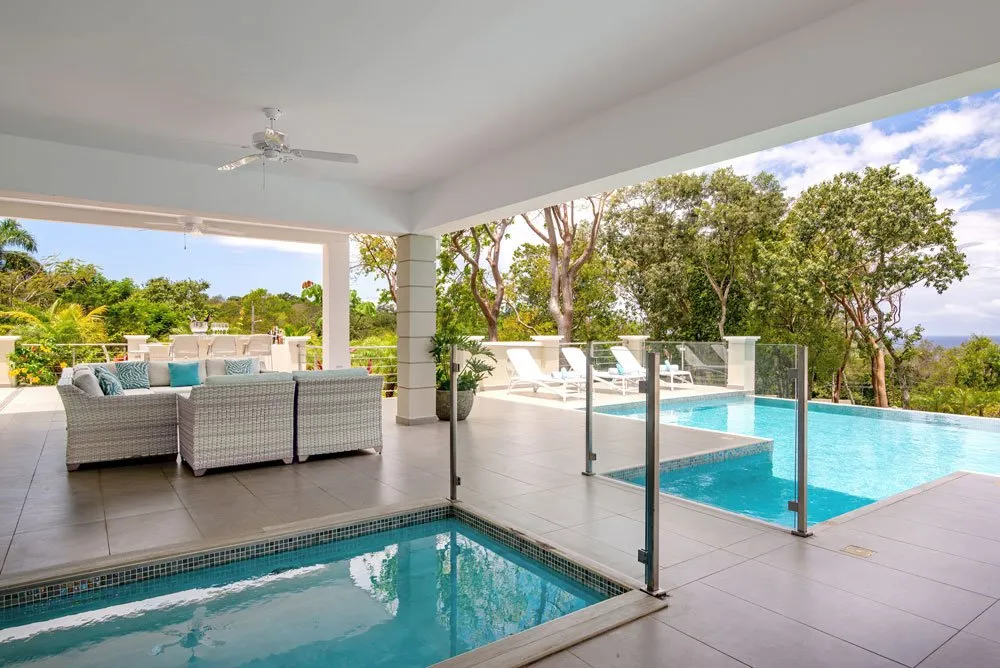
BougainVilla itself is designed for exactly that kind of gathering. The six-bedroom villa sleeps up to 12 guests and unfolds across multiple levels with open-concept living spaces, sprawling terraces, and floor-to-ceiling glass that constantly pulls the outdoors inside. But before even stepping through the front doors, the experience begins with the drive up — bougainvillea flowers lining the entrance road and wrapping around the property in bursts of pink and purple against the hillside greenery.

And then there’s the welcome.

Our group of 10 was greeted not with a standard check-in, but with rum punch, wings, fresh fruit, a cheese plate, and crackers already waiting for us as the staff introduced themselves one by one. It immediately shifted the tone of the stay from “villa rental” to something much more personal.

A villa experience shaped by its staff

What quickly became clear over the weekend is that the staff are the soul of BougainVilla.

Chef Asa, the villa’s chef, brought energy into every meal. Funny, warm, and incredibly personable, he moved through the kitchen telling stories about guests and celebrities he had cooked for over the years while somehow still turning out meal after meal that felt thoughtful rather than routine. One friend described the food as feeling “like Christmas,” and honestly, that captured it perfectly — comforting, abundant, and the kind of cooking that keeps people lingering around the table long after plates are cleared. We ended up buying extra groceries just so Chef Asa and the team could continue cooking throughout the stay.

Everald, the butler, anchored everything else. He seemed to be everywhere at once — helping coordinate meals, checking in during late nights, making sure drinks were topped up, and setting up our playlists (and even football for the guys to watch). His attentiveness never felt forced or overly formal. Instead, it gave the villa a sense of ease that’s difficult to replicate. One of the most memorable moments of the weekend came during a birthday celebration when the staff gathered together to sing, revealing Everald’s surprisingly beautiful singing voice and turning what could have been a small moment into one that everyone talked about afterward.

Housekeepers Natoya and Melanie kept the villa immaculate throughout the stay without ever making the space feel interrupted or overly serviced. Rooms were refreshed daily, beds turned down at night, and towels replaced before anyone needed to ask.

A view of the master bedroom

The gardening team — Frederick, David, and Gregory — also became part of the experience. At one point, fresh mint was picked directly from the garden for tea, one of several small touches that made the estate feel connected to its surroundings rather than simply landscaped for appearance.

Even beyond the villa itself, the hospitality remained personal. Concierge manager Damion checked in on us throughout the arrival process, helping guide us to the property and later stopping by in person to introduce himself and make sure everything was going smoothly. Guest and Operations Director Alina Apostol from Southern Crescent Villas also stopped by during the stay, another thoughtful gesture that reinforced how hands-on and genuinely attentive the experience felt from beginning to end.

Designed to impress at every turn

Architecturally, the villa is striking in person in a way that photos can’t fully capture (so if you’re impressed by the photos, prepare to be blown away in person.) Everything is built around openness and flow. The living and dining spaces are intentionally designed so it’s often difficult to tell where indoors ends and outdoors begins. Neutral tones, sea-colored furnishings, and large conversational seating areas make the shared spaces feel social but never crowded. There is a full kitchen and pantry for guest use, multiple lounges, several flat-screen televisions, a Sonos home sound system throughout the villa, complimentary Wi-Fi in every room, air conditioning across the property, and even complimentary calls to the United States, United Kingdom, and Canada.

Upstairs, there is also a private gym, adding another layer of comfort for longer stays or groups who want to maintain a routine while away.

The outdoor areas are where the property truly expands. The infinity pool features views of the Caribbean Sea and connects seamlessly with an indoor pool element, creating a fluid transition between inside and outside spaces. Surrounding the pool are loungers and open terraces that naturally become gathering spaces throughout the day. There’s indoor and outdoor dining, along with a bar, allowing meals to stretch late into the evening under the stars. Just beyond the pool is a massive lawn framed by flowers and tropical landscaping — large enough to accommodate weddings and other events.

The six-bedroom layout is ideal for larger groups because every room feels intentional rather than secondary.

The master king suite, located on the second floor, features sea views and includes a large bathroom with a soaking tub, a walk-in closet, and direct access to the upper balcony. Another king bedroom on the second floor also opens onto the upper terrace with sea views and an en-suite bathroom with shower. A third king room can convert into twin beds and includes its own private patio overlooking the water.

A separate twin bedroom — also convertible into a king — faces the gardens, while another king suite on the first floor opens directly onto the pool patio. There is also a queen bedroom with a garden view located on the first floor and another bedroom adjacent. Every bedroom includes safes, televisions, robes, hair dryers, and body products, and several rooms can accommodate cots for younger children if needed.

Exclusive access

What makes BougainVilla especially compelling is that it combines the intimacy of a private home with access to resort-style amenities nearby. Guests receive membership privileges at Half Moon Golf, Tennis and Beach Club for the duration of their stay, including complimentary beach access, gym and tennis court use, and complimentary golf green fees (with carts and caddies extra). Through Half Moon, guests also have access to horseback riding at the equestrian center, kayaking, snorkeling, sailing, scuba diving, windsurfing, water skiing, squash courts, spa facilities, restaurants, and one of the area’s best-known white sand beaches.

Transportation is also integrated into the experience. Guests staying seven nights or longer receive a complimentary van and driver service (excluding fuel and gratuity), while airport transfers can be arranged directly through the villa.

Despite all of those luxury inclusions, what lingers most about BougainVilla is how human the experience feels. It never slips into the overly polished stiffness that sometimes comes with high-end accommodations. Instead, the villa feels lived in, warm, and deeply collaborative — a place where the staff remembers your preferences, where conversations drift between the kitchen and poolside, where sea views frame almost every moment, and where the atmosphere quietly adapts around the people staying there.

It’s not an all-inclusive resort. It’s not beachfront. It’s not designed for travelers looking to walk outside into nightlife or crowds.

What it offers instead is something more private and increasingly rare: the feeling of gathering with people you care about in a beautiful space that’s fully cared for, where every detail — from the mint in your tea to the late-night birthday singing echoing through the villa — feels intentional.

US reaffirms disaster response commitment in Caribbean ahead of hurricane season

Cuba crisis
© UNICEF/Claudio Pelaez Hurricane Melissa struck Cuba in late October 2025, causing massive devastation across the island nation (file)

The United States has reaffirmed its commitment to strengthening disaster preparedness and emergency response across the Caribbean and wider Western Hemisphere ahead of the 2026 Atlantic hurricane season.

In a statement released by the U.S. Department of State on May 6, 2026, officials said the initiative builds on the United States’ response to Hurricane Melissa in 2025, which impacted multiple countries across the region, including parts of the Caribbean.

The State Department said it will deepen coordination with the U.S. Southern Command through a newly established Bureau for Disaster and Humanitarian Response (DHR), aimed at improving regional readiness for hurricanes and other natural disasters.

As part of the plan, the United States will launch its first humanitarian assistance hub in South Florida, designed to support rapid deployment of emergency relief supplies to the Caribbean and surrounding areas. The hub will also serve as a coordination centre for pre-positioned aid strategically located throughout the region.

The initiative includes embedding disaster and humanitarian advisors within Southern Command to enhance technical expertise and civil-military coordination during emergency response operations.

The State Department said the goal is to strengthen its capacity to respond to sudden-onset disasters and complex humanitarian emergencies across the region, noting that disaster response remains a core component of U.S. engagement in the hemisphere.

Under what the administration described as its “America First Foreign Assistance” approach, the United States will dedicate 20 percent of its total assistance resources to the region, with a stated focus on advancing U.S. priorities while supporting regional resilience.

Officials said the expanded framework is intended to improve coordination, speed up response times, and reinforce American leadership in disaster preparedness and humanitarian assistance across the Caribbean and the broader Western Hemisphere.

British Virgin Islands to introduce immigration quota system under new planning framework

Belize moves to digital immigration, customs declaration system

The government of the British Virgin Islands is moving to introduce a structured immigration quota-setting system as part of planned amendments to the Immigration and Passport Act, aimed at aligning migration with national development priorities.

According to information shared in a recent social media post by the Ministry of Financial Services, Economic Development & Digital Transformation, the new approach will replace what officials described as an unstructured system.

The post stated that there had previously been no formal link between immigration and national planning. Under the proposed framework, however, quotas will be tied to economic, labour, housing and demographic data.

The reforms are part of broader legislative amendments that include the establishment of an Immigration Quota-setting Committee under new provisions inserted into the law. The committee will be responsible for analysing population trends, labour market conditions and housing availability, as well as determining annual immigration quotas for residence or belonger certificates “in accordance with the quota-setting objectives and the capacity of the territory.”

The committee will also monitor outcomes and recommend adjustments where necessary.

The government said the new system is intended to ensure that “the number of persons entering key sectors in the territory will not be left to chance,” adding that decisions will be guided by “clear quotas that are aligned with national priorities while supporting opportunity and growth across the territory.”

Officials stressed that immigration must be carefully managed in a small island context, where population growth can place pressure on infrastructure, housing and social services. The policy framework notes that unmanaged migration can strain resources and affect economic stability, making deliberate planning essential.

The Immigration and Passport Act, first enacted in 1977, provides the legal basis for controlling entry, residence and employment in the territory, including the granting of certificates of residence and belonger status.

The amendments, passed in the House of Assembly in May 2024, expand that framework by introducing mechanisms to regulate the volume and composition of persons granted such status.

Officials said the changes are aimed at creating “a fair and efficient immigration system,” with decisions becoming “more strategic and data-driven.”

Jamaica tightens port surveillance amid hantavirus outbreak on cruise ship

Jamaica CMO
Jamaica’s Chief Medical Officer, Dr Jacquiline Bisasor-McKenzie

Jamaica’s health and border management authorities are increasing monitoring of cruise ships arriving in the island’s ports as a precautionary measure following an outbreak of hantavirus aboard a vessel currently off the coast of Africa.

The virus, which is spread by rodents, has been linked to at least three deaths and several infections on board a cruise ship that departed Argentina on April 1 and has since travelled through parts of the South Atlantic before arriving near Cape Verde.

Three infected passengers were evacuated from the vessel in Cape Verde on Wednesday morning.

Chief Medical Officer Dr. Jacquiline Bisasor-McKenzie said Jamaica is taking precautionary steps due to its position as a major cruise destination, but stressed that the risk of spread remains low.

“The vessel is off the coast of Africa,” she noted, adding that the World Health Organization has assessed the situation as posing a low risk for global transmission.

Dr. Bisasor-McKenzie also said consultations with local health officials have found no evidence of hantavirus in rodents in Jamaica.

However, she confirmed that increased vigilance will be maintained at ports of entry.

She further noted that while Jamaica does not currently have in-country laboratory capacity to test for hantavirus, samples can be processed regionally through the Caribbean Public Health Agency. She added that local testing capacity could be scaled up if needed, similar to arrangements made during the COVID-19 pandemic.

Hantaviruses are a family of viruses that can cause severe illness, including hantavirus pulmonary syndrome and hemorrhagic fever with renal syndrome. According to international health authorities, a total of seven cases — including three deaths — have been reported aboard the affected cruise ship, which carries passengers and crew of multiple nationalities and is currently moored off Cabo Verde.

Health officials in Jamaica say enhanced monitoring will continue as part of broader port safety measures, particularly given the country’s reliance on cruise tourism.

BCPS to honor 50 students and 22 staff at 26th annual Character and Stellar Attendance Awards

broward schools

Broward County Public Schools (BCPS) will recognize outstanding students and staff at its 26th Annual Kids & Staff of Character Awards and Stellar Attendance Recognition ceremony on Monday, May 11, 2026, at Bailey Concert Hall at Broward College. The event begins at 6:30 p.m., and media are invited to attend.

The ceremony will honor 50 students and 22 staff members who exemplify the district’s eight core character traits: cooperation, responsibility, citizenship, kindness, respect, honesty, self-control and tolerance.

The program will also celebrate students who have achieved perfect attendance at the elementary, middle and high school levels. Two students will be recognized for maintaining perfect attendance from kindergarten through grade 12, marking what the district described as an exceptional demonstration of commitment and resilience.

BCPS said the character traits are integrated into classroom instruction and reinforced throughout the school year to promote positive behavior and safe, respectful learning environments. Schools across the district nominate students and staff who consistently embody these values.

Kids of Character honorees include:

  • Cypress Bay High School: Marcela Aleman-Pardi
  • Atlantic West Elementary School: Didiana Alexis
  • Meadowbrook Elementary School: Jayden Y. Artiles
  • Colbert Elementary School: Leslie Esmeralda Ascencio
  • Marjory Stoneman Douglas High School: Melanie Barrett
  • Coral Springs High School: Sara Benitez
  • Horizon Elementary School: Mia Campbell
  • Hawkes Bluff Elementary School: Tyanna Carthen
  • Dr. Martin Luther King, Jr. Elementary School: Prince Charles
  • Broward Virtual School: Naisha Chaya
  • Henry D. Perry Education Center: Maddison Crowley
  • New River Middle School: Josephine Dare
  • Sawgrass Springs Middle School: Brooklyn Defroscia
  • Lauderhill 6-12 STEM MED: Austin Elliot
  • Coral Cove Academy of the Arts: Mia Fortune
  • North Andrews Gardens Elementary School: Thalia Galarza
  • Somerset Parkland Academy: Noah Gomes
  • Pembroke Lakes Elementary School: Lucia Graterol
  • Challenger Elementary School: Ariana Grey
  • Riverglades Elementary School: Westin Hill
  • Bennett Elementary School: Amir Irons
  • Charles Drew Family Resource Center: Geraldine Lopez-Hernandez
  • Mirror Lake Elementary School: Adalynn Martinez
  • James S. Hunt Elementary School: Alan Quilo Martinez
  • Oakland Park Elementary School: Sandra Martinez
  • Discovery Elementary School: Khamryn Mills
  • Harbordale Elementary School: Kamila Miyerov
  • Tedder Elementary School: Daniel Morales
  • Coral Springs Charter School: Gavin Palmer
  • South Broward High School: Ayeliz Perez
  • Nova High School: Braxton Perry
  • Griffin Elementary School: Indiana Pichardo
  • Glades Middle School: Valentina Pisani
  • Cooper City Elementary School: Aspen Preston
  • Tequesta Trace Middle School: Abigail Reznik
  • Hollywood Hills High School: Janeth Rodas-Aguilar
  • Oakridge Elementary School: Oleksandr Sentmartoni
  • Sunrise Middle School: Jeremiah Sevil
  • Nova Middle School: Shawn Andre Sinanan
  • Ramblewood Middle School: Emma Smith
  • Monarch High School: Steven Strong
  • Flamingo Elementary School: Olivia Swanno
  • North Fork Elementary School: Venesha Thompson
  • Bair Middle School: Laura Toussaint
  • McNab Elementary School: Daniel Tsapchuk
  • Boulevard Heights Elementary School: Esther Grace Williams

Staff of Character honorees include:

  • Marjory Stoneman Douglas High School: Ashley Bravo
  • Tequesta Trace Middle School: Varetta Cooper
  • Deerfield Beach Elementary School: Druker Cunningham
  • Cooper City Elementary School: Nancy Cylke
  • School Counseling Department: Belinda Daise
  • Discovery Elementary School: Donald Franklin
  • Oakridge Elementary School: Tricia Gaynor
  • Plantation Park Elementary School: Michelle Hartman
  • Pines Collegiate Academy 6-12: Kerren Joseph
  • Atlantic Technical College & High School: Kathy Kelly
  • Seagull Alternative High School: Christel Maska
  • Hollywood Hills High School: Shantel McCall
  • Coral Springs Charter School: LaSylvia McCorvey
  • William Dandy Middle School: Lashonne McIntyre-Oliver
  • Lauderhill Paul Turner Elementary School: Kim Norris
  • Park Springs Elementary School: Jennifer Pugatch
  • Avant Garde Academy: Crystal Rahyns
  • Boulevard Heights Elementary School: Kaslyn Romero
  • Stirling Elementary School: Rob Scollon
  • Winston Park Elementary School: Chantal See
  • Ramblewood Middle School: Pillar Studstill
  • School Culture and Student Support: Cynthia Tapia-Rodriguez

BCPS said the event highlights both academic commitment and positive character development across the district.

Diaspora urged to move from remittances to strategic investment in Jamaica

western union remittances

The Jamaican diaspora was urged to shift from traditional remittances toward long-term, strategic investment in national development as Jamaica’s Ambassador to the United States, Major General (Ret’d) Antony Anderson, delivered a pointed address in Atlanta over the weekend.

Speaking at a signature event hosted by The Elaine Bryan Foundation, Ambassador Anderson said diaspora contributions must evolve beyond household support to more structured engagement in enterprise, innovation and nation-building.

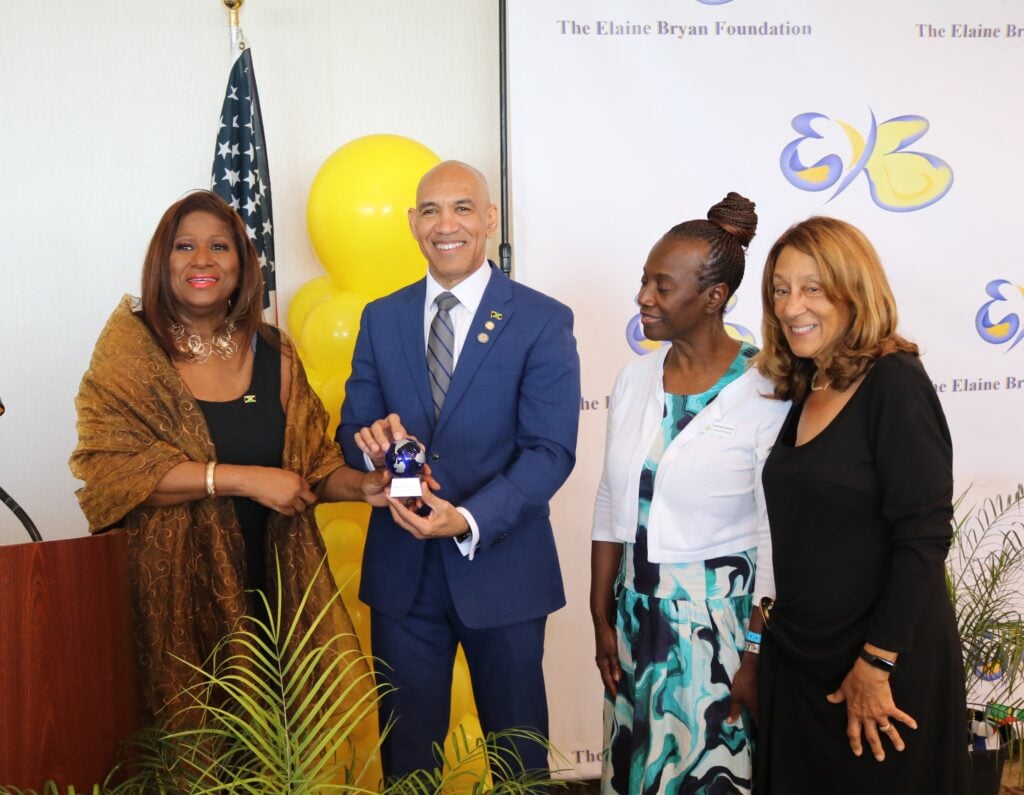
Jamaica’s Ambassador to the United States, Major General (Ret’d) Antony
Anderson, receives a gift from Jamaica’s Honorary Consul in Atlanta, Dr Elaine
Grant Bryan, following his keynote address at the Elaine Bryan Foundation
Inspirational Luncheon at the Buckhead Club in Atlanta on Sunday, May 3, 2026.
Looking on (right) are Dr Dahlia Pottinger and Bernie Layne.

The gathering, held at the Buckhead Club in Atlanta, Georgia on Sunday, May 3, 2026, was organized by The Elaine Bryan Foundation, the philanthropic arm of Dr. Elaine Bryan, Jamaica’s Honorary Consul to Atlanta. The event brought together civic leaders, business professionals, diplomats and members of the wider Caribbean community.

Framing his remarks as a call to action, Anderson said the diaspora’s role in Jamaica’s development must be seen in broader terms.

“What is happening here is not simply giving back. This is nation-building.”

The foundation has built a growing profile supporting students across Jamaica and the Caribbean through education-focused initiatives aimed at leadership development and social mobility.

Ambassador Anderson said while remittances remain a vital economic pillar for Jamaica, they are no longer sufficient on their own to drive sustainable growth.

“The diaspora has always been there in times of need. What is required now is a shift from support to strategy, leveraging that commitment into sustained investment, enterprise, and national development,” he said.

He pointed to the gathering itself as evidence of the diaspora’s reach and influence, noting the presence of professionals, entrepreneurs and leaders across multiple sectors. He also signaled plans to deepen formal ties between Jamaica and Atlanta as a hub for economic and cultural collaboration.

A significant portion of his remarks focused on Jamaica’s recovery from Hurricane Melissa, which caused widespread damage across several parishes and strained infrastructure and services.

Anderson praised coordinated recovery efforts, noting that despite the scale of the disaster, Jamaica had restored most essential services within months. He also highlighted the role of diaspora-led organizations in supporting relief efforts.

“The Elaine Bryan Foundation demonstrated once again that diaspora organisations can serve as genuine first responders—not just in spirit but in action,” he said.

“You cannot rebuild an economy on sympathy. You rebuild it by restoring activity, restoring confidence, and restoring people’s ability to earn.”

The event also served as a platform for the foundation to highlight its ongoing work supporting education and community development initiatives for underserved students.

Closing his address, Ambassador Anderson returned to the theme of shared responsibility.

“This is an investment in you. And your duty is to invest in others.”

The gathering underscored Atlanta’s growing role as a center of Caribbean diaspora influence in the United States and reinforced the Elaine Bryan Foundation’s position as a key link between Jamaica’s development agenda and its global community.

CARICOM deploys election observer mission to Bahamas ahead of general election

CARICOM mission Bahamas

The Caribbean Community has deployed a 12-member election observer mission to The Bahamas ahead of the country’s general election scheduled for May 12.

The mission, organized by the CARICOM Secretariat, was deployed following an invitation from Cynthia A. Pratt, governor-general of The Bahamas.

The team is being led by Herman St. Helen, chief elections officer of Saint Lucia. Serving as deputy chief of mission is Debra Hughes, chairperson of the Electoral Commission of Barbados.

Other members of the delegation include election and public service officials from Antigua and Barbuda, Dominica, Grenada, Haiti, Jamaica, St. Vincent and the Grenadines and Suriname.

According to CARICOM, the observer mission will conduct an impartial assessment of the electoral process, including the pre-election and post-election environment, political conduct and election-day procedures.

The mission’s core group arrived in The Bahamas on May 5, while the remaining members are expected to arrive between May 7 and 8. The delegation is scheduled to remain in the country through May 15.

Ahead of election day, the observer team is expected to meet with government officials, opposition leaders, political parties, independent candidates, civil society organizations and election officials.

CARICOM said the team has already met with Shanta Emily Knowles, commissioner of police, as well as youth organizations and members of the media.

On election day, observers will monitor the opening of polling stations, the voting process, ballot counting and preparation of official poll statements.

Following the election, the mission will issue a preliminary statement outlining its initial assessment before preparing a final report to be submitted to the CARICOM secretary-general. The report will also be shared with the Bahamian government, opposition and the Parliamentary Registration Department, and published on CARICOM’s website.

Dominican-American Makai Henry launches bid for Broward School Board seat

Makai Henry

Makai Henry, a 20-year-old substitute teacher and the son of Dominican immigrants, announced Thursday that he is running for the Broward County School Board’s District 6 seat, positioning himself as a public education advocate focused on literacy, teacher pay and overcrowded classrooms.

Henry, a first-time candidate and graduate of Nova High School, said his connection to Broward County Public Schools runs deep. His mother, a union teacher originally from Dominica, has worked in the district for nearly two decades, and Henry himself regularly works in classrooms across the county as a substitute teacher and debate coach.

He is challenging incumbent Adam Cervera, a lawyer appointed last year by Florida Gov. Ron DeSantis to fill the seat vacated by Brenda Fam. If successful, he would join Jamaican-born Jeff Holness as the only school board members with Caribbean roots.

“Broward has a literacy crisis unlike any other, and education is on the chopping block,” Henry said, pointing to the district’s projected budget shortfall of between $90 million and $100 million.

Henry criticized district leaders for responding to declining enrollment with school closures and job cuts rather than addressing why families are leaving the public school system.

“Our county’s leadership is blaming declining enrollment for the problem, but their answer is to close schools and cut thousands of jobs across the county,” he said. “No one is asking where Broward’s students went. They went to charter and private schools on voucher dollars that Tallahassee is handing out like candy. Broward’s leadership is responding to the exodus by lowering the quality of education even further. This is managing decline, not saving public education.”

Henry argued that while Broward’s graduation rate exceeds 90%, many students are still struggling academically.

“We’ve delinked literacy from graduation in Broward,” he said. “Parents aren’t leaving because they hate public schools. They’re leaving because we’ve stopped investing in what makes them work. Fix the classroom and families come back.”

According to Henry, reversing enrollment declines requires reinvestment in public education rather than additional cuts.

“The way we solve the budget crisis is by stopping the death spiral,” he said. “Improve education in our public schools and students will return. No one is making the argument to voters that public education is worth fighting for. I will.”

Henry drew a contrast between himself and Cervera, criticizing the incumbent’s ties to Tallahassee and campaign spending.

“Adam is just another man from Tallahassee. I’m a son of Broward trying to fight for public education,” Henry said. “Adam Cervera is a millionaire corporate lawyer who dumped $50,000 from his bank account into a school board race. Adam has dumped my mother’s entire salary into this race by himself. He’s spent most of his adult life in Miami. He wasn’t even registered to vote here before being appointed. He thinks money, mailers, and incumbency are enough. But Broward’s not for sale.”

Henry said reducing class sizes, particularly at the elementary level, would be a major priority if elected.

“We need dramatically smaller class sizes in elementary education,” he said. “I see too many classrooms full of students.”

He also criticized the district’s teacher pay structure, arguing it discourages educators from remaining in the profession.

“The school board wants quality education but doesn’t want to pay educators the dollars and cents to make it happen,” Henry said. “In Broward we have pay scales that are effectively flat from zero to sixteen years of experience. Nearly half their career, their wages don’t grow a dime.”

“It’s no wonder we’re facing a shortage of teachers in Broward,” he added. “You can’t support a family on that. We ask teachers to care for our children, look after their best interests, but this county has done nothing to look out for them.”

Henry summarized his campaign around what he described as three core issues facing the district.

“Broward’s teachers are underpaid. Broward’s classrooms are overcrowded. Broward’s students deserve better,” he said. “Adam Cervera has no plan. I do.”

More information about Henry’s campaign is available at Sonofbroward.org.

Throp-X Investment Conference returns to Negril with focus on western Jamaica’s growth potential

Real Estate Panel discussing the current state of the real estate market in Jamaica and the Throp-X 2025 staging, the Jamaica Relief Edition. Pictured left to right: Winthrope Wellington; Maura Watson - Realtor, DC Tavares; Sandy Tatham - Realtor, Coldwell Banker

As investor interest in Jamaica accelerates amid ongoing infrastructure expansion and real estate development, the Throp-X Investment Conference will return to Negril this May for its fifth staging, positioning western Jamaica at the center of the island’s next phase of growth.

The week-long conference, scheduled for May 24-30 at Traveller’s Beach Resort, will bring together local and international investors, members of the diaspora, developers and policymakers for a practical, on-the-ground look at what it takes to invest, build and operate in Jamaica today.

The event will be hosted by Kalilah Reynolds, a leading voice in business and financial journalism.

“Jamaica is entering a defining period of development, particularly in the West, where infrastructure, tourism and real estate are converging,” said Winthrope Wellington, founder and CEO of Throp Media and Throp-X. “This conference is about giving people real access — to projects, to experts and to the kind of insight that allows them to move from interest to action.”

Designed as an immersive experience, Throp-X goes beyond traditional conference formats. Built on four core pillars — education, exploration, action and networking — the conference is structured to guide participants through every stage of the investment journey, from learning and discovery to execution and connection.

Across the week, attendees will participate in guided real estate tours throughout Negril, Westmoreland, and Treasure Beach, St. Elizabeth, offering firsthand exposure to active and emerging developments. These tours are a core feature of the conference, allowing participants to see opportunities on the ground while engaging directly with developers and industry professionals.

The program also includes curated networking events and a series of panel discussions that unpack the realities of investing in Jamaica. Discussions will examine the current real estate market, including how it has shifted in recent years, and explore what it takes to move a project from concept to completion — from design and budgeting to construction and regulatory approvals.

Additional sessions will provide insight into Jamaica’s business environment, guiding attendees through the practical steps required to start and operate a business, as well as the broader economic trends shaping investment decisions.

Key conversations will also address financial planning, access to financing, and the importance of building resilience in the face of climate-related risks — an increasingly critical consideration for investors and developers alike.

Updates on major infrastructure developments, including the Negril airport project, will further highlight the growth potential of the western region and its impact on tourism, connectivity and real estate demand.

“Too often, people see the opportunity in Jamaica but underestimate the complexity,” Wellington added. “We’re creating a space where those realities are broken down honestly — from costs and timelines to regulations and risk — so investors can move forward with clarity and confidence.”

By spotlighting Negril and the wider Westmoreland area, Throp-X aligns with broader national priorities around infrastructure expansion, sustainable development and investment-led growth. The conference aims to connect capital with credible opportunities while supporting more informed, resilient and strategic investment across the island.

Registration for the fifth staging of the Throp-X Investment Conference is now open, with options for full-week access, single-day passes and limited virtual participation. Interested participants can visit www.thropx.com for more information.

The conference is supported by a prestigious roster of partners, including platinum sponsor Treasure Bay Estates — a premier luxury residential development on Jamaica’s south coast — which will be a featured stop on the real estate tour and a key contributor to the expert real estate panel.

Joining them is the Victoria Mutual Group, serving as the official banking partner, with representatives on-site to provide attendees with direct assistance in establishing personal and business banking solutions.

The Throp-X Investment Conference was born out of the “On Deck with Throp” podcast, where conversations around business and investment first gained traction. Today, it serves as a physical extension of that platform, bringing those discussions into real-world spaces where connections are made and investments begin.

What it’s really like to invest and live in Antigua and Barbuda in 2026

1-USE-THIS-ONE-Shirley-Heights-Antigua-and-Barbuda-Photo-courtesy-Antigua-and-Barbuda-Tourism-Authority-2
Antigua and Barbuda

Antigua and Barbuda is often mentioned in lists of “top Caribbean destinations” or “best places for investors.” But those overviews rarely answer the real question:

What does it actually look like to use this country as part of your business or investment strategy?

If you’re considering Antigua and Barbuda in 2026, here’s a more practical breakdown — beyond the usual selling points.

The First Thing Investors Notice: It’s Small — and That Matters

Antigua and Barbuda isn’t a large or complex market. That can be a downside if you’re looking to build a scalable local business.

But for many investors, it’s actually an advantage.

  • decisions are made faster
  • bureaucracy is relatively limited
  • it’s easier to build local connections

In practice, this means you’re not “entering a market” — you’re entering a network.

You’re Not Investing in the Economy — You’re Investing Around It

This is where many expectations don’t match reality.

Most foreign investors in Antigua and Barbuda are not:

  • launching large operational businesses locally
  • relying on domestic demand

Instead, they typically use the country as a base for:

  • asset diversification
  • real estate investment
  • international structuring

The local economy (mainly tourism-driven) supports this model, but isn’t the core reason people invest.

Real Estate: Not Just About ROI

Real estate is one of the most common entry points, but it’s often misunderstood.

Yes, there are returns — especially in:

  • short-term rentals
  • resort-linked properties

But experienced investors look at it differently:

  • as a way to park capital in a stable jurisdiction
  • as a lifestyle asset with upside
  • as part of a broader mobility strategy

Liquidity is lower than in major markets, so expectations need to be realistic.

The “Second Passport” Factor — What It Actually Changes

This is where Antigua and Barbuda becomes part of a bigger picture.

For many entrepreneurs, the interest in the country isn’t just about real estate or lifestyle — it’s about optionality.

Having a second citizenship can:

  • simplify travel logistics
  • reduce dependency on one country
  • create flexibility in how you structure your life and business

This is precisely why investors often view options such as obtaining citizenship through investment not as an end in itself, but as part of a long-term strategy.

In the case of Antigua and Barbuda, citizenship by investment is closely tied to the country’s broader positioning as an investor-friendly jurisdiction.

Day-to-Day Reality: Slower, But Predictable

One thing that doesn’t get mentioned enough — the pace.

Things move slower here than in Europe or the US:

  • administrative processes
  • deal timelines
  • general business communication

But it’s not chaotic — it’s consistent.

Once you adjust expectations, this predictability can actually make planning easier.

Banking and Operations: Manage Expectations

Opening accounts and running financial operations is possible — but not frictionless.

Compared to major financial centers:

  • compliance checks are stricter
  • timelines can be longer
  • international structures often still rely on external jurisdictions

In other words, Antigua is rarely your only base — it’s one piece of a larger setup.

Who This Actually Works For

Antigua and Barbuda is not for everyone.

It tends to work best for:

  • entrepreneurs with location-independent income
  • investors diversifying internationally
  • people building a multi-jurisdictional lifestyle

It’s less suitable if you:

  • need a large local market
  • depend on fast-moving operational environments
  • want immediate high-liquidity investments

The Real Advantage: Flexibility

What Antigua and Barbuda really offers is flexibility.

Not just in terms of taxes or travel — but in how you structure your life.

You’re not locked into one system.
You’re not dependent on one country.
You have options.

And in 2026, that’s becoming one of the most valuable assets an entrepreneur can have.

Final Thought

Antigua and Barbuda isn’t a “growth market” in the traditional sense. It’s a strategic tool.

If you approach it that way — as part of a broader international setup — it can play a very useful role.

If you expect it to function like a major economy, you’ll likely be disappointed.

The difference is in the expectations.


Things to know before you shop for sig sauer holsters

Senior man doing window shopping

Choosing the right holster for your Sig Sauer firearm is more than just a purchase—it’s a decision that affects safety, comfort, and daily usability. With multiple models and holster styles available, it’s important to understand what truly matters before making a choice. A well-selected holster not only secures your firearm but also ensures smooth access and long-term reliability and shop sig sauer holsters.

Understanding Your Firearm Compatibility

Before anything else to shop sig sauer holsters, you need to ensure the holster is designed specifically for your Sig Sauer model. These firearms come in different sizes and configurations, and even slight variations can impact fit.

A properly fitted holster:

  • Holds the firearm securely
  • Prevents unnecessary movement
  • Allows a consistent and smooth draw

Using a generic or poorly fitted holster can compromise both safety and performance, so always prioritize model-specific compatibility.

Choosing the Right Carry Style

Your preferred carry method plays a major role in selecting the right holster. The choice depends on your lifestyle, clothing, and level of activity.

Common Carry Styles

  • Inside-the-Waistband (IWB): Ideal for concealed carry
  • Outside-the-Waistband (OWB): Better for comfort and accessibility
  • Appendix Carry: Offers quick access
  • Shoulder or Alternative Styles: Suitable for specific needs

Each option has its pros and cons, so consider what feels natural and practical for your everyday routine.

Selecting the Right Material

Holster material affects durability, comfort, and maintenance. The most common options include:

  • Leather: Known for comfort and a classic look
  • Kydex or Polymer: Durable, lightweight, and low-maintenance
  • Hybrid: Combines comfort with structural support

Your choice should depend on how often you carry and the conditions in which you’ll use the holster.

Retention and Safety Features

Retention refers to how securely the holster holds your firearm. This is one of the most critical aspects of any holster.

What to Look For

  • Adjustable retention levels
  • Secure grip during movement
  • Smooth but controlled draw

A well-balanced holster keeps your firearm in place without making it difficult to access when needed.

Comfort for Everyday Use

If you plan to carry your firearm regularly, comfort should be a top priority. An uncomfortable holster can quickly become impractical.

Key comfort factors include:

  • Smooth edges to prevent irritation
  • Proper weight distribution
  • Breathable or padded backing

A comfortable holster encourages consistent and responsible carry habits.

Compatibility with Accessories

Many Sig Sauer firearms are equipped with accessories such as lights or optics. Not all holsters are designed to accommodate these additions.

Before purchasing, make sure the holster:

  • Supports mounted accessories
  • Maintains proper fit and retention
  • Allows easy access despite added components
  • Ignoring this factor can lead to poor fit and reduced usability.

Durability and Build Quality

A holster is a long-term investment, so durability matters. High-quality materials and construction ensure consistent performance over time.

Look for:

  • Strong stitching (for leather holsters)
  • Rigid and precise molding (for polymer holsters)
  • Durable clips and fasteners

A well-built holster will maintain its shape and function even with regular use.

Legal Considerations

Before finalizing your purchase, it’s important to understand the legal requirements in your area. Regulations around firearm carry can vary, and your holster choice should align with those laws.

Staying informed helps you:

  • Avoid legal complications
  • Carry responsibly
  • Choose the appropriate holster style

Conclusion

Shopping for a Sig Sauer holster requires careful consideration of several factors, including compatibility, carry style, material, and safety features. It’s not just about appearance—it’s about finding a solution that works seamlessly with your lifestyle.

By taking the time to evaluate your needs and understanding what to look for, you can invest in a holster that offers comfort, reliability, and peace of mind every day.

GetMyBoat brings a Montego Bay yacht experience to life aboard Knot Stressing JA

Knot Stressing JA

Booking a private yacht in Montego Bay increasingly runs through digital platforms, and in this case, GetMyBoat acted as the bridge between a global marketplace and one of Jamaica’s more visible local charter operators, Knot Stressing JA.

The platform, often described as an “Airbnb for boats,” connects travelers with yacht owners and operators worldwide, and in Jamaica it has helped funnel bookings toward companies like Knot Stressing JA — a Montego Bay-based charter outfit operating since 2021. The company also takes direct bookings through its own channels and has expanded in recent years into jet car experiences, adding a different kind of water-based thrill to its offerings. Globally, GetMyBoat has become particularly active in boating and charter hubs such as Miami, the Bahamas, and French Polynesia, as well as Caribbean destinations like the Dominican Republic, Puerto Rico, the US Virgin Islands, and Barbados, where private yacht and day-charter tourism is a major draw.

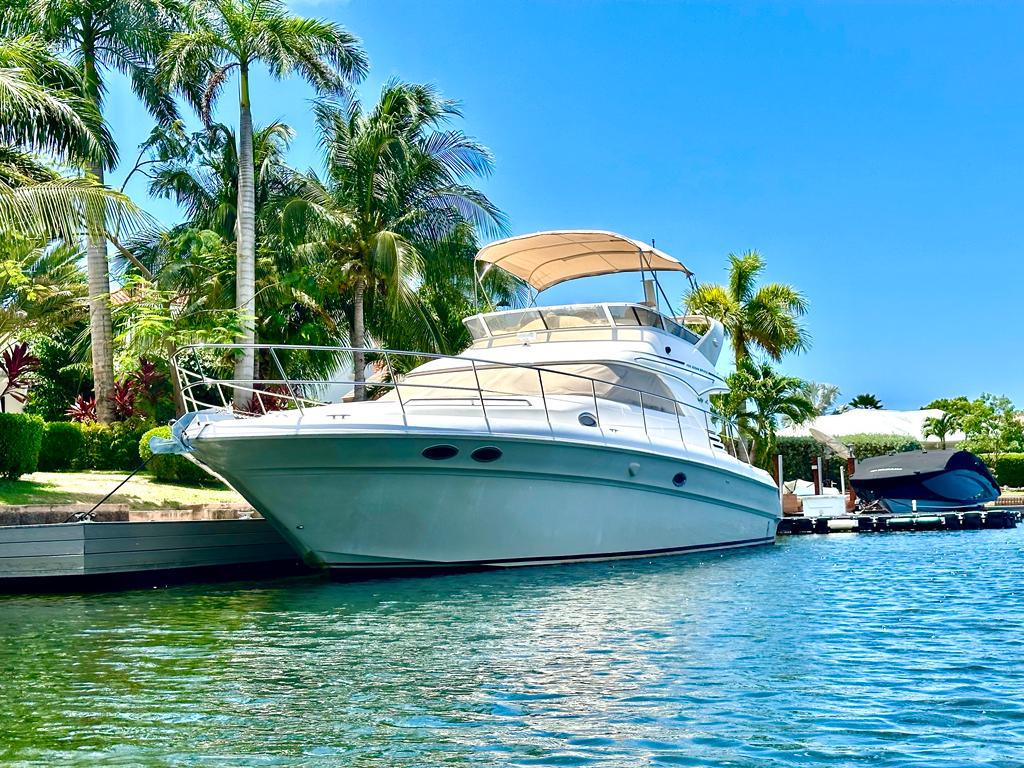
The experience took place aboard Knot Stressing JA’s flagship 46-foot Sea Ray Sundancer called SIR KnotStressin, the largest vessel in its fleet. Designed for group charters, the yacht is configured for comfort and social cruising rather than minimal, stripped-down sailing. Onboard features include a spacious air-conditioned cabin, two bathrooms with showers, a flybridge deck, a small galley-style kitchen area, a smart TV, and a Bluetooth sound system that gives guests control over the soundtrack of the day.

Even with nine passengers onboard, the layout felt open, with movement flowing easily between shaded interior seating and the upper deck lounge areas as the boat traced the Montego Bay coastline.

The itinerary unfolded over roughly five hours, beginning at Marina Palms’ new location on Howard Cooke Boulevard before guests boarded for a coastal cruise that later anchored at Doctor’s Cave Beach — one of the area’s best-known public beaches. Entry fees were covered as part of the package, and guests were able to use the facilities at the beach, while also swimming using floats provided. A certified lifeguard remained on duty throughout the trip, reinforcing the safety structure behind what is marketed as a relaxed, private experience.

A notable part of the Knot Stressing JA offering is its emphasis on celebrations and special occasions, and that came through clearly during this trip, which doubled as a birthday outing. The boat was decorated ahead of departure, and a birthday cake was presented onboard, adding a personal touch that went beyond standard charter service and reflected how the company tailors experiences to individual bookings.

Food and drink formed a central part of the offering, though there was one notable adjustment. The standard catering partnership with Marina Palms — which is expected to provide curated food and cocktail service — was not yet active at the time of the trip, as the restaurant was still relocating and set to open later in May.

Instead, the crew adapted on the fly. Drinks included rum punch, mixed spirits with sodas and mixers, bottled water, and beer. While the advertised “unlimited house cocktails” were not fully in operation due to the transition, the service remained consistent and responsive throughout the day.

Food came in the form of catered platters featuring escoveitched fish bites, shrimp kebabs, and crispy chicken strips, alongside additional requests made during the trip, including chicken sliders that were added at the guest’s request. The overall impression was less about rigid menus and more about flexibility in execution.

The crew — including host Deidrick, Chief Stewardess Shadeka, two additional staff members, and the boat driver — handled the flow of the day with steady coordination. Music was adjusted throughout the cruise, drinks were served continuously, and photos were taken, giving the experience a highly personalized rhythm without feeling staged. According to Deidrick, the company attracts a fairly even mix of tourists and locals, with many guests also returning for repeat bookings.

The most visually striking moments came from the environment itself. The yacht passed clusters of houseboats and waterfront structures along the coast, along with other large leisure vessels moving through the same waters. At one point, commercial jets descending into Sangster International Airport flew unusually low overhead, creating a sharp contrast between aviation and marine leisure — a perspective often associated with St. Maarten’s famous beach plane-spotting scenes, but here viewed from open water.

Beyond the yacht experience itself, Knot Stressing JA has been expanding its activity base. In 2024, it introduced jet car rentals — small, water-based vehicles designed for short, high-energy rides. Pricing is set at approximately USD $250 for two people for 30 minutes, or about $125 per person on a four-person ride.

The yacht experience itself starts at roughly USD $3,000 for a four-hour charter accommodating up to 12 guests, with floats, snorkeling gear, towels, and standard amenities included.

Taken together, the operation sits somewhere between private charter service and curated tourism product — with GetMyBoat functioning as the entry point, Knot Stressing JA handling execution, and the experience itself shaped heavily by on-the-ground hospitality.

In this case, the combination of setting, service, and adaptability delivered a day that felt both structured and fluid — less like a fixed tour and more like a floating space designed around its guests in real time.

Bookings can be made either through GetMyBoat’s platform or directly via Knot Stressing JA’s own website.

Teeth straightening cost guide: Braces vs Invisalign explained

If you have ever looked in the mirror and thought about improving your smile, you are not alone. Many people researching teeth straightening in Singapore are trying to understand not only how treatment works but also how much it costs and which option suits their lifestyle best. The decision often comes down to two popular choices: traditional braces and Invisalign.

Both options can effectively correct misalignment, but they differ in comfort, appearance, treatment experience, and overall cost. Understanding these differences helps you make a confident and informed decision instead of feeling overwhelmed by medical terms or pricing structures.

In this guide, you will walk through both treatments in detail, explore what affects cost, and learn how to choose the right solution for your smile journey.

Understanding Why Teeth Straightening Costs Vary

Before comparing braces and Invisalign, it is important to understand why prices differ from person to person. No two dental cases are the same, and treatment plans are always personalised.

Severity of Misalignment

Mild spacing issues are usually easier and faster to correct, while complex bite problems require longer treatment and more adjustments. Naturally, more complex cases tend to cost more due to additional monitoring and time.

Treatment Duration

Longer treatment timelines generally increase overall cost. This includes regular check-ups, adjustments, and ongoing supervision by the dental professional.

Type of Dental Technology Used

Modern orthodontic systems like Invisalign use advanced 3D scanning and custom aligners, which can influence pricing compared to traditional bracket-and-wire systems.

Braces: A Traditional and Reliable Option

Braces have been used for decades and remain one of the most effective methods for correcting even severe misalignment cases. They work through continuous pressure applied to teeth using brackets and wires.

How Braces Move Your Teeth

Once braces are placed, they gradually guide teeth into the correct position over time. Regular adjustments ensure steady progress and allow precise control over movement.

What Influences Braces Cost

The cost of braces typically depends on treatment complexity, material type (metal or ceramic), and the frequency of orthodontic visits. While they are often more affordable compared to some advanced alternatives, long-term cases may require extended maintenance.

Experience During Treatment

Patients often notice pressure after adjustments, but this usually subsides within a few days. The visibility of braces can be a concern for some, but their effectiveness remains one of the strongest advantages.

Invisalign: A Modern and Discreet Solution

Invisalign has transformed orthodontic care by offering a nearly invisible alternative to traditional braces. It uses a series of clear aligners that gradually shift teeth into place.

How Invisalign Works in Daily Life

You wear each set of aligners for a specific period before switching to the next set. The aligners are removable, which makes eating and brushing easier compared to fixed braces.

Why Invisalign Costs Differ

Invisalign pricing is influenced by the number of aligners needed, case complexity, and the level of customization required. Since each aligner is digitally designed, advanced scanning and planning are part of the treatment process.

Lifestyle Advantages

Many adults prefer Invisalign because it blends seamlessly into professional and social settings. It allows flexibility without drawing attention to the treatment itself.

Braces vs Invisalign: Key Cost Differences

When comparing both options, cost is often a major deciding factor. However, it is not just about the upfront price—it is about overall value, convenience, and suitability for your dental condition.

Treatment Complexity and Pricing Impact

Braces may be more suitable for complex alignment issues, while Invisalign is often recommended for mild to moderate cases. The complexity directly influences total cost for both options.

Maintenance and Follow-Up Visits

Braces require regular tightening appointments, while Invisalign involves periodic progress checks and new aligner sets. Both require commitment, but the structure of visits differs.

Long-Term Value Consideration

While initial costs may differ, the effectiveness and long-term stability of results matter just as much. A properly planned treatment reduces the likelihood of future corrections.

What You Should Expect During Your Smile Journey

Regardless of which option you choose, teeth straightening is a gradual process. At the beginning, you may feel slight pressure or adjustment discomfort as your teeth begin to move.

Over time, these sensations become normal, and progress becomes more visible. Regular dental check-ups ensure everything stays on track and adjustments are made when needed.

The most rewarding part of the journey is seeing your smile transform step by step. Many patients find that the confidence gained during treatment is just as valuable as the final result.

Choosing the Right Option for Your Needs

Selecting between braces and Invisalign is not just a financial decision—it is a lifestyle and dental health decision.

Consider Your Daily Routine

If you prefer a low-maintenance approach, braces may suit you better since they are fixed in place. If flexibility matters more, Invisalign allows you to remove aligners when needed.

Think About Aesthetic Preferences

If appearance during treatment is a concern, Invisalign offers a discreet solution. Braces, while more visible, are highly effective for complex cases.

Professional Dental Assessment Matters

A proper consultation helps determine which treatment aligns with your oral health needs and long-term goals. Self-assessment alone is not enough for making the right decision.

The Importance of Expert Dental Care

Choosing the right clinic plays a major role in both treatment success and overall experience. A well-structured orthodontic plan ensures accuracy, comfort, and predictable results throughout your journey.

Clinics like Nuffield Dental are often trusted by patients who want a personalised and professional approach to orthodontic care, where treatment plans are tailored based on detailed assessments and long-term oral health goals.

Conclusion

Understanding the difference between braces and Invisalign helps you make an informed decision about your smile transformation. While both options are effective, the right choice depends on your dental condition, lifestyle, and treatment expectations.

By exploring costs, treatment experiences, and long-term benefits, you gain clarity on what works best for you. Whether you choose traditional braces or Invisalign, investing in proper teeth alignment is ultimately an investment in confidence, comfort, and lasting oral health.

FAQs

1. Which is more affordable, braces or Invisalign?

Braces are generally more affordable, but total cost depends on case complexity and treatment duration for both options.

2. Is Invisalign as effective as braces?

Invisalign is effective for mild to moderate cases, while braces are better for complex alignment or bite issues.

3. How long does teeth straightening treatment take?

Treatment can range from several months to a few years depending on the severity of misalignment.

4. Does Invisalign hurt less than braces?

Both may cause mild discomfort initially, but Invisalign is often considered more comfortable by many patients.

5. Can adults still benefit from teeth straightening?

Yes, adults can successfully undergo both braces and Invisalign treatment as long as their gums and teeth are healthy.


 

Why you need a Lafayette car accident lawyer

car accident case

Car accidents can change your life in a few seconds upside down. The result of physical injuries and financial strain can be overwhelming, as it is not known what legal rights one is entitled to.  When you have been in an accident in your Louisiana motor accident and have engaged the services of a Lafayette car accident lawyer, then you have made one of the most important choices that you can make. Legal advice will mean that you are not left to meet the expenses involved in dealing with medical expenses, lost wages, and insurance-related issues on your own.

The Reality of Gliding into a Car Accident in Lafayette.

Lafayette is a bustling city that consists of both local traffic, business traffic, and long-distance traffic. As the movement is constant, there is an increased risk of accidents as well. Be it a rear-end crash, an intersection, or a highway crash, the results could be severe.

The most common challenges may arise in the form of:

  • Short and long-term medical care.
  • Income loss as a result of being unable to work.
  • Emotional trauma and stress.
  • Costs of repairing / Replaining a vehicle.

Devoid of a proper legal representation, a good number of victims settle on a settlement that cannot suffice these entire damages.

Knowing Your legal rights.

Following a car crash, it is important to understand that you are entitled to compensation in case another party is in the wrong. Louisiana adheres to a relative system of fault, i.e. the compensation can be given basing on the level of responsibility given to each party.

An experienced lawyer assists you:

  • Should calculate liability on the basis of evidence.

  • Know the applicability of state laws in regard to your case.
  • Eschew errors that have the potential to undermine your assertion.
  • Guarantee your right to just compensation.

It can be so confusing and risky to have to delve into these legal nitty-gritty alone, particularly where experienced insurance adjusters are involved.

How to deal with Insurance Companies.

Payments are usually minimized or avoided by insurance companies. They can give prompt settlements to appear nice but not representative of the actual damages to be sustained. And in the absence of legal backing, you might feel coerced into taking these offers.

An auto accident attorney defends you by:

  • Dealing with all communication with insurers.
  • Bargaining pushily on your behalf.
  • Not accepting non-just negotiated settlements.
  • Getting ready to go to trial in case of any negotiations.

Such a representation may go a long way to making you have the best chance of being fairly compensated.

Some of the major mistakes that should be avoided after an accident.

Immediate steps taken by you immediately following an accident can have a bearing on your claim. By committing some mistakes that could be avoided, many of the victims thereby spoil their own cases by making avoidable mistakes, which include:

  • Owning up on the scene.
  • Not getting medical care immediately.
  • Failure to record evidence (photos, witness information)
  • Discussion with insurance adjusters without attorney services.
  • Making early settlement offers.

A lawyer will help to steer clear of such traps and build your case solid beforehand.

Why Timing is Important in Louisiana.

There are special time restrictions when claims of personal injury should be submitted in Louisiana. Any failure to meet these deadlines might spell out doom on your right to compensation altogether. By taking an immediate action, you will find your lawyer will:

  • Preserve important evidence
  • Take interview testimony when it is still in memory.
  • Make a more substantial case.
  • Make certain that all the legal requirements are fulfilled.

Taking long to act will undermine your stand and decrease the probability of success.

How to select the Right Legal Representation.

Other lawyers may not have the same experience or commitment. In choosing a car accident attorney in Lafayette, you will have to consider such factors as:

  • Knowledge in dealing with similar cases.
  • Record of successful settlements or verdicts.
  • Proper communication and customer care.
  • Ready to handle cases to trial in case of need.

The attorney will focus on the recovery of the individual and he/she will go to any length to provide the individual with the compensation that he or she deserves.

Moving Forward After an Accident.

Car accident recovery is not only a matter of physical recovery, but also of restoring normalcy in your life. The legal assistance may simplify the process as the lawyer will not need to be occupied with complicated claims and negotiations.

By employing a Lafayette car accident attorney, you can be sure that you have someone who is fighting out your best interests in the entire matter. Since the accident investigation is an insurance compensation claim, your lawyer is very crucial in ensuring you go on to claim your compensation with confidence.

When you are willing to move a step forward in defending your rights and to obtain fair compensation, click here to know more info.


Workplace injuries: Smart steps that protect and restore

employee injury at work

When an accident happens at work, it’s a heavy moment for everyone involved. It isn’t just about the paperwork or the legal rules; it’s about a person’s life being disrupted. Most people in charge immediately start wondering what to do after an employee injury at work? because they want to handle it correctly and fairly.

It means you shouldn’t focus only on rules and forms. You also need to treat the injured worker well. Take care of the required steps, and at the same time, treat the injured worker fairly—stay in contact, share clear updates, and support their return to daily life.

Focus on the Person and the Scene

The very first thing to do is make sure the person is okay. If the injury looks bad, don’t guess—call 911. Even if they tell you they “feel fine” or want to “tough it out,” it’s always best to have them seen by a doctor. Small injuries can hide bigger problems like internal bruising or a concussion that doesn’t show up until hours later.

While the worker is being looked after, someone needs to step up and make sure the area is safe. You don’t want a second person getting hurt because of the same slippery floor or broken machine. By blocking off the area, you also keep it exactly as it was, which helps everyone figure out the truth of what went wrong without having to guess later.

Capture the Details While They Are Fresh

To make sure the insurance company covers the bills and the worker’s lost pay, you need to tell a very clear story. People forget details quickly, so it’s important to gather facts as soon as the emergency settles down. This isn’t about blaming anyone; it’s just about being accurate.

  • Take Photos: Use a phone to take clear pictures of everything—the floor, the tools used, any safety signs nearby, and even the lighting in the room.
  • Talk to Others: Ask anyone who was standing nearby to explain what they saw. Write it down so their words don’t get mixed up later.
  • Watch the Clock: Most states have a very short window—sometimes just a few days—to report these things. If you wait too long, the insurance company might deny the claim, leaving the worker and the business in a tough spot.

Navigate the Rules with Care

Every state has its own set of “manuals” for how these things work. Some states tell you exactly which clinic you have to go to, while others let the worker choose. There are also specific forms that usually have to be handed to the worker within a day or two.

The best thing a boss can do is stay organized. When you can hand a worker a simple packet that explains how they’ll get paid and how their doctor visits work, it stops them from feeling scared or ignored. Clear communication at this stage prevents a lot of arguments and lawsuits down the road.

Be a Supportive Human, Not Just a Boss

Being hurt and stuck at home is a lonely and scary experience. A worker might be sitting on their couch wondering if they still have a job or how they’re going to pay their rent. A simple phone call just to say, “How are you doing?” can go a long way in building trust.

If the doctor says they can’t go back to their old job yet, see if there is “light work” they can do. Maybe they can help with inventory, answer phones, or do some filing. Keeping them involved with the team helps them feel useful and usually speeds up their recovery.

Fix the Root of the Problem

Once the person is healing, it’s time to make sure it never happens again. Sit down and look at why the accident happened in the first place.

  • Training: Did the person actually have the right safety gear on hand, and did they feel comfortable enough to know how to use it correctly?
  • Maintenance: Was it a case of a tool finally giving out, or maybe a safety guard on a machine that had gone missing?
  • The Workplace: Was the area too crowded or the floor too messy?

Taking the time to actually fix the problem does more than just patch a hole—it shows every single person on your team that their safety isn’t just a slogan on a poster, but something you truly care about. It’s a chance to build the kind of workplace where people look out for one another, knowing they can walk through the door tomorrow feeling safe, respected, and truly looked after.

Know When to Call in the Experts

Sometimes things get messy. An insurance company might say they won’t pay for a surgery, or a doctor might say someone is ready to work when they still feel a lot of pain. These are the times when the system feels like it’s working against you.

In these complicated moments, talking to experienced employee injury at work lawyers can save a lot of headaches. These professionals understand the “legal language” and can make sure the worker isn’t being treated unfairly. They help keep the focus on what matters most: the person’s health.

If you’re dealing with an injury right now or just want to be prepared for the future, it’s a good idea to visit this page to see how the process should really look. Underwood Law LLC is known for taking a people-first approach, offering the kind of steady advice that helps everyone get through a tough situation and move toward a full recovery.