Barbados says migration central to growth, unveils regional free movement push at UN forum
Key Points(5)
- “On 1 October 2025, Barbados, Belize, Dominica, and St.
- Vincent and the Grenadines launched full free movement, granting nationals the right to live, work, and reside indefinitely across all four states, with guaranteed healthcare and education for their children.”</p> <p data-start="1191" data-end="1358">“This is not generosity.
- It is an obligation built on political will, regional solidarity, and human rights.
- He called for increased access to financing, stronger cross-border cooperation, and full resourcing of the Migration Multi-Partner Trust Fund.</p> <p data-start="2364" data-end="2531">“Accessible finance, cross-border cooperation, and the Migration Multi-Partner Trust Fund are not optional.
- It is an engine for creativity, innovation, and growth,” he said.</p> <p data-start="3202" data-end="3377" data-is-last-node="" data-is-only-node="">“We are a small island with an unshakeable commitment.
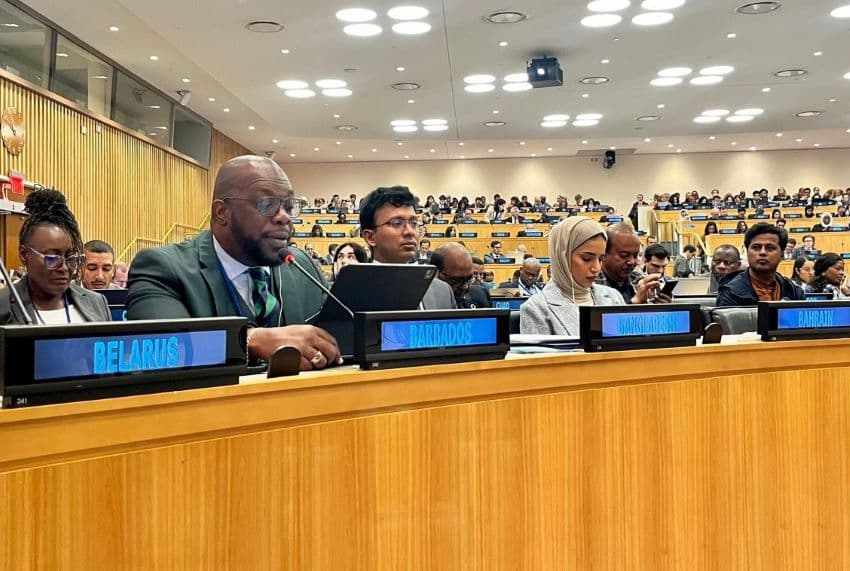
Barbados has told an international conference on migration that its participation is aimed at turning commitment into progress, stressing that for small island developing states (SIDS), migration is central to sustainability, economic resilience, and national identity.
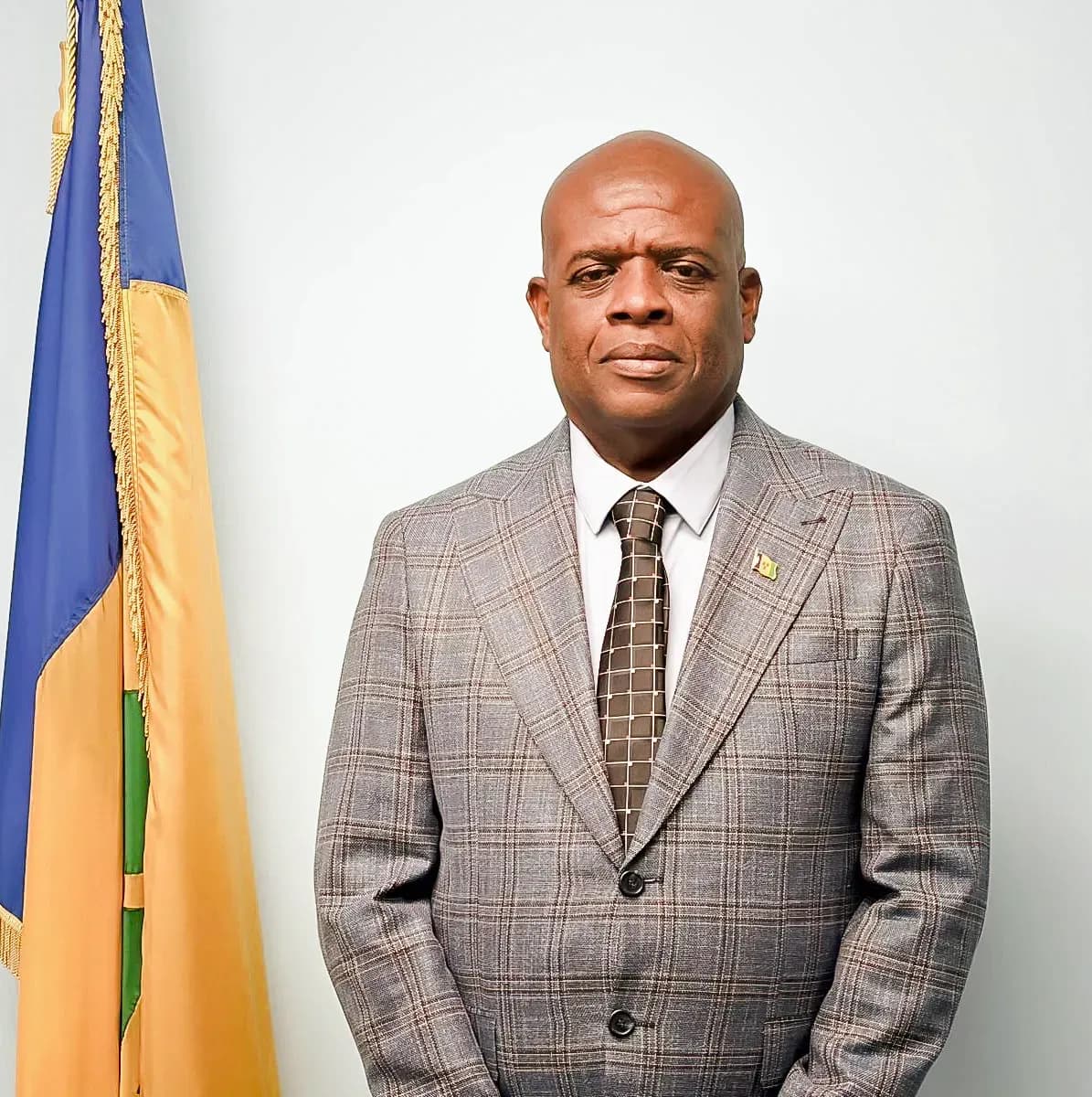
Addressing the second session of the International Migration Review Forum at the United Nations, Barbados Minister of Home Affairs and Information Gregory Nicholls said Bridgetown’s commitment to the Global Compact for Safe, Orderly and Regular Migration (GCM) remains unwavering, and is closely aligned with the 2030 Agenda for Sustainable Development.
He said Barbados views its migration policy commitments as foundational to peace and prosperity.
“Where Barbados has made promises, it has acted,” Nicholls said. “On 1 October 2025, Barbados, Belize, Dominica, and St. Vincent and the Grenadines launched full free movement, granting nationals the right to live, work, and reside indefinitely across all four states, with guaranteed healthcare and education for their children.”
“This is not generosity. It is an obligation built on political will, regional solidarity, and human rights. We offer it not as a boast, but as a blueprint,” he added.
Nicholls said Barbados is also developing a comprehensive National Migration Policy guided by the GCM and Caribbean Community (CARICOM) frameworks, aimed at modernizing migration pathways, strengthening border systems, and supporting economic growth while protecting labor and human rights.
He said migration and climate change are increasingly intertwined challenges for small island states.
“For Small Island Developing States, climate change and migration are not parallel agendas; they are the same agenda,” he said. “Displacement is already here: straining borders, threatening food security, and eroding the stability that safe migration depends on.”
Nicholls said Barbados, through the Bridgetown Initiative, continues to advocate for global climate finance reform, arguing that migration should be viewed as a choice rather than an act of survival. He called for increased access to financing, stronger cross-border cooperation, and full resourcing of the Migration Multi-Partner Trust Fund.
“Accessible finance, cross-border cooperation, and the Migration Multi-Partner Trust Fund are not optional. They are the infrastructure of humane governance,” he said.
He also outlined efforts to deepen engagement with the Barbadian diaspora in the United Kingdom, Canada, and the United States through investment opportunities, skills transfer, and return migration initiatives, noting that legislative reforms are expected to further strengthen those ties.
“Our diaspora is not peripheral to development; it is the heartbeat of it,” he said.
Nicholls said Barbados is committed not only to participating in global dialogue but to building practical partnerships that make safe, orderly, and dignified migration a reality.
“Migration, managed well, is not a burden. It is an engine for creativity, innovation, and growth,” he said.
“We are a small island with an unshakeable commitment. This Compact is the cornerstone of our present and the architecture of our future,” he told the international community.