“Cry, the Beloved Country” is a famous quote by South African author Alan Paton from his book about the plight of his country during the tragic atrocities of apartheid.
Haitians in the diaspora must be quoting the same words as reports from Haiti worsen each day. Although Haiti was experiencing serious socio-economic problems before the assassination of President Jovenel Moïse in July 2021, since then the nation has had a slow, agonizing descent into anarchy.
Moïse delayed calls and protests for national elections, so when he died there wasn’t a clear successor to replace him, nor a stable legislature to continue governing the country. There have been two interim prime ministers since Moïse’s death, but neither has been able to assert any real authority.

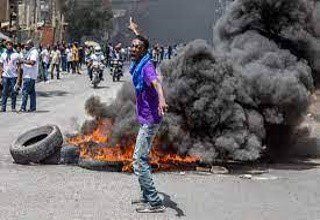
Meanwhile, the country has been overrun by rival gangs who have blocked main roads, impeding the distribution of scarce fuel and food; terrorized citizens, preventing them from leaving their homes, and have created general disorder. In addition to the roving gangs, Haitians have in recent weeks taken to the streets protesting against rising cost of fuel and foods and demanding that current interim-Prime Minister Ariel Henry resign. Protestors have looted food warehouses, supermarkets, banks, and other businesses. Reacting to the increasing chaos and declining security conditions, Henry recently appealed to the international community for immediate deployment of a specialized armed force to restore order in Haiti. The United Nations Integrated Office in Haiti has also called for the establishment of an international humanitarian corridor to make it possible to transport fuel and food through the country.
As news of the anarchy in Haiti escalates, a sense of apathy from the international community has been concerning. As one writer wrote on Instagram, “It seems the rest of the world is waiting for Haiti to completely eradicate itself.”
Time and time again in the past, the international community has risen to assist Haiti when it was impacted either by natural disasters, or social and political upheaval. But most of these interventions ended up criticized by the Haitian people. A UN task force present in Haiti following the devastating 2010 earthquake was criticized of rape, impregnating, and discarding women, and being the source of a cholera epidemic. Other international groups that assisted the country in the wake of the earthquake were accused of stealing funds meant for the country’s redevelopment. And US armed forces sent to Haiti to stabilize the country after former President Jean Bertrand Aristide was forced into exile was also not very welcomed.
So, there may be wariness amongst the international community to collaborate in intervening directly into the current Haitian situation. As happened before, Haitians crying for international intervention, could eventually turn against an international coalition. But what are the alternatives?
Haitian security forces seem clearly overwhelmed by the roaming gangs, while citizens are being kidnapped, slain, and injured wantonly. Citizens are also starving, prohibited from access to vitally needed fuel as roads are blocked. Definitely, Haiti is fast becoming a failed state, a breeding ground for criminals and lawlessness. The international community has a responsibility to at least attempt to correct the situation.
Haiti is a member of the Caribbean Community, CARICOM, and some critics are asking why CARICOM isn’t doing more to help Haiti. But, seriously, what can CARICOM do to alleviate the situation in Haiti? Most Caribbean leaders have expressed concern about the declining Haitian situation and have tabled interest in helping. But how can CARICOM get past the lawlessness that is consuming Haiti?

On the other hand, since Haiti is a member of CARICOM, any planned international intervention must involve the participation and agreement of CARICOM to the terms of deployment of such intervention. CARICOM must insist attempts to curtail the roaming gangs are done without collateral damage to other Haitians. CARICOM should also utilize whatever influence it has with Haitian authorities to encourage the holding of long delayed presidential and legislative elections, which should be held and monitored during the presence of the international observers. And, again, the international community, including CARICOM, will need to remain in Haiti to assist in rebuilding a functioning and effective security force.
Yes, this seems like déjà vu. One cannot fault the international community for saying, “We’ve been there, done that.” That’s understood. But in the past, Haiti had some semblance of a governing authority to run the country. This time, lawless gangs are quickly filling the void left by a disappearing and ineffective government. Haiti needs help to restore normalcy, eradicate the gangs, restore a government. But, most of all Haiti needs humanitarian help which must come from the international community.