Concerns grow over social media’s negative impact
Key Points(5)
- <!-- wp:paragraph --> <p>Back in the late 1960s, a group of technicians at the US Department of Defense's Advanced Research Projects Agency (ARPA) laid the foundation for the Internet with the network called ARPANET.
- At that time, a skeptic cautioned, "Be careful you don't create an out-of-control monster." Little did they know how prophetic those words would become.
- ARPANET continued to expand and develop over subsequent decades.</p> <!-- /wp:paragraph --> <!-- wp:paragraph --> <p>Then, in 1989, Tim Berners-Lee invented the World Wide Web and developed the first web browser and server in 1990.
- This marked the emergence of the Internet as a user-friendly and accessible platform for sharing and accessing information.
- For years, people linked to the Internet for various purposes, including education and business.</p> <!-- /wp:paragraph --> <!-- wp:paragraph --> <p>However, in the late 1990s and early 2000s, the information highway was intersected by social media, leading to congestion and problems.
Back in the late 1960s, a group of technicians at the US Department of Defense's Advanced Research Projects Agency (ARPA) laid the foundation for the Internet with the network called ARPANET. At that time, a skeptic cautioned, "Be careful you don't create an out-of-control monster." Little did they know how prophetic those words would become. ARPANET continued to expand and develop over subsequent decades.
Then, in 1989, Tim Berners-Lee invented the World Wide Web and developed the first web browser and server in 1990. This marked the emergence of the Internet as a user-friendly and accessible platform for sharing and accessing information. For years, people linked to the Internet for various purposes, including education and business.
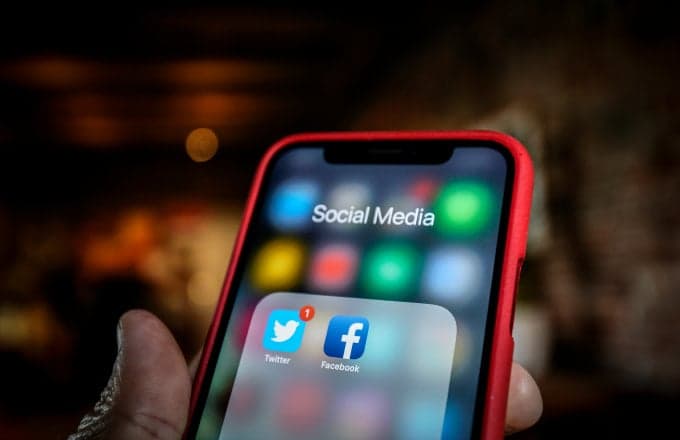
However, in the late 1990s and early 2000s, the information highway was intersected by social media, leading to congestion and problems. Social media, an innovative way of communicating on the Internet, evolved through the collective efforts of various individuals and companies. Platforms like Six Degrees and Friendster laid the groundwork for the social networking concept in the late 1990s and early 2000s, followed closely by Myspace and LinkedIn. But it was in 2004 when Mark Zuckerberg, a visionary young man, created Facebook, revolutionizing social media.
Facebook played a pivotal role in reconnecting people who had lost contact for years and allowing others to share their most precious achievements. Since then, several other social media platforms have been created, including Instagram, WhatsApp, Twitter, and TikTok.
Social media's influence now encompasses a complex mix of positive and negative impacts. It facilitates global connectivity, provides platforms for expression and activism, and enhances communication. For example, in 2010 and 2011, social media played a pivotal role in regime-changing uprisings like the Arab Spring in the Middle East and North Africa.
However, concerns about social media's negative impact on mental health, the spread of fake news, general misinformation, privacy issues, and addictive tendencies are growing. A 2020 survey by the Pew Research Center indicated that 64 percent of Americans believed social media had a mostly negative effect on the country.
Those expressing a negative view of social media emphasized concerns about misinformation, hate, and harassment on these platforms. They worried that users believed everything they saw or read on social media and were concerned about its role in fomenting social and political partisanship and polarization. Subsequent surveys have shown an increase in the percentage of people believing social media has a negative impact.
Currently, over 5 billion people use social media worldwide, with approximately 60 percent being young people aged 8 to 30. As social media use has increased, criticism of its negative impact on youth has also risen. In October 2021, Frances Haugen, a former Facebook product manager, testified before a US Senate Commerce Committee, alleging that Facebook had been aware of the negative impact of social media on people's mental health and society's susceptibility to false information.
Earlier this year, the US surgeon general, Dr. Vivek Murthy, issued an advisory warning about the mental health effects of social media on young people. Research cited in the advisory indicated that platforms like Facebook, Instagram, and TikTok have solidified their presence in American society, with up to 95 percent of people aged 13-17 engaged and over a third reporting that they use social media "almost constantly." The report also detailed how the increase in social media use is associated with higher rates of depression and anxiety, potentially contributing to over 300,000 new cases of depression on US college campuses.
Other medical professionals are particularly concerned about the addictive impact of social media on youth. One doctor commented that young people seemed hooked on social media, with its content keeping them coming back for more even when it has a negative impact on their well-being.
Dr. Murthy has called for urgent action in the development and implementation of safer online policies and practices. In 2022, it was reported that the US Congress and Federal Trade Commission were awaiting reports from the National Science Foundation and the National Academy of Sciences, Engineering, and Medicine as the basis for setting standards for social media platforms. Progress on this front remains uncertain. Additionally, in 2022, Facebook announced plans to implement new tools on its platform, Instagram, to address issues of social media addiction and the spread of harmful content.
Despite the negative impact of social media, it holds tremendous influence in America. It is a multi-billion-dollar money maker, an effective marketing tool for advertisers, and a powerful platform for politicians to raise funds and circulate their political views. Given these factors, it remains unclear who will take a firm stand to control it, echoing the unwitting prophesy from the 1960s that the Internet would create an out-of-control monster called social media.