Trinidad's PM Keith Rowley rejects US visa threats over Cuban medical missions
Key Points(5)
- Keith Rowley has declared that he is willing to forgo future trips to the United States in defense of Trinidad and Tobago’s sovereignty, as he strongly rejected U.S.
- That is someone’s interpretation,” he said, referring to the Trump administration’s stance.</p> <h2 data-start="1712" data-end="1740">Caribbean pushback</h2> <p data-start="1741" data-end="1954">The U.S.
- Vincent and the Grenadines Prime Minister Dr.
- Ralph Gonsalves has openly criticized the move, warning that limiting Cuba’s medical missions will negatively affect Caribbean healthcare.
- Antigua’s Prime Minister Gaston Browne also <a href="https://www.caribbeannationalweekly.com/news/antigua-pm-rejects-us-human-trafficking-allegations-over-cuban-medical-missions/">rejected U.S.
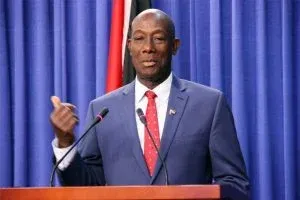
Trinidad and Tobago Prime Minister Dr. Keith Rowley has declared that he is willing to forgo future trips to the United States in defense of Trinidad and Tobago’s sovereignty, as he strongly rejected U.S. claims that Cuba’s overseas medical missions constitute human trafficking.
Speaking at the ceremony marking the completion of the $1.3 billion Port-of-Spain General Hospital Central Block on Monday, Rowley criticized the Trump administration’s visa restriction policy, which targets governments utilizing Cuban medical professionals.
“There are local people here encouraging them to take away our US visas. I came back from California, and if I never go back there again in my life, I will ensure that the sovereignty of Trinidad and Tobago is known to its people and respected by all,” Rowley asserted.
Rejecting US allegations
The U.S. has described Cuba’s medical export program as “forced labor” and a form of “human trafficking,” arguing that the Cuban government profits while medical professionals work under exploitative conditions.
However, Rowley defended the long-standing role of Cuban doctors in the Caribbean’s healthcare system, saying, “We rely heavily on healthcare specialists whom we have obtained from India, the Philippines, and mainly from Cuba over the decades.”
He dismissed the human trafficking accusations as a mischaracterization of the program.
“Out of the blue, we’re being called human traffickers because we hire technical people who we pay top dollars equal to local rates. That is someone’s interpretation,” he said, referring to the Trump administration’s stance.
Caribbean pushback
The U.S. visa restriction policy, announced by Secretary of State Marco Rubio, aims to penalize current or former Cuban government officials and foreign officials deemed complicit in Cuba’s labor export program.
“The United States is expanding its Cuba-related visa restriction policy... to hold accountable those responsible for or complicit in the exploitation of Cuban workers,” Rubio stated on February 25, 2025.
In response, Caribbean leaders have voiced concerns about the impact such restrictions could have on healthcare services in the region. St. Vincent and the Grenadines Prime Minister Dr. Ralph Gonsalves has openly criticized the move, warning that limiting Cuba’s medical missions will negatively affect Caribbean healthcare. Antigua’s Prime Minister Gaston Browne also rejected U.S. claims that the Cuban medical missions constitute human trafficking.
Meanwhile, Trinidad and Tobago’s Foreign Affairs Minister Dr. Amery Browne and his Caricom counterparts met with U.S. officials, including special envoy for Latin America Mauricio Claver-Carone, in Washington, D.C., to discuss the policy’s implications during a special General Assembly of the Organisation of American States (OAS).
When contacted for an update, Browne did not respond.
Rowley, however, made it clear that his government would not be pressured into abandoning its relationship with Cuba.
“This country will not be dictated to,” he declared.