US expands visa bans over Cuban medical missions, citing forced labor
Key Points(5)
- The United States has expanded its visa restrictions to target Cuban and foreign officials involved in Cuba’s labor export program, particularly its overseas medical missions.
- The policy does not apply to Cuban doctors themselves but to government officials responsible for managing these programs.
- “The United States is committed to countering forced labor practices around the globe,” Secretary of State Marco Rubio <a href="https://www.state.gov/expansion-of-visa-restrictions-policy-for-individuals-exploiting-cuban-labor/">said in a statement</a> on February 25.
- “To do so, we must promote accountability not just for Cuban officials responsible for these policies, but also those complicit in the exploitation and forced labor of Cuban workers.” <p data-start="709" data-end="1052">The U.S.
- policy could raise concerns among these nations that rely on Cuban doctors to bolster their healthcare systems.</p> <p data-start="1335" data-end="1651">Under the new restrictions, current and former Cuban officials, as well as foreign officials involved in the labor program, may be denied U.S.
The U.S. government argues that these missions involve forced labor, where Cuban medical professionals are sent abroad under exploitative conditions, while the Cuban government profits.
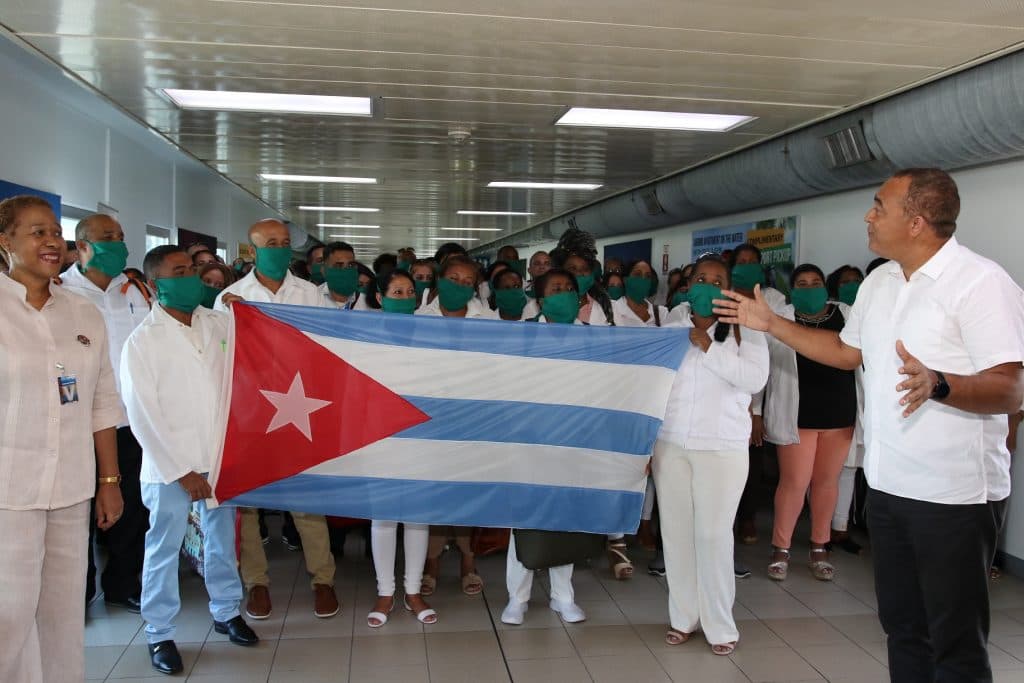
Many Caribbean countries, including Jamaica, benefit from the assistance of Cuban doctors and nurses, who have provided critical healthcare support for decades. The expanded U.S. policy could raise concerns among these nations that rely on Cuban doctors to bolster their healthcare systems.
Under the new restrictions, current and former Cuban officials, as well as foreign officials involved in the labor program, may be denied U.S. visas. Their immediate family members could also be affected.
The State Department has already imposed restrictions on several individuals, including Venezuelan officials. However, Rubio has not specified any other foreign countries or officials that are being targeted, leaving questions about the broader impact of the policy.
Interestingly, Marco Rubio is of Cuban heritage. His parents emigrated from Cuba to the United States in the 1950s, before the Cuban Revolution.
Citing Cuba’s "abusive and coercive labor practices," Rubio said the expanded policy aligns with U.S. efforts to combat forced labor worldwide. The restrictions are being implemented under Section 212(a)(3)(C) of the Immigration and Nationality Act.