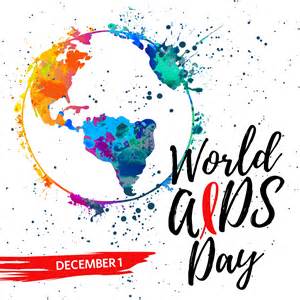
The strides made in the Caribbean region in reducing the number of new cases of HIV, and the steps taken towards the elimination of Mother-to-Child Transmission (EMTCT) of HIV and syphilis were highlighted recently during a high-level World AIDS Day Regional event at the St. Kitts Marriott Resort.

That meeting was organized by UNAIDS in collaboration with the Pan American Health Organization (PAHO) and the Pan Caribbean Partnership Against HIV/AIDS (PANCAP) and the Government of St. Kitts and Nevis.
Validation by WHO

An indication of the progress made in reducing new cases of HIV includes the validation by the World Health Organization (WHO) that St. Kitts and Nevis, as well as five other Caribbean islands, has successfully eliminated mother-to-child transmission of HIV and syphilis.
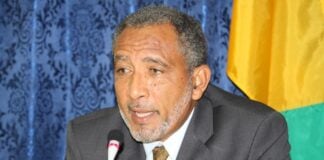
St. Kitts and Nevis’ Prime Minister, Dr. Timothy Harris, said at present, there are just under 300 persons living with HIV/AIDS in the Federation.
Dr. Harris stated, “Their prospects are far different from what would have been, in a by-gone era when an HIV diagnosis meant certain death, or even during the period when HIV medicines were so expensive that only a few individuals had access to them.”
Treatment doubled in six years
With respect to access to HIV treatment, Prime Minister Harris, who also serves as CARICOM’s Lead Head with Responsibility for Human Resources, Health and HIV, noted that the number of people on treatment in the region has more than doubled between 2000 and 2016.
Furthermore, Dr. Harris said his Government is cognizant of the fact that greater emphasis on the prevention of HIV, as well as increased efforts in treatment is important in achieving the sustainable development goal to end AIDS by 2030.

Committed to further improving treatment
“The Ministry of Health in St. Kitts and Nevis is committed to scaling up treatment to ensure that people living with HIV are able to stay healthy and alive,” the prime minister said.
St. Kitts and Nevis is amongst the OECS Member States that has signed on to eliminate HIV by 2030, using the UNAIDS 90-90-90 targets which state that by 2020, 90 percent of all people living with HIV will know their HIV status; 90 percent of all people with diagnosed HIV infection will receive sustained antiretroviral therapy, and 90 percent of all people receiving antiretroviral therapy will have viral suppression.
“Our challenge is to quicken the pace while ensuring that no one is left behind. We have a small window of opportunity remaining to close several gaps,” said Prime Minister Harris.