


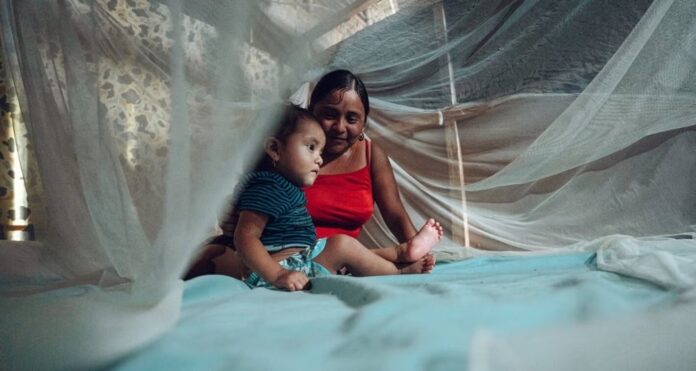
The Pan American Health Organization (PAHO) is calling on countries across the Americas to step up their fight against malaria, warning that progress toward elimination has stalled.

While the region has made notable gains over the past few decades, recent figures show a troubling plateau. In 2023, 505,600 malaria cases were reported in the Americas, with South America accounting for a staggering 92% of them. Brazil, Venezuela, and Colombia alone made up 80% of all cases, with Colombia leading in infections caused by the more dangerous Plasmodium falciparum parasite.
Particular challenges remain in high-burden zones like the Amazon and parts of Haiti, where reaching affected populations remains difficult. Issues such as isolated Indigenous communities, transient workers in gold mining, and security risks continue to block access to early diagnosis and treatment.

Indigenous groups have been hit especially hard: they made up 31% of malaria cases and 41% of malaria-related deaths in the Americas last year. PAHO emphasized that tackling structural barriers—whether geographic, cultural, legal, or financial—is urgent to closing the gap in care.
“To address this situation, a transformative change is needed to ensure access to malaria diagnosis and treatment in all areas where transmission occurs,” said Dr. Sylvain Aldighieri, Director of the Department of Communicable Disease Prevention, Control, and Elimination at PAHO.
Community involvement is seen as crucial to breaking transmission cycles. PAHO advocates for empowering community leaders and local health workers to perform rapid tests, deliver treatments, and maintain consistent services even in the most remote areas. Strong political will, regulatory reforms, and partnerships with impacted communities are essential ingredients for success, Dr. Aldighieri added.
Despite the challenges, there’s good news too. Since 2018, four countries—Paraguay, Argentina, El Salvador, and Belize—have been certified malaria-free. Suriname recently celebrated three consecutive years without local transmission, and Costa Rica, Mexico, and Ecuador are also showing strong progress toward stopping the disease.
PAHO continues to back countries through its Disease Elimination Initiative, helping to sustain past gains and push harder toward a malaria-free future. Officials say the tools to eliminate malaria are already available—the challenge now lies in mobilizing political support and ensuring those tools reach the people who need them most.
Malaria, caused by Plasmodium parasites and transmitted via infected Anopheles mosquitoes, starts with symptoms like fever, headache, and chills but can escalate into a life-threatening illness if not treated promptly.











 is calling on countries across the Americas to step up their fight against malaria.)