

More Caribbean countries achieve milestone in eliminating mother-to-child HIV and syphilis transmission
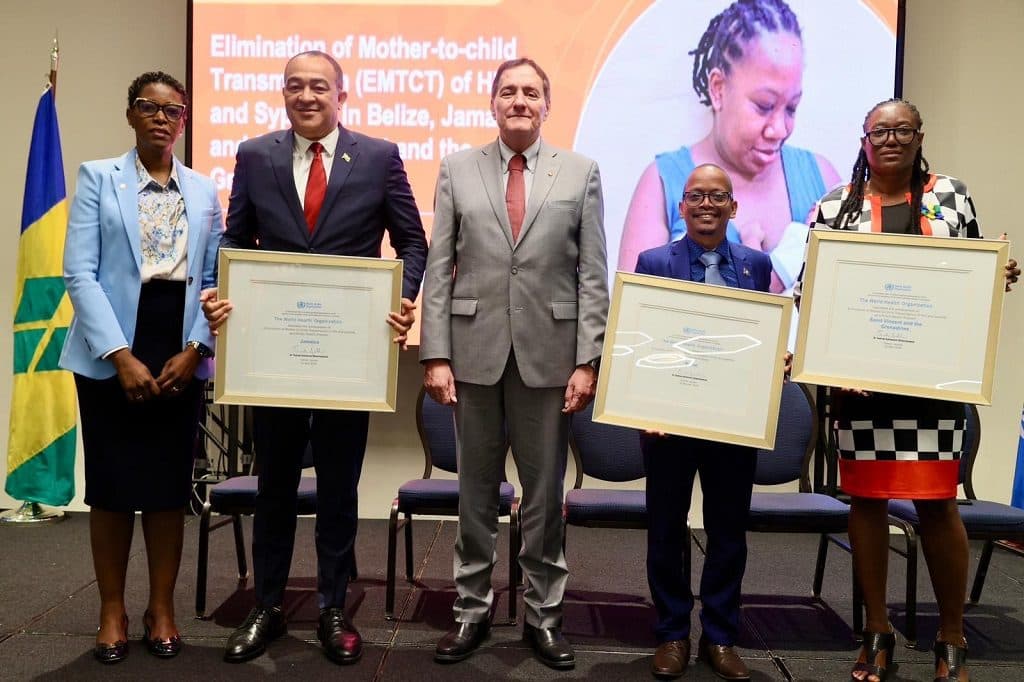
Belize, Jamaica, and St. Vincent and the Grenadines are the latest Caribbean countries to be certified by the World Health Organization (WHO) for the elimination of mother-to-child transmission of HIV and syphilis (EMTCT).
This achievement marks a significant milestone in public health and was celebrated at a commemorative event organized by the Pan American Health Organization (PAHO) in Kingston, Jamaica.
Health ministers from the three nations attended the event, which was supported by UNICEF and UNAIDS.
Years of dedication recognized
The recognition reflects years of dedication, collaboration, and resilience among governments, health professionals, and communities.
Despite the challenges posed by the COVID-19 pandemic, these nations adapted and continued essential services, underscoring their unwavering commitment to combating mother-to-child transmission of HIV and syphilis.
A regional strategy for success
In 2010, countries in the Americas committed to eliminating mother-to-child transmission of HIV and syphilis and endorsed a regional strategy that was updated in 2016 under the PAHO Plan of Action for the Prevention and Control of HIV and Sexually Transmitted Infections.
Key strategies included strengthening prevention and treatment services within primary health care and maternal and child health, updating guidelines, screening pregnant women effectively, and closely monitoring exposed infants.
Global recognition and support
In a video message, WHO Director-General Dr. Tedros Adhanom Ghebreyesus praised Belize for integrating primary disease prevention and treatment into maternal and child health services.
He also lauded Jamaica for its civil society organizations’ commitment to human rights and St. Vincent and the Grenadines for their investment in robust national laboratory structures.
He emphasized the importance of maintaining the progress achieved, highlighting that WHO and partners will continue to support health systems in the Americas.
Expanding the success story
Globally, 19 countries and territories have now received WHO certification for eliminating mother-to-child transmission of HIV and/or syphilis, 11 of which are in the Americas.
In 2015, Cuba became the first nation to achieve dual elimination of HIV and syphilis, followed by Anguilla, Antigua and Barbuda, Bermuda, Cayman Islands, Montserrat, St. Kitts and Nevis in 2017, and Dominica in 2020.
Progress in reducing HIV infections and congenital syphilis
The Caribbean region has made significant strides in reducing HIV infections among children, with new cases decreasing by 25 per cent between 2010 and 2022.
During that period, annual reported cases declined from 2,000 to 1,500.
The rate of congenital syphilis in the English-speaking Caribbean is now 36 cases per 100,000 newborns, below the goal of no more than 50 cases per 100,000 newborns.



.jpg&w=3840&q=75)