Dr. Iglesias’ guide to breast cancer awareness

by Tanya Ragbeer
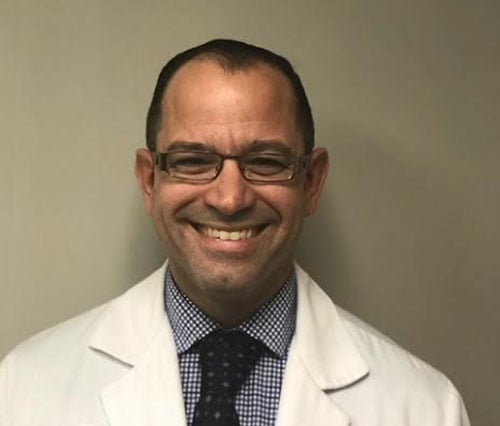
As part of its Breast Cancer Awareness Month features, Caribbean National Weekly had a conversation with Dr. Arthur Iglesias, a Miami-born, Cuban-American Radiation Oncologist at North Shore Medical Center. He spoke candidly about the disease and cancer screening.

“I think it all starts with educating the community,” said Dr. Iglesias. “I think everyone holds a certain stereotype of the doctor, they’re scared of being examined and we don’t realize it, but what happens is that patients are placed in a very vulnerable situation because you meet this individual for the first time and you are divulging your life history to that person and after that, you have to remove all of your clothes to let this person examine you.”
Iglesias believes that younger people are more open and self-aware, but understands that when dealing with an older generation who are more private, it becomes difficult.
Fear of Potential Diagnosis
“You find something suspicious in your body and the first thing that we say, and me included, it has happened in my life, I’m talking from personal experience. The thought is, ‘I’m too young and it can’t happen to me’, or ‘yeah it looks like it, but I’m sure it will go away’.”
As humans, our first response to something that we find, that we are not happy with, is denial. Iglesias thinks the onus is on the medical community to open up and to educate.
“If you find something suspicious, we are here to help you to find out if what you have is indeed something, and if it is, by detecting it early it will help your treatment and will avoid problems later on, or make something that could be potentially endangering to your life less fatal.”

Early detection is very important
- Be Aware
- Locate the problem
- Contact your physician
- Get treatment early
Caribbean people
“My father got diagnosed five years ago with cancer. His first response was, ‘I have something abnormal but I’m not going to do anything about it’. Many older Caribbean men respond this way to inconsistencies in the body,” Iglesias reasoned.
“The younger population also has the idea that, ‘I’m too young for this, nothing’s going to happen’.”
Iglesias wants to break the barrier by educating the community, teaching people about early detection and prevention.
Breast cancer awareness
“My advice is getting you to know your body, being aware of what abnormalities are presented. Self-breast exams are beneficial because if you feel anything abnormal, you can detect it early and subsequently be evaluated by a physician that can also confirm the abnormality and do further workup and management.”
The American Cancer Society recommends regular screening besides regular examinations, following up with your physician on a regular basis. Cancer screening typically starts around the age bracket of 40-44 for women. That does not take away the fact that younger women should also be aware of what is going on. Mammography typically starts at age 40, but for younger women, he recommends:
- Close monitoring with a physician
- Self-exam
- Look at your breast in the mirror to see if there are any skin abnormalities
Examining your breasts
The American Cancer Society has some guides on how to do a proper breast exam, so you can have an early diagnosis.
Cancer Risk
Breast cancer awareness is key. The other thing to be aware of is cancer risk.
- Does my Mom have it?
- Did my Grandmother have it?
These factors may put you at a higher risk, so it becomes important, and there are ways of talking to your physician in order to get the proper guide for health management.
Recommendations
For women, an average breast cancer risk (women who do not have a previous history), the American Cancer Society recommends screening starts:
- Age 40-44, and it’s typically done yearly
- 45-54 should get it every year
- 55 and older should get it every other year
“Now, if there is an abnormality on an exam, it becomes more important,” Iglesias warned.
If something abnormal is felt on the breast or the axilla (the area on the body directly under the joint where arm connects to shoulder), it should get evaluated immediately so that the doctor can get the appropriate tests.
Dr. Arthur Iglesias will be giving a free lecture on Breast Cancer Awareness, on October 26 at North Shore Hospital on Cancer Screening and Management Options.