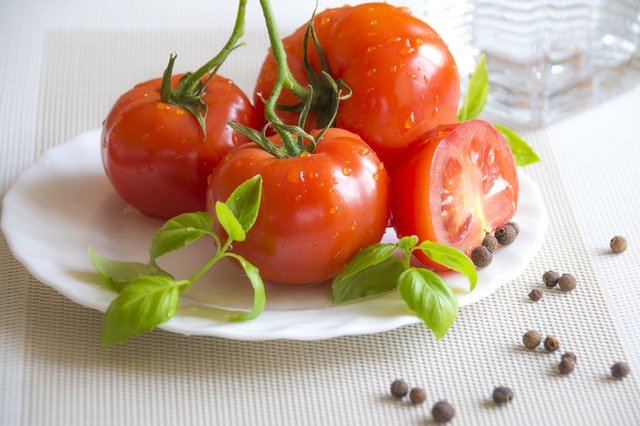
Daily tomato consumption appeared to cut the development of skin cancer tumors by half in a study conducted by the Ohio State University.

The new study of how nutritional interventions can alter the risk for skin cancers appeared online in the journal Scientific Reports.
Methodology

In the study male mice were fed a diet of 10 percent tomato powder daily for 35 weeks. The mice were then exposed to ultraviolet light. It was discovered that the mice experienced, on average, a 50 percent decrease in skin cancer tumors compared to mice that ate no dehydrated tomato.
Co-relation between tomato and cancer
It’s theorized the co-relation between tomatoes and cancer is from dietary carotenoids. The pigmenting compounds that give tomatoes their color, may protect skin against UV light damage, said Jessica Cooperstone. She’s co-author of the study and a research scientist in the Department of Food Science and Technology in the College of Food, Agricultural, and Environmental Sciences at Ohio State.
Previous research indicated male mice develop tumors earlier after UV exposure and that their tumors are more numerous, larger and more aggressive, than female mice.
Cancer treatment different in genders
“This study showed us that we need to consider gender when exploring different preventive strategies,” said the study’s senior author, Tatiana Oberyszyn, a professor of pathology and member of Ohio State’s Comprehensive Cancer Center.

“What works in men may not always work equally well in women and vice versa.”
Previous human clinical trials suggest that eating tomato paste over time can dampen sunburns, perhaps thanks to carotenoids from the plants that are deposited in the skin of humans after eating, and may be able to protect against UV light damage, Cooperstone said.
“Lycopene, the primary carotenoid in tomatoes, has been shown to be the most effective antioxidant of these pigments,” she said.
In the new study, the Ohio State researchers found that only male mice fed dehydrated red tomatoes had reductions in tumor growth. Those fed diets with tangerine tomatoes, which have been shown to be higher in bioavailable lycopene in previous research, had fewer tumors than the control group, but the difference was not statistically significant.
Cooperstone is currently researching tomato compounds that may impart other health benefits.
Non-melanoma skin cancers are the most common of all cancers, with more new cases each year than other cancers combined, according to the American Cancer Society.
“Foods are not drugs, but they can possibly, over the lifetime of consumption, alter the development of certain diseases,” Cooperstone said.