Broward’s Caribbean-Americans have potential to be county’s premier community
One of the unique characteristics of South Florida is its diverse communities. Last week the death of former Cuban President Fidel Castro placed focus on the more cohesiveness of the Cuban-America community in Miami-Dade County. Unlike most of the other ethnic communities in South Florida, the cohesion of the Cuban-American community emerged from a common experience, which brought the majority in that community from Cuba to South Florida.

Often, other less cohesive communities like the region’s Caribbean-American community refer to Miami-Dade as the example of a viable ethnic community,
However, while the Cuban-American community in Miami-Dade continues to thrive as a political, economic, and cultural force there are positive signs that the Caribbean-American community in Broward County has the potential to be a community of significant influence in that county.

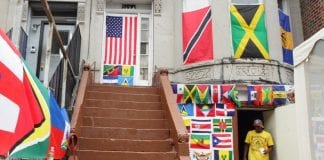
Broward County has the largest Caribbean-American population in Florida, a population, in the absence of empirical data, estimated as over 500,000 including first and second generation residents. This community, unlike the Cuban-American community, consists of residents from several Caribbean countries, of which the overwhelming majority are from Jamaica and Haiti.
The Caribbean-American community in Broward County have been gradually building a political base, thanks to pioneers like Jamaican-Americans Hazelle Rogers, and Fitzroy Salesman and Astor Knight, who were elected in the cities of Lauderdale Lakes, Miramar and Southwest Ranches. Today, the entire membership of the City of Miramar Commission is of Caribbean-American heritage; and Caribbean-Americans hold positions such as – mayor of City of Lauderdale Lakes, commissioner on the City of Sunrise Commission, the Broward County Commission, and are members of the Florida House and Senate.
In national politics, Caribbean-American voters have finally grasped the recognition of national politicians. In the recent presidential election campaign, Democrat Hillary Clinton’s campaign made a relatively concentrated attempt to target Caribbean-American voters in South Florida, particularly in Broward County.
However, there’s a still a long way for the Caribbean American community to fully execute its political influence. With the constant growth of the community, for it to attain it’s real political potential more Caribbean-Americans need to be elected to serve more Broward County cities, the Broward County Commission and in the Florida Legislature The success of those Caribbean-Americans who were previously elected should embolden others to step forward to seek to serve not only in Broward municipalities, or state government, but on the county school board and the county’s judiciary.
However, to do this it’s imperative that potential Caribbean-American politicians be aware of the necessity of building their political base on a coalition of Caribbean-African-Hispanic, Asian-and white Americans. Despite the growth of the Caribbean-American population in Broward county, there are insufficient Caribbean-American voters to guarantee Caribbean-American politicians success in these ethnic-diverse cities and the county. This success is more likely attainable with an ethnic-collation of voters.
The fact is Caribbean-American politicians like Rogers, Florida Legislators Barrington Russel, Daphne Campbell, Broward Commissioner Dale Holness, and City of Sunrise Commissioner Mark Douglas, have proven it’s possible to build an ethnic coalition to be elected to office in Broward County. There’s little doubt the Caribbean-American community will have more influence the stronger it is as a political unit with more elected officials.

The Caribbean-American community is also gradually building an economic base, comprised of small businesses, including shops and restaurants. The growth and impact of Caribbean restaurants in Broward County is gradually cutting into the market share of the county’s restaurant sector.
However, to reach its potential as an economic force, the Caribbean-American business sector must pay more attention to effective marketing and promotion of their products and services, business management and development. The community also needs to implement and develop organized, autonomous financial institutions such as community banks and credit unions. If the Cuban-Americans are the primary reference of a viable ethnic community, it will be seen that the community has several Cuban-American owned financial institutions.
There are clear indications that Broward’s Caribbean- American community has a foundation comprised of its demographics, and its political and economic potential to be Broward County’s more prominent ethnic community. Not too long ago a South Florida commentator stated, “The Caribbean-American community in Broward County has the potential to be what the Cuban-American community is to Miami-Dade.” This is no idle talk, it’s real, but requires hard work.
This is a significant challenge to Broward’s Caribbean American population. Cohesive strategic research, planning and development, cohesive and unselfish leadership and partnerships, commitment to excellence, and outreach to community neighbors could realistically see the community reach its full potential in the not-too-distant future.