In a recent study led by Yale University, researchers have uncovered unsettling disparities in the health impacts of fine particulate air pollution (PM2.5) among different racial and ethnic groups in the United States.
Despite nationwide efforts to reduce air pollution levels, these benefits have not been equitably distributed, with Black individuals bearing a disproportionate burden of cardiovascular disease-related deaths due to PM2.5 exposure.
This article delves into the study’s findings, its implications, and the urgent need for more targeted policies.

Understanding fine particulate air pollution (PM2.5)
Fine particulate matter, often referred to as PM2.5, comprises tiny particles or droplets with a diameter of fewer than 2.5 micrometers, which is 30 times smaller than the width of a human hair.
These minuscule particles pose a significant threat to human health because they can penetrate deep into the lungs and even enter the bloodstream.
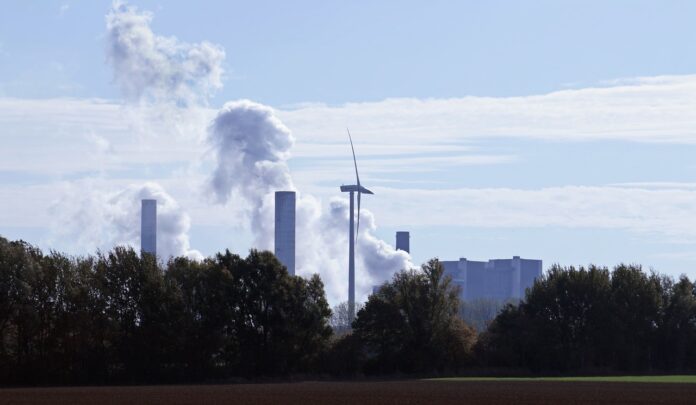
The major sources of PM2.5 pollution in the United States include emissions from vehicles, power plants, and industrial facilities. Some natural sources, such as wildfires, also contribute to PM2.5 levels.

The health impacts of PM2.5
When individuals inhale PM2.5 particles, they can infiltrate the respiratory system and even enter the bloodstream, triggering a range of health problems.
Dr. Kai Chen, an assistant professor of epidemiology at Yale School of Public Health and the senior author of the study, explains, “That can impact your heart, which leads to a lot of the cardiovascular disease we see today.” These health concerns include cardiovascular diseases, respiratory issues, and an increased risk of mortality.
Environmental efforts and health benefits
Efforts to combat air pollution in the United States, such as the 1963 Clean Air Act and the Environmental Protection Agency’s (EPA) National Ambient Air Quality Standards for PM2.5 established in 1997, have contributed to significant reductions in PM2.5 levels. These reductions have led to improvements in public health across the country, but the question remains: are these improvements distributed equally among different racial and ethnic groups?

Racial disparities in PM2.5 exposure
Dr. Kai Chen points out that “some minorities, especially Black and Hispanic people, are exposed to higher levels of PM2.5 than white people.” This discrepancy in exposure forms the basis of the study’s investigation into the vulnerability of different groups to PM2.5 and its associated health consequences.
The study methodology
To conduct this study, researchers collected data on cardiovascular disease-related deaths and monthly PM2.5 concentrations across 3,103 counties in the contiguous U.S. The data spanned from 2001 to 2016, allowing for a comprehensive assessment of the impacts of PM2.5 on mortality rates across different populations.

Findings: The disproportionate burden on Black individuals
The study’s results revealed a stark contrast in the health impacts of PM2.5 exposure among racial and ethnic groups:
- An increase of one microgram per square meter in average PM2.5 levels was associated with 1.76 additional deaths per 1 million white individuals.
- For Hispanic individuals, the same increase in PM2.5 levels resulted in 2.66 additional deaths per 1 million people.
- In sharp contrast, Black individuals experienced a significantly higher burden, with 7.16 additional deaths per 1 million people for the same increase in PM2.5 levels.
This striking disparity underscores the disproportionate impact of PM2.5 exposure on Black communities.

Examining mortality burden across race and ethnicity
The study also analyzed the number of cardiovascular disease-related deaths attributable to long-term PM2.5 exposure between 2001 and 2016. The findings painted a distressing picture:
- On average, there were 202.70 deaths per 1 million white individuals annually due to cardiovascular diseases related to PM2.5 exposure.
- Hispanic individuals faced an annual average of 279.24 such deaths per 1 million people.
- Shockingly, Black individuals bore the highest burden, with a staggering 905.68 deaths per 1 million people each year.
Time trends in mortality rates
To assess whether the mortality burden had changed over time, the researchers compared mortality rates between 2001 and 2016. While there was an overall reduction in cardiovascular disease-related deaths attributable to long-term PM2.5 exposure during this period, the disparities persisted:
- Mortality rates for Hispanic individuals increased from 1.37 times higher than those of white individuals in 2001 to 1.45 times higher by 2016.
- For Black individuals, the disparity remained substantial, with mortality rates 4.59 times higher than those of white individuals in 2001, decreasing slightly to 4.47 times higher by 2016.
The urgent need for equitable air quality policies
The study’s findings emphasize the pressing need for more equitable air quality policies. Dr. Kai Chen stresses that these policies should not only consider the overall population but also high-vulnerability groups, particularly Black Americans, who are at greater risk of mortality due to poor air quality. Coauthor Harlan Krumholz, the Harold H. Hines, Jr. Professor of Medicine at Yale School of Medicine, asserts, “Air pollution reduced and that reduced exposure for everyone, which is very good news. But Black people still experience a higher burden because they are more vulnerable and at higher risk of mortality.”
Implications for public health and policy
The study’s revelations underscore that the public health burden of air pollution differs significantly across racial and ethnic groups. This insight should serve as a crucial factor in shaping future policy design. It calls upon the Environmental Protection Agency (EPA), U.S. lawmakers, and local governments to take a more targeted approach in addressing air quality issues, considering not just the broader population but also the specific needs of high-vulnerability groups.
Future research and addressing inequalities
Dr. Kai Chen is committed to further investigating the health burden disparity. In a new project funded by a Yale Planetary Solutions Project seed grant, he and his colleagues will delve into PM2.5 exposure, cardiovascular disease risk, and morbidity burden at the neighborhood level.
The research aims to design location-specific strategies that can effectively address these inequalities and create healthier environments for all communities.