Opinion: More Americans are struggling with loneliness
Key Points(5)
- According to recent reports, Americans are becoming increasingly lonely.
- The US Surgeon General has explicitly called loneliness and social isolation a public health problem, and recent Pew research found that about 16% of American adults feel lonely or isolated all or most of the time, while another 38% experience it sometimes.
- Interestingly, younger adults report loneliness considerably more often than older adults.
- In another striking statistic, in a 2025 Pew survey, only 26% of Americans said they know all or most of their neighbors.
- There are several forces operating simultaneously that are creating this creeping loneliness.
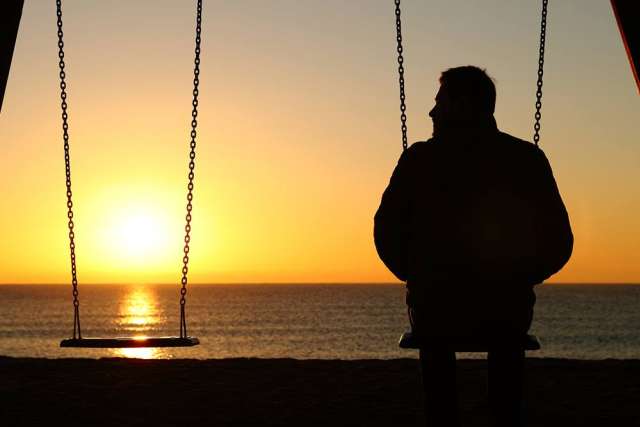
According to recent reports, Americans are becoming increasingly lonely.
The US Surgeon General has explicitly called loneliness and social isolation a public health problem, and recent Pew research found that about 16% of American adults feel lonely or isolated all or most of the time, while another 38% experience it sometimes. Interestingly, younger adults report loneliness considerably more often than older adults.
In another striking statistic, in a 2025 Pew survey, only 26% of Americans said they know all or most of their neighbors.
There are several forces operating simultaneously that are creating this creeping loneliness.
While there have been significant technological advancements, these have both connected and isolated people, since they make it possible to communicate instantly with hundreds of others without actually being with anyone. Texting, Facebook, Instagram, TikTok and other social media can give the feeling of social activity without the emotional nourishment of face-to-face relationships. There’s a huge difference between communication and connection.
The decline of community institutions also matters. Churches, civic organizations, neighborhood associations, clubs, fraternal organizations, community centers and other groups historically gave people a reason to encounter the same people regularly. These institutions have weakened and are not necessarily being replaced with anything.
In recent years, people have become more transient and have moved away from parents, siblings, cousins and lifelong friends to pursue employment or a better lifestyle far away. That may improve their economic circumstances but weaken the social network that used to surround them.
At the same time, many people have become more independent, which can be a wonderful existence, but taken too far becomes "I don't need anybody." Human beings do need other people. Independence and interdependence aren't opposites.
The COVID pandemic in 2020 accelerated existing trends toward loneliness. COVID forced people apart and revealed that many of the social connections that were usually regarded as permanent weren't as strong as imagined. Some people never fully returned to their former social lives.
Economic pressures are also contributing to loneliness, with many people working longer hours and commuting, and two-income households leaving people with very little time or energy for neighbors, friends and community activities.
There was a time when loneliness was a factor that was more associated with the elderly. But Pew's 2025 survey found that 22% of adults under 50 reported frequently feeling lonely or isolated, compared with only 9% of adults 50 and older. That's remarkable. Moreover, 18% of Americans said they don't have even one close friend outside their family. This is no longer a problem of seniors living alone. It’s a problem affecting the social fabric of the country.
American communities need to rebuild a culture in which people regularly encounter one another in person.
The US Surgeon General's recommendations are consistent with this idea. The recommendations include strengthening local communities, creating places where people can meet, encouraging volunteering and community participation, improving digital environments, and deliberately cultivating a culture of connection.
Connection with others should be made a normal part of everyday life. One can envisage more social interaction and less individual loneliness, with communities deliberately creating neighborhood dinners, walking groups, discussion groups, senior-youth programs, volunteer opportunities, church and interfaith gatherings, exercise groups, game nights and mentoring programs. And importantly, these programs shouldn’t exclusively be targeted at lonely people, since that could actually stigmatize loneliness. Instead, activities should be ones in which everyone has a reason to participate and friendships develop naturally.
Ironically, older Americans have something particularly valuable to contribute. An older person has something that younger people desperately need: time, experience, perspective and wisdom. And younger people have something older people need: energy, companionship and a sense of being connected to the future. But what exists today is an unnecessary separation between the older and younger generations.
Imagine a community program where an 80-year-old regularly meets with a 20-year-old — not because either one is "lonely," but because they have something to teach each other. That could be enormously powerful.
The solution to America's loneliness problem is not primarily another government program or another social media application. It’s people deciding to notice and connect with other people.
This can be done by calling on neighbors, especially new neighbors; calling an old friend or faraway relatives; inviting someone out to dinner; visiting people who usually live alone; stopping communication primarily through technology and returning to in-person communication; and, perhaps most importantly, not waiting until loneliness sets in to reach out to others.
The Surgeon General's office now describes in-person social connection as fundamental to health, noting that poor social relationships and isolation are associated with substantially increased risks of heart disease and stroke.
Loneliness is becoming more than a personal problem. It’s a problem that is gradually weakening communities. And rebuilding community may be one of the most important things Americans can do. This should be done not only for happiness, but for the nation’s physical health, mental health, families, neighborhoods and, ultimately, the wider society.