Opinion: NaRRA owes Jamaicans answers on spending
Key Points(5)
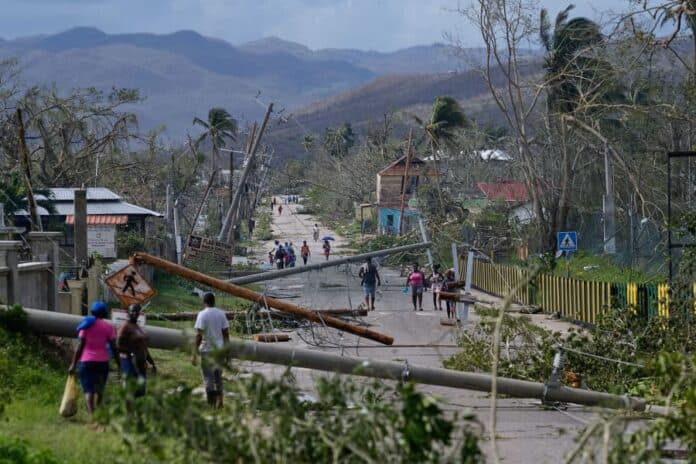
- Hurricane Melissa struck Jamaica on Oct.
- 28, 2025, causing catastrophic damage, particularly in western parishes.
- According to a report by Jamaica’s auditor general tabled in Parliament in May, public donations received for Melissa relief and reconstruction amounted to J$1.44 billion, of which just J$26.2 million, or 1.8%, was spent on hurricane victims.
- The J$1.44 billion is not the total value of all assistance from the Jamaican government, international partners and private sources.
- The government also reported several recovery contracts and other sources of financing worth approximately J$11.3 billion, separate from the donations in the relief accounts.
Hurricane Melissa struck Jamaica on Oct. 28, 2025, causing catastrophic damage, particularly in western parishes.
According to a report by Jamaica’s auditor general tabled in Parliament in May, public donations received for Melissa relief and reconstruction amounted to J$1.44 billion, of which just J$26.2 million, or 1.8%, was spent on hurricane victims.
The J$1.44 billion is not the total value of all assistance from the Jamaican government, international partners and private sources. The government also reported several recovery contracts and other sources of financing worth approximately J$11.3 billion, separate from the donations in the relief accounts.
Earlier this year, the government established the National Reconstruction and Resilience Authority (NaRRA) under a parliamentary act to coordinate and accelerate post-hurricane reconstruction and resilience projects. NaRRA was created to hasten reconstruction, repair drainage systems and damaged communities, and coordinate projects centrally rather than through separate agencies. It is also intended to improve project delivery through specialized planning, procurement, financial and engineering expertise; rebuild infrastructure to withstand strong hurricanes; and track projects and expenditure through reporting, monitoring and a register of approved projects.
To justify establishing NaRRA rather than placing recovery projects under an existing agency, the government argued that existing procedures are too slow for major reconstruction projects. It cited delays in previous projects and difficulties deploying disaster donations quickly as evidence that a different implementation structure was needed.
The government’s argument is sound. After a natural disaster, the public needs essential services restored without unnecessary administrative delays. However, an authority with faster approval and procurement powers can also create greater risks without adequate independent oversight. The government established the Jamaica Reconstruction and Resilience Oversight Committee (JRROC) to provide independent monitoring of NaRRA projects.
During parliamentary debate, the opposition People's National Party (PNP) raised concerns about the concentration of executive power, procurement safeguards and NaRRA’s governance arrangements.
Despite the creation of JRROC, concerns remain about whether NaRRA will preserve meaningful independent checks while speeding up project delivery. Can the agency entrusted with managing substantial relief funds account for the money, approve its use promptly and demonstrate that it reaches those for whom it was intended?
Reports last week indicated that NaRRA had signed a five-year lease for two floors of office space at Digicel’s headquarters on Kingston’s waterfront, at an annual cost of approximately US$725,972, or J$115.2 million. The government said the rent was assessed against current market rates by the National Land Agency. The opposition challenged the decision, asking why government-owned premises could not be used instead.
Following the criticism, the government indicated that the lease terms were being revised to cover one floor. Details of the revised lease remain unknown.
There is no published financial breakdown confirming whether the rent or CEO’s salary is being paid directly from funds collected for hurricane victims.
The government has also said that financing from a US$6.7 billion package involving international development institutions will be channeled through NaRRA. The legislation also allows the authority to receive funds approved by Parliament and other money payable to it.
The fact that NaRRA is an independent agency does not automatically mean its rent and salaries are being paid from funds intended for hurricane victims. The government should publish the precise funding sources for these expenses and identify the budget appropriation, account and funding source used to pay the rent, CEO’s remuneration and office setup costs.
In response to public criticism, the government has said the CEO’s compensation package, including a motor vehicle and a performance-related gratuity of 25%, is comparable to those of CEOs of large public bodies internationally.
There is a reasonable argument for paying a highly qualified executive well to manage a major reconstruction program involving billions of dollars. But the public needs to know the specific performance targets the CEO must meet and the measurable results that justify the compensation. Given the government’s assertion that performance expectations are high, it should publish the targets against which that performance will be assessed.
The government has not demonstrated why the five-year rental commitment represents the best use of taxpayers’ money. Market-rate rent is not the same as good value for money. A building can be priced fairly compared with similar commercial properties and still represent an unnecessary expense if suitable public premises are available.
The government should disclose the independent valuation and full revised lease agreement; identify which government-owned buildings were considered and explain why they were rejected; disclose the cost of furnishing and fitting out the new offices; and publish NaRRA’s projected operating costs over five years.
The government can legitimately argue that the authority needs skilled leadership, adequate office space and resources to coordinate a national rebuilding program. Not every dollar spent on administration is wasted. Good administration can prevent significant losses and accelerate reconstruction. However, administrative expenditure must be proportionate to the task, particularly when people are struggling to rebuild their homes and livelihoods.
People, many of them from the diaspora, who donated money wanted hurricane victims to receive urgent assistance. They deserve an accounting of how those donations are being spent.
It is crucial that NaRRA publish regular financial statements showing the source of each category of funding and how the money is spent, provide a public comparison of office options, including the cost of using existing government premises, and issue regular reports detailing completed projects.
The government owes Jamaicans a stronger justification for committing millions of dollars to a five-year office lease and a highly paid executive. Do these expenses represent the most responsible use of public resources?
If the government cannot demonstrate that the costs are necessary, show that cheaper alternatives have been properly considered and ensure that NaRRA delivers measurable reconstruction results, public criticism of these expenditures is entirely justified.