Opinion: The UN is most relevant to Caribbean nations
Key Points(5)
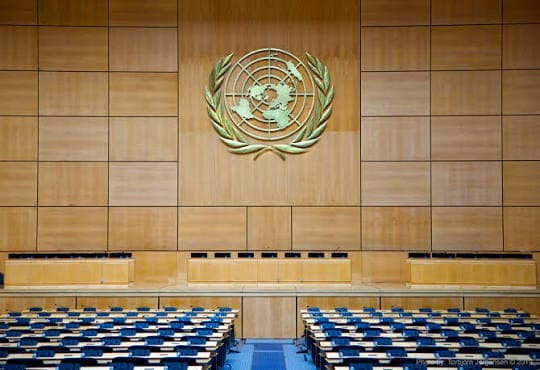
- Last week, the 81st United Nations General Assembly (UNGA) met, marked by speeches in the General Debate from many world leaders.
- But who really listens?
- Is the UN really involved in solving today’s global issues and crises?
- More importantly, what is the real relevance of the UN to the Caribbean region?
- The UN is both more important and less powerful than the speeches at the GA make it appear.
Last week, the 81st United Nations General Assembly (UNGA) met, marked by speeches in the General Debate from many world leaders. But who really listens? Is the UN really involved in solving today’s global issues and crises? More importantly, what is the real relevance of the UN to the Caribbean region?
The UN is both more important and less powerful than the speeches at the GA make it appear. The GA isn’t really a meeting where the U.S., China, Russia, Britain, France, India, Caribbean states, etc., meet and collectively decide how to solve the world’s problems. It’s partly a diplomatic forum; a place for countries to publicly state their positions; a negotiating arena for treaties and resolutions; a place where smaller countries can put issues on the international agenda; and, frankly, a very large international public-relations stage.
The UN isn’t a world government sitting above sovereign countries. When major powers disagree, particularly the permanent members of the Security Council, the UN can become extremely constrained.
That limitation was acknowledged quite bluntly last week when Suriname’s President Jennifer Geerlings-Simons said the UN hasn’t been able to prevent or end continuing armed conflicts, arguing that trust in the organization needs to be restored.
It’s fair to say countries are listening to the UNGA, but listening isn’t the same thing as obeying those speaking.
For small Caribbean nations, the UN provides a collective voice considerably larger than their individual physical size.
Imagine Barbados trying to negotiate climate policy directly with the U.S., China, India and the European Union. It would have very little leverage.
But when Barbados joins other Caribbean countries within the Small Island Developing States (SIDS) grouping at the UN, its arguments become part of an internationally recognized category of vulnerable nations.
The UN explicitly recognizes that small island states face particular problems because of their small economies, remoteness, dependence on imports, debt pressures and climate vulnerability.
Climate change is probably the clearest example. Caribbean nations contribute little to global greenhouse-gas emissions yet suffer disproportionately from hurricanes, rising sea levels, coastal erosion, coral degradation, damage to tourism infrastructure, agricultural disruption and enormous rebuilding costs. But after a hurricane, a country can acquire significant reconstruction assistance through the UN.
The UN offers Caribbean countries a place to argue that they didn’t create climate change problems but are among those paying heavily for them. Whether wealthy countries provide sufficient financing is a different question. This is where Caribbean governments have become increasingly frustrated.
CARICOM is currently pushing specifically for climate finance, including a 2026–2030 climate-finance action plan designed to make international climate funding more accessible.
Haiti is perhaps the most important Caribbean example of the importance and limitations of international institutions. Haiti’s crisis cannot realistically be solved by Haiti acting alone.
CARICOM is working with Haitian authorities, the UN, the OAS and other international partners on security, elections and restoring constitutional government.
While the UN doesn’t possess the power to fix Haiti, it can coordinate, authorize, facilitate, finance, monitor and provide humanitarian assistance. But ultimately, political will and action must come from countries themselves.
The UN matters enormously to Caribbean countries in international law. They don’t have aircraft carrier fleets capable of protecting their interests against major powers. Their protection is largely through international law, diplomacy and collective institutions.
That is why the Bahamian prime minister’s speech at the GA was particularly revealing, arguing that small countries cannot survive in a world where rules apply only to weak states, while emphasizing the Caribbean as a zone of peace.
Suriname made essentially the same argument, saying smaller, vulnerable states depend upon a rules-based international order because, without it, their sovereignty is much more precarious.
Barbados’ PM Mia Mottley is one of the Caribbean’s most prominent voices on the international stage, particularly on climate finance, the international financial system and the position of small states. At this year’s GA, she again raised climate vulnerability, financing and the Caribbean’s position as a zone of peace.
The Caribbean cannot exercise much influence through military or economic power, but exercises influence through diplomacy, coalition-building and international institutions. That’s precisely where the UN is useful.
CARICOM has endorsed a Caribbean candidate, Guyanese diplomat Carolyn Rodrigues-Birkett, for the next UN Secretary-General. She would be the first Caribbean candidate for the position. This indicates the Caribbean views the UN as indispensable to small states, but it needs to work better.
That’s probably the most accurate assessment.
Wars, geopolitical rivalry, climate change, humanitarian disasters and international economic inequality clearly demonstrate the limits of the UN, but failure to solve problems isn’t the same as irrelevance.
For the Caribbean, the UN provides a diplomatic megaphone, a framework for international law, access to development and humanitarian agencies, climate negotiations, disaster assistance, development financing discussions and a mechanism through which they can participate in decisions affecting the world. UN agencies have worked in the Caribbean for six decades on precisely these areas.
The UN shouldn’t be judged by GA speeches, which some find irrelevant. In between the speeches, off camera, are very relevant negotiations, treaties, agencies, financing arrangements, Security Council decisions and international agreements.
For small, geographically exposed and economically vulnerable Caribbean nations, the UN remains considerably more relevant than the spectacle of GA speeches might suggest.