Caribbean-American voters’ influence depends on how they turn out
Key Points(5)
- There’s a tendency within the Caribbean-American community to believe it has become a strong voting bloc in U.S.
- But this belief doesn’t seem to be grounded in fact.
- Caribbean-Americans can make a meaningful difference in U.S.
- elections, but their influence is much greater in certain states, counties and congressional districts than at the national level.
- Importantly, “Caribbean-American” isn’t one homogeneous voting bloc.
There’s a tendency within the Caribbean-American community to believe it has become a strong voting bloc in U.S. general elections. But this belief doesn’t seem to be grounded in fact.
Caribbean-Americans can make a meaningful difference in U.S. elections, but their influence is much greater in certain states, counties and congressional districts than at the national level.
Importantly, “Caribbean-American” isn’t one homogeneous voting bloc. It includes Haitian, Jamaican, Trinidadian, Barbadian, Bahamian, Guyanese and other communities, with different political views and voting patterns.
Florida is probably the clearest example. The state has a substantial Caribbean population, particularly in South Florida. Miami-Dade alone has roughly 106,000 people reporting Haitian ancestry and about 38,000 reporting Jamaican ancestry, with West Indian ancestry overall accounting for about 5.9% of the county’s population.
Historically, Haitian and Jamaican communities have also demonstrated significant political participation and organized voter mobilization. Estimates during the 2024 election put the number of Haitian-American voters in Florida somewhere between 100,000 and 300,000, although estimates vary considerably because the U.S. Census doesn’t have a “Caribbean-American voter” category.
But Caribbean-American voters can still be very effective in midterm and presidential elections when those elections are close.
The important distinction is between Caribbean-Americans’ national, state and local (district) influence.
Caribbean-Americans are too small a population to determine a presidential election by themselves across the entire country. But in closely contested state elections, a concentrated Caribbean-American electorate can matter considerably. In places like South Florida, Caribbean voters can be a very important constituency for congressional, state and local races.
Florida illustrates this particularly well. In 2000, the presidential election ultimately hinged on 537 votes in Florida. That doesn’t mean Caribbean-American voters caused that result. It illustrates how a relatively concentrated community can potentially matter enormously when the statewide margin is extremely small.
Florida’s overall electorate is enormous. Pew’s 2024 data show approximately 2.3 million Black eligible voters in Florida, in addition to its large Hispanic and White electorates. Caribbean-Americans constitute only a portion of the Black electorate, so it would be misleading to equate the two groups.
One thing that makes Caribbean voters particularly interesting is that their influence isn’t necessarily proportional to their population because community organization and turnout matter.
For example, reporting on Florida’s Haitian-American community has described it as a highly engaged electorate, with substantial participation in elections and community mobilization.
So, if, hypothetically, a presidential election in Florida were decided by 20,000 votes, a well-organized community with tens or hundreds of thousands of eligible voters could be consequential — even though it represents only a fraction of the state’s electorate.
In short, Caribbean-Americans aren’t large enough to constitute a nationwide “kingmaker” voting bloc by themselves. But in Florida, particularly South Florida, their numbers, concentration and voter participation can give them real electoral influence.
In the ensuing midterm elections, should Caribbean-Americans turn out to vote in large numbers, their votes could make a significant difference in Florida’s races for U.S. Senate and governor.
As mentioned above, the most recent U.S. Census and election data do not publish a clean count of Caribbean-American voters by nationality because ancestry, birthplace, citizenship and voting eligibility are different things. So, the best figures are population estimates, not voter counts.
The 2024 American Community Survey (ACS) estimates about 569,000 Floridians reporting Haitian ancestry alone. The concentration in South Florida is striking. In Broward County, about 14.3% of the population reports West Indian/Caribbean ancestry, including approximately 134,000 Haitians and 117,000 Jamaicans.
In Miami-Dade, about 5.9% reports West Indian ancestry, including approximately 106,000 Haitians and 38,000 Jamaicans.
Florida had approximately 2.3 million Black eligible voters in 2024, representing 13.8% of the state’s eligible electorate.
And research from Pew found something particularly important: Among Florida’s Black immigrant electorate, 92% originated from Caribbean countries, principally Haiti and Jamaica.
So Caribbean immigration has a substantial presence within Florida’s Black electorate. But not every Caribbean-American is Black, not every person reporting Caribbean ancestry is a U.S. citizen, and Caribbean-Americans don’t necessarily vote alike.
Therefore, the size of the Caribbean-American community isn’t the same as the number of eligible Caribbean-American voters.
For Black immigrants specifically, Pew’s 2024 analysis puts the citizenship rate for Caribbean-born Black immigrants at 64%, which is somewhat higher than the 60% figure for Caribbean immigrants overall.
Florida had 13.95 million registered voters for the 2024 general election, of whom 11.00 million actually voted — a turnout of about 79% of registered voters.
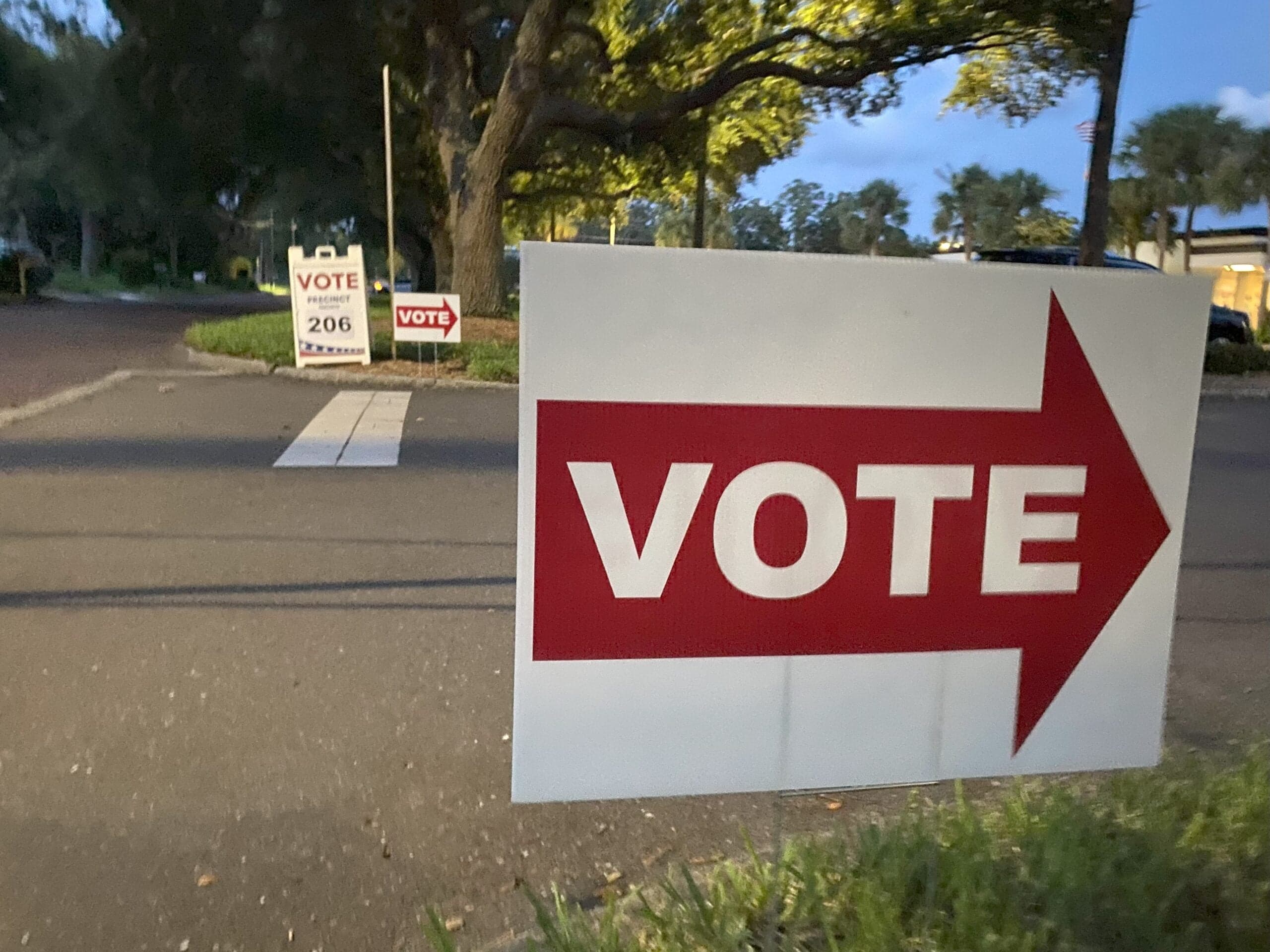
Therefore, voter registration itself isn’t the final measure of political influence. Voter mobilization and turnout are extremely important. If Caribbean-American voters do not turn out to vote in high percentages in federal, state and municipal elections, their large population and high percentage of eligible voters will not help fulfill the potential for this community to become a formidable voting bloc.
In next month’s midterm elections, there are several crucial issues directly affecting the lives and livelihoods of Caribbean-American voters, particularly those in Florida, that will test their political influence. This test will be assessed by the strength of their voter turnout.