Opinion: Emancipation isn’t over
Key Points(5)
- August 1 is commemorated as Emancipation Day in the Caribbean.
- The region achieved legal emancipation from slavery, but many scholars, historians, and Caribbean leaders have argued that economic, social, and political emancipation have been much slower and remain incomplete.
- After slavery was abolished in the British Caribbean on August 1, 1834 (followed by full emancipation after the apprenticeship system ended in 1838), many formerly enslaved people faced enormous obstacles.
- They were freed without land, wealth, or compensation, while slave owners often received financial compensation.
- Plantation economies remained largely intact, limiting opportunities for economic independence.
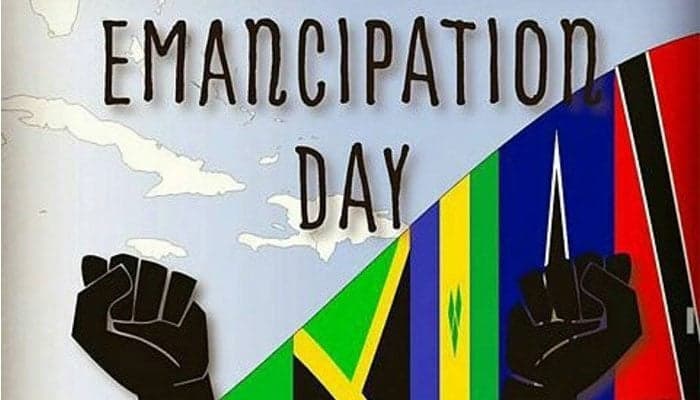
August 1 is commemorated as Emancipation Day in the Caribbean. The region achieved legal emancipation from slavery, but many scholars, historians, and Caribbean leaders have argued that economic, social, and political emancipation have been much slower and remain incomplete.
After slavery was abolished in the British Caribbean on August 1, 1834 (followed by full emancipation after the apprenticeship system ended in 1838), many formerly enslaved people faced enormous obstacles.
They were freed without land, wealth, or compensation, while slave owners often received financial compensation. Plantation economies remained largely intact, limiting opportunities for economic independence.
Access to quality education, healthcare, and political power developed slowly and unevenly. Social hierarchies based on race, class, and wealth often persisted.
As a result, many Caribbean societies continue to struggle with:
- High levels of income inequality;
- Persistent poverty in some communities;
- Limited social mobility;
- Class divisions that sometimes overlap with historical racial and colonial patterns.
It is also true that the Caribbean has made significant progress since emancipation. Many nations have gained political independence and produced world-class educators, scientists, entertainers, athletes, and political leaders. They have expanded education and voting rights, strengthened cultural identities, and reduced extreme poverty compared with earlier generations, although significant challenges remain.
Despite these achievements, some continue to argue that a significant percentage of Caribbean people are still enslaved by poverty, classism, and, more recently, politics. However, it would be inaccurate to say that most Caribbean people have not experienced any form of emancipation beyond the abolition of slavery.
Rather, political freedom has not always been matched by equal economic opportunity or freedom from entrenched class divisions.
Many people therefore speak of the continuing need for “economic emancipation” and “mental emancipation.” The latter phrase echoes the words of Jamaican National Hero Marcus Garvey: “Emancipate yourselves from mental slavery,” a sentiment later made famous worldwide by Bob Marley’s “Redemption Song.”
The idea is that true emancipation includes freedom from poverty, injustice, discrimination, ignorance, and dependence, as well as freedom from legal bondage.
Emancipation Day serves not only as a celebration of the end of slavery but also as a reminder that the work of building societies marked by justice, opportunity, and dignity for all is ongoing.
There is a reasonable point behind the argument that people in the Caribbean today can become enslaved by, and to, politics, political parties, and politicians, and therefore need to be emancipated. However, this is not an objective fact.
In democratic societies such as the British Caribbean countries, people are not legally enslaved by political parties or politicians in the way enslaved people were deprived of their liberty, rights, and personhood in the nineteenth century. Using the word “enslavement” literally risks minimizing the unique horror of chattel slavery.
However, if the term is used metaphorically, there is a legitimate concern that some people become so attached to political parties or leaders that they place party loyalty above truth or principle and, dangerously, accept misinformation without questioning it.
Unfortunately, some also view those with different political views as enemies rather than fellow citizens, creating almost tribal divisions in many countries.
Another concerning reality is that some people depend on politicians to solve every problem instead of strengthening communities and taking personal responsibility.
In that sense, one could argue that a form of political emancipation is needed — meaning the freedom to think critically, evaluate evidence, hold all leaders accountable, and vote according to conscience rather than blind allegiance.
This, however, is not unique to one political party or one country. Strong partisan polarization has become increasingly common in many democracies, including several Caribbean nations.
The strongest version of the “political slavery” argument is that many people in the Caribbean today need emancipation from blind political tribalism, manipulation, and excessive dependence on political leaders — not because they are literally enslaved, but because these influences can limit independent judgment and divide societies.
There are also those who argue that the continued commemoration of the emancipation of slavery on August 1 in many Caribbean nations is unnecessary, irrelevant, and outdated because the current generation does not truly relate to the impact of the era of slavery.
This is an unfortunate and inaccurate argument.
The ravages of slavery are a legacy that continue to haunt the Caribbean. Despite several calls for accountability, Britain — the colonial power that introduced and maintained slavery throughout much of the Caribbean — has never issued a full apology for this historical injustice, nor has it made any serious effort to provide reparations to the region.
Perhaps more than anything else, the commemoration of Emancipation Day is, or should be, a reminder to Caribbean people to use their individual and collective power to ensure they are not bound to any person, group, or system — whether through poverty, social divisions, skin colour, race, or political control.
Every man and every woman in the Caribbean must make the effort to liberate their minds so they are not enslaved mentally.