Opinion: After 64 years of Independence, has Jamaica or Trinidad benefited more?
Key Points(5)
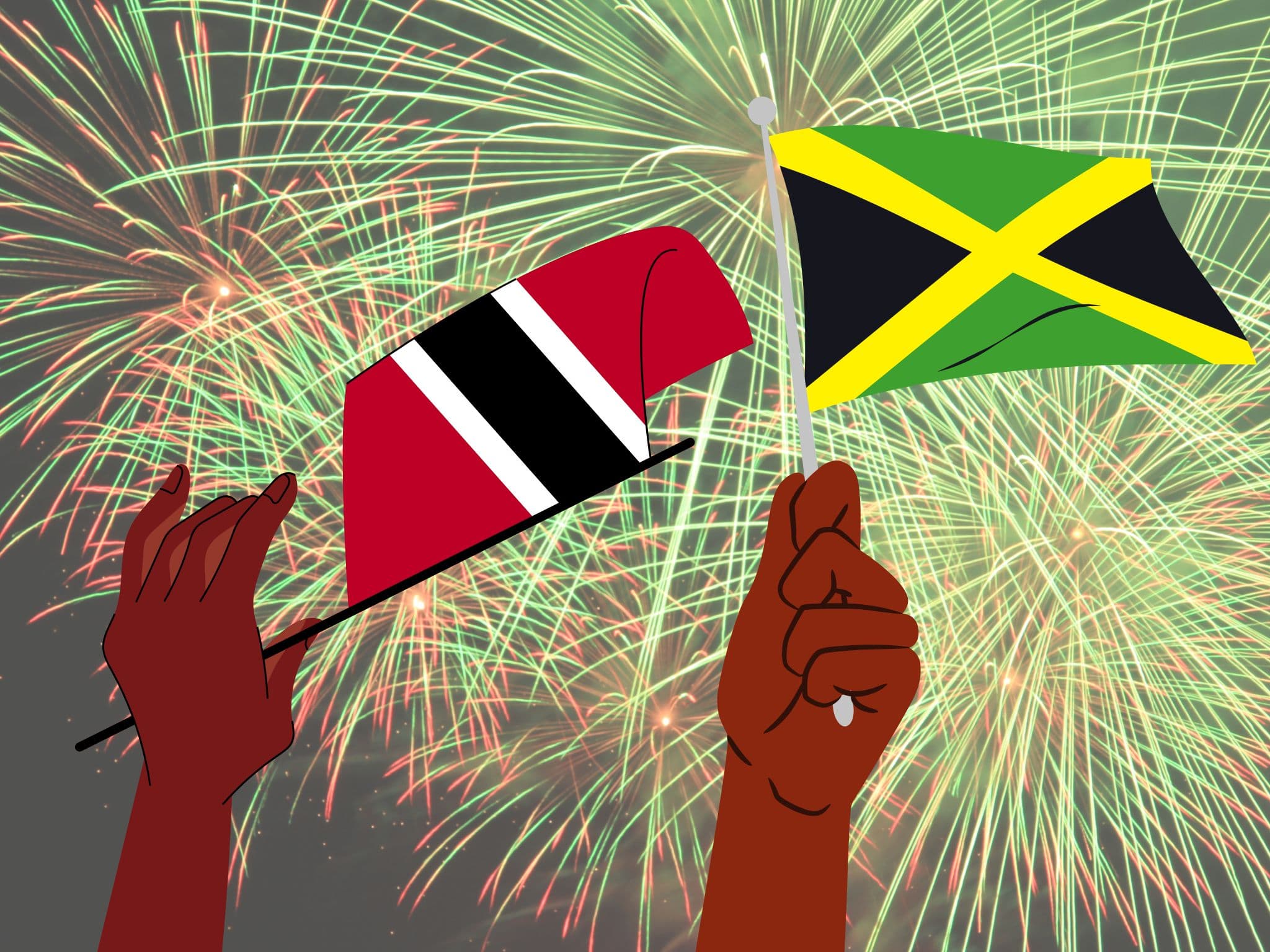
- Jamaica and Trinidad and Tobago (T&T) attained independence on Aug.
- 6 and 31, respectively, in 1962.
- With both countries commemorating 64 years of independence this year, some people have expressed interest in which of the two has achieved and benefited more from political independence.
- Some people are inclined to say T&T has benefited more economically, but with an important qualification: Trinidad's natural-resource advantage makes the comparison somewhat unfair to Jamaica.
- But in 1962, the economic difference between Jamaica and T&T was striking.
Jamaica and Trinidad and Tobago (T&T) attained independence on Aug. 6 and 31, respectively, in 1962. With both countries commemorating 64 years of independence this year, some people have expressed interest in which of the two has achieved and benefited more from political independence.
Some people are inclined to say T&T has benefited more economically, but with an important qualification: Trinidad's natural-resource advantage makes the comparison somewhat unfair to Jamaica.
It's ironic that when Jamaica pulled out of the former West Indies Federation, one of the reasons expressed by anti-federalists headed by Sir Alexander Bustamante, then Jamaica's opposition leader, was that the other nine members of the federation, including T&T, would be a drain on Jamaica's economy.
But in 1962, the economic difference between Jamaica and T&T was striking. T&T already had a higher income per person, about $704 versus Jamaica's $458, so T&T had a distinct economic advantage.
Today, the gap is considerably larger. World Bank data put 2024 GDP per capita at approximately $18,733 in T&T and $7,754 in Jamaica, or roughly 2.4 times higher in T&T.
The difference isn't merely GDP. The UNDP's latest Human Development Index places T&T at 0.807, ranking 72nd, and Jamaica at 0.720, ranking 117th. That's a substantial difference in the combination of income, education and life expectancy.
But here's where the comparison becomes interesting. T&T is extraordinarily fortunate to possess oil and natural gas. The 1973-74 oil-price explosion transformed the country's finances. Real GDP grew at an extraordinary 9.6% annually from 1974-79.
Jamaica had bauxite, but bauxite isn't remotely comparable to having large petroleum and natural gas revenues. Jamaica also had to import its oil, making the 1970s oil shock particularly damaging. Its real GDP fell about 21% between 1974 and 1980.
On the other hand, Jamaica has achieved some remarkable accomplishments. Foremost, Jamaica developed a remarkably durable democracy. Despite periods of intense political violence, especially in the late 1970s, Jamaica has maintained competitive elections and alternation between the JLP and PNP.
Jamaica also built an internationally recognizable national brand. In music, athletics, culture, tourism and its diaspora, Jamaica's influence is vastly greater than its population or economic size would suggest.
Bob Marley, reggae, dancehall, Rastafarian culture, Jamaican cuisine, sprinting and the enormous Jamaican diaspora have given Jamaica a global cultural footprint T&T simply hasn't matched.
Without the advantage of the oil that T&T has, Jamaica has accomplished something extraordinary with its public finances in recent decades. After decades of extraordinarily high debt, Jamaica undertook painful fiscal reforms and dramatically reduced its debt burden. Jamaica entered independence with government debt of only about 20% of GDP but eventually experienced enormous debt accumulation before reversing course.
Some people believe T&T hasn't fully taken advantage of its natural-resource assets. The nation had an opportunity to transform itself into something like a small Caribbean version of Norway: a highly diversified, prosperous, technologically advanced economy with enormous sovereign savings and world-class institutions. But it didn't fully accomplish that.
The country invested heavily in state enterprises, infrastructure and social programs, and its citizens unquestionably benefited from the oil wealth. But the economy remained heavily dependent on hydrocarbons. T&T may have done better than Jamaica economically, but not as well as it could have done.
When asking whether average citizens in T&T and Jamaica have experienced a substantial improvement in their standard of living since 1962, it seems T&T citizens have had the clear advantage.
T&T's oil and gas resources enabled the country to provide relatively high wages, extensive social services, infrastructure and a higher standard of living. The historical record shows that by the 1970s and 1980s, Trinidad had achieved exceptionally high literacy, electricity and potable-water access and other quality-of-life indicators.
But if the question is which country used political independence to build a sustainable, diversified and well-governed society, the gap becomes much narrower, with Jamaica ahead.
The area where neither country can claim great success is crime and security. Both have suffered serious violent crime problems. Although emergency crime-control measures can reduce violence in both countries, neither has solved the underlying problem.
From an economic viewpoint, T&T has benefited more after 64 years, primarily because history handed it a much better economic hand. Jamaica had to play with a weaker hand.
And in some respects, Jamaica's achievements — maintaining democracy, creating a remarkably influential national culture, building a globally important tourism industry, producing world-class athletes and artists, and eventually bringing its enormous debt burden under control — are quite impressive.
T&T has produced better material and human-development outcomes, while Jamaica has perhaps made the more impressive achievements relative to the resources and circumstances with which it started.
T&T has had considerably more natural-resource wealth than Jamaica since 1962, but it has not converted that advantage into the kind of diversified, resilient economy that could have evolved. Jamaica, meanwhile, never had Trinidad's oil windfall or the luxury of becoming overly dependent upon it. Instead, Jamaica made great, determined and successful attempts to make gains from mining its cultural and athletic assets, building Jamaica into an outstanding international brand.
Despite their respective shortcomings, both nations have progressed over the past 64 years, validating the decisions that made them politically independent nations.