Jamaica’s Chuck urges stronger regional cooperation to fight corruption
Key Points(5)
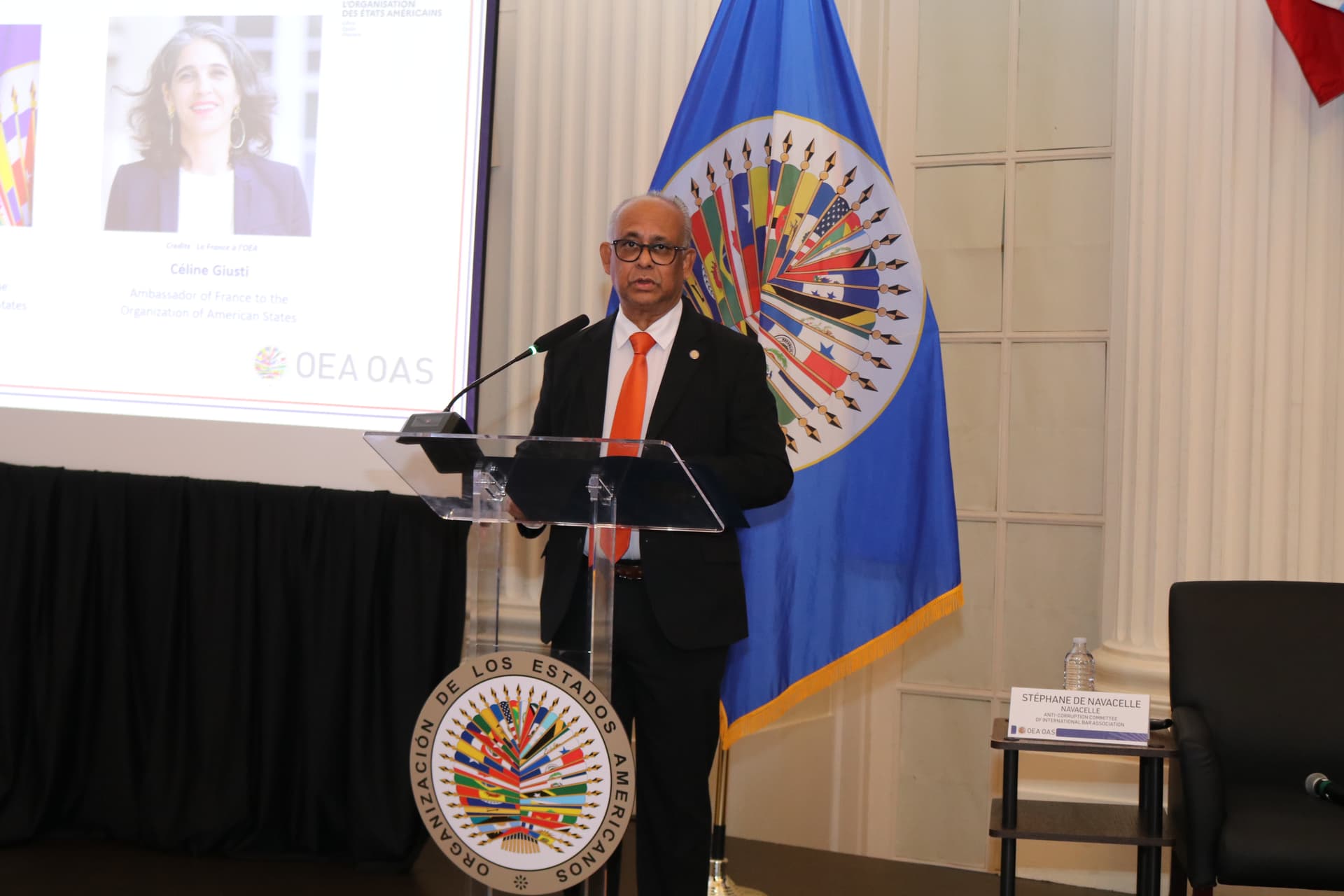
- Chuck made the call Wednesday at a regional anti-corruption conference hosted by the Embassy of France and its Permanent Mission to the Organization of American States (OAS) at the OAS headquarters in Washington, D.C.
- “Crime and corruption go together,” Chuck said, emphasizing the need to strengthen institutions and cooperation to confront both problems.
- He said corruption affects more than government finances, eroding public trust and diverting scarce resources from critical sectors such as health care, education and national security.
- An effective response, he argued, requires transparent governance, consistent enforcement of the law, public participation and a culture of integrity in which corrupt practices are neither tolerated nor normalized.
- Jamaica’s anti-corruption framework Addressing Jamaica’s experience, Chuck acknowledged challenges involving public trust, perceptions of corruption, the detection and prosecution of wrongdoing, public procurement and the management of public resources.
Jamaica’s Minister of Justice and Constitutional Affairs, Delroy Chuck, has called for stronger regional cooperation, greater transparency and improved accountability to combat corruption, warning that the problem undermines development, weakens the rule of law and diverts public resources from essential services.
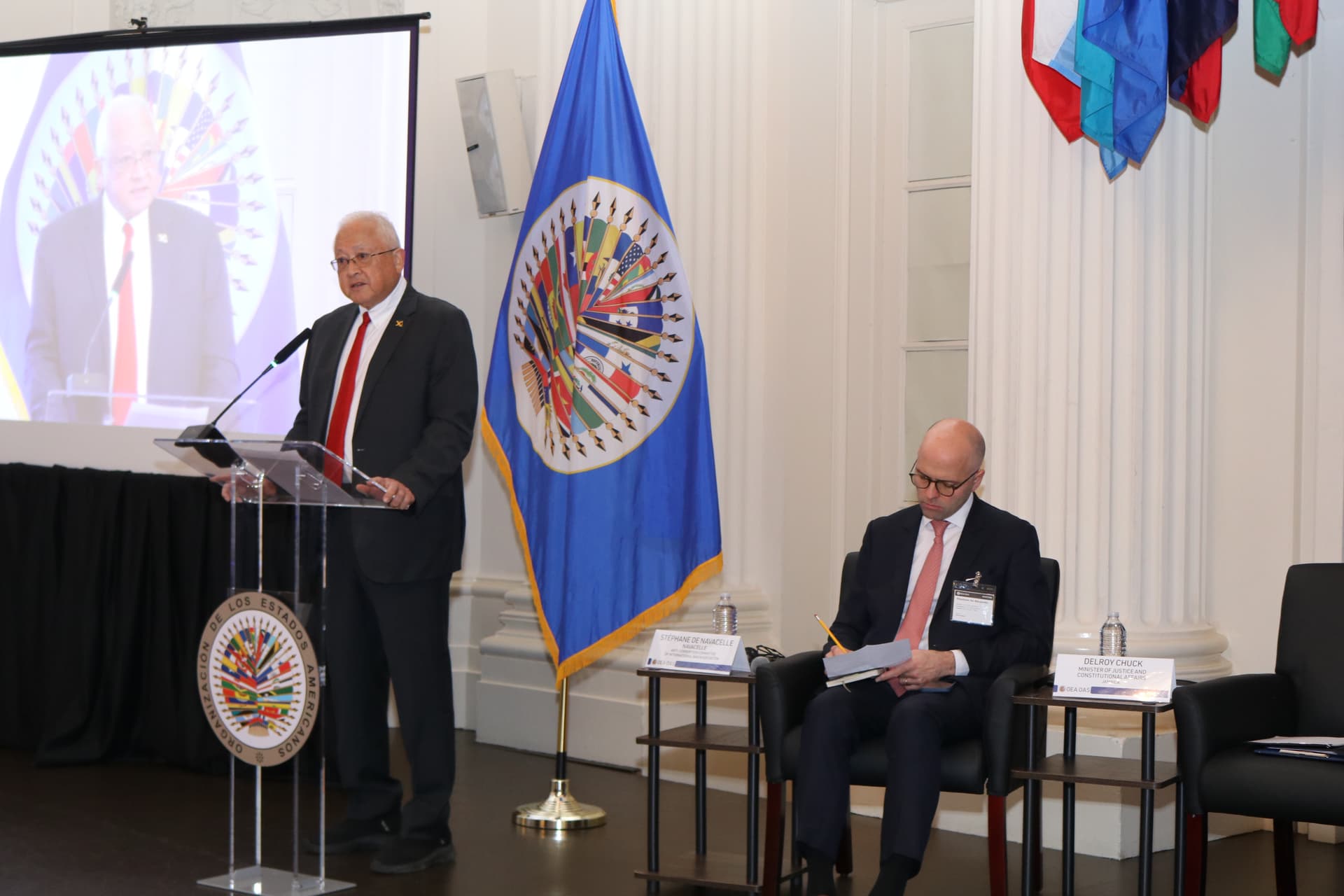
Chuck made the call Wednesday at a regional anti-corruption conference hosted by the Embassy of France and its Permanent Mission to the Organization of American States (OAS) at the OAS headquarters in Washington, D.C.
The conference was held under the theme “The Fight Against Corruption: Addressing a Common Threat to Society and Development.” Chuck addressed a session titled “The Fight Against Corruption: Navigating a Moving Landscape.”
He described corruption as a shared challenge that no government or institution could effectively tackle alone, arguing that cooperation among governments, law enforcement agencies, civil society, the private sector and international partners was essential to protecting public resources.
“Crime and corruption go together,” Chuck said, emphasizing the need to strengthen institutions and cooperation to confront both problems.
He said corruption affects more than government finances, eroding public trust and diverting scarce resources from critical sectors such as health care, education and national security.
An effective response, he argued, requires transparent governance, consistent enforcement of the law, public participation and a culture of integrity in which corrupt practices are neither tolerated nor normalized.
Jamaica’s anti-corruption framework
Addressing Jamaica’s experience, Chuck acknowledged challenges involving public trust, perceptions of corruption, the detection and prosecution of wrongdoing, public procurement and the management of public resources.
He also raised concerns about people’s reluctance to report wrongdoing for fear of retaliation, stressing the importance of stronger protections for whistleblowers.
Chuck outlined legislative and institutional measures Jamaica has introduced over the past 25 years to strengthen oversight and accountability. These include the Corruption Prevention Act of 2000, the Independent Commission of Investigations Act of 2010, the Protected Disclosures Act of 2011, the Proceeds of Crime Act and legislation establishing the Integrity Commission.
He highlighted the roles of the Integrity Commission and the Major Organised Crime and Anti-Corruption Agency (MOCA) in investigating wrongdoing and strengthening accountability.
The Integrity Commission monitors public officials’ statutory declarations, oversees government procurement and investigates complaints, while MOCA investigates major organized criminal activity, including serious corruption and financial crimes.
Chuck said both institutions require sustained financial and operational support to carry out their mandates effectively.
He cautioned that continued progress would also depend on adapting to technological developments, increasingly complex criminal networks and rising public expectations.
Cross-border cooperation
The minister said corruption increasingly crosses national borders, with bribery, fraud, money laundering and illicit financial flows often involving multiple jurisdictions.
He urged countries to improve information-sharing, coordinate investigations and learn from one another’s experiences to strengthen their ability to detect wrongdoing, recover assets and hold offenders accountable.
Chuck also called for broader public participation in anti-corruption efforts, arguing that responsibility should extend beyond specialized agencies to become a national commitment.
He said public confidence depends on institutions demonstrating transparency, operating fairly and ensuring that the law applies equally.
In his address, Chuck also cited what he described as significant reductions in murders in Jamaica in recent years, linking the country’s crime-fighting efforts to stronger institutions, improved investigative capacity and the use of technology.
He said technological tools were helping law enforcement agencies detect criminal activity and support investigations, while emphasizing the need to continue strengthening the country’s capacity to identify and prevent wrongdoing.
Although he pointed to progress in tackling crime, Chuck acknowledged that corruption remained difficult to measure and required continued vigilance.
He urged regional partners to deepen cooperation and share expertise, describing the fight against corruption as a broader struggle for justice, opportunity and development.
Chuck said sustained collaboration was essential to protecting democratic institutions, upholding the rule of law and ensuring that public resources serve the public interest while creating conditions for lasting and inclusive development.