Home Blog Page 78

Opinion: Bad Bunny’s Super Bowl performance proved identity and unity can coexist

Bad Bunny super bowl

I didn’t head into the Super Bowl as a Bad Bunny superfan — I know a few of his songs, and I expected a well‑produced show. What I saw instead was one of the most culturally resonant halftime performances in recent memory. The stage wasn’t just a platform for hits — it was a panoramic celebration of identity, heritage, and a shared sense of belonging that stretched well beyond the United States.

Bad Bunny opened with “Tití Me Preguntó” and carried the energy through a setlist that hit hits like “Yo Perreo Sola,” “El Apagón” and closed with “DtMF.” The field was transformed: sugarcane stalks, coconut and piragua stands, men playing dominoes, and representations of everyday life transported the audience into the rhythms and textures of Caribbean and Latin American culture. Even a real wedding happened onstage — an unexpected but fitting symbol of community and celebration in the middle of football’s grandest night.

There were star cameos — from Lady Gaga’s salsa‑infused performance of “Die With a Smile” to Ricky Martin performing Lo Que Le Pasó a Hawaii — and cameos in the choreography by Cardi B, Pedro Pascal, Jessica Alba, Karol G and others. These weren’t just guest appearances: they threaded together multiple generations and genres, in a moment that was celebratory without ever feeling superficial.

But it was the symbolism that lingered. Bad Bunny marched across the field with dancers waving flags from countries throughout North, Central, South America and the Caribbean, deliberately naming nations — from Chile and Argentina to Jamaica, Cuba and Canada — as he held aloft a football marked “Together, We Are America.” Behind him, the jumbotron read, “The only thing more powerful than hate is love.” This wasn’t pandering. It was affirmation.

Some critics dismissed the performance, saying he wasn’t “American” or questioning why he sang in Spanish. But that very choice was central to the show’s power. Bad Bunny is a U.S. citizen, and countless Americans speak Spanish or another language as their first tongue; his performance affirmed that language and heritage are part of the American identity, not a barrier to it. At a time when immigration debates and political division swirl across the country, there was something quietly revolutionary about an artist using the sport’s biggest stage to show that the Americas are culturally intertwined, complex, and deserving of recognition and respect.

Few things in popular culture deliver both spectacle and substance — and fewer still invite viewers to see themselves reflected back on a field usually reserved for gladiatorial sport and commercial breaks. Seeing a Jamaican flag fly alongside Puerto Rico’s, hearing countries called out by name, and feeling that moment transcend fandom was a rare thing. Bad Bunny didn’t just perform a halftime show — he carved out a place for millions of people who have long felt unseen, and in doing so, reminded us all that identity and unity can coexist at once on the world’s biggest stage.

The most romantic proposal spots in the Caribbean

Jamaica tourism

A proposal of marriage should feel like a big, significant moment. As such, it’s worth getting every element just right. Of course, among the more important elements is the backdrop against which you’ll be posing the question. Some proposal spots in the Caribbean can lend the event a special sense of magic – and you’ll want to pick one that matches your personal sensibilities.

So, what are your options? Let’s take a closer look.

Antigua & Aruba: Iconic Sunset Proposals with Luxury Touches

ABC islands Aruba
Flamingos on Aruba

For natural beauty, seclusion, and world-class facilities, the island paradises of Antigua and Aruba are virtually peerless. You might stroll along a private beachfront, or take in the sunset from a clifftop viewpoint. There are fully planned experiences available, too, like the Sunset Champagne Experience at the Blue Waters Resort, and the Sunset Concierge service offered by the Hilton on Aruba.

The best resorts have quite considerable experience with proposals, and the things that might help them to go off without a hitch. Among the most important considerations, naturally, is your engagement ring. The right supportive team might help you to manage this essential object – or even photograph the moment it appears.

Grenada & Turks & Caicos: Private Beaches and Intimate Luxury Settings

Turks and Caicos

In Grenada, you’ll find a wealth of amazing beaches, like Grand Anse. Turks & Caicos, meanwhile, are home to upmarket resorts, with a greater focus on privacy and high-end dining. You might stop off at Providenciales, for example, and enjoy a meal fit for a night you’ll never forget.

St. Lucia: Adventure Meets Romance Among the Pitons

Saint Lucia launches national survey on living conditions

If you’re looking for sweeping, evocative scenery, then a visit to St. Lucia, and the iconic ‘Pitons’ might be perfect. You can hike to the summit, and reward yourself by getting down on one knee. The Pigeon Island National Park is similarly packed with amazing wildlife and gorgeous forests. Outdoorsy couples might struggle to find a more suitable proposal spot!

Jamaica: Cliffside Views, Famous Beaches & All-Inclusive Romance

tourism

Of course, no list of Caribbean proposal spots would be complete without at least a passing mention of Jamaica. Home to more stunning scenery, and a vibrant and varied culture, the island offers sweeping cliffs, amongst which you’ll find the iconic Rick’s Café, as well as the gorgeous stretch of coastline that is the Seven Mile Beach.

The high-end resorts on the island have been able to lean into the local culture and heritage, and provide a combination of private dining and romantic décor that’s endlessly luxurious and distinctly Jamaican.

Miami ranked home to most annoying drivers in US, study finds

driving

Miami has topped a new nationwide ranking of the most aggressive, rude and frustrating drivers in the United States, reigniting debate about driving behaviour across major American cities.

According to a recent study by legal firm Lemon Law Experts, Miami earned the highest score on the company’s “driver annoyance index,” receiving 98.50 out of 100 — the highest in the country.

The study found that 86 per cent of Miami residents rated local drivers at seven or higher on a scale of zero to 10, where 10 represents “extremely annoying.”

“When analyzing these habits across the country, we found it’s Miami, FL, that leads the way with an annoying driver score of 98.50 out of 100,” the report said. “When asked how annoying drivers are in their city, 86% of Miami residents responded with a seven or higher on a scale of 0 to 10, with 10 representing extremely annoying.”

Researchers noted that the gap between Miami and other cities is significant, with the difference between first-place Miami and lower-ranked cities wider than the gap between second-place Las Vegas and seventh-place Albuquerque.

Survey participants highlighted several behaviours they find most frustrating on Miami’s roads, including changing lanes without signalling, tailgating, speeding, refusing to yield to merging traffic and inconsiderate parking practices. The report said these habits not only irritate other motorists but also contribute to stress and increased safety risks.

Las Vegas, Nevada, ranked second overall, with respondents citing frequent phone use while driving, speeding and disregard for pedestrians. Nashville, Tennessee, placed third, followed by Philadelphia, Pennsylvania, and New Orleans, Louisiana.

Memphis, Tennessee; Albuquerque, New Mexico; Atlanta, Georgia; Sacramento, California; and Washington, D.C. rounded out the top 10 cities with the most annoying drivers, according to the study.

Machel Montano drops new album ‘Encore’ at height of Carnival season

Machel Montano
Photo by Che Kothari

Trinidad and Tobago soca superstar Machel Montano has released his highly anticipated new studio album Encore, arriving at the height of the country’s Carnival celebrations.

The album, released Friday, February 6, 2026, via Montano’s Monk Music label, comes as the global soca icon continues his Encore Tour, with at least eight major performances scheduled ahead of Carnival Monday on February 16.

Encore features the title track “Encore,” created by the same team behind Montano’s 2025 hit “PARDY,” along with standout songs including “Pull D Pin” and “Move Out D Way.” The project brings together an intergenerational mix of collaborators representing both the legacy and future of soca, including Skinny Fabulous, Voice, Nailah Blackman, Super Blue, Paris Coutain, litleboy, Tempa, Lil Natty & Thunda and Mela Caribe.

With its high-energy production and anthem-driven sound, Encore has quickly entered the Road March conversation. Both “Encore” and “Move Out D Way” have emerged as early fan favourites and strong contenders for the coveted title. A Road March win would give Montano his 12th victory, allowing him to surpass the late Lord Kitchener and become the most decorated Road March artist in history. The two are currently tied with 11 wins each.

Montano is also set to defend his Chutney Soca Monarch crown during Carnival week with “Dancing in the Streets,” returning to the competition as the reigning champion.

The album release coincides with a packed Carnival performance schedule, including appearances at Stink & Dutty, Chutney Soca Monarch, Monday Madness, ValeVibe, Lime, Tribe Ignite, Freebird Fete and the EPIC Welcome Party.

To mark the release of Encore, Montano is hosting an exclusive album listening party today at a new private venue in Trinidad, giving select guests an intimate first listen ahead of Carnival’s busiest days.

Adding to an already milestone-filled week, Montano will also premiere his upcoming documentary, Like Ah Boss: Journey of a Soca King. The film offers an intimate look at his life, legacy and four-decade career, debuting with a red-carpet premiere on February 10, followed by a theatrical release on February 12 in cinemas across Trinidad and Tobago and Guyana.

As Carnival 2026 unfolds, Encore stands as both a musical release and a statement from an artist who continues to shape, challenge and elevate Caribbean culture on the global stage.

Security minister meets police high command after weekend killings in St. Vincent

St. Vincent and the Grenadines’ Minister for National Security, St. Clair Leacock

St. Vincent and the Grenadines’ Minister for National Security, St. Clair Leacock, convened an emergency three-hour meeting with the police high command on Sunday following two fatal shootings over the weekend.

The February 8 meeting brought together Commissioner of Police Enville Williams, senior members of the Royal St. Vincent and the Grenadines Police Force (RSVGPF), and key tactical leads from the Coast Guard Service to address what officials described as a “grave concern” over escalating violence and to strengthen coordination between policy direction and frontline operations.

The emergency response was triggered by two killings within a 24-hour period. Kevin Richards, 25, of Montaque, Mesopotamia, was fatally shot on Friday, February 6, while Lenford Peters, 43, of Richland Park, was shot and killed on Saturday, February 7.

Officials said the incidents underscore the growing proliferation of illegal firearms and the urgent need for stronger control measures. Leacock announced that the Government intends to implement tighter firearm policies, including what he described as a state-mandated disarmament initiative and a comprehensive overhaul of the firearm licensing system.

Among the measures outlined are an immediate audit and review of the legal framework governing firearm licences and permits, the introduction of more stringent background checks for applicants, and the mandatory revocation of all civilian licences for high-powered rifles.

Leacock stressed that the Government will not tolerate gang activity or any attempt by criminal groups to exert control over communities, warning that no area of the country will be allowed to become a “no-go zone”.

He also underscored the importance of a collaborative approach to crime fighting, involving government agencies, civil society, the private sector, faith-based organisations, schools and families to address the root causes of criminal activity while supporting enforcement efforts.

During the meeting, Commissioner Williams highlighted several operational challenges facing the police force, including manpower shortages, high attrition rates, and the need for improved working conditions and benefits to boost morale and retention. He also pointed to gaps in technical capacity and the need for modern equipment and enhanced traffic management systems to combat mobile criminal networks.

Leacock assured the police high command of the Government’s full support, noting that the 2026 national budget includes provisions aimed at strengthening law enforcement capacity and addressing critical operational needs.

The RSVGPF is also appealing for greater public cooperation in combating crime, urging citizens not to harbour criminals or remain silent about illegal activity.

“Public cooperation is essential to the effective prevention and detection of crime. Citizens are reminded: Do not turn a blind eye to crime. Do not harbour criminals. If you see something, say something,” the force said in a statement.

Police warned individuals involved in criminal activity to cease immediately or face the full force of the law, reiterating their commitment to investigate, arrest and prosecute offenders in the interest of public safety and national security.

Fitch affirms Jamaica’s ‘BB-’ credit rating with stable outlook

Fayval Williams Jamaica
Fayval Williams

Jamaica’s Minister of Finance and the Public Service, Fayval Williams, has welcomed Fitch Ratings’ decision to maintain the country’s Long-Term Foreign-Currency Issuer Default Rating (IDR) at ‘BB-’ with a stable outlook.

In a statement issued on February 5, Fitch said the Government has built a strong track record over more than a decade of adhering to a solid fiscal framework, resulting in a sharp reduction in Jamaica’s debt-to-gross domestic product (GDP) ratio.

Williams said the rating affirmation and stable outlook reflect the Government’s commitment to fiscal discipline and the sacrifices made by Jamaicans. She added that the assessment also signals Fitch’s expectation that despite the significant economic damage and recovery costs from Hurricane Melissa, the country will return to fiscal consolidation beginning in 2027.

According to Fitch, Jamaica is projected to experience a temporary economic contraction of 1.5 per cent in 2025 and 2.6 per cent in 2026 as reconstruction efforts advance. However, the agency noted its belief that the Government will remain committed to its fiscal framework and will actively seek to reduce its debt burden once rebuilding is completed.

Williams confirmed the Government’s continued commitment to fiscal responsibility.

Fitch also praised Jamaica’s financial preparedness for Hurricane Melissa, describing it as a “robust multilayered financial toolkit”. Recovery and reconstruction efforts are expected to be supported by a concessional multilateral loan package valued at more than US$6 billion, along with government insurance and contingency funds totalling nearly US$250 million. Additional support will include lines of credit, a US$150 million catastrophe bond facility and substantial private insurance inflows.

The rating agency further highlighted Jamaica’s fiscal response, including the temporary suspension of the Fiscal Responsibility Law to accommodate urgent reconstruction costs.

Fiscal balances are projected to move into deficit in the 2025 and 2026 financial years, but Fitch expects primary surpluses to resume in the 2027 financial year, in line with the Government’s target of reducing debt-to-GDP levels toward 60 per cent.

Expert points to ‘a lot of evidence’ as Jamaica offshore oil search advances

An industry expert involved in Jamaica’s ongoing offshore exploration says there is mounting evidence suggesting the island could sit above an active petroleum system, as scientific surveys of its seabed continue.

A UK-based oil and gas exploration company currently surveying Jamaica’s seabed for potential petroleum resources says there is growing evidence suggesting the island could sit above an active offshore oil system.

United Oil & Gas Plc, which holds the Walton Morant offshore licence, has launched a new internal technical podcast outlining the geological case for oil exploration around Jamaica, as it continues a multi-week scientific survey of the seabed.

The podcast, On the Rocks, is intended to give shareholders and stakeholders a deeper look at the data guiding the company’s exploration programme. Its first episode features Business Technical Manager Paul Ryan and Head of Business Development Donal Meehan, who discuss what they describe as strong indicators of a working petroleum system offshore.

“There’s really just an awful lot of evidence there,” Meehan said in the debut episode. He pointed to what the company describes as a proven petroleum system onshore in Jamaica and a combination of offshore indicators including satellite data, seismic interpretation and rock analysis. “Everything’s pointed in the right direction that we do have an active petroleum system in the offshore as well as the onshore,” he added.

The podcast launch comes as United Oil & Gas recently deployed the research vessel R/V Gyre to Jamaican waters to begin a geochemical exploration survey on the Walton Morant licence. The vessel, operated by TDI Brooks International, departed Trinidad last month and is conducting seabed mapping, heat flow measurements and sediment sampling in deep waters more than 450 metres below sea level.

The survey is designed to determine whether oil-like substances previously detected beneath Jamaica’s waters could be commercially viable. According to the company, the work focuses on gathering scientific evidence rather than drilling.

Ryan said some of the data collected so far suggests hydrocarbons detected in the area are likely natural rather than man-made. “I think the signature is suggestive of a thermogenic origin, which means that it’s more than likely coming from a seep on the seabed that’s venting up,” he said, explaining that the geochemical signature differs from refined fuels such as diesel.

He added that upcoming seabed “piston coring” will aim to confirm what the company calls circumstantial evidence from satellite imagery and seismic anomalies by collecting physical samples from the ocean floor. The goal is to determine whether thermally derived hydrocarbons are present in the sediments.

Despite the growing optimism from the company’s technical team, Jamaican officials have urged caution about interpreting the current activity. Energy Minister Daryl Vaz previously stressed that the programme is strictly scientific and does not involve oil drilling or extraction.

United Oil & Gas Chief Executive Officer Brian Larkin also emphasised that the survey represents early-stage data collection. “We are not drilling a well. This is data collection, arguably the final piece of the jigsaw before you move towards potential exploration drilling,” Larkin said during a media tour of the research vessel at the Port Royal Cruise Terminal in January.

The offshore programme includes multi-beam seabed mapping followed by heat flow measurements and piston coring at roughly 41 selected sites. The company says the results will help determine whether an active petroleum system exists offshore Jamaica and whether further exploration, including drilling, could eventually be justified.

For now, the exploration remains in its evidence-gathering phase — but company officials say the indicators so far are pointing in a promising direction.

5.5-magnitude earthquake strikes southeastern Cuba

Earthquake

A 5.5-magnitude earthquake struck southeastern Cuba on Sunday, according to the United States Geological Survey (USGS).

The tremor occurred at approximately 12:00 GMT about 45 kilometres southwest of Maisí, the easternmost municipality of the island, at a depth of 10 kilometres (6.2 miles), the USGS reported.

The earthquake was felt near the city of Guantánamo, which lies roughly 92 kilometres west-northwest of the epicentre.

No tsunami warning or advisory was issued following the quake, and there were no immediate reports of damage or casualties. Authorities have not indicated any significant impact from the tremor as monitoring continues.

Hetmyer shrugs off travel turmoil with record-breaking World Cup blitz

Shimron Hetmyer out of World Cup after missing rescheduled flight

KOLKATA, India – Shimron Hetmyer needed less than a day on Indian soil to remind the cricketing world of his class. Arriving in India fewer than 24 hours before the West Indies’ opening match of the ICC Men’s T20 Cricket World Cup, the left-hander delivered a breathtaking half-century that powered the Caribbean side to a 35-run victory over Scotland.

Delayed by visa complications that left him stranded in South Africa since January 31, Hetmyer had been forced to miss the West Indies’ only warm-up fixture against Afghanistan. When he finally landed on Friday, his schedule left little room for acclimatization, limited largely to the ICC’s official photoshoot. Yet once the lights came on at Eden Gardens, none of that seemed to matter.

A record-breaking assault at Eden Gardens

In scintillating form coming into the tournament after compiling 171 runs in a three-match T20 series against South Africa, Hetmyer picked up exactly where he left off. Batting at number three, the 29-year-old unleashed a ferocious 64 from just 36 deliveries, peppering the stands with six sixes and striking two fours as West Indies surged to 182 for five in their allotted 20 overs.

His half-century arrived in just 22 balls, setting a new benchmark as the fastest by a West Indian at a T20 World Cup. Scotland never recovered, and Hetmyer was a unanimous choice for Player of the Match.

“Everything happens for a reason”

Speaking afterward, Hetmyer insisted the disruption surrounding his arrival never affected his mindset.

“I guess everything happens for a reason, so I’m not really complaining. I’m just giving thanks to the Almighty for giving me the strength and helping me to get here,” he said.

He explained that once he joined the squad, his focus was singular.

“When I got here it was just to focus and put that behind and just make sure that when I came out here today, I focused on the game ahead and focused on my batting and making sure I give the bowlers a good score for chasing down [a target],” Hetmyer added.

Embracing life at number three

With former captain Nicholas Pooran now retired from international cricket, Hetmyer has been elevated up the order, a shift that appears to suit him perfectly. Though long valued as a finisher in the shortest format, he acknowledged his comfort and enthusiasm for batting higher.

“It’s fun. It’s something that I used to do in the beginning, but I guess playing more T20s, finishing was also fun for me but if I had to choose, I’ll stay up top,” he said.

The adjustment, he noted, is largely mental rather than technical.

“It’s just about mindset really, because batting at three the ball just moves about a little bit more and comes on to you a little bit faster than when you’re batting at five or six, so it’s just for you to get into position as early as possible and just execute.”

A statement to start the campaign

For West Indies, Hetmyer’s performance was more than a match-winning contribution, it was a statement of intent. For the batter himself, it was proof that preparation, confidence, and clarity of purpose can outweigh even the most disruptive of circumstances.

Shimron Hetmyer transformed a chaotic travel ordeal into a record-breaking World Cup statement, setting the tone for West Indies’ campaign with authority and poise.


Hetmyer’s fire, Shepherd’s hat-trick launch Windies’ World Cup charge

Shepherd, Joseph end WI wait for series win over Proteas

KOLKATA, India – A blistering batting display from Shimron Hetmyer followed by a historic bowling spell from Romario Shepherd propelled West Indies to a commanding 35-run victory over Scotland in their opening match of the ICC Men’s T20 World Cup at Eden Gardens.

Hetmyer, who arrived in India only on Friday after visa-related delays, showed no hint of disruption as he tore into the Scottish attack. Shepherd then ensured there would be no late drama, producing a devastating hat-trick, the first by a West Indies bowler in T20 World Cup history, to decisively swing the contest.

The result provided an ideal start for the Caribbean side, who now turn their attention to a highly anticipated Group C clash against pre-tournament favorites England on Wednesday.

A slow burn before the explosion

West Indies’ innings began cautiously, with openers Brandon King and Shai Hope struggling to generate early momentum. Scotland’s disciplined bowling restricted the pair to just 33 runs at the end of the power play, leaving the innings in need of inspiration.

That spark briefly came from King, who launched pacer Safyaan Sharif for a six and two fours in a costly seventh over that yielded 17 runs and carried the score past 50. However, Hope’s scratchy stay ended soon after, as off-spinner Michael Leask bowled him for a labored 19 off 22 balls.

When King followed shortly afterward, slapping left-arm spinner Oliver Davidson straight to backward point for 35 off 30 balls, West Indies found themselves 58 for two in the 10th over and in danger of squandering their platform.

Hetmyer takes control

Batting at number three, Hetmyer initially rode his luck, with two mistimed slogs falling safely between fielders. But once settled, he seized complete control of the innings.

Together with Rovman Powell, Hetmyer transformed West Indies’ fortunes in breathtaking fashion. The pair added 81 runs in just six overs, dismantling Scotland’s spin attack with ruthless efficiency.

Hetmyer launched Davidson over long off, followed by another maximum off Leask over long on. Mark Watt was then sent into the stands twice in succession, as the left-hander accelerated with authority. A six and four off Sharif carried Hetmyer into the 40s, and moments later he reached his half-century from just 22 balls, the fastest by a West Indian at a T20 World Cup, eclipsing Chris Gayle’s 23-ball effort against Australia in 2009.

Powell’s cameo ended when he struck Brad Currie straight to deep backward square leg for 24 off 14 balls, but the damage had already been done.

Late flourish pushes Windies to 182

Hetmyer continued his assault alongside Sherfane Rutherford, who blasted 26 off just 13 deliveries. The pair added 36 runs in a little over three overs, ensuring West Indies closed strongly despite losing both batters in quick succession at the death.

Hetmyer’s innings featured six sixes and two fours in a commanding 64 off 36 balls, while Rutherford struck four fours and a six as West Indies posted an imposing 182 for five.

Scotland fight back, then falter

West Indies struck early with the ball, removing Michael Jones for one, Brandon McMullen for 14, and George Munsey for 19, the latter falling to a spectacular diving catch by Hetmyer. Scotland stumbled to 38 for three after six overs.

However, captain Richie Berrington and Tom Bruce revived hopes of a historic upset with an aggressive 78-run partnership in just eight overs. Scotland surged to 115 for three at the start of the 14th over, aided by missed chances, Bruce being dropped twice, first by Jason Holder and then by Matthew Forde.

Holder atoned soon after, dismissing Berrington for a rapid 42 off 24 balls with a catch at the deep point boundary.

Shepherd’s spell turns the match on its head

With momentum swinging, Gudakesh Motie trapped Bruce lbw for 35 to make it 122 for five. What followed was a spell that will live long in West Indies World Cup history.

Shepherd struck immediately in the 17th over, removing Matthew Cross and Michael Leask in consecutive deliveries before bowling Davidson to complete a stunning hat-trick, the 10th ever at a T20 World Cup. He capped the over by having Sharif caught at long off, finishing with extraordinary figures of five for 20 from just three overs.

Scotland collapsed from contention to 133 for nine in the blink of an eye.

Holder closes the door

Jason Holder returned to clean up the tail, dismissing last man Mark Watt to end the innings at 147 in 18.5 overs. Holder finished with three for 30, sealing a comprehensive and emphatic victory.

Shimron Hetmyer’s record-breaking assault and Romario Shepherd’s historic hat-trick combined to deliver West Indies a powerful and authoritative start to their World Cup campaign.


Caribbean cuisine takes center stage at South Beach Food & Wine Festival

South Beach Wine & Food Festival

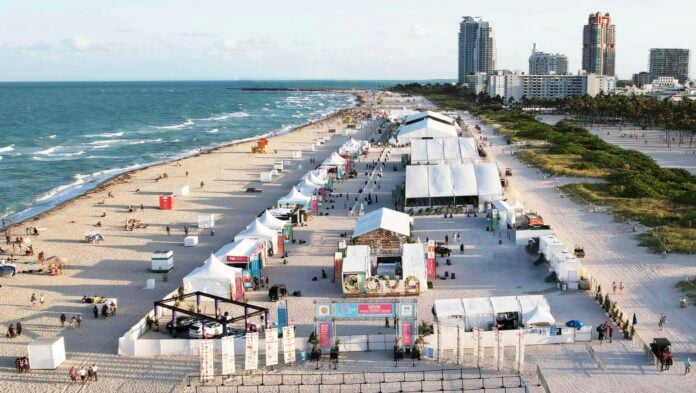
Las’ Lap Link Up: A Celebration of Afro-Caribbean Cuisine will put the best of Caribbean cuisine in the spotlight at Food Network’s South Beach Wine & Food Festival on Friday, February 20, 2026. More info here.

The walkaround tasting experience, held at the Kimpton Surfcomber Hotel in Miami Beach, will feature a wide variety of Caribbean culinary delights prepared by a roster of chefs specializing in Jamaican and Caribbean cuisine.

The chefs’ showcase will be hosted by culinary stars Nina Compton and Kwame Onwuachi, who will be joined by Jamaica’s own Andre Fowles, Wayne Sharpe, Daniel Lai, and Hugh “Chef Irie” Sinclair, among others, serving up their specialties.

Andre Fowles

Kwame Onwuachi is one of the most influential chefs of his generation, known for championing Afro-Caribbean flavors with inventive flair. His NYC restaurant, Tatiana, has been hailed as one of the city’s best for the past three years, earning top accolades including The World’s 50 Best Restaurants’ “Best New Restaurant” in North America (2023), and consistent praise from The New York Times as a top dining destination. With his vibrant culinary perspective and boundary-pushing creativity, Onwuachi brings serious star power to the shores of Miami Beach.

Nina Compton, James Beard Award–winning chef and owner of Compère Lapin in New Orleans, is celebrated for her soulful approach to Caribbean cuisine. Born and raised in Saint Lucia, she infuses her dishes with bold island flavors, refined technique, and personal storytelling drawn from her roots. Her culinary leadership and warm hospitality have made her one of the brightest forces in contemporary Caribbean dining.

Complementing the culinary experience will be a Caribbean music soundtrack presented by award-winning DJ GQ, who was raised in Jamaica.

Broward Schools celebrate top educators and staff at 2026 Caliber Awards

Broward County Public Schools (BCPS) honored its most outstanding educators and employees during the 2026 Caliber Awards on Friday, February 6, at the Broward County Convention Center. The red-carpet event recognized over 500 nominees for their leadership, innovation, and dedication, with 16 finalists receiving top honors. More than 1,100 community leaders, business partners, educators, and supporters attended the celebration.

Dr. Saima Sanaullah, a veteran science teacher and department chair at Plantation High School, was named Teacher of the Year. With more than 14 years of experience teaching advanced academic and honors programs, Dr. Sanaullah has led remarkable improvements in student performance, boosting Biology End-of-Course proficiency from 37% to 63% and helping raise her school’s overall grade. She will receive cash prizes and a Honda vehicle with a paid two-year lease, courtesy of Rita and Rick Case Automotive Group.

“This year’s honorees represent the very best of Broward County Public Schools,” said BCPS Superintendent Dr. Howard Hepburn. “Their passion, innovation, and unwavering commitment to students inspire excellence across our District. We are proud to recognize their extraordinary contributions.”

Other major awards included:

  • Principal of the Year: Cormic Priester, Rock Island Elementary School, who led the school to an “A” rating for the first time since 2009, improving attendance, enrollment, and academic performance while fostering staff development and family engagement.

  • Assistant Principal of the Year: Anna Koltunova, Marjory Stoneman Douglas High School, recognized for strengthening instructional systems, expanding advanced academic opportunities, and supporting schoolwide student achievement.

  • School/District Employee of the Year: Vanderbilt Carpenter III, Security Specialist at Deerfield Beach High School, praised for maintaining a safe and supportive environment for students and staff through his experience in behavioral support and crisis management.

BCPS extended congratulations to all nominees, finalists, and winners, highlighting their dedication to elevating educational excellence across the county.

Federal inmate, 4 others charged in 2016 Oakland Park and Lauderhill kidnappings and murders

sentenced to over 18 years in US prison

A federal inmate serving a 34-year sentence and four others have been charged in connection with the 2016 kidnappings and murders of two victims in Oakland Park and Lauderhill, authorities announced Friday.

Palacio Valdes Farley, 45, made his initial appearance in federal court on Jan. 27 to face the new charges. Farley, already serving consecutive sentences for conspiracy to commit drug-trafficking, money laundering, and robbery of narcotics traffickers, allegedly orchestrated the crimes with co-defendants Frederic Wayne Mordon, Jr., 44; Emmanuel Xavier White, 51; Walter James Tillman, 37; Andrew Francois Martin, 33; and Joassaint Josiah Aristil, Jr., 30.

Court records indicate the group allegedly planned and carried out the robbery of an Oakland Park apartment used to store narcotics and drug-trafficking proceeds. The defendants reportedly purchased GPS tracking devices, DEA-style clothing, masks, holsters, and flashlights, and rented vehicles to carry out the scheme.

On Aug. 18, 2016, Farley, Mordon, and White allegedly approached “John Doe” and Tiara Jeanne Register at a Lauderhill apartment complex, claiming to be DEA agents and forcing them from their vehicle at gunpoint. Doe was taken to the Oakland Park apartment, where Farley allegedly fatally shot Eric Orlando McNair, who was at the location. Meanwhile, Register was held captive before being driven to a cul-de-sac and shot by Martin, acting on Farley’s instructions.

The defendants are charged with two counts of kidnapping resulting in death, causing death in furtherance of a crime of violence and a drug trafficking crime, and killing a witness. If convicted, they face mandatory life sentences on the kidnapping counts, with the possibility of the death penalty on other charges.

U.S. Attorney Jason A. Reding Quiñones, FBI Miami Special Agent in Charge Brett D. Skiles, Broward Sheriff Dr. Gregory Tony, and Lauderhill Police Chief Constance Stanley announced the charges. The FBI, Broward Sheriff’s Office, and Lauderhill Police Department are jointly investigating the case. Assistant U.S. Attorney Dwayne E. Williams is prosecuting.

FPL and Broward County launch lighting upgrade in Washington Park

Work is set to begin this month on a major lighting upgrade in the Washington Park neighborhood of the Broward Municipal Services District (BMSD), funded by the county’s one-cent transportation surtax.

The Highway and Bridge Maintenance Division, in partnership with FPL, will install a completely new lighting system for sidewalks and roadways, bringing the area up to Florida Department of Transportation lighting standards.

The project builds on prior improvements: the first phase, completed in November 2024, included sidewalk enhancements, ADA-accessible pedestrian curb ramps, and swale upgrades. The second phase, finished in March 2025, focused on drainage system cleaning, inspections, and point repairs. The new lighting work is scheduled to begin in February 2026.

During construction, vehicular traffic will be detoured during off-peak hours, with traffic officers on-site to help minimize disruptions. Some sidewalks will be temporarily closed, and pedestrians will be directed to use the opposite side of the street. County staff coordinated closely with the Washington Park Homeowners Association to ensure smooth communication with residents. Motorists are advised to follow variable message signs along impacted roadways.

“Improved lighting in Washington Park makes the neighborhood safer for pedestrians and drivers, as concrete poles can better withstand severe weather,” said District 8 Commissioner and Vice Mayor Robert McKinzie, whose district includes Washington Park. “These latest improvements complement the work that has been completed to make this area more accessible for everyone in the community.”

Miami-Dade student accused of attacking school employees

A Miami-Dade high school student is facing charges after allegedly attacking two school employees during a classroom disturbance Friday morning, authorities said.

Officers with the Miami-Dade Schools Police Department identified the suspect as Charlise Sydnie Hurst, 19, of Homestead. The incident occurred around 11 a.m. at the Ruth Owens Kruse Education Center, located at 11001 SW 76th St., where Hurst is enrolled.

According to the arrest report, Hurst pulled the hair of two employees, forcing them to the floor and holding them down for several minutes. Investigators said she also threatened a teacher, reportedly stating, “B—-, I’m going to come back and kill you.” The report noted that the entire class fled the classroom in fear.

School administrators, security personnel, and additional teachers responded to the disruption, which police said interfered with the educational process and orderly conduct of the campus. Hurst was subsequently taken into custody.

Jail records show Hurst is facing one count of battery on a specified official or employee and one count of disrupting or interfering with an educational institution. As of Saturday morning, she was being held at the Turner Guilford Knight Correctional Center, with her bond listed as “to be set.”

The school’s website highlights that for more than 50 years, Ruth Owens Krusé has advocated for mental health services, juvenile justice, education, and safety for vulnerable children and their families.

Authorities have not disclosed a motive for the attack.

Final call for voter registration for elections in Broward and Palm Beach counties

south florida primary election voting Municipal elections
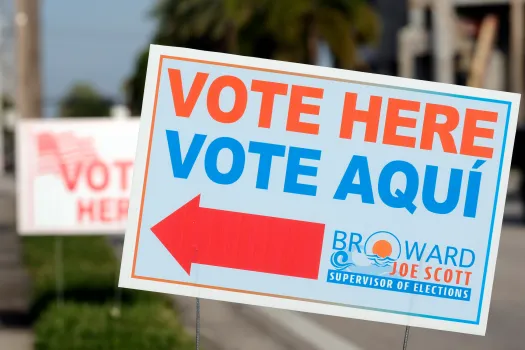
Signage identifies the International Longshoremen’s Local #1526 as a voting precinct on primary Election Day in Fort Lauderdale, Tuesday, Aug. 20, 2024. (Amy Beth Bennett / South Florida Sun Sentinel)

With local elections around the corner in Broward and Palm Beach counties, election officials are reminding residents that the deadline to register to vote is fast approaching. Whether you’re choosing new city leaders, filling mayoral seats, or weighing in on community referendums, your voice won’t count unless you’re registered by Monday, Feb. 9.

The voter registration deadline for the elections, which take place on March 10, is 29 days before polls open. Residents of two cities, towns, and villages in Broward County and 19 in Palm Beach County will be voting on local officials, referendums, or both. Some communities are selecting successors to long-serving mayors.

How to register

Residents can register online until 11:59 p.m. Monday, or in person at elections offices until 5 p.m. Mail-in applications will be accepted if postmarked by the deadline. Officials caution that mailed applications must be complete, as errors cannot be corrected after Feb. 9.

To register online, applicants need a Florida driver’s license or state ID and the last four digits of their Social Security number. Those without these forms must print and submit their registration by mail or in person. Registration forms are also available at elections offices, libraries, and motor vehicle offices.

Eligible voters must be at least 18 years old by Election Day, though pre-registration is allowed for those younger than 18.

Where to vote

In Broward County, elections will be held in Lauderhill and Pembroke Pines (Districts 1 and 4). Four other communities had unopposed candidates, so no elections are scheduled there.

Palm Beach County voters will head to the polls in Boynton Beach, Belle Glade, Boca Raton, Delray Beach, Greenacres, Gulf Stream, Hypoluxo, Juno Beach, Jupiter Inlet Colony, Lake Park, Lake Worth Beach, Loxahatchee Groves, Palm Beach, Palm Beach Gardens, Palm Beach Shores, Royal Palm Beach, South Palm Beach, Wellington, and West Palm Beach.

Those wanting to vote by mail must submit a new ballot request if they have not done so since the 2024 presidential election. Under state law, previous requests have been voided. Applicants must provide a driver’s license or state ID number, or the last four digits of their Social Security number.

Important dates

  • Register to vote: Feb. 9 — 5 p.m. in person; 11:59 p.m. online; postmarked by Feb. 9 if by mail.

  • Request mail ballot: Feb. 26 — 5 p.m.

  • Return mail ballots: March 10 — 7 p.m. (postmarks do not count)

  • Election Day: March 10 — neighborhood polling stations open from 7 a.m. to 7 p.m.

Early in-person voting is not available for these March elections.

Voters can check registration status, request ballots, and find polling locations online or by phone:

Haiti’s transitional council steps down, handing power to Prime Minister Fils-Aime

Haiti's new PM Alix Didier Fils-Aimé names 18-member Cabinet
Haiti’s Prime Minister, Alix Didier Fils-Aimé

After nearly two years of rule, Haiti’s transitional presidential council formally handed power to U.S.-backed Prime Minister Alix Didier Fils-Aime on Saturday. The nine-member council’s tenure was marked by political infighting, corruption allegations, and an inability to curb rampant gang violence, leaving Fils-Aime as the country’s only politician with executive authority.

Council President Laurent Saint-Cyr addressed the prime minister during the handover, saying: “Our watchwords are clear: security, political dialogue, elections, stability. Mr. prime minister, in this historic moment, I know that you are gauging the depth of the responsibility you are taking on for the country.”

Haiti, the poorest country in Latin America, continues to grapple with deadly gang violence, widespread kidnappings, and food insecurity. Last year alone, gangs reportedly killed nearly 6,000 people, while about 1.4 million citizens—roughly 10 percent of the population—have been displaced.

The council had been tasked with preparing elections, which have not been held since 2016, but it postponed planned votes that would have elected a new president by February. Tentative dates for August and December have been announced, though many analysts doubt that elections and a runoff will take place this year.

U.S. officials have been closely involved in the transition. In late January, the U.S. warned council members against attempting to remove Fils-Aime and subsequently imposed sanctions on five members. The U.S. Embassy in Haiti stated on Wednesday: “As the Transitional Presidential Council’s mandate ends on February 7, we support Prime Minister Fils-Aime’s leadership in building a strong, prosperous and free Haiti.”

U.S. Secretary of State Marco Rubio underscored the prime minister’s role in stabilizing the country: “The importance of his continued tenure as Haiti’s prime minister to combat terrorist gangs and stabilize the island cannot be overstated.”

The United Nations has also stepped in to assist with security, approving an international force aimed at restoring order. However, deployment has been slow, with fewer than 1,000 of the planned 5,500 troops—mostly Kenyan police—on the ground so far. The UN aims to reach full deployment by midyear or November at the latest.

Fils-Aime now faces the daunting challenge of governing amid ongoing violence, filling the political vacuum, and organizing credible elections while addressing severe humanitarian needs in Haiti.

Former BVI premier Andrew Fahie appeals US conviction, citing jury concerns

Former BVI premier Andrew Fahie sentenced to 11 years in Federal prison
Andrew Fahie.

Former British Virgin Islands premier Andrew Fahie has filed an appeal challenging his February 2024 U.S. conviction on drug and money laundering charges, arguing that the government’s sting operation involved a substance “that would never test positive” for cocaine and that critical information about the credibility of a confidential informant was withheld from the court.

According to the Initial Brief of Appellant filed earlier this week with the United States Court of Appeals for the Eleventh Circuit, Fahie is seeking to overturn his conviction on three primary grounds. He was sentenced to more than 11 years in prison after being convicted of conspiracy to import five kilogrammes or more of cocaine, conspiracy to engage in money laundering, attempted money laundering, and foreign travel in aid of racketeering.

Fahie’s attorneys argue that the trial court erred in refusing to dismiss the indictment, citing what they describe as “significant government misconduct.” The brief notes that a Mexican judicial officer previously found the same confidential informant used in Fahie’s case to have “credibility and reliability issues,” which led to the dismissal of corruption charges against Mexican officials. The appeal contends that U.S. authorities were aware of this adverse credibility finding but failed to disclose it during bond proceedings or at trial.

A second central argument focuses on the substance at the heart of the conspiracy charge. The filing states that the informant repeatedly described the shipment as liquid construction materials that had been chemically treated so they would “never, never, never” test positive for cocaine during inspections. According to the brief, cocaine could only be extracted after a four-day chemical process in Puerto Rico, meaning the substance in transit could not be detected as cocaine. Fahie’s attorneys argue this undermines the government’s ability to prove the presence of a “detectable amount of cocaine,” a requirement under federal law.

The appeal also raises concerns about jury unanimity. After the verdict, two jurors reportedly expressed dissatisfaction with the outcome, with one claiming the verdict delivered was not hers at the time she answered during polling. Although the district court conducted a limited inquiry, it declined to grant a mistrial.

Fahie’s attorneys have asked the appellate court to dismiss the indictment, vacate the cocaine conspiracy conviction, or order a mistrial or further evidentiary hearing on the jury issue.

Scholarship launched for children of Jamaican farm workers in Canada

Photo: Donald De La Haye Minister of Labour and Social Security, Hon. Pearnel Charles Jr. (seated left), looks on as Ontario Fruit and Vegetable Growers’ Association (OFVGA) Communications Advisor, Benjamin Murray (seated centre) signs a symbolic cheque for the OFVGA Scholarship Programme, at the launch event on Thursday (February 5) at the Ministry’s North Street offices. Also looking on are (standing, left) Acting Permanent Secretary, Dione Jennings; Public Relations Manager in the Ministry, Justine Bailey; and Minister of State in the Ministry, Hon. Donovan Williams. The grant, valued at Can$10,000, is aimed at offsetting educational and school-related expenses for 10 children or wards of Seasonal Agricultural Workers Programme (SAWP) workers. Jamaica and Canada Celebrate 60-Year SAWP Partnership with Scholarship Programme Photo: Donald De La Haye Minister of Labour and Social Security, Hon. Pearnel Charles Jr. (second left), shakes hands with Ontario Fruit and Vegetable Growers’ Association (OFVGA) Communications Advisor, Benjamin Murray (third right), as he receives a symbolic cheque for the OFVGA Scholarship Programme.

Jamaica’s Ministry of Labour and Social Security, in partnership with the Ontario Fruit and Vegetable Growers’ Association (OFVGA), has launched a scholarship programme to support the children of Jamaican farm workers participating in the Seasonal Agricultural Workers Programme (SAWP) in Ontario, Canada.

The grant, valued at Can$10,000, will assist 10 children or wards of current SAWP workers by helping to offset educational and school-related expenses. Each successful recipient will receive $115,000 to cover items such as books, uniforms, examination fees, transportation and lunch.

Speaking at the launch held Thursday (February 5) at the ministry’s North Street office in Kingston, Portfolio Minister Pearnel Charles Jr. welcomed the initiative and underscored the wider impact of education.

“The thing about education is that it has a multiplier effect. That’s what we want from this scholarship, to have a positive multiplier effect echoing across the communities so that these 10 scholarships will multiply into hundreds of persons being impacted to want to do more. I believe that because it is blessed, this investment is going to be a blessing to many,” Minister Charles Jr. said.

He noted that the scholarship reflects the shared vision of the ministry and OFVGA to demonstrate the link between worker welfare, education and opportunity.

The initiative also marks the 60-year partnership between Jamaica and Canada under the SAWP, which addresses labour shortages in Canada’s agricultural sector while providing employment opportunities for Jamaican workers.

Minister Charles Jr. said the new scholarship programme symbolises the strength and longevity of that relationship.

“That’s why we see this as a symbol of the strength and the enduring and lasting relationship that I believe will stand another 60 years. Things are changing… but I believe that once we continue to have conversations, plan, strategise, be agile… we will be able to formulate and adjust to make sure that this programme continues to be relevant,” he said.

The scholarship is open to children or wards of current SAWP workers who have participated in the programme in Ontario for at least three consecutive years and remained with the same employer during that period. Eligible students must be enrolled in a recognised secondary institution and maintain at least a ‘B’ average on their most recent report card. Applicants must not have previously benefited from the JN Money Fields of Opportunity Scholarship.

Supporting documents required include proof of the worker’s participation with the same Ontario employer, a birth certificate or proof of guardianship for the student, and the student’s report card.

OFVGA Communications Adviser Benjamin Murray said the scholarship reflects the association’s appreciation for Jamaican workers and their families.

“The workers’ hard work and commitment mean a great deal to our farms and our communities back home. This scholarship is something we’re extremely proud of…, supporting a participant’s child and continuing their education is a meaningful way for us to give back, while also recognising the sacrifices that these families and workers have to make year after year,” Murray said.

Applications for the OFVGA Scholarship Programme open April 1, 2026 and close June 30, 2026, with awards to be granted for the 2026/2027 academic year.

For further information, persons may contact the ministry’s Family Services Unit at 876-676-5557 or 876-676-5659.

CARICOM observer team to review voters’ list concerns in Barbados

Leader of the CARICOM Election Observer Mission Ian Hughes (centre) flanked by other team members at Friday’s press conference. (LG)

A Caribbean Community (CARICOM) Elections Observer Mission (CEOM) on Friday said it will examine concerns about the integrity of Barbados’ final voters’ list as part of its work ahead of next week’s general election, while stressing it has no authority to intervene in the country’s electoral process.

The three-member mission, which arrived on the island Thursday at the government’s invitation, said it would document issues raised by stakeholders and make recommendations where necessary.

Chief Electoral Officer Sherland Turton said the voters’ register would be completed on Friday, with chairman of the Electoral and Boundaries Commission (EBC) Ramon Alleyne indicating that the final list is expected to be released on Saturday.

Speaking at a press briefing at Hotel Indigo in Hastings, Mission Chief Ian Hughes said concerns about missing names on the register fall within the team’s scope, but any action would be limited to observation and reporting.

Hughes said: “[Missing names is our remit to observe] since the register of electors, or the electors’ list, is probably the most important aspect of any election. And so yes, we have also heard… that there are some concerns. It is key that we state here that we cannot make any interventions in your election. Barbados is a sovereign state, and so what we do is we observe, we listen to the stakeholders, we put those concerns in writing, and we make recommendations.

“Of course, based on our findings, then, at the end of the day, the stakeholders may utilise that particular report as further documentation, factual documentation, if they wish to go further with any sort of legal challenges or proceedings.”

Hughes noted that with the election process already under way, the observers’ role is strictly limited.

“We’re not here to supervise,’ said the mission chief. “We’re not here to change your processes.

They’re already under way. What we can do is make recommendations regarding your stakeholder concerns.”

Since arriving, the observers have met with the commissioner of police and senior officers, the Barbados Christian Council (BXC) and members of the media. Meetings are also planned with Prime Minister Mia Mottley, Opposition Leader Ralph Thorne, the EBC leadership, and other political and civil society stakeholders.

These consultations are expected to help the mission assess the pre-election environment and the country’s readiness for the February 11 polls.

Hughes said: “The role of the CEOM observers on Election Day will be to observe, not supervise, the electoral process, including preparations for the start of the poll, the casting of votes, the closure of the polling stations, the counting of the ballots and the declaration of results. The CEOM will also assess the immediate post-election atmosphere, following the conclusion of Election Day activities.”

A preliminary statement outlining the mission’s initial findings will be issued before the team departs Barbados on Friday. A more detailed report will later be submitted to CARICOM Secretary-General Dr Carla Barnett and made public.

The mission is made up of senior electoral officials from Antigua and Barbuda, Belize and Jamaica, supported by CARICOM Secretariat staff providing logistical and administrative assistance.

Trinidad’s UNC not involved in Barbados election campaign, says minister

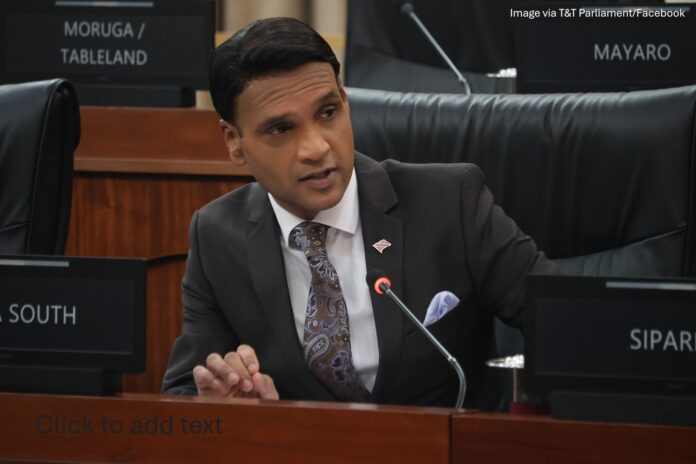
Trinidad and Tobago Public Utilities Minister Barry Padarath

Trinidad and Tobago Public Utilities Minister Barry Padarath on Friday said the ruling United National Congress (UNC) is playing no role in Barbados’ February 11 general election, distancing the party from comments made by Barbados Prime Minister Mia Mottley about possible external political influence.

Padarath’s remarks followed statements by Mottley suggesting that references made by the leader of the opposition Democratic Labour Party (DLP), Ralph Thorne, to the phrase “yellow is the code” — the UNC’s campaign slogan during Trinidad and Tobago’s April 28 general election last year — could signal outside support.

“I tell you yellow is the curse about here,” Mottley told supporters of her ruling Barbados Labour Party (BLP), which is seeking an unprecedented third consecutive clean sweep of the 30-member Parliament.

“And what is that really a code for? Is it a code for campaign financing? Is it a code for who is supporting your party financially, because of that is the case the (former prime minister) Errol Walton Barrow should now be rolling in a watery grave to believe that anybody leading the Democratic Labour Party could want to make that party subsidiary of another political entity in the Caribbean.”

Mottley said Barrow had stood “shoulder to shoulder” with the late Trinidad and Tobago Prime Minister Dr. Eric Williams and that Barbadian leaders had long maintained close but independent ties with their regional counterparts.

“I have stood shoulder to shoulder with (former prime minister ) Dr. Keith Rowley and the same Kamla,” she said in reference to Trinidad and Tobago Prime Minister Kamla Persad Bissessar.

Mottley also dismissed suggestions that her BLP was taking advice from Jamaica’s ruling Jamaica Labour Party.

“First of all, anybody who knows anything about s knows our sister party in Jamaica is the People’s National Party and even though they are not in government we are not fair weather friends,” she said, noting she had addressed PNP conventions in Jamaica on several occasions.

UNC distances itself

Speaking to reporters outside Parliament in Port of Spain, Padarath sought to distance the UNC from any involvement in the Barbadian campaign.

“I would want to issue caution to our Caribbean colleagues with respect to using that sort of inference. The United National Congress, we have said both publicly and privately that we do not interfere in the elections of any other sovereign nation and we hold true to that.

“Obviously, though, many of our party colours across the Caribbean and the world are quite similar. We don’t have any control or jurisdiction over those things. So that I would in the silly season in Barbados that those inferences are not made because we really and truly do not have any horse in the race there.”

The DLP’s official party colour is blue.

Padarath said the UNC administration would respect the outcome of the February 11 polls.

“The UNC government will respect the will of the people of Barbados and therefore the outcome of the elections will be respected by the government of the Republic of Trinidad and Tobago.”

Asked whether UNC-linked social media influencers or entertainers could appear on political platforms in Barbados — as had occurred in St Vincent and the Grenadines and St Lucia — Padarath said performers were free to work independently but did not represent the party abroad.

“we know that (Yellow is the code) is quite a catchy song but most of the persons you have spoken about…they all came from the entertainment fraternity before entering the political stage…

“They have every right to perform if they are hired so to do. But they do not speak or sing on behalf of the United National Congress in support of one political party over another in a sovereign nation”.

Padarath also had a direct message for the Barbadian prime minister.

“Let not your heart be troubled Honourable Prime Minister, the will of the people in Barbados I am almost certain wll be done and we respect the democratic process because Barbados is a sovereign nation.

“We have no intention of interfering in Barbados elections,” he added.

Jamaican-born US veteran deported after five decades in America

A Jamaican-born U.S. military veteran who lived in the United States for more than five decades has been deported to Jamaica, sparking concern among his family who say past legal issues had long been resolved.

Godfrey Wade, 65, a father of six and grandfather of three, was held in Louisiana’s Richwood Correctional Center before being deported last week. Wade, who had been living in Covington, Georgia, arrived in Jamaica on Thursday, according to the Jamaica Gleaner, and now faces the task of rebuilding his life in a country he has not lived in for years.

Wade immigrated legally from Jamaica to the United States in 1975 at age 15, arriving with his mother on a green card as a lawful permanent resident. He later enlisted in the U.S. Army, serving overseas before receiving an honorable discharge. Over an eight-year military career, he reportedly served in deployments across four continents, spending much of his time stationed in Germany and earning several medals. After his discharge in 1992, he worked as a chef, artist and fashion designer.

According to the U.S. Department of Homeland Security, however, Wade had a criminal record and an outstanding removal order. Tricia McLaughlin, a spokesperson for the department, told Newsweek in December: “On September 18, ICE arrested Godfrey Oliver Wade, a criminal illegal alien from Jamaica. His criminal history includes domestic assault, criminal trespass, reckless conduct, deposit account fraud, violation of probation, multiple arrests for driving on a suspended license.

“In 2014, an immigration judge ordered him removed after he failed to show up for his immigration hearing. This repeat offender is now off our streets and no longer able to terrorize Americans.”

Wade’s family disputes that characterization and maintains that the removal order stemmed from missed correspondence and decades-old charges.

Family members say his decades of residence and military service should have been taken into account. His daughter, Christian Wade, has publicly defended him, saying the legal issues cited by immigration authorities date back many years.

“My dad is not the ‘worst of the worst,'” Christian Wade said. “While he has had legal issues in the past, those cases were resolved and do not define who he is today.”

His attorney said the removal order was issued when Wade did not attend a 2014 immigration hearing he was never notified about because notices sent to an address used by immigration authorities were returned as undeliverable.

Wade was initially held at Rockdale County Jail before being transferred to Immigration and Customs Enforcement (ICE) custody. Although the family reportedly paid bond, he was moved between facilities, including Stewart Detention Center, before being transferred to Richwood Correctional Center in Louisiana.

“My dad told us that he was shackled with chains on his waist, ankles, and wrists,” Christian said. “He got on a flight to Texas and then flew to Louisiana.”

Jamaica’s PM Holness addresses deportation concerns

Wade’s deportation comes amid ongoing concerns about Jamaicans facing removal from the United States. The Jamaican government has not commented on this specific case, but Prime Minister Andrew Holness last year issued a message to nationals who may be deported.

“We understand that the shifting immigration policies in the United States have placed many Jamaicans in difficult and uncertain circumstances,” said Prime Minister Holness in June. “Let me be clear: Jamaica is your homeland. You are not homeless, and you are not stateless. This is your country, and we welcome you home.”

The Prime Minister also cautioned against returning to Jamaica with criminal intent.

“If your intent is criminal, expect to be dealt with firmly,” he warned. “Do not come back here to destroy your homeland or dismantle what we have been working very hard to create, so that you wouldn’t have had to leave in the first place.”

As deportations continue, local agencies have been working to support reintegration. In January, the Planning Institute of Jamaica (PIOJ) developed a handbook titled Living in Jamaica: A Guide to Services and Support, aimed at assisting involuntarily returned migrants and formerly incarcerated persons.

The guide addresses common challenges including securing housing, accessing financing, and obtaining counselling and social support. According to the PIOJ’s 2024 Economic and Social Survey Jamaica, 547 involuntarily returned migrants were received in Jamaica in 2024, with 59 per cent coming from the United States.


What Caribbean entrepreneurs should know before investing in US commercial real estate

commercial real estate

Investing in U.S. commercial real estate opens the door to significant opportunity. But it also introduces legal, tax, and liability exposure that must be managed carefully.

Strong legal frameworks, deep capital markets, and standardized reporting create opportunities for strategic expansion. However, cross-border acquisitions require careful planning before capital is deployed.

U.S. Market Cycles Directly Impact Performance

The U.S. commercial real estate market does not move uniformly across asset types or cities. Performance depends heavily on sector fundamentals and regional economic conditions.

Recent outlooks show uneven recovery patterns, with industrial and select retail sectors outperforming portions of the office market. For an investor, that means location and property type influence income stability far more than national averages suggest.

Reviewing vacancy rates, tenant demand, and absorption trends in a specific area reduces the risk of acquiring an underperforming asset. Market timing and sector selection both matter.

U.S. Tax Rules for Foreign Owners Require Advance Planning

Foreign investors are subject to federal tax rules that differ from those applied to domestic buyers. Withholding requirements under FIRPTA and income-tax treatment for rental earnings can materially affect overall returns.

Nonresident individuals and foreign entities are taxed on U.S.-sourced real estate income. Improper structuring may result in higher withholding at disposition or inefficient taxation during ownership.

Tax strategy should be addressed before closing. Entity elections, treaty considerations, and repatriation planning must align with the broader corporate structure.

Entity Structure and Legal Strategy Matter

Owning U.S. commercial property carries litigation exposure. Lease disputes, environmental liabilities, and contractual conflicts are common in commercial transactions.

Proper entity formation protects both the asset and the parent company. So, your legal strategy should be viewed as foundational rather than optional.

Working with a real estate attorney for corporations helps ensure things like acquisition entities, operating agreements, and lease terms are aligned with corporate risk-management goals.

Asset Class Selection Shapes Risk and Return

Different commercial sectors respond differently to economic conditions. Industrial properties connected to logistics networks have demonstrated resilience, while some office markets continue adjusting to changing workplace dynamics.

In its 2025 outlook, CBRE highlighted how sector-level performance varies significantly by region. For investors, those differences affect occupancy rates, rental growth, and exit timing.

Before committing capital, evaluate:

  • Tenant financial strength and lease duration
  • Local employment and population growth
  • Required capital improvements over the next several years

Each factor directly influences cash-flow reliability and long-term valuation.

State and Local Regulations Vary Significantly

Commercial property law in the U.S. operates primarily at the state and municipal levels. Zoning restrictions, landlord-tenant statutes, and transfer taxes can differ dramatically across jurisdictions.

Detailed due diligence, including lease audits and regulatory review, reduces post-acquisition risk. Environmental assessments, title verification, and insurance requirements should be thoroughly examined before closing.

Understanding the regulatory framework in the specific state where the property is located prevents compliance issues that could disrupt operations.

Building a Strategic Approach to U.S. Commercial Real Estate

U.S. commercial real estate offers Caribbean entrepreneurs structured opportunities within a mature and highly regulated market. Success depends on disciplined market selection, proactive tax planning, appropriate entity structuring, and thorough due diligence.

A carefully structured approach to U.S. commercial real estate can strengthen long-term corporate growth and capital stability.

So, do more research and check out more informative articles like this before you take action.


Why consumer behavior around vaping is shifting in 2026

vaping

Consumer attitudes and purchasing patterns in the vaping sector are undergoing a significant transformation in 2026, as the broader nicotine and alternative lifestyle markets continue to evolve. Driven by a complex interplay of health awareness, regulatory pressures, environmental concerns, and technological innovation, vaping is no longer the static lifestyle choice it once was. Across global markets, industry research shows that performance, perception, and preference are dynamically reshaping how adults view vaping products.

Recent market analyses reveal that the global vaping and e-cigarette market continues to expand, with notable growth in both core segments and emerging product categories. While overall market capitalization rose from an estimated USD 10.41 billion in 2025 to USD 12.8 billion in 2026, consumer interest in higher-performance, customizable products is increasingly defining purchasing behaviour.

A key driver of this shift is the rising preference for devices such as vape pens, which combine portability, convenience, and improved user experience compared with older models. Devices in this category ranging from sleek rechargeable pens to more advanced pod-based systems have appealed to adult consumers seeking alternatives to traditional tobacco or combustible cigarettes. The convenience of easy refills, extended battery life, and discrete design has made these devices appealing not just for early adopters, but for a broader adult audience looking for practical, everyday use options.

Health Consciousness and Harm Reduction Trends

One of the most profound influences on consumer behaviour in 2026 is heightened health consciousness. Once dominated by novelty and youth culture, vaping is increasingly viewed through the lens of harm reduction and personal wellbeing. A growing portion of adult smokers now view vaping as a less harmful alternative to combustible cigarettes, with some public health advocates supporting this transition as part of broader smoking cessation strategies. As a result, many adult users are actively seeking devices and e-liquids designed for controlled nicotine delivery, lower-emission profiles, and transparent ingredient lists.

At the same time, consumers are demanding more information than ever before about what goes into the products they use. This includes clearer labelling, standardized ingredient disclosures, and tighter manufacturing quality control, expectations that both regulators and manufacturers are responding to. The alignment of policy and product transparency has helped to cultivate a perception of vaping as a more “informed choice” for adult nicotine users.

Environmental Awareness 

Environmental concerns are now a substantial factor shaping market dynamics. As single-use and disposable vaping devices continue to draw criticism over waste and sustainability impacts, a growing segment of consumers is seeking eco-friendly alternatives. This trend has been reinforced by public discourse on recyclable materials, biodegradable components, and refillable systems that minimize landfill contributions. Consumers increasingly view sustainability not just as a social responsibility, but as a tangible value indicator when selecting vaping products.

Manufacturers have responded by introducing more devices with recyclable parts and reduced packaging waste, recognizing that younger adult demographics, in particular, are willing to prioritise environmental stewardship in their purchases. This trend not only illustrates the market’s adaptability, but also underscores the shifting priorities of modern consumers who increasingly balance pleasure and impact.

Innovation and Technology

Technological advancement remains a cornerstone of the vaping market’s evolution. Manufacturers are integrating smart technology, app connectivity, and precise usage tracking into new product lines, allowing users to monitor consumption patterns, control device settings, and personalise their experience like never before. These features cater to a demographic that values both convenience and data-driven self-regulation.

These advancements also support consumer safety and regulatory compliance, with age-verification technologies and emission testing becoming more common. Smart devices can help prevent underage access and ensure consistent product performance factors that increasingly influence consumer trust and loyalty in a market with heightened scrutiny.

Flavor Diversity and Customization

Flavor remains a powerful motivator in consumer choice. Fruit, herbal, and other innovative flavor profiles now command a significant share of user preferences, outpacing traditional tobacco tastes in many regions. This shift underscores a broadening of the vaping lifestyle beyond simple nicotine delivery, embracing a sensory experience that resonates with diverse adult tastes.

Simultaneously, customization from adjustable power settings to aesthetic personalization is no longer a niche feature but a core expectation for many consumers. Brands that offer flexible options, interchangeability, and performance enhancements are seeing stronger engagement, especially among adult users who value a tailored experience.

Regulatory Landscape Influences Consumer Perception

Regulatory developments are playing a dual role in shaping consumer behaviour. On one hand, stricter ingredient, labeling, and safety standards are elevating consumer confidence by ensuring quality and transparency. On the other hand, restrictions on flavor marketing and youth protections are influencing how and where products are sold. This regulatory clarity, while sometimes challenging for manufacturers, is helping responsible adult users make informed decisions without ambiguity about compliance and safety.

Moreover, in jurisdictions such as the UK and parts of the EU, discussions about broader nicotine frameworks indicate a trend toward balanced policies that support adult harm reduction while minimizing youth uptake. This evolving legal terrain encourages manufacturers and retailers to innovate responsibly, aligning with consumer expectations for safety and quality.

The compliance blind spot: Contracts that exist outside your core systems

businesses

Most organisations believe they have a clear view of their contractual risk. The assumption is simple: if a contract was reviewed by legal and signed by the business, it must be accounted for somewhere. In reality, that confidence is often misplaced. The biggest compliance risks do not come from the contracts everyone knows about. They come from the ones quietly living outside core systems, disconnected from governance, reporting, and oversight.

This blind spot is not created by negligence. It is the natural result of how modern organisations operate.

How Contracts Drift Outside the System

Contracts rarely go missing in dramatic ways. They drift. A local team signs a supplier agreement to keep operations moving. A business unit renews a long standing contract without looping in legal. A variation is agreed over email and filed in a shared folder that only one team can access.

Over time, these documents accumulate. They are valid, binding, and active, but invisible to anyone outside the immediate team involved. They never make it into procurement platforms, finance systems, or legal trackers. From a compliance perspective, they effectively do not exist.

Why Core Systems Miss So Much

Most core systems are not designed to capture the full reality of contract creation. ERP platforms focus on transactions. CRM systems focus on customers. Procurement tools focus on purchase orders. None of them are built to track the nuance of contractual obligations, amendments, side letters, or non standard terms.

As a result, contracts become fragmented across tools. The financial elements may be visible, but the legal and compliance obligations are not. This separation creates a dangerous assumption that risk is being managed when it is simply being ignored.

The Compliance Risks That Follow

When contracts exist outside core systems, compliance breaks down in predictable ways. Regulatory obligations are missed because no one is monitoring them. Termination rights go unused. Audit requests trigger frantic document hunts. Data protection clauses are outdated, exposing the organisation to regulatory penalties.

The risk is not theoretical. It shows up during audits, investigations, and disputes, often long after the opportunity to address the issue has passed.

Why Legal Teams Are Often the Last to Know

One of the most frustrating aspects of this blind spot is that legal teams are often unaware it exists. Contracts are signed without their involvement, or reviewed once and then amended repeatedly without visibility.

By the time legal is pulled back in, the contract has already created exposure. At that point, the role of legal shifts from prevention to damage control.

The False Comfort of Central Repositories

Many organisations believe they have solved this problem by centralising contract storage. A shared drive or document management system becomes the designated home for agreements. In practice, this only partially addresses the issue.

Storage is not the same as oversight. A contract that sits in a folder but is never reviewed, tracked, or linked to obligations is still a compliance risk. Visibility without context does not equal control.

How Decentralisation Makes the Problem Worse

Modern enterprises encourage autonomy. Business units are empowered to move quickly, engage suppliers, and negotiate terms. While this improves agility, it also multiplies the number of contracts created outside formal processes.

Each decentralised decision adds another potential blind spot. Without clear pathways for bringing contracts back into a central governance framework, compliance becomes fragmented by design.

The Gap Between Signing and Living With a Contract

Compliance failures rarely happen at signing. They happen months or years later, when obligations are forgotten and assumptions are made. A data processing clause is overlooked during a system change. A notice period is missed. An automatic renewal locks the business into unfavourable terms.

These failures stem from the same issue: contracts that are not embedded into how the organisation operates day to day.

Where Technology Fits and Where It Fails

Technology alone does not solve this problem, but it can expose it. Some organisations turn to management software for contracts to create visibility across agreements that would otherwise sit outside core systems. When implemented with discipline, it becomes a bridge between legal intent and operational reality.

When implemented without process change, it simply becomes another repository that teams bypass under pressure.

What Closing the Blind Spot Actually Requires

Closing the compliance blind spot requires more than a new tool. It requires clear ownership of contracts across their entire lifecycle. It requires making it easier to bring agreements into the system than to keep them out. It requires aligning legal, procurement, finance, and operations around a shared view of risk.

Most importantly, it requires acknowledging that contracts are not static documents. They are living instruments that shape behaviour, obligations, and exposure long after they are signed.

Why This Problem Is Growing, Not Shrinking

As organisations scale, the number of contracts grows faster than governance frameworks. New markets, new vendors, and new regulations all add layers of complexity. Without intentional design, the gap between where contracts exist and where compliance is managed will continue to widen.

This is why the blind spot persists even in highly regulated industries with experienced legal teams.

Seeing What Has Always Been There

The most effective organisations do not eliminate decentralisation. They design for it. They assume contracts will be created outside core systems and build pathways to bring them back into view.

This is where management software for contracts often becomes part of a broader compliance strategy, not as a silver bullet, but as infrastructure that supports visibility, accountability, and control.

Until organisations confront the reality of contracts that exist beyond their systems, compliance will remain reactive. The risk will not be obvious. And the consequences will only appear when it is already too late.