I didn’t head into the Super Bowl as a Bad Bunny superfan — I know a few of his songs, and I expected a well‑produced show. What I saw instead was one of the most culturally resonant halftime performances in recent memory. The stage wasn’t just a platform for hits — it was a panoramic celebration of identity, heritage, and a shared sense of belonging that stretched well beyond the United States.
Bad Bunny opened with “Tití Me Preguntó” and carried the energy through a setlist that hit hits like “Yo Perreo Sola,” “El Apagón” and closed with “DtMF.” The field was transformed: sugarcane stalks, coconut and piragua stands, men playing dominoes, and representations of everyday life transported the audience into the rhythms and textures of Caribbean and Latin American culture. Even a real wedding happened onstage — an unexpected but fitting symbol of community and celebration in the middle of football’s grandest night.
There were star cameos — from Lady Gaga’s salsa‑infused performance of “Die With a Smile” to Ricky Martin performing Lo Que Le Pasó a Hawaii — and cameos in the choreography by Cardi B, Pedro Pascal, Jessica Alba, Karol G and others. These weren’t just guest appearances: they threaded together multiple generations and genres, in a moment that was celebratory without ever feeling superficial.

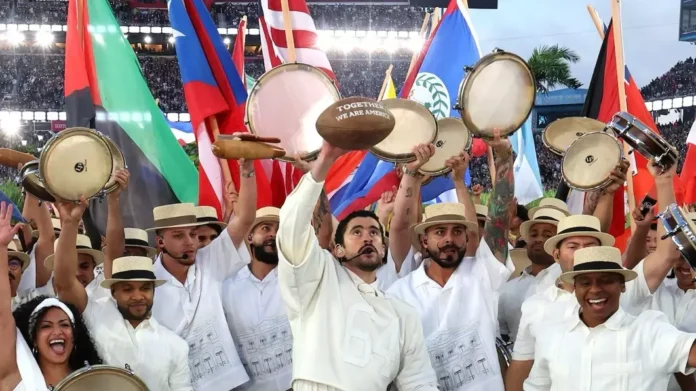
But it was the symbolism that lingered. Bad Bunny marched across the field with dancers waving flags from countries throughout North, Central, South America and the Caribbean, deliberately naming nations — from Chile and Argentina to Jamaica, Cuba and Canada — as he held aloft a football marked “Together, We Are America.” Behind him, the jumbotron read, “The only thing more powerful than hate is love.” This wasn’t pandering. It was affirmation.
Some critics dismissed the performance, saying he wasn’t “American” or questioning why he sang in Spanish. But that very choice was central to the show’s power. Bad Bunny is a U.S. citizen, and countless Americans speak Spanish or another language as their first tongue; his performance affirmed that language and heritage are part of the American identity, not a barrier to it. At a time when immigration debates and political division swirl across the country, there was something quietly revolutionary about an artist using the sport’s biggest stage to show that the Americas are culturally intertwined, complex, and deserving of recognition and respect.
Few things in popular culture deliver both spectacle and substance — and fewer still invite viewers to see themselves reflected back on a field usually reserved for gladiatorial sport and commercial breaks. Seeing a Jamaican flag fly alongside Puerto Rico’s, hearing countries called out by name, and feeling that moment transcend fandom was a rare thing. Bad Bunny didn’t just perform a halftime show — he carved out a place for millions of people who have long felt unseen, and in doing so, reminded us all that identity and unity can coexist at once on the world’s biggest stage.