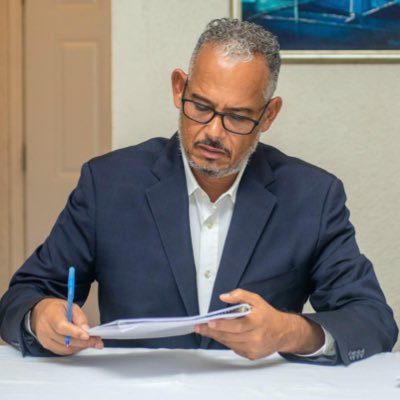
After nearly two years of rule, Haiti’s transitional presidential council formally handed power to U.S.-backed Prime Minister Alix Didier Fils-Aime on Saturday. The nine-member council’s tenure was marked by political infighting, corruption allegations, and an inability to curb rampant gang violence, leaving Fils-Aime as the country’s only politician with executive authority.

Council President Laurent Saint-Cyr addressed the prime minister during the handover, saying: “Our watchwords are clear: security, political dialogue, elections, stability. Mr. prime minister, in this historic moment, I know that you are gauging the depth of the responsibility you are taking on for the country.”
Haiti, the poorest country in Latin America, continues to grapple with deadly gang violence, widespread kidnappings, and food insecurity. Last year alone, gangs reportedly killed nearly 6,000 people, while about 1.4 million citizens—roughly 10 percent of the population—have been displaced.

The council had been tasked with preparing elections, which have not been held since 2016, but it postponed planned votes that would have elected a new president by February. Tentative dates for August and December have been announced, though many analysts doubt that elections and a runoff will take place this year.
U.S. officials have been closely involved in the transition. In late January, the U.S. warned council members against attempting to remove Fils-Aime and subsequently imposed sanctions on five members. The U.S. Embassy in Haiti stated on Wednesday: “As the Transitional Presidential Council’s mandate ends on February 7, we support Prime Minister Fils-Aime’s leadership in building a strong, prosperous and free Haiti.”
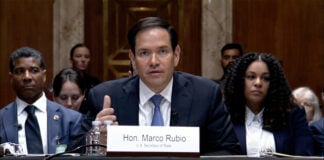
U.S. Secretary of State Marco Rubio underscored the prime minister’s role in stabilizing the country: “The importance of his continued tenure as Haiti’s prime minister to combat terrorist gangs and stabilize the island cannot be overstated.”

The United Nations has also stepped in to assist with security, approving an international force aimed at restoring order. However, deployment has been slow, with fewer than 1,000 of the planned 5,500 troops—mostly Kenyan police—on the ground so far. The UN aims to reach full deployment by midyear or November at the latest.
Fils-Aime now faces the daunting challenge of governing amid ongoing violence, filling the political vacuum, and organizing credible elections while addressing severe humanitarian needs in Haiti.