Home Blog Page 1458

Local Chapter hosts forum calling for greater diversity on the bench

The Virgil Hawkins Florida Chapter of the National Bar Association (VHFCNBA) will host a panel discussion called “Black Judges: By Any Means Necessary”, on Saturday, April 23, starting 9:30 am at the Marriott Harbor Beach Resort in Ft. Lauderdale, Florida.

Free and open to the public, the panel will focus on the VHFCNBA’s most critical issue – the insufficient number of African-American judges serving on the bench in Florida, specifically in South Florida. Broward County and Miami-Dade County are two of the most diverse counties in the state of Florida, but in Broward County, only 6 judges of nearly 90 judges currently serving on the bench are African-American. In Miami-Dade, only 10 of 123 judges are Black.

The forum seeks to expand on the Florida Supreme Court Standing Committee on Fairness and Diversity Report, which concluded that: “The Florida State Courts System can better serve the people of this state and enhance the credibility of the justice system if judges and court staff reflect the diversity of the community we serve.”

This forum is co-sponsored by the Caribbean Bar Association, F. Malcolm Cunningham Bar Association, Gwen S. Cherry Bar Association, Haitian Lawyers Association, T.J. Reddick Bar Association, Wilkie D. Ferguson Bar Association, NAACP and the Urban League.

The VHFCNBA is an organization of lawyers and judges that are dedicated to promoting the professional excellence of black lawyers throughout the State of Florida, increasing the enrollment of minority students in college and law school, and promoting the general welfare of all citizens in Florida.

Cracked Tooth Syndrome

Some teeth have cracks that are too small to show up on X-rays. Sometimes the cracks are under the gum. These small cracks are known as “cracked tooth syndrome.”

Causes

Cracked tooth syndrome is most common in lower back teeth (molars). That’s because these teeth absorb most of the forces of chewing. People who grind or clench their teeth are more likely to have cracked tooth syndrome. Sometimes, the way a person’s teeth come together can put too much pressure on one tooth. This can cause the teeth to crack. Teeth with large fillings may also be more likely to crack, as well as teeth that have undergone root canal treatment, because they become weaker than other teeth. People with one cracked tooth are more likely to have others, either at the same time or in the future.

Symptoms

The tooth may hurt sometimes when you bite or chew. The sensitivity or pain can be mild or intense. It may last a brief time or a long time. It may be painful only when you eat certain foods or when you bite in a specific way. You will not feel a constant ache, as you would if you had a cavity or abscess. The tooth may be more sensitive to cold temperatures.

If the crack gets bigger, a piece of the tooth may break off. You may also develop an infection. This can happen in the gum around the fractured tooth. You may notice a pimple-like bump on the gum near the tooth. Pus may drain from the pimple. This is known as a fistula. Many people with cracked tooth syndrome have symptoms for months. Cracked tooth syndrome is one of the most difficult dental problems to diagnose because the pain is not predictable. Your dentist may refer you to an endodontist (root canal specialist).

Diagnosis

Your dentist will examine your mouth and teeth, focusing on the tooth in question. They may use a sharp instrument called an explorer to feel for cracks in the tooth. Your dentist also will look at the gums around the tooth. X-rays may be taken, but they often don’t show the crack. Your dentist may also use special tools to test the tooth. One tool looks like a toothbrush without bristles, which fits over one part of the tooth at a time as you bite down. If you feel pain, the part of the tooth being tested most likely has a crack in it. Your dentist may shine a very bright light on the tooth. He or she may stain it with a special dye. If the tooth already has a filling or crown, your dentist may remove it in order to see the tooth better.

Treatment

Treatments for cracked tooth syndrome do not always relieve the symptoms. Treatment depends on where the crack is, how deep it is, and how large it is.

Sometimes a crack affects one or more cusps of a tooth. These are the highest points of the tooth. In this case, the tooth may be fixed with a crown. When cracks affect the pulp (the center of the tooth) where the nerves and blood vessels are, the tooth will need root canal treatment.

About 20 percent of teeth with cracked tooth syndrome will need root canals. After a root canal, the tooth will no longer be sensitive to temperature, but it will still respond to pressure. If you felt pain before the root canal, you may still feel some pain afterward. It probably will not be as intense or as frequent, but it may still occur.

In some cases, however, the tooth may need to be removed. Some cracks affect the root of the tooth in the jaw, and there’s no way to fix this type of crack. If your tooth is removed, you can have it replaced with an implant or a bridge.

Your dentist can make a night guard (a plastic bite piece) to prevent you from grinding your teeth. This will relieve the pain from grinding. For some people it can stop tooth sensitivity. The night guard can be worn during sleep. It also can be worn at other times if clenching or grinding happens during waking hours.

Dr Sharon Robinson DDS may be reached at The Dental Place, located at 6738 W Sunrise Blvd, Suite #105, Plantation, Fl. 33313. Dr Robinson may be contacted at 954-792-1857 or visit the website www.dentalplace4u.com.

Jamaican chef Andre Fowles returns to “Chopped” all-stars to compete for $50,000

A look at some of the top stories making the news today, April 19, across your Caribbean-American community in South Florida.

Florida immigration advocates gathered in Washington DC yesterday calling on the Supreme Court to vote in favor of President Obama’s executive action DAPA, which would defer deporting parents of legal U.S. residents. 26 states, including Florida, have petitioned the court challenging the program. If decided as legal, DAPA could affect up 183,000 people in Florida.

Jamaica’s Labor Minister Shahine Robinson is calling for patience among applicants seeking U.S. visas through the Farm Workers program. Responding to complaints about the long wait, Minister Robinson says the delay has been caused by the processing of petitions from U.S. employers, who must justify the use of foreign workers to the U.S. State Department.

Jamaica’s first lady of Jazz Myrna Hague brought down the house this past weekend in a special concert at the Miramar Cultural Center, performing a selection of jazz and reggae classics. Hosted by the American Foundation for the University of the West Indies, the event raised proceeds for the foundation’s scholarship fund.

In sports, it was victory for India and Combined Islands at the recent Lauderhill T20 Cricket tournament held at Lauderhill Sports Park. Guyana made an impressive 170 for 7, but Combined Islands won out with 135 for 4, winning by 2 runs by meeting the new target score adjusted for lost time. Meanwhile, India defeated Pakistan by 3 runs with 151 for 6. Team Pakistan however plans a different batting approach for the next round, says team member, Zishawn Qureshi.

What’s trending:

Jamaican chef and Food Network’s “Chopped” champion Andre Fowles returns to TV tonight to compete in the “Chopped Champions” tournament. The culinary showdown starts at 10 p.m. EST.

For Today’s Weather Forecast:

Partly Cloudy in Broward County with a high of 82 and a low of 67. For Miami-Dade, partly cloudy with a high of 82 and a low of 66.

For more information on these and other stories, visit caribbeannationalweekly.com. Remember to pick up this week’s copy of our Caribbean National Weekly at your nearest Caribbean outlet.

OneonOne with singer, songwriter Leea Stewart

Leea Stewart

Young artist takes family’s musical legacy to the next generation

Upcoming new artist Leea Stewart has some serious musical pedigree, as daughter of percussionist Willie Stewart of Third World fame, and niece to calypso pioneer Byron Lee of Byron Lee and the Dragonaires. But make no mistake – Leea stands out in her own right, offering pop music reflecting her soulful roots and eclectic, global perspective. Fresh off her latest release “I’ll Be Right There,” the hit lead track for new movie, “The Heart of Summer,” National Weekly sat down with the starlet to discuss her inspirations and upcoming projects.

How would you describe your style of music?

I never really boxed myself in one particular genre. I’ve always done many kinds of music. Pop, R&B, and fusion, with a hint of all different cultures, all genres. I left Jamaica when I was 7 and lived in London, and now Florida for 14 years. I’ve been lucky to encounter all sorts of music – house music, funk. So I love to draw on all different styles for inspiration. But I won’t say that I ever forgot reggae. It runs in the blood.

How has your family inspired your work?

My dad always taught me the drum is your heartbeat. Music is a place to express yourself and heal yourself and others. I think that’s why I have that drive to make purposeful music that can uplift people. And my brother, Monea Stewart, he’s taught me to be a perfectionist, always aim for the best take, the best lyric. And he’s always there telling me to keep on believing in my music.

Tell us about your latest song, “I’ll Be Right There”?

My brother Monea had a box guitar, playing these chords. And I just started to sing. The whole thing just came out. I was going through my own personal struggles at the time, and the song just felt like the song was giving me strength from God. That though you feel like you’re losing ground – like your world is coming to an end, God is right there with you.

Do you have any other upcoming projects?

I’m working on an EPK to be released over the summer. It doesn’t fit into a box genre-wise, but the music deals with things people can relate to. I hope the music can bring people through a hard time, inspire them and encourage them.

Where next can fans see you perform?

Next I’m performing with daddy on May 7th for the Tribute to Mothers Concert [starting 6 p.m. Holy Sacrament Episcopal Church in Pembroke Pines]. He’s bringing together some great musicians. It’s a lot of fun vibing with them, learning from people who been doing music for so long.

This Day in History

CanJet Flight 918 leaving from Jamaica was hijacked

On this day in Caribbean history, April 19, 2009, an unforgettable tragic airline hijacking occurred when a CanJet Flight 918 took off from Sangster International Airport (MBJ), bound for Halifax Stanfield International Airport in Canada. 

There were 174 passengers and 8 crew member on board. The suspect Stephen Fray was charged on May 1, 2009 with assault, robbery with aggravation, illegal possession of a firearm, illegal possession of ammunition, shooting with intent, and breaching the Civil Aviation Act in connection with the hijacking. Fray was sentenced to 83 years in prison, however he will only serve a maximum of 20 years as the sentences are to run concurrently

This was the first time a plane was hijacked on Jamaican soil and the second time a Canadian airliner was hijacked.

At the time of the hijack Bruce Golding was prime minister of Jamaica and Canada’s Prime Minister was Stephen Harper.


Add a spicy carnivore kick to your favorite vegetarian dish

As people become more conscious about eating healthy, refrigerators are becoming drippy dens for organic spinach, locally grown Swiss chard and that bumpy “it” green—dinosaur kale.

But Jamaicans laugh at these neurotic hipsters who decorate their shelves with these limp greens that often expire before one can bear the thought of blending them.

Callaloo is a delicious green leaf that tastes like a hybrid of spinach and collard greens. While we don’t recommend adding it to your smoothie, you can certainly give it a jerk.

While the best callaloo recipes are simple tributes to its God-given fresh, mild flavor, my mother, a stalwart Manchesterian, puts dry and wet jerk seasoning on almost everything, and she inspired this jerk callaloo recipe.

Jerk Callaloo

Ingredients

  • 2 large bags of callaloo
  • 1 tablespoon unrefined coconut oil (or extra virgin olive oil)
  • 1 large onion, chopped
  • 3 whole scallions, chopped
  • 1 large tomato, chopped
  • 1/2 teaspoon salt
  • 1/3 cup water
  • 1 teaspoon of your favorite dry or wet jerk seasoning (We like JCS Boston Dry Jerk Seasoning)
  • 2 organic boiled eggs (optional)

Directions

Step 1

Tear or cut small branches with leaves from the main stem and submerge the callaloo into a bowl of cold water. Let soak for about a minute and remove, discarding the water. Repeat at least one more time. Roughly chop the leaves and branches and set aside.

Step 2

Fill pot with cold water, covering eggs by 1 inch. Boil eggs over medium-high heat until yolks are completely cooked. Set eggs aside while you prepare callaloo. Heat the oil in a medium or large Dutch pot or skillet over medium heat. Add the onion and scallions, stirring until the onion begins to soften, approximately 2 to 3 minutes. Add the callaloo, tomato and salt. Mix all of the ingredients together, add the water and cover. Cook over medium heat until the stems are tender, approximately 10 minutes. Note: If you want the greens to be al dente, cook for less time, approximately 5 to 7 minutes.

Step 3

Pour callaloo into a bowl and mix in jerk seasoning. Remember a little jerk seasoning goes a long way, so do not add any more seasoning until you taste the callaloo. Slice eggs into halves and when serving callaloo, place one egg half at the center of the dish. Sprinkle or dab a little jerk seasoning on the egg for an extra kick. Serve with Basmati rice or Jamaican water crackers.

Antigua & Barbuda PM calls for an end to criticism of Muslim religion in Iraq

Prime Minister Gaston Browne

Prime Minister Gaston Browne of Antigua and Barbuda has called for an end to the criticism of Muslim religion in Iraq as his administration moves ahead with plans to allow Iraqi nationals to participate in the country’s citizenship by investment programme (CIP).

The main opposition United Progressive Party (UPP) has called on the Antigua and Barbuda government to re-think its decision to allow Iraqi nationals to participate in the programme, saying “there can be no benefit to the people of Antigua and Barbuda.

“We have no cultural and we have no trade ties with Iraq. What is the benefit to opening an embassy in Baghdad? Iraq as we know is in the midst of a civil war with ISIS and ISIS is in control of large sections of Iraq. We are unnecessarily exposing our country and our people to unnecessary risk.

“Perhaps it may benefit a few individuals financially but it will not benefit the people of Antigua and Barbuda,” UPP leader Harold Lovell said recently.

But Prime Minister Browne said that the “greater risk that we face at this point is that if members of the opposition is going to mock these people’s their religion and draw attention to themselves that is a far greater risk of attracting some form of action than processing the CIP passport”.

Prime Minister Browne said that it is not in the interest of the country to provoke, saying “clearly the Caribbean is not a priority for them at this time.

“I am not saying that a terrorist could not end up in the Caribbean but it is not a priority. But if in Antigua and Barbuda…you are going to have individuals for partisan political reasons you are going to provoke them, then clearly they could be consequences.


“Big Night” in Little Haiti says farewell

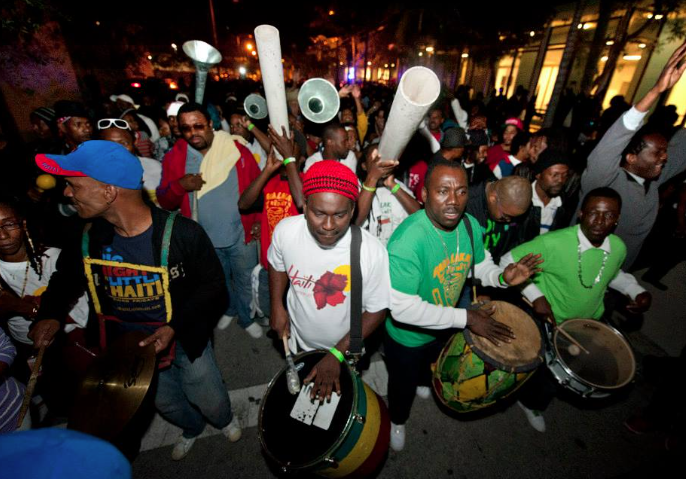
Local drummers perform at a Big Night event held in 2015.

Popular concert series Big Night in Little Haiti had a triumphant farewell last Friday at the Little Haiti Cultural Center, as music fans gathered to celebrate their last event. Big Night, hosted every third Friday since March 2011, had to close because of lack of funding, said a statement from organizers, The Rhythm Foundation.

For the concert’s last round, there were stellar performances from premier Kompas group Gabel, with DJ Mack Brazile keeping the beat strong all night long. Local band RARA Lakay closed the night with the traditional and beloved rara parade spilling out the venue into Little Haiti.

The event initially launched with a $125,000 grant from the Knight Foundation, and another $120,000 grant to cover expenses for 2013 and 2014. And in 2015, the Knight Foundation dished out another $60,000. The final donation dried up in September. Unfortunately, no major sponsor stepped forward to cover the expenses of the free community concert, which costed $10,000 a month.

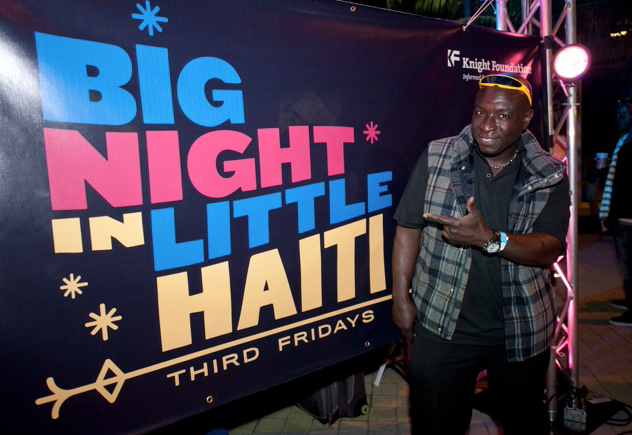
DJ Mack, a regular deejay at Big Night poses for the camera
DJ Mack poses for the camera at one of the Big Night in Little Haiti events

“In a perfect world, we would have had a title sponsor,” Rhythm Foundation director Laura Quinlan told the Herald. “I don’t know why we didn’t get one — it seemed to me like the project was so fundable. I imagined at the beginning that Target or Bank of America would come in and sponsor it. It was such a quality production. It was so family-friendly. So many people came every month with their extended families. We had activities for kids and great institutional partners.”

Quinlan does hope the foundation will soon be able to re-launch the popular event. One new concert series has already popped up, promising to fill the void. “Sounds of Little Haiti”, will host a fun, family-friendly cultural activity every third Friday of the month at the Little Haiti Cultural Complex, beginning May 20, with performances from Tabou Combo.

Yohan Blake back in fighting form

Yohan Blake

After a string of injuries, Jamaican sprinter Yohan Blake showed he is back in fighting form, winning the 100 meters in a world-leading 9.95 seconds at the recent MVP Classic meet held at the National Stadium in Kingston, Jamaica.

After a late start from the blocks, Blake was able to recover nicely and accelerate against a tail-wind of 1.6 mps. Sprintec’s Dwyer was second in 10.10, the same time as third-placed Zharnel Hughes of Great Britain. The win was welcomed news for Blake, who has been recovering from a hamstring injury for the past two years.

“I felt really good from the relay and I said to myself and my friend I am gonna get a nine something or the world lead,” he said to The Jamaica Gleaner following his win.

As for whether this most recent performance bodes well for Blake’s potential this year – particularly the Jamaica Olympic Trails coming up next June, Blake remained cautious, but grateful.

“I don’t want to set any expectations, but as I say God is good,” said Blake. “Oh my God it has been really tough, but thank God my friends who have been there, my coach… has been working really hard on getting the leg up to scratch and right now it’s firing.”

Tips to turn kids into money masters at any age

Most kids start learning about money earlier than a lot of people think—and it’s usually from watching their parents.

Three out of five young adults say their parents’ advice or example had the greatest influence over how they handle their finances today, according to findings from a Bank of America/USA TODAY survey. That parental involvement had a big effect on the practice of good financial habits. Of those who say their parents did an “excellent” or “good” job teaching them about money, 74 percent have savings and nearly half make a regular budget.

Parents who would like guidance on how to teach kids valuable financial lessons can find help online. The website BetterMoneyHabits.com – a financial education resource by Bank of America and education innovator Khan Academy – offers easy-to-follow videos and tips to help parents teach important financial lessons to children of various stages and ages.

Elementary lessons

A child in elementary school is just learning how money works, so simple lessons are best. For example, a trip to the store for back-to-school shopping can be an opportunity to learn about how to comparison shop and save money. Ask your child to examine the prices of different folder and notebook styles and find the lowest priced items.

An allowance is another tool for teaching the building blocks of money management. Experts typically recommend parents who follow this approach to give young children 50 cents to $1 per week for every year of their age. Some parents start with a smaller amount and only raise it once they feel their child can handle the responsibility.

Moving up to middle school

At this age your child may be ready for more complex money-management skills, including saving for larger, medium-term goals such as coveted clothing or electronics. Work with them to build a savings plan around a goal and track progress. For bigger-ticket items, consider matching contributions to reward your child’s savings efforts. If she wants a new phone that costs $200, for example, you could ask her to save for half, and agree to cover the remaining $100.

This age is also a good time to talk about digital spending. All those in-app purchases, music and game downloads can add up. Instead of allowing your child to download at will, consider setting up online accounts to require a password for purchases and set a monthly spending limit. When he asks you to make a digital purchase, discuss the cost and how what he’s asking for will fit into the budget.

High school lessons

By high school, your teenager will be much more independent and will have had a lot more experience with money. If he is managing a larger allowance or even an income from a part-time job, it may be time to open a checking account. Checking accounts come with a lot of responsibility, but walking him through the process of setting one up and establishing best practices for banking and managing money responsibly will set the foundation for sound money habits far into the future.

As your teen gets older, she may start to have bigger ideas about things she wants to do or purchase – such as planning a spring break trip or graduation party or buying a car. Take the opportunity to talk about how much it could cost, work with her to map out a budget for all related expenses, and identify ways for her to help contribute, say for a plane ticket or the party invitations.

At some point, most teens are offered opportunities to take on debt, perhaps through loans or credit cards. You can help prevent impulsive decisions (and costly outcomes), by teaching teens some key guidelines about borrowing money. For example, most teens might not understand that there is a cost to taking out a loan or charging purchases to a credit card if you stretch the payments out over a long time. There is of course a benefit to borrowing money responsibly as a way to build credit so show your teen your credit report and discuss your own experiences to show how good and bad decisions affect credit and purchasing power.

Whether your child is just starting to learn the value of money or is old enough to have a bank account, the money skills you set while they are young could help them develop financial skills for a lifetime.

Brandpointcontent.com

Thousands celebrate World Heritage Day worldwide

Jamaica's Blue Mountains

Today, April 18, the National Weekly joins thousands around the world as they celebrate World Heritage Day.

World Heritage Day was developed by UNESCO as the international day for acknowledging monuments and sites. This special day offers an opportunity to raise the public’s awareness about the diversity of cultural heritage and the efforts that are required to protect and conserve it, as well as draw attention to its vulnerability.

On 18 April 1982, on the occasion of a symposium organised by the International Council On Monuments and Sites (ICOMOS) in Tunisia, the holding of the “International Day for Monuments and Sites” was suggested to be celebrated simultaneously throughout the world. This project was approved by the Executive Committee who provided practical suggestions to the National Committees on how to organise this day.

The idea was also approved by the UNESCO General Conference who passed a resolution at its 22nd session in November 1983 recommending that Member States examine the possibility of declaring 18 April each year “International Monuments and Sites Day”. This has been traditionally called the World Heritage Day.

To commemorate the day in Jamaica, several activities have been planned by the Ministry of Culture, Gender, Entertainment and Sport under the theme “The Heritage of Sport”. Portfolio Minister Olivia Grange will unveil two of the three signs being erected at the entrances to the Blue and John Crow Mountains National Park and World Heritage site. The signs are being erected as part of the Ministry’s undertaking to heighten public awareness and encourage persons to visit the Site.

The Ministry will also host a symposium at the University of Technology under the theme “Sport for Development”

5 tips to avoid hidden credit card fees

Many consumers are trying to be wiser with their credit cards. They avoid splurging on gifts during the holiday season. They don’t apply for a store credit card every time they’re offered 10 percent off their purchase. Yet hidden charges and overlooked terms and conditions might be covertly padding some consumer credit card balances.

Annual fees are rising. On average, Americans paid more than $17 for these fees last year, up 70 percent from $10 in 2010, according to CardHub.com. Average maximum late fees also have risen to more than $35 over the same period.

“Many people are using credit responsibly — they’re working hard to keep balances down, but they may be undermining that effort over time by overlooking the fine print,” says Mikel Van Cleve, USAA personal finance advice director.

When evaluating cards for unnecessary fees, he says to first make sure it doesn’t charge a fee for something you do often.

“For example, USAA Bank recently eliminated foreign transaction fees on all of our credit cards. If you frequently travel abroad, a card with no foreign transaction fees could provide significant savings,” Van Cleve says.

In addition to foreign transaction fees, Van Cleve also recommends keeping an eye on sneaky fee fine print:

Changes in APR. Many cards offer an attractive “introductory” interest rate but may hike the rate up significantly after the promotion expires. If you plan on keeping a balance on the card, make sure you look for a card with a low A PR after the introductory rate expires.

Penalties on late payments. Credit cards often have a penalty APR when you pay late. Check out the terms of your account to ensure you aren’t getting an interest rate hike due to a late payment.

Balance transfer fees. Credit cards usually come with a fee to move a balance from another card. Make sure you know the cost of transferring the balance. Often people move a balance to another card with a lower interest only to learn that they’ve lost the savings to a balance transfer fee.

Reward terms. Understand the terms of your credit card so you don’t lose points or cash rewards because of a late payment or expiration date. It’s also smart to know what incentives and special offers are available with your card. Focused on airline miles? See if booking hotel rooms and rental cars with your card earns you more miles, for instance.

Hidden costs for cash advances. Some cards have higher interest rates for cash advances than regular purchases. Before withdrawing cash, make sure you know the true cost of getting that extra cash.

This kind of fine print is commonplace, so it’s important to understand what fees are on your card and how your spending habits impact the additional fees you can pay. Choose your cards wisely, and you should be able to find a card that fits your needs without paying a fortune in fees.

brandpointcontent.com

This Day in History

Former Haitian Primer Minister Gerard Latortue

Former Haitian Primer Minister Gerard Latortue stops demanding reparations from France

On this day in Caribbean history, former Haitian Prime Minister Gerard Latortue stopped demanding reparations from France. Latortue discontinued a demand, the payment of $21 billion paid to Haiti from France, which was established by former president Jean-Bertrand Aristide in an attempt to form better relations with the country’s former colonizer.

“What we need now is increased cooperation with France that could help us build roads, hospitals, schools, and other infrastructure.” Prime Minister Latortue believed the deal to have been forged solely for political reasons not meant for the betterment of the country.

The amount was the total requested from the country as a return of the sum Haiti paid to France when slaveholders demanded compensation for the loss of “property” following the emancipation of slavery.

Three 10-minute appetizer recipes

Instead of focusing on several sides to accompany your barbecue favorites this holidays, consider offering your guests an array of seasonal appetizers to complement your main course.

Celebrity chef and Food Network star, Alex Guarnaschelli offers three make-ahead, delicious appetizers that will help make entertaining a breeze. By pairing seasonal produce and herbs with nuts like walnuts and pecans for rich flavor, these appetizers will be the highlight of your meal. Chef Alex Guarnaschelli prefers to use Fisher nuts, as it is the only national brand of recipe nuts entirely without preservatives.

Walnut stuffed cherry tomato halves

20512784

“Who doesn’t love a stuffed cherry tomato?” Guarnaschelli says. “A mixture of cheese, peppery arugula and juicy tomatoes brings out the great richness of the nuts. Stuffed cherry tomatoes are satisfying without being filling, and make a great alternative to bread-based starters. You can assemble these appetizers ahead of time and refrigerate them until you’re ready to serve.”

Yield: 12 servings

Prep time: 15 minutes

Ingredients:

3/4 cup fresh arugula leaves, coarsely chopped

1/2 cup (2 ounces) coarsely chopped Fisher Walnut Halves and Pieces, toasted

1/2 cup finely grated Parmesan cheese

2 tablespoons extra-virgin olive oil

1 teaspoon balsamic vinegar

1 teaspoon grated lemon zest

1/8 teaspoon salt

36 cherry tomatoes

Directions:

Toast the walnuts by placing them in a large non-stick skillet over medium heat. Stir frequently until the walnuts turn golden – about three to five minutes.

Combine the arugula with the walnuts, cheese, olive oil, vinegar and lemon zest; set aside.

Cut the tops off the tomatoes. Use a small spoon (such as an espresso spoon), the handle of a teaspoon or a melon baller to gently remove the majority of the seeds and pulp, taking care not to pierce the skin. Season the insides lightly with salt. Fill the tomatoes with the walnut and arugula mixture. Serve at room temperature.

“For a more Italian experience, use authentic Parmigiano Reggiano cheese in this recipe,” Guarnaschelli suggests. “It’s more expensive than domestic Parmesan, but it has a wonderfully rich and nutty flavor.”

Quickie goat cheese and pecan bites

20512870

Another great make-ahead appetizer, these bites are filled with flavor and deliver the perfect combination of crunch and taste. “The freshness of the parsley and lemon zest is the perfect bridge between the goat cheese and pecans,” says Guarnaschelli.

Yield: Makes 24 servings

Prep time: 15 minutes

Ingredients:

1 pound soft goat cheese

2 teaspoons cracked black pepper

1/2 cup toasted Fisher Pecan Halves, chopped

Zest from two lemons

3 tablespoons chopped flat-leaf parsley

Directions:

Break up and mix the goat cheese with the black pepper in a medium bowl. Divide into 24 pieces of about 2 teaspoons each and roll into balls.

Combine the pecans, lemon zest and parsley in a medium bowl until well blended. Roll the goat cheese balls in the pecan mixture. Arrange on a serving platter. Refrigerate until ready to serve. Take them out 15 minutes before serving so they soften a little and drizzle with a little olive oil, if desired.

Spicy walnut and chickpea hummus

20512394

Chipotle brings smoky heat to this appetizer. While hummus is traditionally made with tahini (sesame) paste, this version uses sesame seeds and walnuts to add richness to the mixture and texture when sprinkled on top. Serve this hummus as an individual hors d’oeuvres or as a tasty dip with pita wedges.

Yield: 24 2-tablespoon servings

Prep time: 15 minutes

Ingredients:

1 cup chopped Fisher Walnuts, divided

1/4 cup olive oil

1 can (15 ounces) chickpeas, drained and rinsed

3 tablespoons fresh lemon juice

1 tablespoon sesame seeds

2 cloves garlic

1/2 teaspoon paprika

1/2 teaspoon salt

1/4 teaspoon chipotle powder or ground red pepper

1 medium red bell pepper, ribs and seeds removed, coarsely chopped, about 3/4 cup

1 tablespoon chopped parsley

Directions:

Combine 1/2 cup walnuts and olive oil in the bowl of a food processor, pulse to coarsely chop the walnuts. Add the chickpeas, lemon juice, sesame seeds, garlic, paprika, chipotle powder and salt, and process until smooth.

Transfer the spread from the food processor into a medium mixing bowl and stir in bell pepper, parsley and remaining 1/2 cup walnuts. Serve with toasted pita triangles, if desired.

Brandpointcontent.com

Jamaican immigrant becomes first Black Grandmaster of Chess

A look at some of the top stories making the news today, April 18, across your Caribbean-American community in South Florida.

Reigning Miss Jamaica World Dr. Sanneta Myrie will be joining Diaspora medical outreach program, United Missions of Goodwill, for their annual service trip to Jamaica this May. Led by New York-based registered nurse Lorna Rawle, the 25-member team will provide medical support at the Savanna-La-Mar General Hospital in Westmoreland.

The Jamaican Fire Brigade is calling for more safety equipment for their fire fighters, who they report do not have enough gear to equip the over 1600 members. The brigade’s lack of equipment attracted public attention following a recent report on the recovery of injured firefighter Tennyson McFarlane, who is currently undergoing treatment for severe burns at Jackson Memorial Hospital in Miami.

Celebrating local artists in the community, the city of Lauderhill hosted the annual Jammin’ in the Park this past weekend at the Ilene Lieberman Botanical Gardens. The free event included performances by Old Skool Gang, Club Nouveau, and Heat Wave, as well as an art show showcasing the work of local talent.

In sports, the Lauderhill Junoirs swept Plantation Futballers 5 to 0 at the recent round of game in the CASA League soccer Super tournament, held at the Lauderhill Sports Park. The much welcomed win brings Lauderhill Jrs. to 6th place, while Plantation Futballers stand at the bottom of the heap in 11th place.

What’s trending:

Jamaican immigrant Maurice Ashley has become the first black grandmaster to be inducted into the U.S. Chess Hall of Fame in St. Louis. Ashley was inducted for “his contribution as a player, coach and commentator.”

For Today’s Weather Forecast:

Partly cloudy in Broward County with a high of 80 and a low of 63. For Miami-Dade, partly cloudy with a high of 81 and a low of 64.

For more information on these and other stories, visit caribbeannationalweekly.com. Remember to pick up this week’s copy of our Caribbean National Weekly at your nearest Caribbean outlet.

Lauderhill Commissioner to be honored by JEPA of South Florida

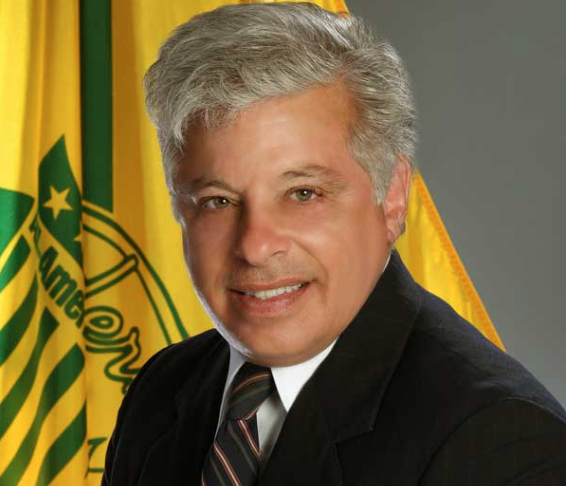
City of Lauderhill Commissioner Howard Berger

Commissioner Berger to receive the Presidential Award

City of Lauderhill Commissioner Howard Berger is set to receive the Jamaica Ex-Police Association of South Florida, Inc. (JEPA) prestigious Presidential Award at JEPA’s annual fundraising Ball on Saturday, April 23, 2016, commencing at 8 pm, at the Woodlands Country Club.

“We are honoring him for his length of service, dedication and continued commitment to the citizens of the Lauderhill Community and by extension Broward County,” explains Malachi Smith, JEPA’s Public Relations Director. He continues, “Commissioner Berger along with Lauderhill Police Chief Stanley and JEPA played a key role in hosting a successful Citizen’s Rights and Responsibilities empowerment seminar at the Lauderhill Police Department headquarters complex in Lauderhill.”

This year’s featured speaker will be the renowned Dr. Winston Alexis.

The Jamaica Ex-Police Association of South Florida, Inc. is a not for profit corporation that is licensed by the State of Florida. Their fundraising efforts are aimed at assisting students in our South Florida Community and in Jamaica with opportunities to attain educational scholarship funds. In addition, they are working on a Police Station Renovation Project in Jamaica.

While they have been staging their annual ball for the past 24 years as their association’s main fundraiser, they also take this time to honor a person from the South Florida community who has made significant contributions to the citizens of the community.  The person honored is selected by a committee while the general membership of the association votes on the final selection.  This year, the City of Lauderhill’s Commissioner Howard Berger was selected.


Family fun event aims to keep children safe

Broward AWARE! Protecting Our Children Resource Fair set for April 16

April is Child Abuse Prevention Month and Broward County’s Nancy J. Cotterman Center along with the Children’s Services Council of Broward County and many other community partners are providing a day of fun at the 8th annual Broward AWARE! Protecting Our Children Resource Fair at Reverend Samuel Delve Park on April 16th from 11AM – 3PM.

Keeping children safe is everyone’s responsibility and the participating agencies will provide a variety of resources to assist parents and the community with protecting children, and tips on how to keep them happy and nurtured..

In addition to the numerous educational resources, families can enjoy a day packed with special guests and activities including – raffle prizes for the entire family (including 2 tickets to Universal Studios, a Nick Cannon autographed guitar, 1 night deluxe stay at Hard Rock Seminole Casino), free food and refreshments, BSO “Paint-a-Fire Truck”, an interactive “Teen Zone”, fresh produce from Feeding South Florida, KidSafe Florida Story Time, a bounce house, swim lessons coupons and Rodney Baltimore from Hot 105

For more information on Broward AWARE! Protecting Our Children, visit the Nancy J. Cotterman website or the Children’s Services Council of Broward’s website.

PAHO launches Zika virus research database

The Pan-American Health Organization (PAHO) has launched a new Zika Research Projects List, a database that categorises all scientific studies on the Zika virus worldwide, including the Caribbean.

PAHO said it has “systematically identified and collected basic information on all investigations related to Zika, both those already published and those on track to be published”.

The database includes the title, authors and a direct link to the article.

According to PAHO, each study has been categorised in the areas of virus, vectors and reservoirs; epidemiology; disease pathogenesis and consequences of Zika infection; clinical management; public health interventions; health systems and services response; research and product development; and causality.

One can also search by publication type: published articles, protocol and publication of preliminary results, PAHO said.

It said the search mechanism was created after a group of experts from around the world met in March to discuss a regional agenda to prioritise and coordinate research on Zika.

At that meeting, PAHO said researchers concluded that efforts must be increased to explore unknown factors about microcephaly and other congenital malformations that may be linked to infection by the virus.

Experts analysed and mapped the gaps in scientific knowledge about the virus, how it affects people, its implications for public health in the Americas, and the Aedes aegypti mosquito, the vector that transmits the disease, PAHO said.

To date, the Zika virus is circulating in 34 countries and territories in the Americas, including the Caribbean.

The virus is transmitted by the bite of an Aedes mosquito, and now has been found to be sexually transmitted.

Zika has also been associated with congenital malformations such as microcephaly, and neurological complications, such as Guillain Barré syndrome.

PAHO said the research projects list is an additional tool to coordinate and keep adding knowledge about Zika virus as it appears.

St. Kitts & Nevis and Brazil sign cooperation agreement

St. Kitts & Nevis Foreign Affairs Minister Mark Brantley

St. Kitts-Nevis has signed a technical cooperation agreement with Brazil that officials say will lead to a deepening of relations between the two countries.

St. Kitts & Nevis Foreign Affairs Minister Mark Brantley who signed the accord on Friday, said the twin-island Federation has in the past benefitted from its diplomatic relations with Brazil.

“There are opportunities for exchange in language training in Portuguese and English, opportunities even in the context of healthcare. Brazil is known for its healthcare and culture; your carnival is one of the best known carnivals in the world and so these are all examples of where we can benefit mutually from this relationship,” he said.“We know you have tremendous expertise in football and sports generally. That is an area also that I think we can cooperate in, in order for our people to benefit. St. Kitts and Nevis as you know is a football crazy island just like Brazil.

Brazil’s ambassador to St. Kitts-Nevis, Douglas Wanderly de Vasconcellos said that his country’s technical cooperation differs from others and “part of its success in providing such assistance to Latin American, African and Caribbean countries derives from the fact that Brazil shares some common challenges and tested solutions” with the territories.

“Another distinctive trade of the Brazilian technical cooperation is that it is granted with no strings attached,” he said.

“We do not interfere in internal affairs of countries, we pose no conditionality. We try to pursue that on a par with countries that we recognize as true partners. That is the whole atmosphere that guides the Brazilian technical cooperation.”

Brantley welcomed the criteria used by Brazil in providing assistance to developing countries.

“It is true as you know that many times assistance is offered and there are strings attached and so I think our public will be delighted to know that in the context of our relationship with Brazil that there are no strings attached and that we approach these matters bilaterally.

“We approach these matters on a nation to nation basis in the interest of the ties that exist between our peoples and the commonalities that you described.”

St. Kitts and Nevis and the Federative Republic of Brazil established diplomatic relations in 1985.

Caribbean saw ‘most rapid’ growth in remittances last year – World Bank

Remittances to developing countries edge up slightly in 2015

The World Bank says Latin America and the Caribbean saw the “most rapid” growth rate in remittances in 2015.

On Wednesday, the Washington-based financial institution said the region’s 4.8 percent growth was due to the recovery in labor markets in the United States.

The bank said growth in Latin America and the Caribbean is expected to continue in 2016, albeit at a slower pace.

It added that remittances are expected to reach US $69.3 billion this year, from US$66.7 billion last year.

Overall, the World Bank said remittances to developing countries grew only marginally in 2015, as weak oil prices and other factors strained the earnings of international migrantsand their ability to send money home to their families.

In the latest edition of the “Migration and Development Brief” released Wednesday, the World Bank said officially recorded remittances to developing countries, including the Caribbean, amounted to US$431.6 billion in 2015, an increase of 0.4 percent over US$430 billion in 2014.

However, the growth pace in 2015 was the slowest since the global financial crisis.

The institution sayd global remittances, which include those to high-income countries, contracted by 1.7percent to US$581.6 billion in 2015, from US$592 billion in 2014.

The World Bank said the slowing in remittances growth, which began in 2012, was exacerbated last year by low oil prices, “which are taking a toll on many oil-exporting remittance-source countries, such as Russia and the Gulf Cooperation Council (GCC) states.”

“Remittances are an important and fairly stable source of income for millions of families and of foreign exchange to many developing countries,” said Augusto Lopez-Claros, Director of the World Bank’s Global Indicators Group.

However, remittance flows are expected to recover this year, after “bottoming out” in 2015, with growth driven by continued economic recovery in the United States and the EuroArea, and a stabilization of US dollar exchange rates of remittance-source countries.

The World Bank noted that the Diaspora has assisted people affected by disasters by sending more money home.

But it warned that remittances may also fall if the disaster disrupts the money-transfer infrastructure.

“While climate change is likely to result in increased frequency and severity of weather-related disasters, the international community currently lacks a legal and institutional framework to cope with the resulting migration from the affected areas,” the Bank said.


Dominican Republic, Haiti to re-establish ties

Dominica’s Minister of Foreign Affairs Andrés Navarro

The governments of Haiti and the Dominican Republic have pledged to re-establish ties following months of disagreement.

According to Dominica’s Minister of Foreign Affairs Andrés Navarro, the ties between the countries that share the island of Hispaniola are again at “the highest level”.

Navarro made the statement following a meeting here on Wednesday with his Haitian counterpart Pierrot Delienne.

During a news conference at the end of a meeting, aimed at resuming the political dialogue, Navarro said Delienne’s presence together with delegations from both countries was geared towards reviewing the bilateral agenda, especially that of the Joint Haitian- Dominican Committee.

“The aim is to normalise the dialogue from this meeting, because there are many issues of common interest, as neighbouring countries, that need to be addressed for the well being of both peoples,” Navarro said, and stressed the importance for both nations to foster an “environment of harmony”.

Some of the key points discussed were trade and the ban on overland access of 23 Dominican products enacted by Haiti during former president Michel Martelly’s term in office.

He said as a result of the meeting, economic issues and co-operation between both countries will also be reviewed “as a starting point to relaunch our relations.”

Since 2013 ties between the neighbouring countries have grown increasingly strained since a Dominican court ruled that children born in the country to non-citizens did not qualify for automatic citizenship because their migrant parents were “in transit”.

JAPEX to showcase growth of destination’s tourism product

An attendee exports the Guardman's booth at the 2015 Jamaica Product Exchange (JAPEX) trade show

Montego Bay, Jamaica’s tourist capital, will play host to the 26th staging of Jamaica Product Exchange (JAPEX), set to take place April 29-May 1, 2016 at the Montego Bay Convention Centre. Over 500 travel agents, hoteliers, allied members and small and medium-sized enterprises are expected to attend this year’s event, organized by the Jamaica Hotel and Tourist Association (JHTA) and the Jamaica Tourist Board (JTB).

Prime Minister, the Hon. Andrew Holness, will be special guest at the opening reception, which is co-sponsored by Melia Braco, under the theme: Many Moods of Jamaica.

As Jamaica’s premier travel trade event, JAPEX is one of the most important business generators for the island’s tourism industry. In two days of pre-scheduled appointments, wholesalers, tour operators and travel agents will meet face to face with close to 200 of the island’s leading tourism suppliers and linkage partners to conduct business negotiations.

“Just mere weeks away, this annual travel trade event offers the ideal platform for Jamaica’s tourism stakeholders to meet, negotiate and learn about improvements in our tourism product,” said Jamaica’s Director of Tourism, Paul Pennicook. “It is through the Jamaica Product Exchange that a significant number of our industry partners are able to do business with tour operators and travel agents. The business conducted at JAPEX will benefit both tourism partners and other providers of goods and services in Jamaica.”

Jamaica is a very accessible destination. Just four hours away from one third of the world and only six hours from the remaining two thirds of the world, the island’s unique geographic location makes it a veritable hub of investment opportunities. Moreover, the country’s road network has been expanded with the building of state-of-the-art highways. The newly opened North-South leg will attract more international businesses and investments.

“We look forward to welcoming new and returning buyers to update them on the significant developments of our tourism product,” noted Nicola Madden-Greig, President of the JHTA . Key among them is the addition of new hotel partners and the opening of the North-South Link of Highway 2000, which has already started to bear fruit with the creation of multi-destination packages. We encourage those attending JAPEX to try and experience it for themselves,” she added.

Black in Miami: Forum discusses state of local black communities

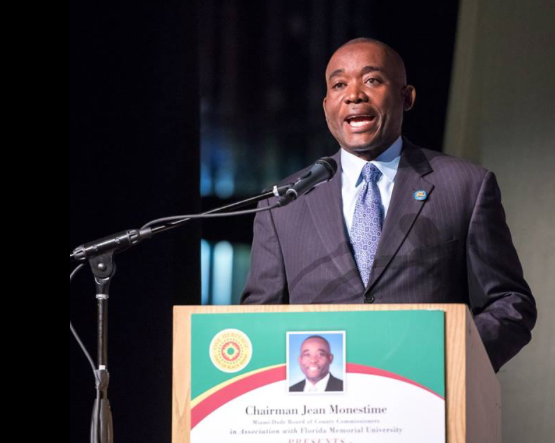
Miami Dade Commission Chairman Jean Monestime , addresses the audience at the “State of Black Miami” forum at Florida Memorial University last week.

As Miami Dade County undergoes a development boom, finally emerging from the 2008 market crisis, are traditionally black communities being left behind? That was the question explored at the recently held “State of Black Miami” forum, hosted by Miami Dade Commission Chairman Jean Monestime at Florida Memorial University. Local leaders and advocates gathered to discuss the community’s current and future prosperity.

The black community makes up 18.9 percent of Miami-Dade at over 2,600,000, including over 80,000 Caribbean-Americans. Of major concern for speakers and panelists were consistent challenges of high poverty, unemployment, inaccessibility to job training programs. An estimated 29 percent of Blacks live under the poverty line, especially in mostly Black populated neighborhoods such as Overtown, Liberty City, Model City and Little Haiti, where the poverty rate is around 40 percent.

This is particularly concerning, says Miami City Commissioner and Chairman of the Southeast Overtown/Park West Community Redevelopment Agency, Keon Hardemon, as many of these cities are currently undergoing new developments.  While many developers offer job incentives for the black community when constructing projects like condos, says Hardemon, this is not enough. “The community needs participation stakes in these development projects,” says Hardemon.

Among the estimated 80,000 Caribbean Americans residing in Miami-Dade, approximately 10 percent reside in economically challenged communities like West Coconut Grove, Liberty City and Overtown. Jamaican-born Carl Levers, a small business owner in Overtown, says he welcomes developers’ efforts to provide jobs to residents, “but they mustn’t ignore residents when these developments are finished.” He said he’s “cautiously optimistic” with plans to build a Major League Soccer stadium in Overtown, where residents will be offered fulltime jobs with the stadium when it’s completed and functioning.

But Cornell Crews, chairman of the Miami-Dade Economic Development Trust, believes condominium development in these historical black communities may be depleting the black neighborhoods. These expensive condos, “some which cost $4 or $5 million, [with] scant concern for traffic congestion and public services, and the related high cost of living,” says Crews, is escalating housing costs for black residents in these neighborhoods, forcing them out.

President and CEO of the Urban League of Greater Miami T. Willard Fair also expressed fears that the proposed Liberty Square redevelopment – a large affordable housing project in Liberty City with $76 million pledged by Miami-Dade County – will “force out black residents during the construction period. I fear the profits will go to the developers and not the community.” He wants County Mayor Carlos Gimenez to take steps to ensure the community benefits directly from this development.

Real estate investor, Pandwe Gibson of EcoTech Visions, suggests the black community pools its resources and invest in economic development in these neighborhoods. She drew reference to the black middle class in cities like Atlanta and Chicago that owns property as examples for Miami’s black community to follow.

“Regardless how small, pooled investment in local properties or black-owned business ventures can make a big difference,” says Gibson. “More investment cohesion is needed in the black community.”

Miami FC to nurture next-gen soccer stars

Newly minted North American Soccer League (NASL) team, Miami FC, already has plans to give back to their new home, with a partnership with Play for Change (PFC) to help support the development of PFC’s “Kick It program.”

Play for Change, the charity working across the globe to provide opportunities for children from disadvantaged communities to play, learn and develop, is launching its Kick It program in Miami, a youth program using soccer as a catalyst for social change. Supported by Miami FC, the program aims to expand opportunities for children and young people to learn new skills, get active and play in a safe environment.

“Play for Change shares our vision of empowering our community’s youth through soccer,” said Cesar Velasco, Miami FC general manager. “Working together to achieve this goal was a natural decision. Miami FC is a team that first and foremost belongs to the community.”

The partnership will encourage local communities to create cost-effective, long-term initiatives that meet youth-development needs and provide safe environments where children can thrive. Among the partnership’s goals are to improve infrastructure and access at local sports facilities, provide needed equipment and supply quality coaches, all in the hopes of increasing participation in the sport, so that children have more opportunities to lead an active lifestyle.

“We are thrilled to be partnering with Miami FC, which will be actively taking part in helping to enrich more young people’s lives with new experiences,” says Marie Le Page, Director of Play for Change. “Enabling opportunities for vulnerable young people to access sport is invaluable for developing confidence, skills and knowledge.”


How old is your heart?

Heart complications

Higher heart age means higher health risks

Your heart may be older than you are – and that’s not good. Higher heart age means higher health risks. According to a new CDC Vital Signs report, 3 out of 4 U.S. adults have a predicted heart age that is older than their actual age. This means they are at higher risk for heart attacks and stroke.

“Heart age” is the calculated age of a person’s cardiovascular system based on his or her risk factor profile. The risks include high blood pressure, cigarette smoking, diabetes status, and body mass index as an indicator for obesity.

“Too many U.S. adults have a heart age years older than their real age, increasing their risk of heart disease and stroke,” said CDC Director Tom Frieden, M.D., M.P.H. “Everybody deserves to be young – or at least not old – at heart.”

Men’s hearts are aging faster, with the average heart age for adult men at 8 years older than their chronological age, compared to 5 years older for women. And although heart age exceeds chronological age for all race/ethnic groups, it is highest among African-American men and women (average of 11 years older for both). Among both U.S. men and women, excess heart age increases with age and decreases with greater education and household income.

So how can you improve your heart age? Actions like quitting smoking or lowering blood pressure through eating a healthier diet, taking appropriate medication, or exercising more can go a long way. State and local health departments can help by promoting healthier living spaces, such as tobacco-free areas, more access to healthy food options, and safe walking paths.

“Because so many U.S. adults don’t understand their cardiovascular disease risk, they are missing out on early opportunities to prevent future heart attacks or strokes,” said Barbara A. Bowman, Ph.D., director of CDC’s Division for Heart Disease and Stroke Prevention. “About three in four heart attacks and strokes are due to risk factors that increase heart age, so it’s important to continue focusing on efforts to improve heart health.”