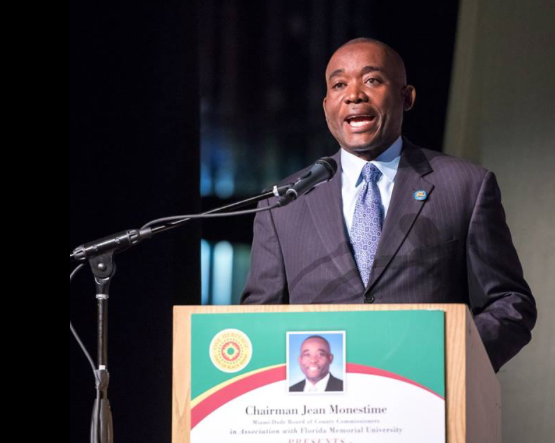
As Miami Dade County undergoes a development boom, finally emerging from the 2008 market crisis, are traditionally black communities being left behind? That was the question explored at the recently held “State of Black Miami” forum, hosted by Miami Dade Commission Chairman Jean Monestime at Florida Memorial University. Local leaders and advocates gathered to discuss the community’s current and future prosperity.
The black community makes up 18.9 percent of Miami-Dade at over 2,600,000, including over 80,000 Caribbean-Americans. Of major concern for speakers and panelists were consistent challenges of high poverty, unemployment, inaccessibility to job training programs. An estimated 29 percent of Blacks live under the poverty line, especially in mostly Black populated neighborhoods such as Overtown, Liberty City, Model City and Little Haiti, where the poverty rate is around 40 percent.
This is particularly concerning, says Miami City Commissioner and Chairman of the Southeast Overtown/Park West Community Redevelopment Agency, Keon Hardemon, as many of these cities are currently undergoing new developments. While many developers offer job incentives for the black community when constructing projects like condos, says Hardemon, this is not enough. “The community needs participation stakes in these development projects,” says Hardemon.

Among the estimated 80,000 Caribbean Americans residing in Miami-Dade, approximately 10 percent reside in economically challenged communities like West Coconut Grove, Liberty City and Overtown. Jamaican-born Carl Levers, a small business owner in Overtown, says he welcomes developers’ efforts to provide jobs to residents, “but they mustn’t ignore residents when these developments are finished.” He said he’s “cautiously optimistic” with plans to build a Major League Soccer stadium in Overtown, where residents will be offered fulltime jobs with the stadium when it’s completed and functioning.
But Cornell Crews, chairman of the Miami-Dade Economic Development Trust, believes condominium development in these historical black communities may be depleting the black neighborhoods. These expensive condos, “some which cost $4 or $5 million, [with] scant concern for traffic congestion and public services, and the related high cost of living,” says Crews, is escalating housing costs for black residents in these neighborhoods, forcing them out.
President and CEO of the Urban League of Greater Miami T. Willard Fair also expressed fears that the proposed Liberty Square redevelopment – a large affordable housing project in Liberty City with $76 million pledged by Miami-Dade County – will “force out black residents during the construction period. I fear the profits will go to the developers and not the community.” He wants County Mayor Carlos Gimenez to take steps to ensure the community benefits directly from this development.
Real estate investor, Pandwe Gibson of EcoTech Visions, suggests the black community pools its resources and invest in economic development in these neighborhoods. She drew reference to the black middle class in cities like Atlanta and Chicago that owns property as examples for Miami’s black community to follow.
“Regardless how small, pooled investment in local properties or black-owned business ventures can make a big difference,” says Gibson. “More investment cohesion is needed in the black community.”