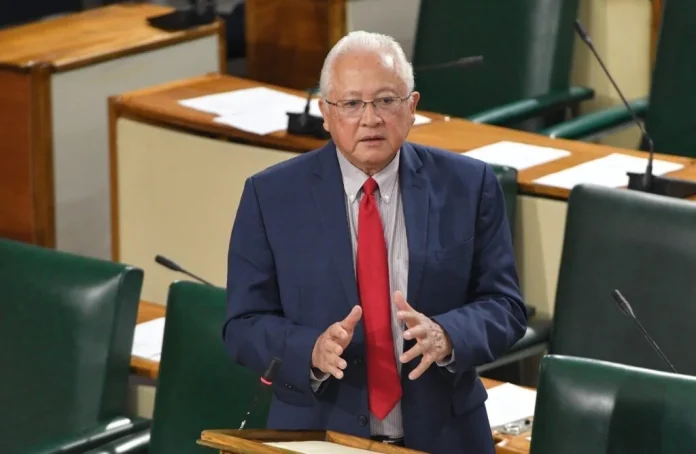
In a recent address to the House of Representatives, Jamaica’s Minister of Justice, Hon. Delroy Chuck, highlighted the remarkable achievements of the nation’s Restorative Justice (RJ) Program.
The statistics unveiled during his statement on Wednesday, underscored the program’s commendable success rate of approximately 80 per cent for cases referred by various entities, including the courts, communities, schools, and police.
RJ facilitators pave the way for resolution
With a robust team of over 200 RJ Facilitators spread strategically across the parishes, Jamaica’s Restorative Justice Program has become a pivotal resource for conflict resolution and relationship mending.

Minister Chuck noted the program’s impact, stating, “I cannot overemphasize the success of Restorative Justice as an important tool for conflict resolution and repairing relationships.”
More on Restorative Justice in Jamaica
- Jamaican schools encouraged to utilize restorative justice practices to combat conflicts
- Jamaica’s Justice minister urges region to utilize restorative justice to deal with violent crime
- Jamaican government encouraging citizens to use restorative justice to settle disputes
Empowering communities through conferences
Over the past four years, the RJ Program has played a vital role in facilitating 9,192 conferences, culminating in 7,580 agreements.
These figures underscore the transformative potential of RJ, with Minister Chuck highlighting the countless lives saved through peaceful conflict resolution.

RJ sensitization reaches wider audience
Apart from its direct interventions, the Restorative Justice Program has made its mark on the broader community.
A staggering 74,949 Jamaicans have participated in RJ sensitization sessions, emphasizing its role in spreading awareness and promoting a culture of understanding.
Collaborative efforts and expansions
Minister Chuck attributed the program’s success to collaborative efforts and strategic expansions.

He mentioned that the Ministry of Education and Youth, as well as churches across Jamaica, have signed Memorandums of Understanding to bolster the RJ initiative.
Moreover, the recent operationalization of the Social Justice Division, encompassing the Restorative Justice Branch, the Child Diversion Branch, and the Victim Services Branch, has further fortified the program’s reach and effectiveness.
Providing support and alternatives
The three branches under the Social Justice Division have united to provide Jamaicans, including child offenders as young as 12 years old, with timely access to alternative dispute resolution services and support for victims of crimes.
This comprehensive approach aims to address the needs of both offenders and victims, fostering a more inclusive and just society.
Extensive network of RJ centers
Currently, there are 21 Parish and Restorative Justice Centres strategically located across the island, ensuring accessibility for all communities. Standalone Restorative Justice Centres, located in Tower Hill, Trench Town, August Town, Denham Town, Tivoli Gardens, Spanish Town, May Pen, Pembroke Hall, and Bunkers Hill (opening soon), serve as pillars of restorative justice in the Jamaican landscape.
Parish Justice Centers offering RJ services can be found in St. Ann, St. Mary, Portland, Trelawny, St. James, Westmoreland, St. Elizabeth, Manchester, St. Thomas, and St. Andrew.
The widespread presence of these centers underscores the government’s commitment to making restorative justice accessible to all Jamaicans.