Imagine a gender-equal world, a world free of bias, stereotypes, and discrimination, a diverse, equitable, and inclusive world. Imagine John Lennon still relevant in 2022. As the world celebrates International Women’s Day on March 8, Nuff Respect by Lady G is one of the songs that stands out as it demands equality within the dancehall fraternity.

In a male-dominated sector, Lady G has spoken out about the inequality in the music industry and society, which is viewed by many as an anthem for women.
It was not easy for females in the past, and it is still not easy now. However, back then, it was more challenging, let’s say near impossible, to break through the noise and shine like the men in dancehall. During this period, most popular deejays songs usually had some references to the female body with disrespectful, misogynistic lyrics widely accepted by society.

Lady G stood out, paving the way for many females in dancehall today to get Nuff Respect and the recognition that they truly deserve.
Dancehall has truly evolved over the years, particularly with the rise of female artists on the scene. Women in dancehall have boldly stood alongside their counterparts, holding their own and generating huge fan bases.
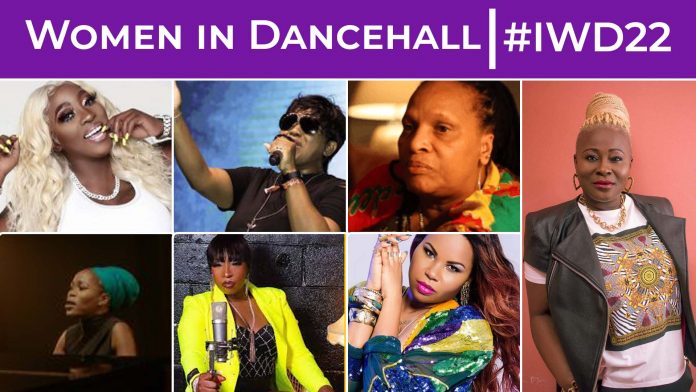
We want to highlight a few women in dancehall who have been breaking barriers and have significantly influenced and revolutionized dancehall music.
Sister Nancy
Born in Kingston, Jamaica, Sister Nancy, also known as Muma Nancy, is known as the first female dancehall DJ and is regarded as the dominating female voice for over two decades in dancehall.
Her famous single Bam Bam gained massive success back in the 80s. The track is one of the most sampled reggae songs ever, having been voiced over by international artists such as Kanye West, Jay Z, Lauryn Hill, and Chris Brown, to name a few.
The music scene would not be the same without her contribution to the industry.

Macka Diamond
Like many females in dancehall, Macka Diamond has publicly acknowledged that Sister Nancy significantly impacted her career.
Known by many names, including Lady Cham, Lady Mackerel, Money Goddess, and the Granny of Dancehall, Macka has celebrated many hit singles such as Done a Ready and Don Girl. Her mega-hit Dye Dye was a #1 hit in Jamaica after its release.
Tanya Stephens
Born Vivienne Tanya Stephens, she gained popularity and enjoyed most of her success in the late 1990s. Tanya dominated the scene with her hit single Yuh Nuh Ready Fi Dis Yet.
The single was later featured on the Reggae Gold 1997 compilation album. Tanya quickly opened up with tunes like Cry & Bawl and Freaky Type that have become staples in dancehall. In the early 2000s, she released her chart-topping single It’s a Pity, the controversial song ultimately shot her to stardom.
In 2004 Stephens teamed up with Warner Music Sweden and gained international recognition for her “Gangsta Blues” album.
Spice
Grace ‘Spice‘ Hamilton, the current queen of dancehall, began her career in the early 2000s and is recognized as a stalwart in the dancehall fraternity. Spice is considered one of the women in dancehall who has taken the Jamaican music brand globally.
Spice became extremely popular through her theatrical stage performances, often leaving her fans in awe. Together with hits like Complain (Mi Gone), Hype, Right There (Fix Me Good) featuring Toi, among many others, she became a force to be reckoned with.
Spice is one of the leading female artists in dancehall, with 3.9 million followers on Instagram. Her flamboyant hair color and her one-of-a-kind personality are captured in her high-energy stage performances as well as her innovative and creative music videos.
Beyond her music and entrepreneurial endeavors, Spice is also the brand ambassador of Magnum Tonic Wine – the official drink of dancehall.
The dancehall queen is also a cast member of the hit reality series “Love and Hip Hop Atlanta.”
Queen Ifrica
Reggae and dancehall legend Queen Ifrica has used her conscious lyrics to influence fans in Jamaica and across the world.
Born Ventrice Morgan, Queen Ifrica is widely recognized for her humanitarian efforts, using her positive music to get much-needed resources to help impoverished youth in Jamaica.
Firmly secured in the Rastafarian faith, she blossomed as one of the top cultural artists in reggae, charting to the top with hits like Randy, Below the Waist, and Daddy.
Queen Ifrica has performed at many stage shows worldwide, including Summer Jam in Germany, Sierra Nevada World Music Festival, Bob Marley Festival, Reggae on the River in California, and Reggae Sundance Festival in Holland.
Ce’cile
Cecile Claudine Charlton, aka Ce’cile, got her big break in 1995 when Steven Ventura, the owner of Celestial Sound Recordings, discovered her. She started out singing backup vocals for various bands, also finding the time to write and produce songs with artists such as Jah Mason & Chrisinti.
Her first major success was with the single Can You Do the Work with Sean Paul in 2001. The track later appeared on his album Dutty Rock which sold over two million copies in the United States and won a Grammy Award.
Her first album, Bad Gyal, was released in 2008 with Kingstone Records and was the first dancehall album discussed in the German Playboy. Today, Ce’cile is known internationally. Her albums sell well in Germany and Japan, among others.
Women have and will continue to grow in the dancehall space. They reject the stereotype and help to redefine how the genre thinks about women.
Koffee, Ishawna, Shenseea, Jada Kingdom, just to name a few, are among those leading the charge, rebuking social norms showing us that the genre has no limitations. After all, who runs the world? Girls!
Happy International Women’s Day.