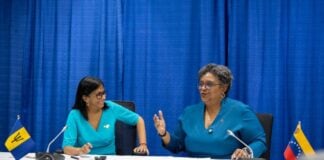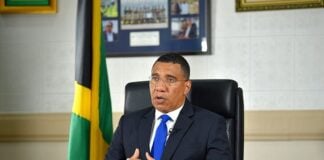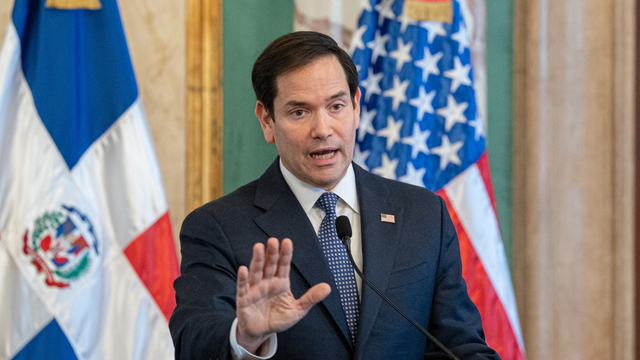
Leaders from the Organisation of Eastern Caribbean States (OECS) and The Bahamas will meet with United States Secretary of State Marco Rubio on Tuesday in Washington, aiming to deepen ties and address pressing regional issues.

St. Lucia’s Prime Minister Phillip J. Pierre, who currently chairs the OECS, will lead the delegation. A statement from the OECS noted that the high-level talks are expected to focus on strengthening economic cooperation, addressing migration and security concerns, exploring the role of the Caribbean diaspora in the United States, and discussing the future of the Cuban Medical Programme.
Pierre is expected to reaffirm the OECS’s commitment to “constructive dialogue and strategic partnership” during the discussions, which he sees as crucial for ensuring that the voices of small island developing states remain heard at the highest diplomatic levels.

“This diplomatic engagement is part of the OECS Authority’s broader mandate to promote the collective interests of its member states,” the statement read.
Dominica’s Prime Minister Roosevelt Skerrit, speaking on DBS Radio, described the meeting as “a very constructive engagement” and emphasized its significance as the first formal discussion with Rubio in his capacity as Secretary of State.
The Bahamas will be represented by its Prime Minister, Phillip Davis.
The meeting follows Rubio’s recent visit to the Caribbean, where he held bilateral talks with CARICOM chair and Barbados Prime Minister Mia Mottley, Jamaica’s Prime Minister Andrew Holness, and President Irfaan Ali of Guyana, among others. During those visits, Rubio reiterated the Trump administration’s commitment to stronger engagement with the region.
However, tensions have surfaced in recent weeks over Washington’s decision to revoke visas of foreign officials from countries employing Cuban medical personnel—a policy that also targets the officials’ immediate family members.
Marco Rubio, the son of Cuban immigrants, has defended the measure, citing allegations of forced labor and human rights abuses tied to Cuba’s overseas medical missions.

“Cuba’s labor export programs enrich the regime and deprive ordinary Cubans of the care they need at home,” Rubio said, emphasizing the U.S. government’s broader efforts to combat forced labor globally.
Caribbean nations, meanwhile, have pushed back against the policy, asserting that the Cuban medical brigades have been critical to their healthcare systems, particularly in underserved communities. Many governments have signaled their willingness to continue working with Cuban medical professionals, even at the risk of losing U.S. visa access for some officials.
The outcome of Tuesday’s meeting could help clarify the Biden administration’s stance on key Caribbean concerns and set the tone for future U.S.–Caribbean cooperation.