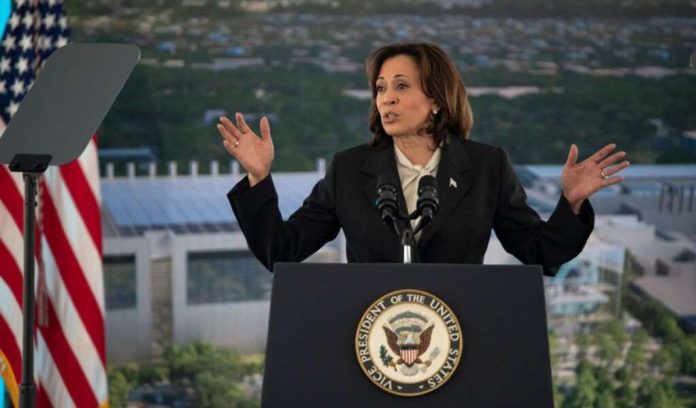
The Democratic Party Convention recently highlighted some of the most powerful and talented women in American politics, showcasing their potential to become influential leaders.

The appearance of former Secretary of State and presidential candidate Hillary Clinton at the convention stirred reflections on how she narrowly missed being elected president in 2016. Meanwhile, speeches from women like Congresswoman Jasmine Crockett of Texas and Alexandria Ocasio-Cortez of New York underscored the significant strides American women have made in the political arena. As speaker after speaker lauded the qualifications and abilities of 2024 Democratic presidential candidate Kamala Harris, many felt that the time had finally come for a woman to assume the presidency.
The evolution of women’s roles in U.S. politics mirrors broader societal changes and the ongoing struggle for gender equality. Women’s involvement in politics began to gain momentum in the 19th century, as more women advocated for social reforms, including the abolition of slavery. This was a challenging endeavor, as women faced opposition in a male-dominated society. Many women boldly resisted the constraints imposed by husbands, fathers, and other male relatives, as well as the misinterpretation of Biblical teachings that marginalized their roles. At that time, women were expected to remain silent in church and were relegated to caregiving roles at home, with no formal political power since they couldn’t vote.

The fight for women’s suffrage, led by pioneers like Susan B. Anthony and Elizabeth Cady Stanton, gained traction in the late 19th and early 20th centuries. Despite facing significant challenges, the movement culminated in the passage of the 19th Amendment in 1920, granting women the right to vote—a milestone achieved just 104 years ago.
However, women did not stop at securing the right to vote; they also sought the right to serve alongside their male counterparts in local, state, and federal governments. In 1916, Jeannette Rankin of Montana became the first woman elected to Congress, even before women nationwide had the right to vote. Over the decades, the number of women in Congress gradually increased, and women began to influence policy in areas such as education, health, and welfare at the state and local levels.
The 1960s and 1970s, marked by the Civil Rights Movement and a resurgence of feminism, brought renewed focus on gender equality. The push for the Equal Rights Amendment, though ultimately unsuccessful, heightened awareness of the need for greater female representation in politics. Shirley Chisholm, a Democrat with Caribbean heritage, seized this opportunity. She became the first Black woman elected to Congress in 1968 and, in 1972, the first woman to seek a major party’s presidential nomination. Despite the odds and advice to the contrary, Chisholm’s historic run signaled to America that women, too, could aspire to the presidency.
Shirley Chisholm’s legacy inspired women across all racial and ethnic backgrounds to pursue political leadership. The 1992 general elections, often referred to as the “Year of the Woman,” saw a significant increase in the number of women elected to Congress. Since then, the number of women in both the House and Senate has steadily grown. Today, a record 153 women serve in the U.S. Congress, including 128 in the House of Representatives and 25 in the Senate. Despite this progress, women remain a minority in Congress, representing approximately 28 percent of the total membership.
In addition to legislative roles, women have increasingly assumed key leadership positions in American politics, including the former Speaker of the House, Nancy Pelosi, and the current Vice President, Kamala Harris. Women have also been appointed to the Supreme Court and have held significant positions in presidential cabinets.
Despite the strides made over the past 104 years, women—especially women of color and those from marginalized communities—are still underrepresented in U.S. politics. Women in politics have traditionally faced unique challenges, including gender bias, stereotypes, and unequal access to campaign funding and political networks. However, 2024 appears to be a turning point, as Kamala Harris seeks to become the first female U.S. president.

Female politicians like Harris often advocate for policies related to gender equality, reproductive rights, healthcare, education, and family leave. They contribute diverse perspectives on various issues, influencing decisions on economic policy, national security, and international relations.
Overall, the role of women in U.S. politics has expanded significantly, although there is still progress to be made to achieve full gender parity in political representation. However, this year seems different, and there is strong reason to believe that women’s role in U.S. politics may soon reach its pinnacle with the election of a woman as president.