Prepare for worst case scenario with Hurricane Ian
Key Points(5)
- Hurricane Ian has continued to rapidly intensify with maximum sustained winds of 155 mph with higher gusts and additionally, has significantly expanded in size.
- The latest updates show that a storm surge is a major concern in these communities due to the unique topography of the bays, inlets, and nearby ocean floor.
- Persistent high winds will essentially pile water up and continually direct the rapidly rising water into the bays, inlets and tidal rivers including Charlotte Harbor, the Peace River, and the Caloosahatchee River with waves on top of this water level increase.
- The storm surge will threaten people and property.
- Due to the slow movement of the storm, the storm surge can persist increasing the risk for considerable damage and threatening to cut-off communities.
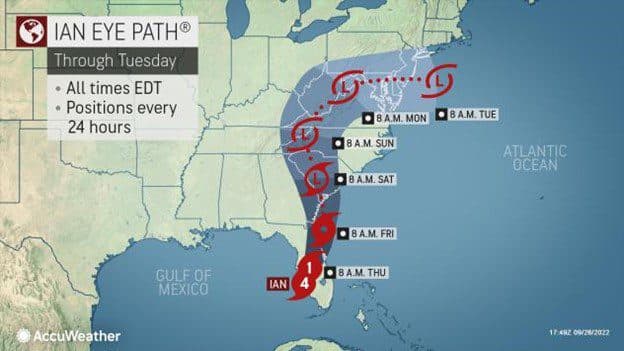
Hurricane Ian has continued to rapidly intensify with maximum sustained winds of 155 mph with higher gusts and additionally, has significantly expanded in size.
AccuWeather Chief Meteorologist Jonathan Porter called the impact in Port Charlotte, Punta Gorda, Cape Coral, Fort Myers, Sanibel Island, and surrounding communities a potential “worse case” hurricane situation given the intense hurricane nearing the west coast of Florida. The report states Ian’s angle of approach and slowing down considerably, will prolong the life-threatening impacts from the hurricane including a devastating storm surge of 15-20’ in the worst hit areas, it will also lead to flooding rainfall, destructive winds, and the risk for localized tornadoes.
The latest updates show that a storm surge is a major concern in these communities due to the unique topography of the bays, inlets, and nearby ocean floor. Persistent high winds will essentially pile water up and continually direct the rapidly rising water into the bays, inlets and tidal rivers including Charlotte Harbor, the Peace River, and the Caloosahatchee River with waves on top of this water level increase. The storm surge will threaten people and property. Due to the slow movement of the storm, the storm surge can persist increasing the risk for considerable damage and threatening to cut-off communities.
Destructive sustained winds of 100-130 mph are expected to occur in Southwest Florida.
All hurricane preparations should be immediately brought to completion and Floridians should safely evacuate from areas under mandatory evacuation as soon as possible. You only have a matter of hours or less to get a safe location to ride out the storm.
Do not assume Ian’s impacts will be felt only along the coast in SW Florida – AccuWeather meteorologists also predict extremely heavy rainfall in the order of 18-24 inches. This prolonged heavy rainfall may result in major or even catastrophic flooding. Although Ian will lose wind intensity as the storm slowly progresses inland away from the coast, damaging wind gusts to near hurricane force (74 mph) are possible in Orlando and surrounding areas. Widespread power outages, some long-lasting, perhaps weeks in duration, may occur in the hardest hit areas.
Localized tornadoes, which created severe damage and injuries across parts of South Florida yesterday, will also be possible across much of the central and southern part of the peninsula.
AccuWeather meteorologists also warn of the potential for dangerous flooding further north later this week into the weekend across parts of the southeastern US as Ian’s moisture interacts with a stalled front resulting in continued heavy rainfall and a risk for flash flooding.
The greatest impact area along the SW Florida coastline is unfortunately some of the same places which experienced devasting impacts from Hurricane Charley in August 2004.