Miami’s South Beach Confronts Disastrous Spring Break
Key Points(5)
- (AP) — Florida’s famed South Beach is desperately seeking a new image.
- With more than 1,000 arrests and nearly 100 gun seizures already during this year’s spring break season, officials are thinking it may finally be time to cleanse the hip neighborhood of its law-breaking, party-all-night vibe.
- The move comes after years of increasingly stringent measures — banning alcohol from beaches, canceling concerts and food festivals — have failed to stop the city from being overrun with out-of-control parties on South Beach and anything-goes antics.
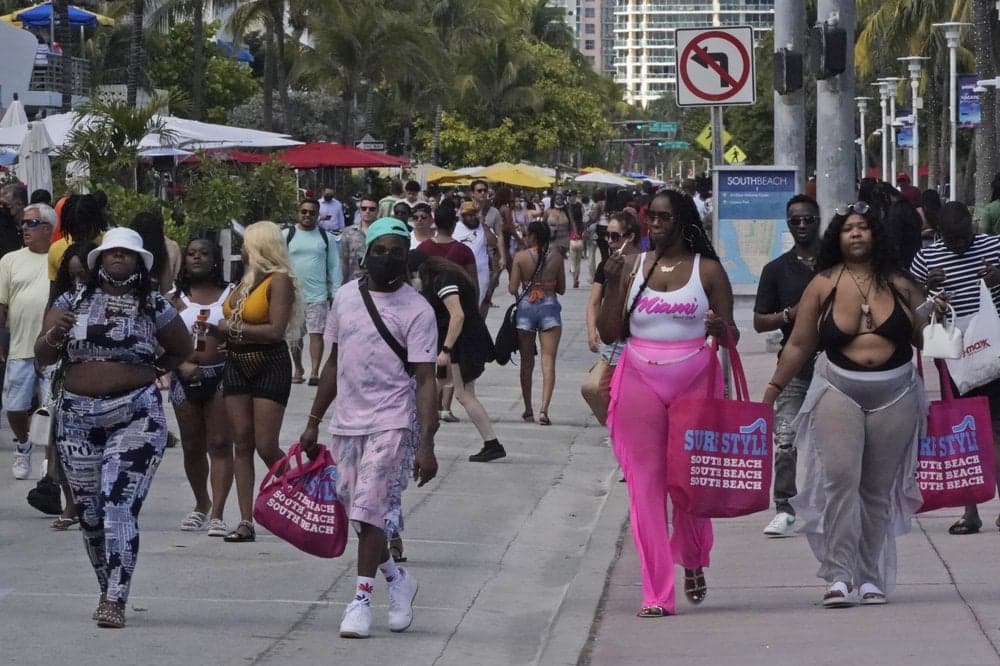
- This weekend alone, spring breakers and pandemic-weary tourists drawn by Florida’s loose virus-control rules gathered by the thousands along famed South Beach and Ocean Drive, at times breaking into street fights, destroying restaurant property and causing several dangerous stampedes.
- The situation got so out of hand that Miami Beach Police brought in SWAT teams to disperse pepper bullets and called in law enforcement officers from at least four other agencies.
New Orleans, which attracts thousand of tourists every year for Mardi Gras, successfully avoided the mayhem that erupted in Miami. Gov. John Bel Edwards, a Democrat, had already put a statewide mask mandate in place as well as occupancy limits on bars, restaurants and other businesses. Edwards also limited the hours in which alcohol could be sold in restaurants, closed iconic Bourbon Street to cars and pedestrians, and ordered bars closed completely for the final weekend of the season.
New Orleans Democratic Mayor LaToya Cantrell went even further by closing bars completely, even those allowed to operate as restaurants.
Despite strong opposition from Republicans and business leaders, Edwards and Cantrell were determined not to repeat Mardi Gras 2020, which state officials later said contributed to New Orleans being an early Southern hot spot in the coronavirus pandemic.
“If people think they’re going to come to Louisiana, anywhere ... and engage in the kind of activities they would have pre-pandemic, then they are mistaken and, quite frankly, they are not welcome here to do that,” Edwards said in a news conference ahead of Mardi Gras.
Miami Beach took less proactive measures under Republican Gov. Ron DeSantis, who has refused to implement a mask-wearing rule and has insisted on letting businesses stay open. Instead, city officials this year sent text messages that warned tourists to “Vacation Responsibly or Be Arrested” and spelled out a lengthy list of rules. The city also canceled all concerts and food festivals, trying to avoid large crowds on South Beach, but that only left the throngs of people who showed up anyway to congregate aimlessly in impromptu street parties.
Some visitors were frustrated by the mixed messages after being lured to the state by a $5 million national tourism advertising campaign, the largest in 20 years.
Reg Mac, a paralegal from Orlando, spent $800 on his trip to Miami, which he said was a bust thanks to the 8 p.m. curfew. He’d been looking forward to letting loose — and had even set aside special outfits for the after-hours scene.
“I was expecting to go out to enjoy the nightlife,” said Mac, who instead returned to his hotel room to sleep. “The food was horrible and the service sucked.”
Added Deaja Atwaters, who traveled from Harker Heights, Texas: “It’s unfortunate that you can’t do everything that we want to do, that we plan to do, but we’re going to make the best of it.”
Miami Beach officials said the crowd of partiers consisted mostly of adults from out of state, not college students. They said many of them didn’t even patronize restaurants and local businesses.
“Not all people that visit Miami beach are bad and come to Miami Beach with the intent of breaking the law and disrupting our quality of life, but this is a different situation and it calls for drastic measures,” said interim City Manager Raul Aguila, who enacted the emergency curfew.
__
Kennedy reported from Fort Lauderdale. Associated Press writers Kevin McGill in New Orleans and Anila Yoganathan in Atlanta contributed to this report