Guyana provides $2.76 billion in support to rice farmers amid global price pressures
_by_Augustus_Binu.jpg&w=3840&q=75)
Key Points(5)
- The Guyana government has provided more than GUY$2.76 billion in financial assistance to thousands of rice farmers under its First Crop 2026 Support Programme, as it works to protect the sector from declining international rice prices.
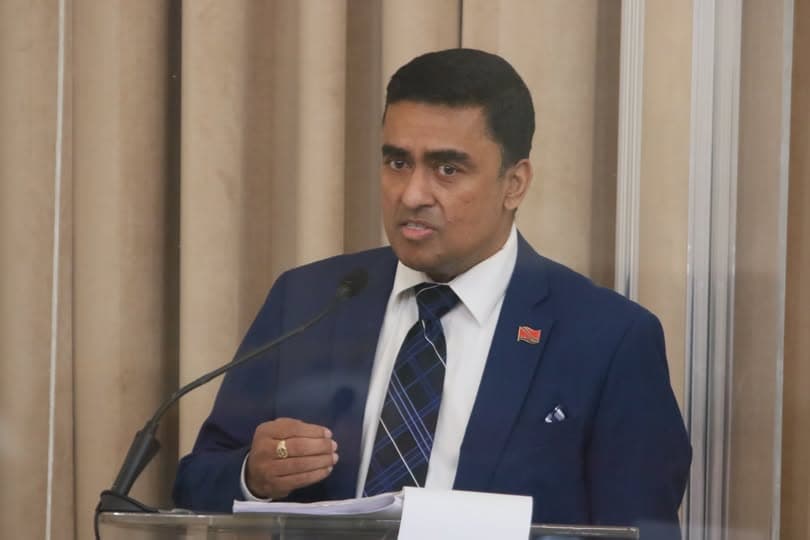
- Agriculture Minister Zulfikar Mustapha said the programme has so far supported 5,106 farmers across the country, covering nearly 235,000 acres of cultivated land.
- “To date, we have paid out to 5,106 farmers, a total of GUY$2,763,249,165.
- That gives us a total acreage of 234,919.96 acres that were cultivated for the first crop,” Mustapha said.
- The financial assistance was distributed based on acreage cultivated.
The Guyana government has provided more than GUY$2.76 billion in financial assistance to thousands of rice farmers under its First Crop 2026 Support Programme, as it works to protect the sector from declining international rice prices.
Agriculture Minister Zulfikar Mustapha said the programme has so far supported 5,106 farmers across the country, covering nearly 235,000 acres of cultivated land.
“To date, we have paid out to 5,106 farmers, a total of GUY$2,763,249,165. That gives us a total acreage of 234,919.96 acres that were cultivated for the first crop,” Mustapha said.
The financial assistance was distributed based on acreage cultivated. Farmers cultivating 50 acres or less received GUY$15,000 per acre, while those farming more than 50 acres received GUY$10,000 per acre.
The largest allocation went to Region Five, where 1,387 farmers cultivating 104,519.12 acres received GUY$1,182,326,700.
Mustapha said the support forms part of a wider government effort to cushion farmers from the effects of lower global rice prices, which have affected the market over the past several years.
“The price of paddy right now and the price of rice have been influenced by the world market. The price is a bit low internationally, and over the last two to three years we have been subsidising the rice industry heavily,” he said.
In addition to direct payments, the government has introduced other measures aimed at reducing production costs, including lowering land rental and drainage and irrigation charges, removing taxes on agricultural chemicals and machinery, and working to make fertiliser and seed paddy more affordable.
Mustapha also highlighted planned investments expected to expand agricultural capacity, including the construction of a fertiliser plant and new drainage and irrigation projects.
He said the projects will open approximately 55,000 additional acres in Region Five and 35,000 acres in Region Six, with more land expected to become available in Region Three. The expansion is expected to provide farmers with opportunities to increase production and diversify into high-value crops and aquaculture.
Guyana’s rice production has grown significantly in recent years, increasing from about 550,000 tonnes in 2020 to 825,000 tonnes in 2025. Production is projected to reach approximately 827,000 tonnes this year.
The government is also seeking new export opportunities, including expanded markets in Mexico and the Caribbean Community (CARICOM), in an effort to secure better prices for farmers and reduce reliance on state subsidies.
“The rice industry is very resilient right now. It is strong and robust. What we are looking at now is to find more lucrative markets. If we can secure those markets, the industry will become even stronger and farmers will depend less on government subsidies,” Mustapha said.