International Students Must Leave US If Their Colleges Go Online
Key Points(5)
- </p> <!-- /wp:paragraph --> <!-- wp:paragraph --> <p>The announcement comes as many universities in the United States have begun to transition to online learning as the COVID-19 numbers show no sign of declining soon.
- Department of State will not issue visas to students enrolled in schools and/or programs that are fully online for the fall semester nor will U.S.
- </p> <!-- /wp:paragraph --> <!-- wp:paragraph --> <p>The rule puts thousands of Caribbean students who populate universities in Florida and other states on student visas at a possible disadvantage.
- </p> <!-- /wp:paragraph --> <!-- wp:paragraph --> <p>Some universities require their international students to take a certain number of credits on campus thus forcing students out or requiring them to transfer poses a threat to their education programs and/or limited resources.
- Many students will also be denied the experience of earning income on campus, taking part in internships, among other opportunities.
What many Caribbean students are calling "a slap in the face", the Immigration and Customs Enforcement (ICE) announced Monday that the hundreds of thousands of international students who are pursuing degrees in America will have to leave the country or risk deportation if their universities switch to online-only courses.
The announcement comes as many universities in the United States have begun to transition to online learning as the COVID-19 numbers show no sign of declining soon. Harvard University was one such school that recently announced that all its courses will be taught online for the next school year.
The new rule applies to holders of F-1 and M-1 nonimmigrant visas, which allow nonimmigrant students to pursue academic and vocational coursework, respectively.
In a news release Monday, ICE said that students who fall under these visa categories "may not take a full online course load and remain in the United States," adding, "The U.S. Department of State will not issue visas to students enrolled in schools and/or programs that are fully online for the fall semester nor will U.S. Customs and Border Protection permit these students to enter the United States."
The release said that for international students who were already enrolled in online programs, they will either have to leave the country or "take other measures, such as transferring to a school with in-person instruction to remain in lawful status." If not, they may face immigration consequences.
There is, however, an exception for universities using a hybrid model, such as a mix of online and in-person classes.
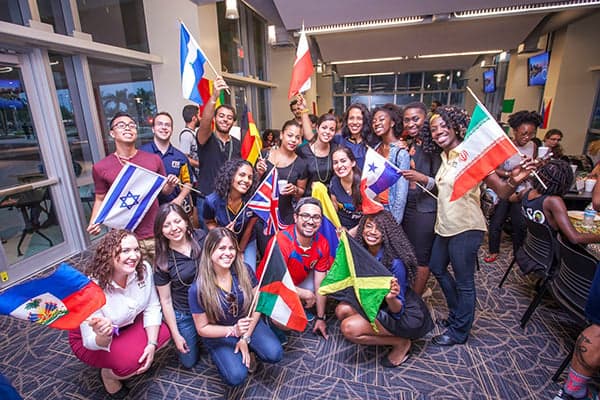
The rule puts thousands of Caribbean students who populate universities in Florida and other states on student visas at a possible disadvantage.
Some universities require their international students to take a certain number of credits on campus thus forcing students out or requiring them to transfer poses a threat to their education programs and/or limited resources. Many students will also be denied the experience of earning income on campus, taking part in internships, among other opportunities. All while tuitions are expected to stay the same as pre-COVID.
According to the nonprofit Institute of International Education, more than 1 million of the country's higher education students come from overseas.