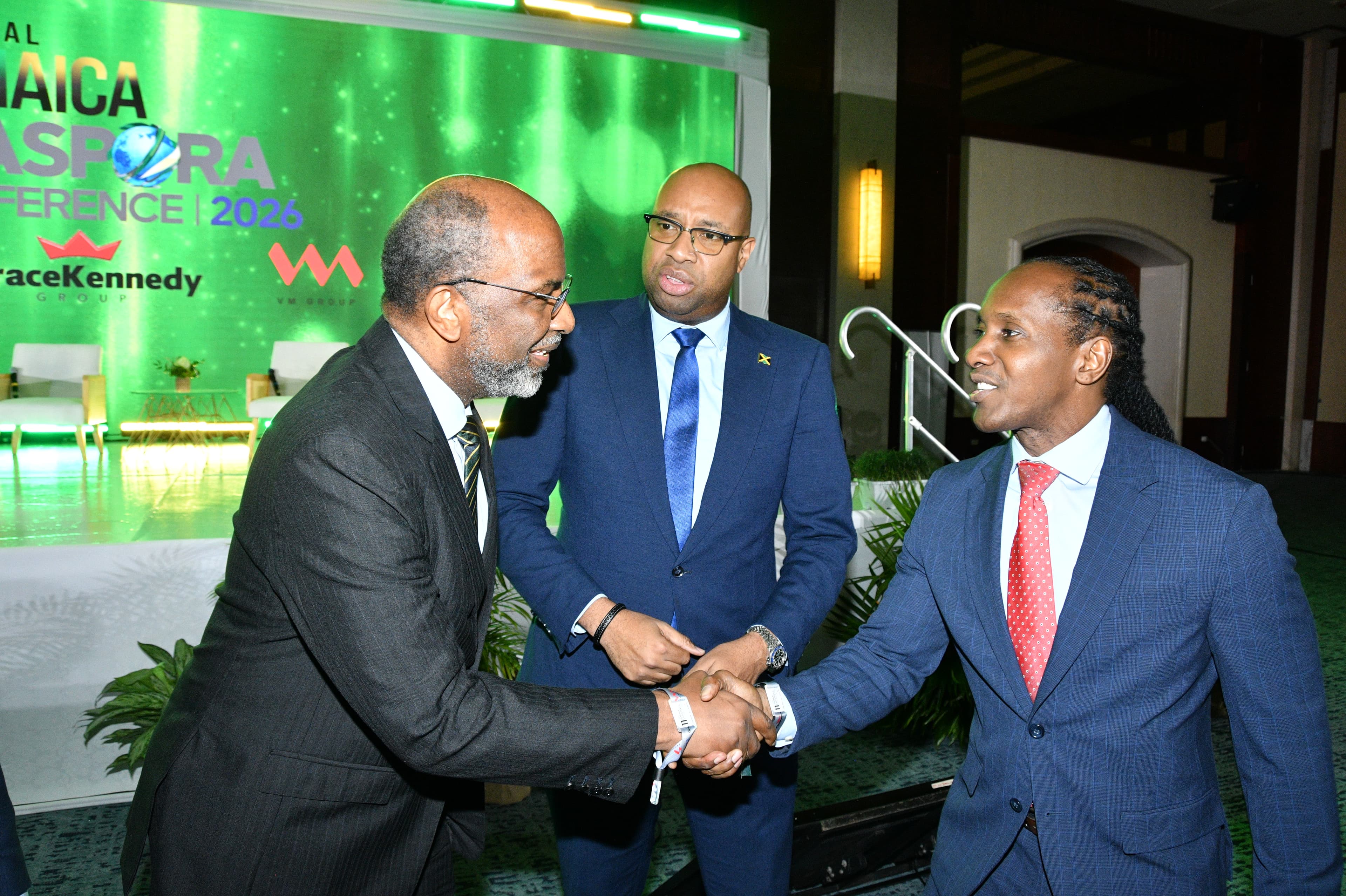
Diaspora conference chair hails 2026 staging as ‘greatest homecoming experience’
Key Points(5)
- The 11th Jamaica Diaspora Conference closed this week with organizers describing it as a landmark gathering that underscored the growing influence of Jamaicans abroad in national development.
- Chairman of the conference, Earl Jarrett, CEO of The Jamaica National Group, called the event the “greatest homecoming experience” for Jamaicans overseas, pointing to what he described as a “movement” of diaspora engagement that now extends beyond traditional family support.
- The biennial conference, held at the Montego Bay Convention Centre from June 14–18, brought together more than 1,000 participants from 15 countries, making it the largest edition in the 22-year history of the event.
- Under the theme “Diaspora Partnerships: Rebuilding a More Resilient Jamaica,” discussions spanned investment, returning residency, agriculture, education, philanthropy, technology, security, youth engagement, disaster response, and climate resilience.
- Organizers said the agenda was shaped by feedback collected from diaspora communities in advance of the meeting.
The 11th Jamaica Diaspora Conference has concluded in Montego Bay with organizers describing it as the largest and most consequential edition in the event’s 22-year history, bringing together more than 1,000 Jamaicans and friends of Jamaica from 15 countries.
Chairman of the conference, Earl Jarrett, CEO of The Jamaica National Group, said the gathering represented what he called the “greatest homecoming experience” for Jamaicans overseas, adding that diaspora engagement has evolved into something far broader than traditional support for family and friends.
Speaking at the close of the biennial event, Jarrett said the diaspora’s sustained involvement in Jamaica’s development now reflects a “movement,” pointing to its expanding role in areas such as investment, philanthropy, education, and disaster response.
The conference, staged under the theme “Diaspora Partnerships: Rebuilding a More Resilient Jamaica,” ran from June 14–18 at the Montego Bay Convention Centre. Discussions covered a wide range of topics including investment, returning residency, agriculture, education, technology, security, youth engagement, disaster response, and climate resilience. Organizers said the agenda was shaped by feedback collected from diaspora stakeholders through a survey designed to ensure key concerns were addressed.
Jarrett noted that diaspora institutions abroad have grown organically over time, supporting schools, communities, and families in Jamaica. He highlighted the response following Hurricane Melissa, which devastated Jamaica in October 2025, as an example of the diaspora’s collective mobilization.
“You have all organically created these institutions abroad in support of your schools, communities, families, and Jamaica itself,” he said. “Those many containers and others that were received was because of your own efforts… and if we were to incorporate all of them, we would have a really, really massive movement.”
He added that the true measure of success would be what follows after the conference concludes, rather than the discussions themselves, noting that past gatherings have already influenced improvements in government processes in response to diaspora concerns.
“It’s not just about coming here together… it’s about finding solutions to the issues raised,” Jarrett said.
That sentiment was echoed by Minister of State in the Ministry of Foreign Affairs and Foreign Trade, Alando Terrelonge, who oversees diaspora affairs and delivered closing remarks for the conference.
He said the “true value” of the discussions would be measured by concrete actions taken in the weeks, months, and years ahead, beyond the quality of dialogue alone.
Terrelonge pointed to tangible outcomes already emerging from the conference, including new investment opportunities, business partnerships, and efforts to establish a British Jamaican Chamber of Commerce aimed at strengthening trade relations between Jamaica and the United Kingdom.
“These discussions were not merely theoretical,” he said. “New investment conversations have begun. Business relationships have been formed, and practical solutions have been proposed.”
He also confirmed that, for the first time in the conference’s history, a formal Conference Declaration will be produced based on recommendations and discussions to help guide future engagement between Jamaica and its diaspora.
Despite the scale of the event, organizers noted the logistical challenges posed by damage to the Montego Bay Convention Centre following Hurricane Melissa. The venue was restored in time for the conference after months of preparation.
“Four months ago, this space was not looking anything like this. Through collaboration and determination, we were able to get the convention center ready for the conference,” Terrelonge said, commending organizers and stakeholders for their efforts in delivering a successful staging.



.jpg&w=3840&q=75)