Cuban population at increased risk for dengue fever
Key Points(5)
- <a href="https://covid-19.ebscomedical.com/ministry-health-cuba">Cuba’s Health Minister</a> Carilda Peña Garcia has voiced concern about a spike in the mosquito-borne dengue fever as three of four serotypes present in Latin America and the Caribbean, are in Cuba.
- Dengue is a viral infection transmitted to humans through the bite of infected mosquitoes.
- The primary vectors that transmit the disease are Aedes aegypti mosquitoes and, to a lesser extent, Ae.
- Dengue prevention and control depend on effective vector control measures.
- Sustained community involvement can improve vector control efforts substantially.
Cuba’s Health Minister Carilda Peña Garcia has voiced concern about a spike in the mosquito-borne dengue fever as three of four serotypes present in Latin America and the Caribbean, are in Cuba.
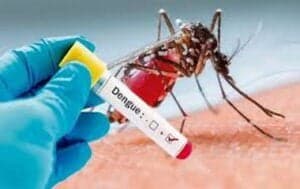
Dengue is a viral infection transmitted to humans through the bite of infected mosquitoes. The primary vectors that transmit the disease are Aedes aegypti mosquitoes and, to a lesser extent, Ae. albopictus.
Dengue prevention and control depend on effective vector control measures. Sustained community involvement can improve vector control efforts substantially.
While many dengue infections produce only mild illness, dengue can cause an acute flu-like illness. Occasionally this develops into a potentially lethal complication, called severe dengue.
Garcia warned the public that if a person contracts more than one strain of the disease, there is an increased possibility of them having hemorrhagic dengue.
According to Garcia, the increase in cases of dengue fever is not only a Cuban problem, as more than two million dengue, Zika, and Chikungunya cases were recently detected over the past few weeks in the Americas
The global incidence of dengue has grown dramatically with about half of the world's population now at risk. Although an estimated 100-400 million infections occur each year, over 80 percent are generally mild and asymptomatic.
Before 1970, only nine countries had experienced severe dengue epidemics. The disease is now endemic in more than 100 countries in World Health Organization regions of Africa, the Americas, the Eastern Mediterranean, South-East Asia, and the Western Pacific.
Since May and June, Cuba witnessed an increase of dengue cases due to the rainy season and the life cycle of the mosquito.
The trend is expected to last till November.
Dr. Madelaine Rivera, who heads the anti-vector fight in the Health Ministry says 71 Cuban municipalities have reported a spike in dengue fever and based on this everything needs to be done to prevent an epidemic.
CMC/
Read Similar Story: Caribbean countries urged to step up the fight against malaria