CCJ president rejects allegations of panel fixing and interference in judgments
Key Points(5)
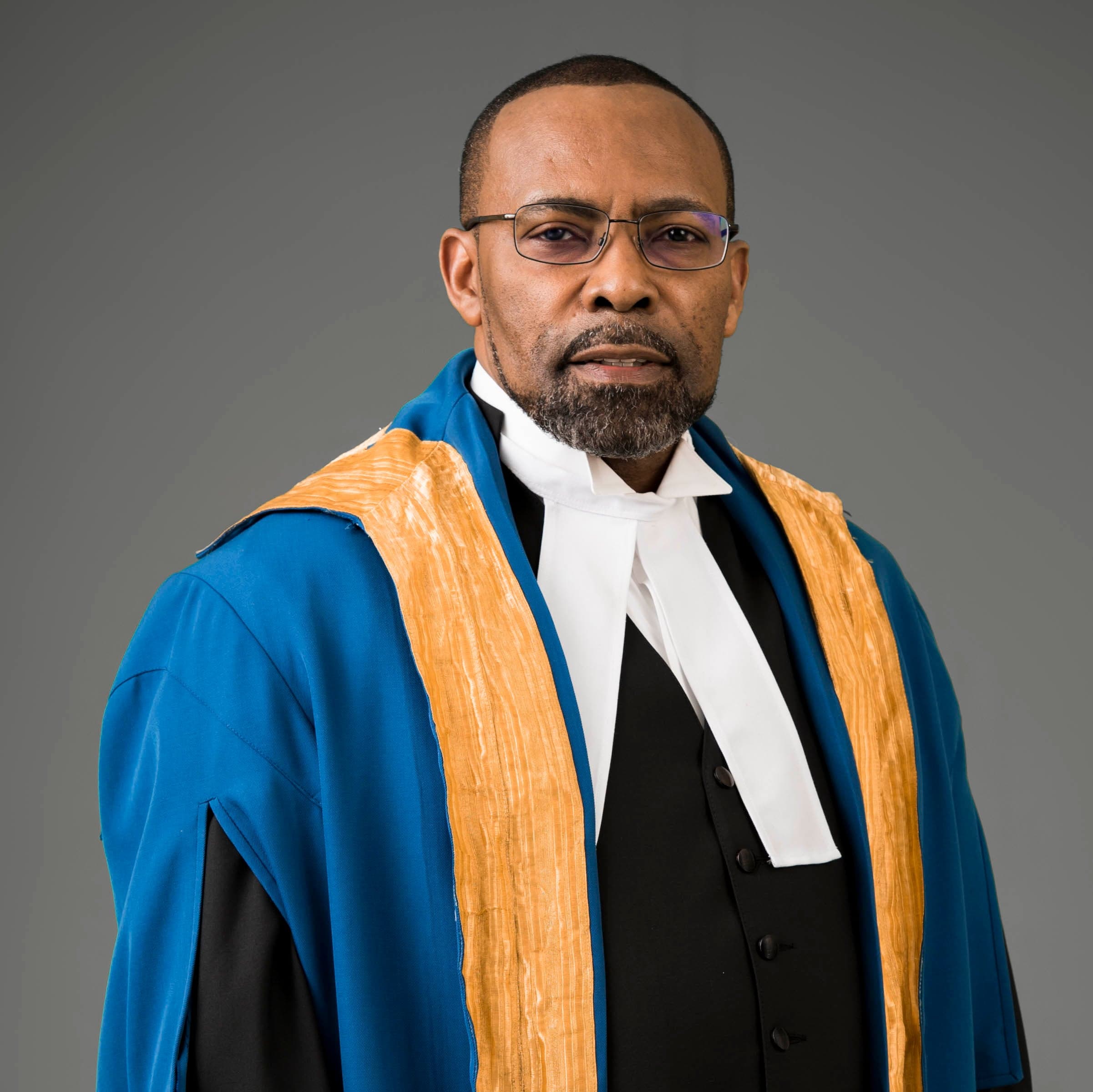
- Caribbean Court of Justice (CCJ) President Justice Winston Anderson has rejected allegations of panel fixing and interference in judicial decisions, while acknowledging that he may have handled some internal matters too forcefully.
- In a statement issued from Port of Spain, Anderson addressed recent reports and publications concerning the court's internal affairs, saying the disclosures had caused "concern, anxiety and profound sadness" within the institution and across the Caribbean.
- He strongly condemned the unauthorized disclosure and publication of confidential court material, including internal deliberations and correspondence.
- "Such disclosures and their publication are wholly unacceptable and strike at one of the fundamental principles upon which every independent judiciary depends," Anderson said.
- He said the disclosures undermine trust in judicial deliberations and collegiality, as well as public confidence in the judiciary.
Caribbean Court of Justice (CCJ) President Justice Winston Anderson has rejected allegations of panel fixing and interference in judicial decisions, while acknowledging that he may have handled some internal matters too forcefully.
In a statement issued from Port of Spain, Anderson addressed recent reports and publications concerning the court's internal affairs, saying the disclosures had caused "concern, anxiety and profound sadness" within the institution and across the Caribbean.
He strongly condemned the unauthorized disclosure and publication of confidential court material, including internal deliberations and correspondence.
"Such disclosures and their publication are wholly unacceptable and strike at one of the fundamental principles upon which every independent judiciary depends," Anderson said.
He said the disclosures undermine trust in judicial deliberations and collegiality, as well as public confidence in the judiciary.
Anderson's statement addressed several allegations involving his leadership of the court, including consultation with judges and staff, judicial dress, the composition of panels, alleged attempts to influence judgments and his involvement in discussions concerning Guyana's judicial leadership.
Anderson defends decision to remove judge from panel
One of the disputes centered on the removal of a CCJ judge from an interlocutory panel in D'Almada v. Trinidad and Tobago.
Anderson said the decision was made because the judge had declined to follow the court's established practice concerning judicial attire.
According to Anderson, the judge had appeared in court wearing traditional national dress during proceedings in December 2025 and again in April 2026.
He said he raised the issue privately with the judge on June 10, 2026, but was unable to secure an agreement to follow the court's established practice of wearing judicial robes or appropriate bench attire.
Anderson subsequently removed the judge from the panel hearing a procedural application in the D'Almada case scheduled for July 2.
He said he made clear in writing that the decision was based solely on the issue of judicial attire and had nothing to do with the judge's views, participation in conferences or deliberations, or opinions on the case.
The judge was later assigned to the panel for the substantive hearing, Anderson said.
He also defended efforts to establish a formal judicial dress code, saying the issue was institutional rather than personal.
Anderson said he has since recognized that he "may have approached the matter of the handling of the issue dress code too strongly."
He said the question of whether national dress should be permitted on the CCJ bench should ultimately be determined through consultation across the region.
President rejects 'panel fixing' allegation
Anderson described allegations that CCJ panels were constituted or changed to influence the outcome of cases as among the most serious claims made against the court.
"The allegation is wholly untrue," he said.
He maintained that the president has historically been responsible for constituting court panels and that the responsibility has been exercised to ensure the orderly, efficient and impartial administration of justice.
Anderson again said the change to the D'Almada interlocutory panel was motivated solely by the issue of judicial attire.
He pointed to the outcome of the hearing as further evidence, saying all five judges subsequently agreed unanimously that leave should have been granted for the substantive matter to proceed.
He said the substantive hearing would be heard by the full bench, including the judge whose removal had prompted the controversy.
Anderson also announced a change intended to prevent future concerns over panel composition.
"Going forward, every Judge of the Court will be required to sit on every panel, unless the Judge opts out for a legitimate reason and is excused," he said.
He rejected suggestions that a judge's nationality or other personal characteristic should be considered when assessing impartiality.
"To suggest otherwise is to undermine not merely an individual Judge, but confidence in Caribbean justice itself," Anderson said.
He described the suggestion that the attire dispute amounted to panel fixing as "irresponsible, intellectually dishonest, injudicious and quite simply, malevolent."
Denies influencing judgments
Anderson also rejected allegations that he had attempted to influence judges' decisions.
He said judicial independence is protected by the CCJ's constituent instruments, judicial oaths and internationally recognized standards, including the Bangalore Principles of Judicial Conduct.
Addressing the Nazar Mohamed and Azruddin Mohamed v. Minister of Home Affairs case in Guyana, Anderson said disagreements during the preparation of judgments are normal in an appellate court.
He said judges routinely engage in robust discussions and consider competing legal analyses before reaching a final decision.
Anderson stressed that all seven judges were unanimous in the disposition of the Mohamed appeal.
He also noted that dissenting judgments are not published in the court's Original Jurisdiction, where unanimity is standard practice among international courts exercising similar jurisdiction.
"The suggestion that judicial views were suppressed or that any Judge was directed to reach a particular conclusion is therefore wholly without foundation," he said.
Explains involvement in Guyana judicial appointments
Anderson also addressed criticism of his meetings with Guyana's president and opposition leader over the country's prolonged use of acting appointments for the offices of chancellor and chief justice.
He noted that Guyana has gone more than two decades without substantively appointed holders of its two highest judicial offices.
Anderson said his concern was not directed at any particular government or political party but at what he considers the constitutional importance of having permanent office holders protected by judicial tenure.
He cited Article 122A of Guyana's Constitution, which provides for an independent judiciary free from political, executive and other forms of direction and control.
Anderson also pointed to statements by his predecessors, former CCJ presidents Sir Dennis Byron and Justice Adrian Saunders, who had previously raised concerns about the absence of substantive appointments.
He said he met separately with Guyana's president and opposition leader in October 2025 in an effort to encourage a resolution to the impasse.
Looking back, Anderson acknowledged that he could have taken a different approach.
"It may have been better to have confined myself to public commentary on the constitutional importance of substantive judicial appointments, as did my predecessors," he said.
He maintained, however, that his actions were motivated solely by concerns about judicial independence and the constitutional integrity of Guyana's judiciary.
CCJ president defends court's work
Anderson also sought to highlight the court's work since he assumed the presidency on July 6, 2025.
He said the CCJ has continued to deliver judgments in its Appellate and Original Jurisdictions, advance regional integration through interpretation of the Revised Treaty of Chaguaramas and strengthen its engagement with regional and international stakeholders.
The court has also undertaken initiatives aimed at improving administration, governance, operational procedures, staff development, stakeholder engagement and public outreach, he said.
Anderson emphasized that those efforts were the result of the work of the court's seven judges, senior management and staff rather than the president acting alone.
He pledged that the CCJ would continue hearing cases and fulfilling its responsibilities under the Agreement Establishing the Court and the Revised Treaty of Chaguaramas.
"I undertake that the Court will continue to hear and determine the cases that come before us ... and to serve the people of this Region with independence, fairness and integrity deserving of the trust and confidence of the Caribbean people," he said.