Bahamas PM calls for US to follow proper process amid DEA operations dispute
Key Points(5)
- Prime Minister Philip Davis has called on the United States to follow established procedures for law enforcement operations in The Bahamas, as a public dispute continues over reports that undercover U.S.
- Drug Enforcement Administration (DEA) agents operated in the country without the knowledge or authorization of Bahamian authorities.
- Ambassador to The Bahamas Herschel Walker has challenged the government’s concerns, dismissing suggestions that DEA agents operated illegally as “fake news” and questioning why Bahamian officials would object to U.S.
- authorities helping to apprehend a suspected drug trafficker.
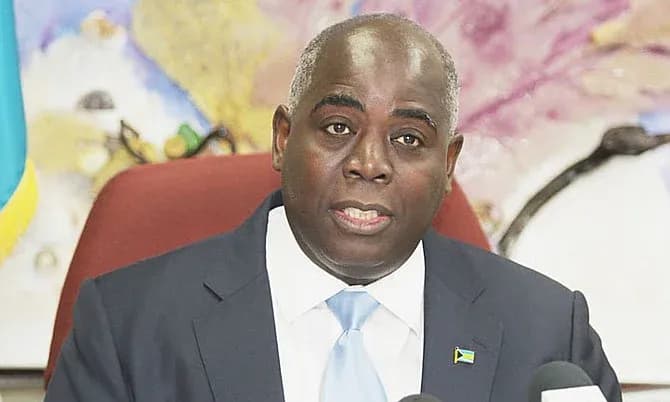
- Davis, speaking to reporters, said the dispute was not about opposition to targeting criminals but about respecting the process governing cooperation between the two countries.
Prime Minister Philip Davis has called on the United States to follow established procedures for law enforcement operations in The Bahamas, as a public dispute continues over reports that undercover U.S. Drug Enforcement Administration (DEA) agents operated in the country without the knowledge or authorization of Bahamian authorities.
U.S. Ambassador to The Bahamas Herschel Walker has challenged the government’s concerns, dismissing suggestions that DEA agents operated illegally as “fake news” and questioning why Bahamian officials would object to U.S. authorities helping to apprehend a suspected drug trafficker.
Davis, speaking to reporters, said the dispute was not about opposition to targeting criminals but about respecting the process governing cooperation between the two countries.
“We’re not fearing anything. It’s not a question of fearing targeting criminals. We all want to get criminals out and ensure they pay for their crimes. It’s not about targeting criminals at all,” Davis said.
“It’s a question of the process. There’s a process between countries for when and how we engage. All that is being asked for is for the process to be followed,” he added.
The dispute intensified last week after Bahamas Ambassador to the United States Wendall Jones accused “rogue” DEA agents of conducting operations in The Bahamas and “destabilizing” the government.
Jones also called on U.S. officials to identify “Politician-1,” an unnamed Bahamian politician alleged to have met with a drug trafficker in Parliament to discuss the delivery of cocaine to the United States.
The comments followed the arrest of convicted drug trafficker Jonathan Eric Gardiner in the United States. Gardiner was taken into custody after a plane he was traveling on crashed in waters off Florida on May 12.
U.S. authorities charged Gardiner in June with drug importation and conspiracy offenses, alleging that he had moved large quantities of cocaine through The Bahamas with the protection of Bahamian government officials.
Attorney General Wayne Munroe earlier this week echoed Jones’ concerns, accusing DEA agents of breaching Bahamian law through undercover operations involving criminal informants.
“For many reasons, you do not go into another country and commit what is in essence a crime, because being involved with a CI [criminal informant] or somebody else supposedly agreeing to transfer drugs is a crime,” Munroe said.
Munroe acknowledged that The Bahamas has historically maintained a strong working relationship with U.S. authorities, particularly on cocaine interdiction, but said unilateral operations could create problems.
The two countries have a longstanding counter-narcotics partnership through Operation Bahamas, Turks and Caicos (OPBAT).
Walker, responding to Munroe, urged the Bahamian government to “work with its greatest ally,” saying Washington was prepared to strengthen bilateral relations. He also said the United States could no longer accept the “flow of drugs” to its shores.
Davis said he wants U.S. authorities to notify Bahamian officials about operations conducted in the country, while stressing that he does not expect the dispute to damage relations between the two nations.
“I don’t think so. I take, quite frankly, as I said to my people, we ought to take the advice of the ambassador. What did he say? Just let us wait and see. So I take his advice, and I think we ought to wait and see,” Davis said.