Caribbean nationals among foreign detainees held at Guantanamo Bay
Key Points(5)
- Caribbean nationals are among dozens of foreign citizens currently being detained at the U.S.
- naval base at Guantanamo Bay, Cuba, according to the United States Department of Homeland Security (DHS).
- “The detention of foreigners with criminal records at Guantanamo Bay shows that President Donald Trump and Homeland Security Secretary Kristi Noem are using ‘every tool available to get criminal illegal aliens off our streets and out of our country,’” McLaughlin said.
- media reports indicate that the move is part of an expanded initiative by the Trump administration to repurpose Guantanamo Bay as an immigration detention facility.
- The naval base initially held mainly Spanish-speaking Latin American migrants awaiting deportation but now houses individuals from all continents except Antarctica.
Caribbean nationals are among dozens of foreign citizens currently being detained at the U.S. naval base at Guantanamo Bay, Cuba, according to the United States Department of Homeland Security (DHS).
The detainees hail from more than two dozen countries, including Haiti, Jamaica, St Kitts and Nevis, Brazil, China, Colombia, the Dominican Republic, El Salvador, Ethiopia, Guatemala, Honduras, India, Kenya, Liberia, the Marshall Islands, Micronesia, Myanmar, Nicaragua, Nigeria, Peru, Romania, Russia, Somalia, the United Kingdom, Venezuela, and Vietnam.
In a statement, DHS Assistant Secretary for Public Affairs, Tricia McLaughlin, said the detention of foreign nationals with criminal records at Guantanamo Bay is part of a broader effort by President Donald Trump and Homeland Security Secretary Kristi Noem to remove “criminal illegal aliens” from the U.S.
“The detention of foreigners with criminal records at Guantanamo Bay shows that President Donald Trump and Homeland Security Secretary Kristi Noem are using ‘every tool available to get criminal illegal aliens off our streets and out of our country,’” McLaughlin said.
U.S. media reports indicate that the move is part of an expanded initiative by the Trump administration to repurpose Guantanamo Bay as an immigration detention facility. The naval base initially held mainly Spanish-speaking Latin American migrants awaiting deportation but now houses individuals from all continents except Antarctica.
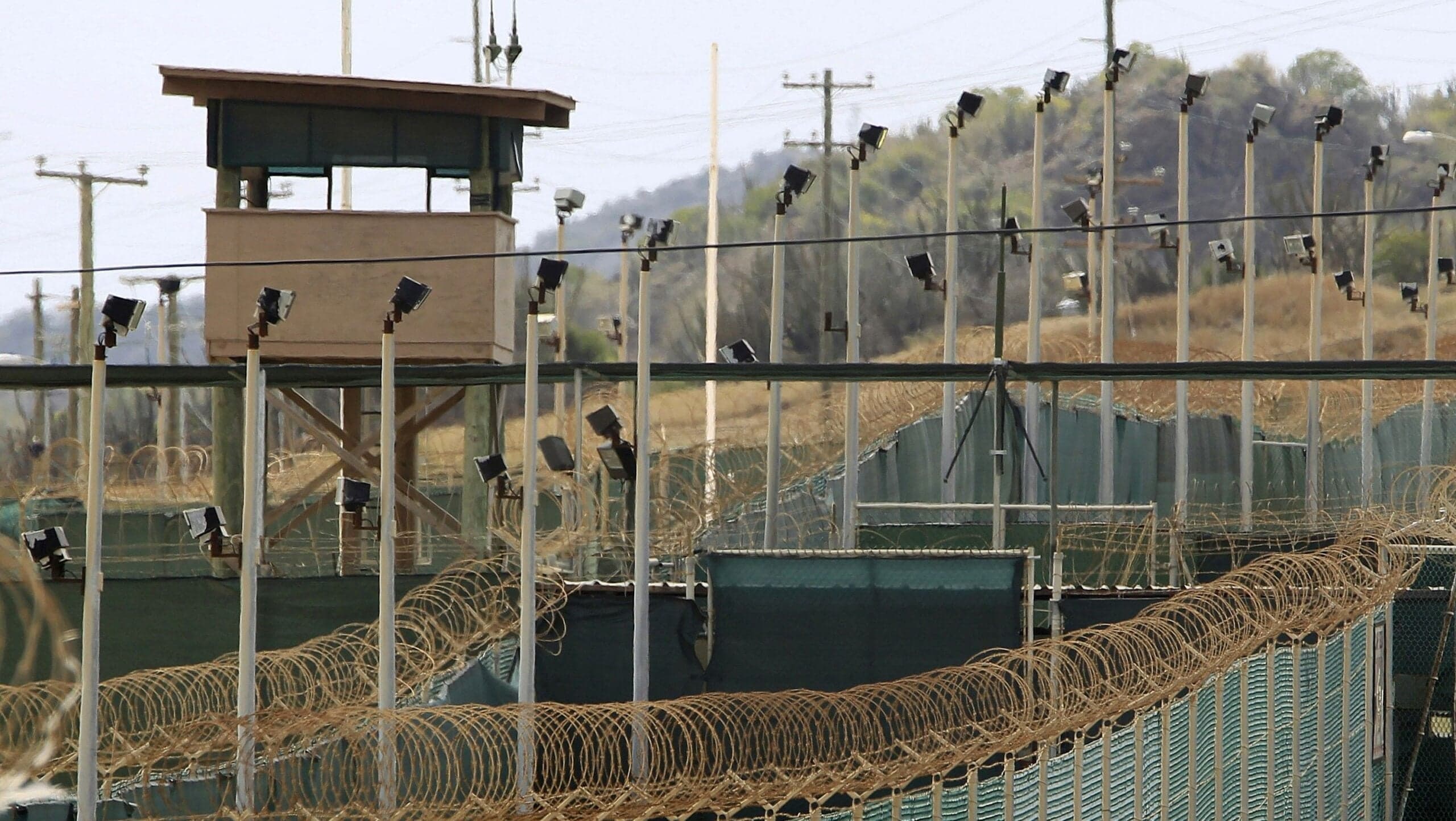
DHS officials said that detainees with criminal records — including convictions for homicide, sexual offences (including against children), child pornography, assault with a weapon, kidnapping, drug smuggling, and robbery — are categorized as “high-risk” and held at Camp IV, a section of the post-9/11 prison complex that also contains a dozen detainees from the war on terror era, though in a separate area.
Those considered “low-risk” — either without criminal records or with less serious offences — are housed in the Migrant Operations Centre, a barracks-style facility on the base.
As of last week, there were 72 immigration detainees at Guantanamo Bay: 58 categorized as high-risk and 14 as low-risk.
The administration has used controversial facilities to underscore its hardline immigration stance and to send a message to undocumented migrants with serious criminal convictions.
“Whether it is CECOT, Alligator Alcatraz, Guantanamo Bay or another detention facility, these dangerous criminals will not be allowed to terrorise US citizens,” McLaughlin said.