Bahamas government reveals tax-free budget to parliament
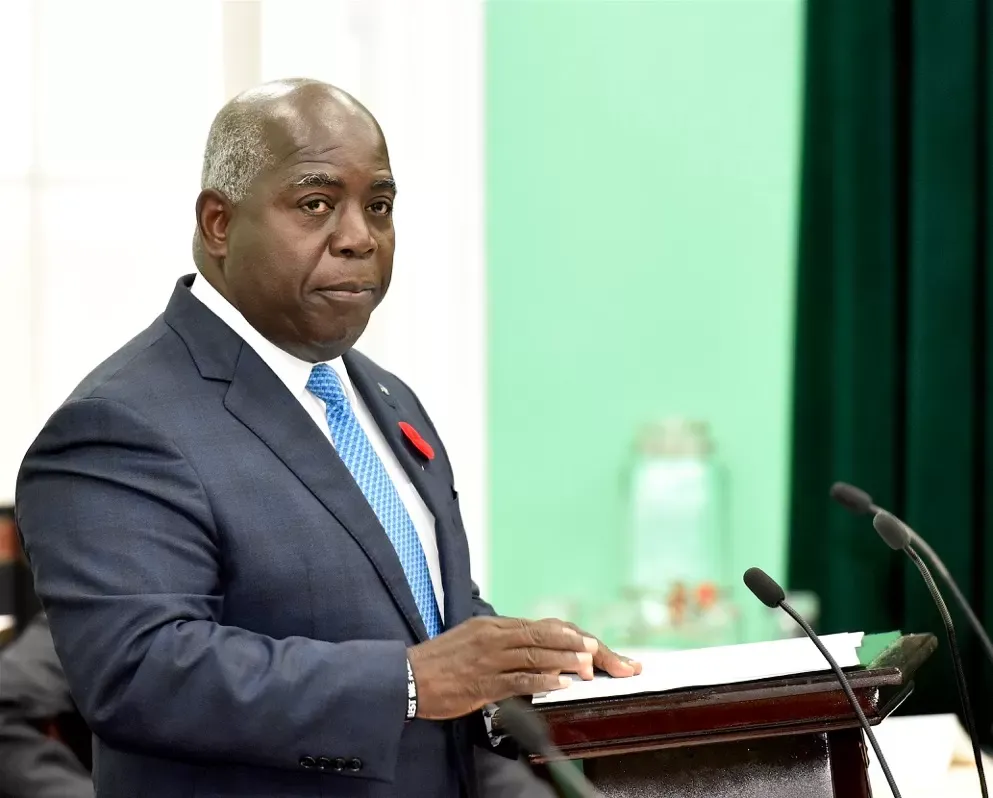
The Bahamas government has introduced a tax-free US$3.54 billion budget to Parliament, continuing its efforts to enhance the nation’s economic stability and growth.
Prime Minister Phillip Davis emphasized that this fiscal package builds on the measures implemented since his administration took office in 2021.
Revenue and expenditure breakdown
Prime Minister Davis highlighted that the estimated revenue for the budget excludes a US$75 million reimbursement from the Grand Bahama Port Authority (GBPA), noting that the total amount due from the GBPA is US$357 million.
The total expenditure is projected at US$3.61 billion, with recurrent expenditure accounting for US$3.27 billion and capital expenditure for US$344.5 million.
Fiscal deficit and economic indicators
The fiscal deficit is estimated at US$69.8 million, or 0.5 per cent of gross domestic product (GDP), while the primary balance shows a surplus of US$586.9 million, or 3.9 per cent of GDP.
The debt-to-GDP ratio is projected to be 75.3 percent by the end of the 2024-25 fiscal year.
Launch of Cloud Bahamas
Prime Minister Davis announced the official launch of Cloud Bahamas, a new Government Enterprise Resource Planning (ERP) Application designed to modernize public service operations.
This ERP system is set to improve financial reporting, including a public sector income statement and balance sheet, and will be fully implemented by January 2025.
Commitment to tax efficiency
The government’s revenue philosophy focuses on lowering the overall tax burden for ordinary Bahamians while improving tax efficiency and enforcement.
The new budget does not introduce any new taxes but includes adjustments to fees for government services where costs have increased.
Revenue growth and future goals
Since prioritizing tax efficiency, the revenue-to-GDP ratio has increased from 18.7 per cent at the start of the administration’s first term to 20.4 per cent in the 2022-23 fiscal year.
The government aims to achieve a medium-term revenue target of at least 25 per cent of GDP.
Key policy priorities
Davis said that the fiscal package prioritizes enhancing the well-being of Bahamians and creating opportunities, increasing revenue from foreign direct investment, addressing VAT underperformance on real estate transactions, and developing an equitable and competitive business environment.
He also shared that supporting new opportunities for Bahamians and incentivizing participation in a growing economy remain key policy priorities for the government.