Home Blog Page 53

Uber drives accessibility forward with renewed JPA partnership

Jamaica Paralympic Association

A partnership built on mobility, inclusion, and opportunity has been renewed, as Uber once again joins forces with the Jamaica Paralympic Association (JPA) to support the island’s para-athletes.

The ride-sharing company has confirmed it will continue as the governing body’s official islandwide travel partner, extending a relationship that first took shape in 2024 and marking another step in efforts to strengthen the infrastructure supporting para sports in Jamaica.

Beyond a sponsorship

The renewed agreement represents more than a financial arrangement. While the initial deal signed in 2024 included a cash commitment, the expanded partnership signals what both sides describe as a deeper level of trust and shared purpose.

For Uber, the collaboration aligns with its broader focus on accessibility and inclusion.

“We are committed to facilitate freedom of movement, inclusion and accessibility and support for Jamaica’s para-athletes who inspire us with their determination, resilience and talent,” the company said.

Practical support for athletes and coaches

At the heart of the arrangement is a simple but impactful objective: making it easier for athletes and coaches to get where they need to go.

Under the agreement, para-athletes and coaches who meet eligibility requirements and are registered with the Jamaica Paralympic Association will receive free local Uber rides. These services will cover travel to training sessions and competitions organized by the association, as well as transportation to airports for overseas conferences, games, and championships.

The initiative is expected to remove a significant financial burden from athletes and support staff who often shoulder transportation costs themselves.

Reducing a major cost barrier

For many within the para sports community, travel expenses represent a daily challenge.

Athletes and coaches frequently self-fund transportation to training venues and competitions. These costs add to other unavoidable expenses in para sport, including mandatory athlete classification and licensing fees.

JPA President Christopher Samuda said the agreement directly addresses that reality.

“What Uber is doing is driving the JPA and we, the JPA, are driven to partnering with them in serving our para-athletes and coaches.

“It’s a practical agreement. It’s cost saving for our primary internal stakeholders, and it will provide convenience and certainty in their travel arrangements, one less thing to worry about.”

A milestone for para sports

The significance of the partnership was also underscored by decorated Paralympian Neville Sinclair, the association’s sport manager.

“Historic, never before, but at the JPA we never say never but rather let us make it happen and it has happened,” Sinclair said.

Samuda emphasized that transportation is fundamental to the development of athletes.

“Travel is a daily DNA factor of an athlete’s and coach’s work and business and Uber international has joined the JPA, yes, in creating history but, more importantly, in providing relief and a critical facility of the infrastructure of sport,” he said.

“You can’t reach, achieve and wheel if you don’t have wheels.”

Official launch coming soon

The partnership will be formally unveiled later this month when both organizations host an official launch to outline further details of what they describe as a strong corporate collaboration in the business of sport.

For Jamaica’s para-athletes and coaches, however, the impact of the agreement may already be clear: fewer travel barriers and a smoother road to competition.


Saints eye squash league glory after commanding start

Saints team KPMG Squash LeaqueI 2026 2 MG-20260309-WA0027 (1)
Saints team intends to go all the way this year in the KPMG Squash League. Team members (from left) are Darren Latchman, Jerazeno Bell, team captain Mario O’Connor and Leigh Dwyer.

Last season’s runner-up Saints are gathering momentum in the 26th staging of the KPMG Squash League, strengthening their bid to finally capture the title that has narrowly eluded them in recent years.

After finishing second twice in succession, the team has begun this year’s campaign with renewed determination. With only one preliminary-round match remaining, optimism within the camp is growing, especially with defending champions Blown absent from this year’s competition.

Dominant performance at Liguanea

Saints received a bye in the opening round due to an uneven group, but wasted no time making an impact when they stepped onto the court in the second round.

Competing at the Liguanea Club, home of Jamaica Squash Association, Saints delivered a decisive 3-0 sweep over JDF B in a lively encounter.

Matches in the league are contested in a best-of-five format to 21 points, but none of the Saints players required a fifth game to secure victory.

Darren Latchman set the tone, dispatching JDF B’s Daniveen Campbell in straight games, 21-18, 21-17, 21-18.

Jerazeno Bell followed with another composed performance, defeating O’Dayne Edwards 21-18, 21-19, 21-19.

Team captain Mario O’Connor completed the sweep with a convincing victory over Rohan Samuels, posting scores of 21-14, 21-16, 21-18 to seal the tie.

Captain praises team focus

O’Connor said the team’s discipline and concentration were key to managing the unique demands of the league’s handicap format.

“I was pleased with our performance because in a handicap situation like this, where these guys, their handicaps were pretty high, we had to focus in such a way to avoid giving away crucial points because some of the matches were 17-0,” O’Connor explained.

“I think Jerry’s game started at 18-2. So in terms of room for error, there was really no room for error. So we had to focus so that we could get the points, catch up and then win the game. So I’m really pleased with how we were focused enough to get it over the line. And we’re just looking forward now to playing Campion.”

How the handicap system works

The league’s distinctive handicap system is designed to create balanced competition across players of varying ability levels.

Tournament director Nathlee Boreland explained that the system assigns starting points to lower-ranked players while stronger competitors begin at zero, or even negative scores, forcing them to rally during the match.

“A handicap tournament basically evens the playing ground for advanced players who will play against persons of a lower level, therefore the lower skilled player will start with points assigned them whereas the higher skilled level player will start at zero or minus and these games are played to 21,” Boreland said.

“So the lower skill level may start with 17 and the higher skill level may start at zero going to 21. So it’s for the person with the higher skill level to concentrate in order to get even to the 17 and then go on to win so its not gonna be easy to win for the higher skill level player.”

Crucial final preliminary round ahead

The third and final preliminary round of matches were scheduled to begin on Tuesday at the Liguanea Club.

Following the conclusion of that stage on Thursday, the top two teams from each group will progress to the quarter-finals, where the tournament will shift to a knockout format.

The preliminary stage is being contested in a round-robin format among groups of four teams, setting the stage for what promises to be an intense race toward the championship.

For Saints, the mission is clear: maintain their momentum and transform steady progress into a long-awaited league triumph.


Finance Minister defends Jamaica’s new digital services tax, citing pressure on local retailers

Fayval Williams

Finance Minister Fayval Williams says Jamaica must begin taxing certain digital services as the rapid growth of online shopping continues to quietly erode the country’s traditional retail sector.

Opening the Budget Debate in Parliament this week, Williams argued that the shift toward tax-free online purchases has placed local businesses at a disadvantage, while allowing a growing portion of economic activity to fall outside the country’s tax system.

“I want to highlight a phenomenon, not just in Jamaica, but I’m sure in other parts of the world, and it’s the silent closure of small retail businesses, given the change that has been happening in terms of our ability to easily order whatever we need online without the requisite taxes. This puts our local businesses, our local retailers at a disadvantage,” Williams said.

The minister said the issue goes beyond business owners and affects workers and others who depend on those businesses.

“It is not equitable or fair. Our local businesses have to compete with tax-free items, and I want Jamaicans to consider that it’s the people who work in these retail shops, these businesses, who are affected when they close. It is the security guard who is no longer needed at the entrance or no longer needed to direct you where to park. It is the cleaning crew that comes in early in the morning or late at night that are let go. It is the lease on the building, electricity and water payments that are no longer made,” she added.

Williams said the trend has been unfolding gradually.

“Our local businesses have to compete with tax free items,” the minister said, noting that workers in the retail sector are often among those hardest hit when businesses shut down.

“It is not happening with a loud bang, just silently,” she told Parliament.

Against that backdrop, the Government is proposing to apply General Consumption Tax (GCT) to certain digital services and intangible products supplied from overseas but used in Jamaica.

The measure, outlined in the Government’s revenue proposals for the 2026/27 fiscal year, is expected to generate about $300 million and is projected to take effect in the fourth quarter of the fiscal year.

Williams said the move is also intended to modernise Jamaica’s tax framework as more commerce shifts online and international technology companies earn revenue from local users.

“Taxing digital services ensures fairness, brings in much-needed government revenues, keeps our tax laws up to date with how people do business, and makes sure big companies pay their share. Digital services taxation is now either in place or being discussed in over 100 countries,” she told the House.

The finance minister also sought to reassure Jamaicans that the policy is not meant to prevent people from shopping online or using overseas digital services.

“I want to say to Jamaicans, capturing our fair share of digital economy revenues is no longer just a good idea, it’s essential. It helps diversify our revenue streams so that we are not so reliant on just a few sectors. It brings in much-needed funds for schools or hospitals, infrastructure, and yes, for rebuilding after Hurricane Melissa,” Williams said.

Federal jury convicts inmate in kidnapping of rideshare driver after Georgia escape

sentenced

A federal inmate already serving a life sentence has been convicted for his role in a violent kidnapping and robbery of a rideshare driver following an escape from state custody.

According to prosecutors, Stevenson Charles, 24, was found guilty by a federal jury in Fort Lauderdale on Feb. 27 of kidnapping, conspiracy to kidnap, Hobbs Act robbery and possession of a firearm and ammunition by a convicted felon.

Officials said Charles had been in federal custody before being transferred on Dec. 5, 2025, to Georgia state authorities to await trial on charges related to a 2022 murder and armed robbery. During a routine security check on Dec. 22, authorities discovered Charles and two other inmates — Yusuf Minor, 31, and Naod Yohannes, 25 — were missing from the facility.

“This defendant’s escape from custody triggered a violent chain of events that put an innocent rideshare driver in grave danger,” said Jason A. Reding Quiñones, U.S. attorney for the U.S. Attorney’s Office for the Southern District of Florida. “The evidence at trial showed a brutal kidnapping carried out to facilitate his flight from justice. Thanks to the determined work of our federal agents and law enforcement partners, the victim survived and the defendant now stands convicted by a jury of his peers.”

Prosecutors said that after escaping, the suspects used a rideshare service in Georgia before kidnapping the driver. Once inside the vehicle, one of the men wrapped a rope around the victim’s neck from behind, tied the victim’s hands and forced the driver into the back seat.

The suspects threatened the victim’s life and ordered the driver to keep their head down as they traveled to South Florida.

Authorities said the men forced the victim to provide access to bank accounts and used the victim’s cards to make purchases in Miami-Dade County and Broward County, including paying for a short-term rental property in Broward.

When the victim attempted to escape, the suspects physically assaulted the driver and continued to issue threats before taking the victim to the rental property, where they prevented the victim from leaving.

More than 18 hours after the kidnapping began, law enforcement located Charles driving the victim’s vehicle on the evening of Dec. 22. Yohannes was also inside the car.

Authorities attempted to disable the vehicle, and Charles jumped out while it was still moving before fleeing on foot through a construction site. During the chase, Charles discarded a semi-automatic handgun before being captured shortly afterward. The firearm was later recovered along the pursuit route.

Charles faces a maximum sentence of life in prison on the kidnapping and conspiracy charges and up to 20 years for the robbery conviction. He also faces a mandatory minimum of 15 years on the felon-in-possession charge if the court determines he qualifies as an armed career criminal under the Armed Career Criminal Act.

A federal judge will determine the final sentence after reviewing federal sentencing guidelines and other statutory factors.

Meanwhile, Yohannes and Minor are scheduled to stand trial on March 30.

Curaçao tourism delegation promotes island at ITB Berlin

Curaçao Tourist Board

A delegation from Curaçao, led by the Curaçao Tourist Board (CTB) and joined by 10 private-sector partners, participated last week in ITB Berlin in Berlin, Germany, one of the world’s largest trade-focused tourism fairs.

This year’s event marked the 60th anniversary of ITB Berlin and drew more than 5,000 exhibitors from 166 countries, along with approximately 97,000 participants from across the global travel industry.

According to CTB, Curaçao’s presence at the three-day event aimed to strengthen commercial ties with international tourism partners and expand the island’s visibility in key travel markets. During the fair, members of the Curaçao delegation met with tour operators, airlines, online travel agencies and travel trade media to discuss partnerships and future promotional opportunities.

For the event, Curaçao showcased its tourism offerings with a colorful 100-square-meter stand located in the Caribbean Hall. Throughout the fair, the delegation held a series of strategic meetings with international partners to outline tourism initiatives and marketing plans for 2026.

The stand also featured a lighthearted promotional activity tied to sports. In anticipation of Curaçao’s match against Germany scheduled for June 14 as part of the 2026 FIFA World Cup, CTB invited visitors to participate in friendly foosball matches while waiting for meetings.

Among those who joined the activity was Dona Regis-Prosper, secretary-general and CEO of the Caribbean Tourism Organization, who played a match against Muryad de Bruin, managing director of the Curaçao Tourist Board.

The Curaçao delegation also included several tourism and hospitality partners such as Coral Estate Luxury Resort, Curaçao Marriott Beach Resort, Renaissance Wind Creek Curaçao Resort, Acoya Curaçao Resort, Villas & Spa, The Kontiki Curaçao Beach Resort, Courtyard by Marriott Curaçao, and Dreams Curaçao Resort, Spa & Casino, along with other industry partners including Corendon Hotels & Resorts and Samurai Curaçao.

Tourism officials said Curaçao’s participation at ITB Berlin forms part of ongoing efforts to strengthen the island’s global tourism presence and build relationships that support future visitor growth.

Broward HealthPoint, Lauderhill host community wellness event serving hundreds

More than 600 residents gathered in Lauderhill for a community wellness event aimed at expanding access to healthcare and preventive services across Broward County.

The “Stay Healthy Together” event, hosted by Broward HealthPoint in partnership with the City of Lauderhill, brought medical screenings, educational workshops and food assistance directly into the community.

Organizers say the initiative is designed to reduce barriers to care by delivering primary and preventive health services to residents in their own neighborhoods.

“This is our third launch — Pompano, Lauderdale Lakes and now Lauderhill. We’re going to continue to go out into the community,” said Shane Strum, president and CEO of Broward Health. “We’re taking medicine and healthcare to everyone out there, we’re flipping the model.”

During the event, Broward HealthPoint deployed its adult and pediatric mobile health units to provide medical services and screenings. The adult mobile unit delivered 25 services, including 15 primary care visits and 10 blood pressure and glucose screenings. The pediatric unit provided medical visits for children and families.

In addition to healthcare services, volunteers distributed 700 bags of nutritious food, with 600 handed out at the event and another 100 delivered throughout the community. Organizers also served 700 hot lunches to residents, volunteers and staff.

More than 100 attendees took part in wellness workshops covering topics such as CPR training, water safety, sun protection and skin cancer awareness. A session on diabetes and high blood pressure was led by Vanina Molinares, while another workshop, titled “Breathe. Reset. Thrive: Three Simple Steps Toward Better Health,” focused on practical strategies for improving overall well-being.

“Strong collaboration is essential to building healthier communities,” said Melida Akiti, corporate transformation executive at Broward Health. “Working alongside the City of Lauderhill and our community partners allows us to connect residents with vital health services and support in meaningful ways.”

The event included participation from 47 community partners and was supported by 128 volunteers, giving residents opportunities to connect with organizations offering services ranging from preventive health education to social support resources.

Officials say the Stay Healthy Together program is part of the broader Better Together initiative between Broward Health and Memorial Healthcare System, which aims to expand access to primary care and maternal health services regardless of a patient’s ability to pay.

Organizers say similar outreach events are expected to expand to additional communities across Broward County in the future.

Miami-Dade Schools launches ‘Big Smiles’ program to provide free dental care to students

South Hialeah Elementary School student receives dental services through Big Smiles Dental

Miami-Dade County Public Schools (M-DCPS) has launched a new initiative aimed at improving student health and classroom readiness by providing free on-site dental care at select schools across the district.

The program, called Big Smiles Dental, was officially introduced Tuesday at South Hialeah Elementary School, where district officials, healthcare partners, educators, and families gathered to mark the start of the pilot effort.

Superintendent Jose L. Dotres said the program reflects the district’s broader commitment to supporting students and their families beyond academics.

“The best thing in the world is to see a child smiling. A smile from a child, no matter who they are, just brightens your day. Now with Big Smiles, that smile becomes even prettier and louder,” Dotres said. “Whenever we can facilitate resources for families, like dental care, we are empowering and creating a better structure for our students and learning. That’s key.”

The launch event also drew Danny Espino, a member of the Miami-Dade School Board; Marcy Borofsky, co-founder and executive vice chair of Big Smiles Dental; school principal Dillon M. Williams; as well as district representatives, teachers, staff, and students.

Health experts say access to dental care remains a significant challenge for many children. According to data cited by the program, more than 51 million school hours are lost each year due to dental-related health issues, and about one in seven children experiences tooth pain at any given time. Florida also ranks last in the United States for dental access among low-income children.

Borofsky said untreated dental problems can have serious consequences for students’ learning and overall well-being.

“Dental decay is the number one chronic infectious disease of childhood, the top unmet health need for children, and with it, children cannot focus, learn, or thrive,” she said. “The solution is partnerships like this one with Miami-Dade County Public Schools, bringing care to where the children are.”

Through the program, a mobile dental team visits participating schools and sets up a temporary clinic on campus. The mobile unit includes dental chairs, sterilization equipment, and the tools needed for examinations and cleanings, along with a licensed dentist and dental assistant.

After completing services at one school, the team dismantles the mobile clinic and travels to the next participating campus.

Parents say the convenience of having dental care available at school will help families who might otherwise struggle to schedule appointments.

“I’m very happy with this idea. I won’t have to miss a day of work,” said parent Evelyn Delgado. “Having to shuttle two children around town to get their teeth cleaned is a lot. Having programs at our school like this is wonderful.”

Officials said the Big Smiles initiative will operate at select M-DCPS schools during its pilot phase, with the dental team returning every six months to provide follow-up care and treat new students.

Palm Beach County warns of phishing scam targeting permit applicants

service providers fraud

Officials in Palm Beach County are warning residents, property owners, contractors and businesses about a phishing scam in which criminals impersonate government staff from the county’s planning and permitting offices to collect fraudulent payments.

According to the county’s Palm Beach County Planning, Zoning and Building Department (PZB), scammers are sending emails posing as local government planning, zoning or building personnel and requesting payment for fake permit or development application fees.

Authorities say the messages are designed to appear legitimate and may contain accurate property addresses, permit or case numbers, and even the names of real government officials. In some cases, the emails also feature official-looking logos and formatting to make the requests appear authentic.

“Please be aware that payments can only be made through the secure payment portal on our website or in person at our offices located at the Vista Center in West Palm Beach,” said Whitney Carroll, executive director of PZB.

Carroll emphasized that the department does not request payments through email.

“PZB will never ask that payments be made via email using wire transfer, peer-to-peer payment apps, or cryptocurrency as referenced in the FBI alert,” she added.

The warning follows a public alert issued by the Federal Bureau of Investigation highlighting common tactics used in the scam.

Among the red flags identified by the FBI are emails sent from non-government domains that do not end in “.gov,” messages using urgent language threatening delays or penalties if payment is not made quickly, invoices directing recipients to reply by email for payment instructions, and requests for payment through wire transfers, peer-to-peer payment applications or cryptocurrency.

Officials are urging anyone who receives a suspicious message to verify the request before making any payment. Individuals who believe they may have been targeted or victimized by the scheme are encouraged to report the incident to the FBI Internet Crime Complaint Center (IC3).

Residents with questions about permit fees or payments can also contact the Planning, Zoning and Building Department directly at 561-233-5001.

US shares ‘persons of interest’ list with Trinidad and Tobago

Roger Alexander

Trinidad and Tobago’s Homeland Security Minister Roger Alexander says the United States has provided the government with a list of “persons of interest” believed to be linked to illegal drugs, firearms trafficking and violent crime in the country.

Speaking to the Trinidad Express, Alexander said he could not disclose further details due to national security concerns, but stressed that the information reflects the level of cooperation between Washington and Port of Spain in the fight against organized crime.

The intelligence sharing comes as Trinidad and Tobago joins the Americas Counter Cartel Coalition, an initiative spearheaded by Donald Trump aimed at strengthening regional coordination against drug cartels. The coalition focuses on intelligence sharing as well as joint law enforcement and military operations among participating countries.

According to Alexander, Trinidad and Tobago’s participation in the coalition has drawn criticism from some observers who may not fully understand its significance.

“I support this move as the Homeland Security Minister, so much so that when it happened, I was moved, totally moved,” he said, describing the agreement as a major step forward in the country’s security partnerships.

He added that the initiative reflects the confidence the United States has in the current government led by Kamla Persad-Bissessar.

Alexander noted that the United States collects extensive intelligence globally and carefully determines which partners it can trust in efforts to combat cartels and narco-traffickers.

“And they know exactly who they can work with and who they can trust with respect to their security efforts and combating cartels and narco-traffickers,” he said.

Trinidad and Tobago is one of only two Caribbean nations participating in the coalition so far, alongside Guyana. The remaining 17 member countries are in Latin America.

The partnership comes amid heightened anti-drug operations in the region. Since September 2025, the United States has conducted several kinetic strikes on suspected drug trafficking vessels in Caribbean waters, operations that have reportedly resulted in more than 100 deaths, including nationals from Trinidad and Tobago and Saint Lucia.

Alexander said any use of force must remain within the law but insisted that stronger action is necessary to tackle criminal networks.

“We support the aggressive action against those persons who continue to kill our citizens through their trafficking,” he said, arguing that drug trafficking and related crimes are undermining society and harming young people.

“They are killing the entire society with their nefarious activities which impact our youth. We are fed up,” he added.

Trinidad and Tobago is currently operating under a state of emergency as authorities attempt to curb violent crime.

Alexander expressed confidence that closer alignment with the United States could help the country confront the security threats it faces.

“It will strengthen us. And again, this alignment will create history in Trinidad and Tobago,” he said.

Neon gas shortage and US chip manufacturers: Cryoin engineering’s role in stable supply

Funny thing about neon. Most people picture glowing bar signs, maybe a retro diner somewhere off a highway. Pink light buzzing in the night. That sort of thing.

But in the semiconductor world? Neon is something else entirely.

Inside chip fabrication plants – those ultra-clean, almost sci-fi facilities where processors are born – neon plays a critical role in photolithography. That’s the step where incredibly precise lasers carve microscopic patterns onto silicon wafers. We’re talking about structures so small they make dust particles look like boulders.

The gas itself isn’t rare in the air around us. Neon floats up there quietly at trace levels. Extracting it, though, and purifying it to the insane standards required by semiconductor fabs – that’s the tricky part. The difference between regular industrial neon and the stuff used in chip plants is enormous.

Think tap water versus pharmaceutical-grade laboratory chemicals. Same molecule, wildly different expectations.

When the neon pipeline suddenly tightened

For years, the global semiconductor industry ran on a relatively stable supply of high-purity neon. Not unlimited, but steady enough that most people in the industry didn’t lose sleep over it. Then the supply chain cracked.

A large portion of the world’s refined neon historically came from facilities connected to industrial gas recovery systems in Eastern Europe. Neon is captured during air separation processes – particularly in plants producing oxygen for steel manufacturing – and then refined through additional purification steps.

When geopolitical disruption hit those production hubs, the effect rippled outward almost immediately.

Suddenly the neon shortage semiconductor industry analysts had occasionally warned about wasn’t theoretical anymore. It was real. Chip manufacturers began scrambling to secure contracts, suppliers raised prices, and procurement teams started looking for alternative purification facilities capable of meeting semiconductor standards. Which, frankly, aren’t easy to replicate.

Some companies had the technical experience to step in. Cryoin Engineering, for example, had already been working in advanced purification systems capable of supporting semiconductor grade neon supply, helping stabilize availability during a moment when many fabs were wondering whether their laser systems might soon be starved of critical gas.

Not a comfortable situation.

Because once a fab stops production, restarting it isn’t exactly flipping a switch. It’s more like restarting a small city.

Why chip factories panic without stable neon

Semiconductor fabrication plants run with the sort of precision that would make a Swiss watchmaker nervous. Every stage of the manufacturing process is calibrated to absurd tolerances. Temperatures, particle counts, chemical concentrations – everything monitored constantly. And gas supply. Especially that.

Photolithography lasers rely on carefully controlled gas mixtures. Neon helps maintain the conditions required for excimer laser operation – the light source responsible for printing circuit designs onto wafers.

If the neon purity drops even slightly, or if delivery becomes inconsistent, the laser’s output can drift. Not dramatically. Sometimes just enough to nudge pattern accuracy off by a tiny fraction.

Tiny fractions matter here.

A microscopic distortion in a chip pattern can ruin an entire wafer batch. Multiply that by thousands of wafers moving through the production line, and suddenly the cost implications become enormous.

That’s why fabs don’t treat neon as a casual industrial input. It’s more like infrastructure. Something that must exist quietly in the background, always stable, always predictable.

When the shortage appeared, chip manufacturers didn’t just worry about prices. They worried about continuity – whether their supply would remain stable enough to keep factories running at full capacity. Because downtime in semiconductor manufacturing is brutally expensive.

Rethinking where neon comes from

Semiconductor manufacturers didn’t just want more gas. They wanted reliability – the boring, predictable kind that lets billion-dollar fabrication plants run day and night without someone nervously checking supply forecasts.

To get there, the industry started spreading risk geographically. New purification facilities appeared in places closer to major semiconductor hubs. Existing gas producers expanded capacity. Recovery systems inside fabs became more sophisticated.

It sounds simple. It isn’t.

Producing ultra-pure neon means dealing with an almost absurd level of precision. Raw gas from air separation plants contains trace contaminants – nitrogen fragments, hydrogen, hydrocarbons – that have to disappear almost completely before the gas can safely enter a lithography laser.

Stabilizing the gas behind the lasers

Inside a semiconductor fab, photolithography machines fire thousands of laser pulses every second. Each pulse helps etch microscopic circuits onto silicon wafers. Those circuits are measured in nanometers. Tiny. Ridiculously tiny.

Which means the gases inside those lasers must behave with almost boring consistency.

That’s where neon gas for chip manufacturing becomes so critical. It stabilizes excimer lasers used during lithography, allowing them to produce the precise ultraviolet light needed to print circuit patterns.

If neon purity drifts even slightly, laser performance can change. And when laser performance shifts, chip yields can drop – sometimes dramatically. Imagine running a factory where a microscopic change in gas composition can quietly sabotage an entire batch of processors.

Not ideal.

So fabs treat neon less like a commodity and more like a precision component. Supply contracts stretch across years. Purity standards are ruthless. Monitoring systems constantly check for deviations. And engineering firms specializing in rare-gas purification step into the middle of that delicate balance.

The role of engineering expertise

This is where companies such as Cryoin Engineering come into play. Their work doesn’t usually make headlines – industrial gas purification rarely does – but it sits quietly underneath the stability of modern chip manufacturing.

The challenge isn’t simply producing neon. It’s producing it consistently, batch after batch, shipment after shipment, without introducing variability that could ripple through lithography systems.

That means controlling the entire chain: extraction, cryogenic purification, impurity monitoring, storage, transport. Every stage matters. Every valve, sensor, and pressure regulator contributes to the final purity level. Think of it less like manufacturing a product and more like maintaining an ecosystem.

When these systems operate correctly, fabs receive neon that behaves identically regardless of where it was purified. And that uniformity – invisible but essential – allows semiconductor manufacturers to keep their machines calibrated and their production lines stable.

A more resilient future

The neon shortage ended up doing something unexpected. It forced the semiconductor industry to modernize its gas infrastructure faster than it otherwise might have.

Diversification is now the watchword. Instead of relying on a few regional hubs, the market is slowly evolving toward a network of production facilities spread across multiple countries and industrial partners.

Recovery technologies are improving too. Some semiconductor fabs are now able to capture and recycle portions of the neon used in lithography processes, purifying it again and returning it to circulation. It’s not a complete solution – demand still requires fresh supply – but it reduces vulnerability.

Meanwhile, purification technologies themselves continue evolving. More precise monitoring. More efficient cryogenic stages. Smarter systems that detect contamination before it becomes a problem.

All small improvements. But together they add up.

The quiet importance of invisible materials

People talk about processors, AI chips, smartphones, GPUs. Hardly anyone talks about the gases inside the lasers that make those chips possible. Yet without reliable neon purification and stable supply chains, those devices simply wouldn’t exist in the same form.

Semiconductor manufacturing is a tower of precision built on countless small foundations – rare gases among them. When one of those foundations wobbles, the entire structure notices.


 

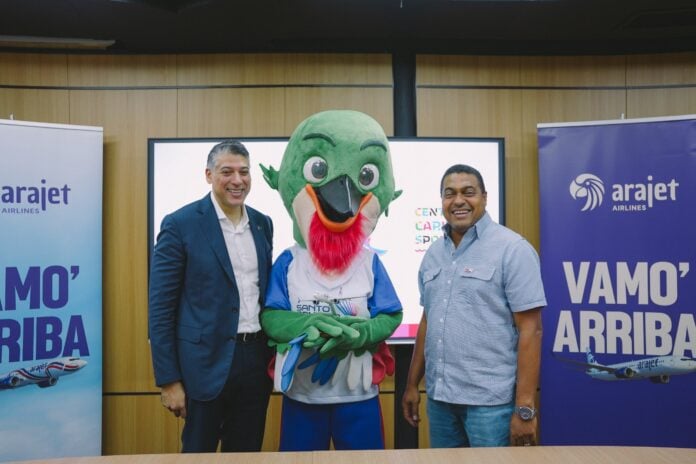
Arajet named official airline of Central American and Caribbean Games

Dominican airline Arajet has been named the official airline of the upcoming Central American and Caribbean Games, following the signing of a collaboration agreement with the event’s Organizing Committee. The partnership highlights Arajet’s commitment to sports development, regional integration, and positioning the Dominican Republic as a strategic connectivity hub in the Americas.

Under the agreement, Arajet will support air mobility for athletes, delegations, technical teams, guests, and fans attending the Games, ensuring seamless transportation throughout the competition.

“For Arajet, it is an honor to become the official airline of the Central American and Caribbean Games,” said Víctor Pacheco Méndez, CEO and founder of Arajet. “This agreement reflects our commitment to sports, youth, and to showcasing the Dominican Republic as a regional connection hub. We are proud to put our wings at the service of an event that unites the entire region around talent, discipline, and excellence.”

José P. Monegro, president of the Games’ Organizing Committee, welcomed the partnership, emphasizing its strategic value. “Having Arajet as the official airline strengthens our organizational and logistical capacity and provides significant support for a successful staging of the Games. We are pleased to include a Dominican brand that shares our vision of promoting the country and delivering a memorable event for the region.”

The collaboration cements a relationship aimed at ensuring the success of the Central American and Caribbean Games, while bolstering the Dominican Republic’s profile as a host for major sporting events and a key hub for regional air connectivity.

Since launching operations in 2022, Arajet has established two bases at Las Américas International Airport in Santo Domingo and Punta Cana International Airport, operating a modern fleet of Boeing 737 MAX aircraft.

Why small-town dining experiences leave a lasting impression

You often know within minutes if a meal will be forgettable. The menu is polished, the lighting looks intentional, and everything seems fine. Yet the place could be anywhere. The food may taste good, but the experience fades from memory soon after.

Places like Sevierville tend to interrupt that pattern in a quiet way. The town’s food scene carries a sense of familiarity that visitors notice quickly. Local kitchens focus less on presentation and more on the rhythm of everyday cooking. The meals are often simple, sometimes rustic, yet they reflect a community that takes food seriously in a practical way. That mixture of comfort, tradition, and local personality is what keeps travelers talking about the experience long after they leave.

What Makes Small-Town Dining Feel Different

Small-town dining rarely begins with a dramatic first impression. The building might look ordinary. The sign outside may be modest. In many cases, the place feels more like a gathering spot than a carefully designed restaurant. Yet that simplicity tends to shape the entire experience.

In smaller communities, restaurants often grow alongside the people who live there. Recipes develop slowly, sometimes over generations. Staff members greet regular customers by name. The atmosphere feels less formal because it reflects everyday life rather than a planned concept.

Visitors notice this difference almost immediately. The pace of the meal changes. Instead of rushing through courses, people tend to settle into the conversation around the table. Servers may take a moment to chat rather than delivering food with rehearsed efficiency. The experience feels human in a way that many larger dining environments struggle to maintain.

The Local Spots That Define a Town’s Food Identity

Every town develops a handful of places that quietly become part of its identity. The best Sevierville restaurants are rarely the most elaborate or expensive. Instead, they gain recognition through consistency and familiarity. Food spots like Buddy’s bar-b-q are known for their authentic local flavors. People know what to expect when they walk through the door. The menu may change slightly over the years, but the overall character stays the same. Visitors who stop in for the first time often sense that history immediately.

Food writers sometimes describe these places as community anchors. They host birthday dinners, casual lunches, and long conversations over coffee. Residents recommend them to friends without needing to explain why. Over time, travelers begin searching for these local dining spots when visiting smaller towns. They want to experience the food culture that locals appreciate every week. These types of dining experiences often become the meals people remember most clearly from a trip.

Why the Atmosphere Matters

Food itself is only part of the story in small-town dining. The atmosphere surrounding the meal often shapes the memory just as much as the flavors. Many of these restaurants feel lived in rather than designed. The décor might include old photographs, handwritten menus, or small signs that have been on the wall for years. None of it appears staged for visitors.

That authenticity creates a relaxed environment where people feel comfortable staying longer than planned. A couple might arrive for lunch and remain well into the afternoon simply because the conversation flows easily. Families gather around large tables where children and grandparents share the same meal without the pressure of formal dining etiquette. The room carries a sense of belonging that cannot easily be manufactured.

Food That Reflects Local Habits

Another reason small-town meals leave a lasting impression is the way the food reflects everyday habits rather than culinary trends. In larger cities, restaurants sometimes follow shifting dining fashions. Menus change to keep pace with new ingredients or presentation styles. While this approach can be exciting, it occasionally creates meals that feel temporary.

Small-town kitchens tend to work differently. Recipes often remain stable because they are built around what people genuinely enjoy eating. Portions are usually generous, flavors are familiar, and preparation focuses on consistency rather than experimentation. That approach may sound simple, but it produces a type of reliability that many travelers appreciate.

When visitors return years later and discover the same meal prepared the same way, the experience feels reassuring rather than outdated.

Conversations That Shape the Meal

Dining in smaller communities often involves more conversation than people expect. Servers talk with guests about local events, family histories, or nearby places worth visiting. Customers at neighboring tables sometimes join the discussion without hesitation. This level of interaction rarely happens in busy urban restaurants where time is limited and turnover is constant.

Guests begin to feel less like anonymous customers and more like temporary participants in the local community. The restaurant becomes a place where stories are exchanged as easily as plates of food. Travelers often remember these conversations long after the meal itself.

Why the Memory Lasts

When people recall their favorite travel meals, the memories usually extend beyond the taste of the food. They remember the feeling of the room, the rhythm of the evening, and the small details that surrounded the meal. Small-town dining experiences naturally create those layered memories.

The food may be comforting rather than complex. The setting may be modest rather than dramatic. Yet the overall experience carries a sense of place that larger dining environments sometimes lose. Visitors leave with the impression that they briefly stepped into the daily life of the community. And that sense of connection is often what makes a simple meal stand out years later.

The Quiet Power of Familiar Places

In the end, small-town restaurants succeed not because they try to impress visitors but because they remain rooted in the routines of the people who live nearby. The food reflects local habits. The atmosphere grows naturally over time. The staff and customers shape the experience together through everyday interactions.

Travelers who encounter these places often feel something slightly different from a typical restaurant visit. The meal becomes part of the story of the town itself. That quiet connection is why small-town dining experiences tend to linger in memory long after the trip has ended.


Guyana Court of Appeal to rule on extradition challenge by US-sanctioned businessmen

Azruddin Mohamed

The Guyana Court of Appeal is set to rule on March 17 on an appeal by U.S.-sanctioned businessmen Azruddin Mohamed and Nazar Mohamed challenging the authority issued by Oneidge Walrond to proceed with their extradition.

During a hearing at the Court of Appeal in Kingston, the appellate bench rejected the Mohamed duo’s request for a stay of extradition proceedings before the Georgetown Magistrates’ Court until a decision is rendered on their substantive appeal.

The father-and-son pair had appealed a February 4 ruling by acting Chief Justice Navindra Singh, which dismissed their challenge to the Authority to Proceed (ATP) issued under the Fugitive Offenders Act. The Mohameds claimed the ATP was tainted by political bias, citing Azruddin Mohamed’s involvement in politics and his role as a competitor in the September 2025 General and Regional Elections.

They argued that the authority to proceed, the arrest warrant, and ongoing proceedings before Principal Magistrate Judy Latchman should be quashed. However, the Chief Justice ruled that the Minister of Home Affairs acted within her executive capacity as prescribed by law, not in a judicial or quasi-judicial role.

Following arguments from attorneys for both the applicants and the State, the Court of Appeal allowed the extradition proceedings to continue but reserved judgment on the substantive appeal. A ruling is expected next week.

Gonsalves rejects claim election petitions against PM Friday are frivolous

St. Vincent passes legislation allowing public servants to contest elections without fear of job loss

Opposition Leader Ralph Gonsalves has rejected claims that two election petitions challenging the nominations of Prime Minister Godwin Friday and Foreign Affairs Minister Dwight Fitzgerald Bramble are frivolous, insisting the matter raises serious constitutional questions.

The petitions, now before the High Court in St. Vincent and the Grenadines, challenge the nominations of both men as candidates in the November 27 general elections last year.

Following the first case management hearing last Thursday, Friday—whose New Democratic Party (NDP) won a decisive 14–1 victory over the opposition Unity Labour Party (ULP)—criticized the legal action, saying it was wasting public and court resources.

“The people elected me to do their business, I’m spending two hours in the court here answering a frivolous application,” Friday told reporters.

But Gonsalves, speaking on his weekly radio program, rejected that characterization.

“He was mouthing the word frivolous, but he knows it’s not frivolous… He knows that this is a serious matter to be addressed,” Gonsalves said.

The opposition leader referenced the aftermath of the 2015 elections, when the NDP, with Friday serving as a party vice-president, filed petitions and staged protests accusing the ULP of electoral misconduct.

“They had no case and the case crumbled, but they dragged it on,” Gonsalves said, adding that the NDP organized a group known as the “Frontline,” which he said harassed then Supervisor of Elections Sylvia Findlay-Scubb.

“The woman was verbally abused, words were thrown at her daily,” he said.

Gonsalves also accused the NDP of damaging the country’s reputation by claiming the 2015 election was not free and fair.

“People do not want to come to a place that reeks of political instability. That is what we had to endure for five years. So, don’t get amnesia on Friday. Don’t forget what people like yourself instigated and supported for five years,” he said.

At the same time, Gonsalves said the ULP does not intend to prolong the current court proceedings and that the petitioners want the case resolved quickly.

“And we will have a determination not too long from now, first at the High Court and then whichever side loses, will go to the Court of Appeal, and whatever the Court of Appeal says, that will be it,” he said.

Lawyers representing both sides say they are prepared for the case to proceed.

Senior Counsel Anand Ramlogan, the former attorney general of Trinidad and Tobago who is leading the legal team for Friday and Bramble, described the case management hearing as “an interesting, if not amusing experience.”

“The mandate given to the newly elected prime minister is overwhelming, and this is an attempt by the petitioners to effect change, other than by the democratic process,” he said.

However, attorney Stuart Young, who is leading the legal team for the petitioners, said the matter raises significant constitutional issues.

“Well, this matter for Vincentians is a serious matter, and what is being determined by the court really is an interpretation of your constitutional provisions and the qualification, or the disqualification to stand as a candidate for elections,” Young said.

“So it’s quite an important provision that is finally going to be determined by the court.”

Young added that the judge has set a tight timetable for the case, with the trial scheduled to run from July 28 to 30.

One of the petitions was filed by ULP candidate Augustus Carlos Williams, who contested the Northern Grenadines seat in the 2025 elections. His petition challenges Friday’s nomination as well as the actions of returning officer Devon Ollivierre and Supervisor of Elections Dora James. As is standard in election matters, the attorney general is also listed as a respondent.

In a separate case, Luke Browne has challenged the nomination of Bramble and the actions of the returning officer Jacqueline Browne, the supervisor of elections and the attorney general.

Visa issues sideline 10 Mount Pleasant players ahead of Champions Cup clash with LA Galaxy

Mount Pleasant

Jamaican club Mount Pleasant FA will face LA Galaxy in the Round of 16 of the CONCACAF Champions Cup on Wednesday despite visa complications that have left the Caribbean side without 10 players.

The team traveled to the United States with a significantly reduced squad after several members were unable to secure visas in time for the match, scheduled to be played at Dignity Health Sports Park in California.

According to officials, seven of the affected players are from Haiti, one of several countries impacted by a U.S. travel ban. The policy bars Haitian nationals from entering the United States, although exemptions exist for certain sporting events such as the upcoming World Cup.

The Jamaican club, which qualified for the regional tournament after winning the CONCACAF Caribbean Cup in 2025, has been forced to rely on academy players to fill out its roster for the match.

“We don’t want to just show up for the game, we want to be able to compete, but we are not being given the opportunity to be at our best,” Mount Pleasant sporting director Paul Christie told the Jamaica Observer.

Regional football governing body CONCACAF said the match would proceed as scheduled, noting that clubs are responsible for submitting visa applications within the timelines set by diplomatic missions.

“Concacaf is aware of the situation and has been in communication with, and providing support to, Mount Pleasant FA regarding the US visa application process for several of its players ahead of the club’s Concacaf Champions Cup Round of 16 first-leg match against LA Galaxy in Los Angeles,” a Concacaf spokesperson said.

“In accordance with the competition regulations, each participating club may register a roster of up to 35 players and is responsible for submitting visa applications within the timeframe required by the diplomatic missions of the countries to be visited.

“Considering the competition regulations, and that the club had ample time to complete the visa application process following the competition’s official draw in December 2025, the series will proceed as scheduled.”

Mount Pleasant head coach Theodore Whitmore sought to keep the focus on the match despite the setback.

“It’s an important issue. As a coach you would want your whole team to select from,” Whitmore said during a press conference Tuesday. “Nonetheless, we have players who are eager to go out there and put all the negatives behind us and look forward.

“It’s only one thing, and it’s about the game tomorrow.”

The situation has also sparked broader concerns about how U.S. immigration policies could affect international football competitions, including the 2026 FIFA World Cup, which will be co-hosted by the United States, Canada and Mexico.

Haiti national football team has already qualified for the tournament and has been drawn in a group with Morocco, Scotland and Brazil. While U.S. authorities have indicated that athletes and team personnel will receive travel exemptions, similar guarantees have not been extended to fans or spectators.

Regional effort aims to streamline agricultural trade across Caribbean

Dominica hosts OECS agriculture ministers meeting

A new regional initiative aimed at strengthening agricultural trade across the Caribbean is underway following an inception meeting convened by the Caribbean Agricultural Health and Food Safety Agency (CAHFSA) to develop harmonised sanitary and phytosanitary (SPS) standards for priority agricultural commodities.

The initiative forms part of the project “Strengthening the Framework for Intra-Regional Trade in Agriculture Products,” funded by the Caribbean Development Bank (CDB). The effort is expected to improve the regulatory environment governing agricultural trade within the region and help facilitate the safe movement of agricultural products between Caribbean countries.

Under the project’s first phase, stakeholders will work toward developing 10 harmonised SPS standards for selected agricultural commodities. The process will build on existing regional trade guidelines previously adopted by the Council for Trade and Economic Development (COTED–Agriculture) and will involve consultations with national authorities and industry stakeholders across member states of the Caribbean Community (Caricom).

The consultancy component of the project is being implemented by CAB International (CABI), which will collaborate with CAHFSA and the Caribbean Regional Fisheries Mechanism (CRFM). A Regional Technical Advisory Committee—made up of experts from plant health, veterinary services and food safety authorities across the Caribbean—will also support the work.

“The development of regional SPS standards represents an important step in strengthening the foundation for intra-regional agricultural trade. By harmonising technical requirements across countries, we can reduce uncertainty for exporters, improve market access and enhance the safety and quality of agricultural products traded within the Caribbean,” said Gavin Peters, chief executive officer of CAHFSA.

Currently, differences in national SPS regulations across Caribbean countries can complicate the movement of agricultural products between markets. Officials say the adoption of shared standards would provide clearer guidance for producers, regulators and traders, while ensuring agricultural goods meet safety and quality requirements.

The initiative also aligns with the region’s food security goals, including the Caricom 25 by 2025 + 5 agenda, which aims to significantly reduce the Caribbean’s food import bill by boosting regional production and trade.

Malcolm Wallace, operations officer at the CDB, said the project reflects the bank’s ongoing commitment to strengthening agri-food systems across the region.

“Strengthening regional SPS frameworks is critical to unlocking the full potential of intra-regional trade in agricultural products. This initiative will help create a more predictable and transparent regulatory environment, enabling Caribbean producers and traders to compete more effectively while safeguarding plant, animal and human health,” Wallace said.

The consultancy will involve extensive consultations with national SPS authorities, technical experts and private sector stakeholders throughout the Caribbean. Draft standards will be reviewed through regional consultations before being submitted to COTED-Agriculture for consideration.

According to Benoit Gnonlonfin, the technical lead for the CABI consultancy team, collaboration among regional partners will be key to the project’s success.

“Developing practical and science-based SPS standards requires strong collaboration with national authorities and regional partners. Our team looks forward to working closely with member states to ensure that the resulting standards are technically sound, implementable and supportive of regional trade,” Gnonlonfin said.

In addition to developing common standards, the broader project will support capacity-building for national SPS systems and the development of knowledge and communication tools designed to strengthen expertise across the regional agri-food value chain.

Officials say the initiative is expected to contribute to a more integrated and resilient Caribbean agricultural sector by improving regulatory clarity, facilitating trade and enhancing the region’s ability to manage agricultural health and food safety risks.

RIU launches education projects in Bahamas and Jamaica

RIU Hotels & Resorts has expanded its social outreach in the Caribbean with the launch of new education-focused initiatives in the Bahamas and Jamaica, part of the company’s broader sustainability program aimed at supporting children and communities where it operates.

The hotel chain said the projects fall under its “Proudly Committed” sustainability strategy and will focus primarily on education, child protection and community development in Nassau and Montego Bay.

In the Bahamas, RIU has launched its first social collaboration in the country through a partnership with the nonprofit organization Lend a Hand Bahamas. The initiative, which carries an initial three-year commitment, will operate from a community center in Grant’s Town and aims to support more than 200 children and young people between the ages of five and 18.

The program will provide a range of extracurricular activities designed to strengthen literacy and STEM learning — science, technology, engineering and mathematics — along with socio-emotional workshops and culinary arts training intended to help broaden opportunities for participants.

Meanwhile, in Jamaica, the company has strengthened its existing support for the Wested Educational Centre, which provides academic intervention for students who need additional help in school.

The Montego Bay-based program currently assists 77 students drawn from more than a dozen schools across the area, offering reinforcement in core subjects such as reading and mathematics.

The initiative also incorporates a daily nutrition component, providing meals for students, along with a growing digital learning program that uses tablets and other technology to enhance classroom instruction.

Despite disruptions caused by Hurricane Melissa, the center has resumed operations and continues to provide mentoring and academic support aimed at improving school retention.

According to RIU, both initiatives are guided by what the company describes as the “RIU Method,” a social investment framework that prioritizes projects focused on health, education, child protection and biodiversity.

With the addition of the Bahamas partnership and expanded support in Jamaica, the company said the initiatives now form part of a wider global network of more than 90 partner organizations working with RIU on community and environmental projects.

Diaspora nurses respond to Jamaica’s call to help fill public health vacancies

healthcare

The Jamaican Government has received nearly 140 applications from healthcare professionals overseas following an appeal to the diaspora for specialist nurses to help address shortages in the country’s public health system.

Speaking during a virtual press briefing on Monday, Christopher Tufton, Minister of Health and Wellness, said Jamaica is now moving to the next stage of the recruitment process.

“We have shortlisted close to 70 specialist nurses from the diaspora but also beyond the diaspora, and those 70 are being scheduled for interviews through the Human Resources (HR) Department at the Ministry’s corporate office. So, in the coming week, week and a half or so, we will begin the process of interviewing, and the idea is to fast-track the engagement of those persons,” Tufton said.

The recruitment effort forms part of the Government’s strategy to fill staffing gaps following the end of a technical cooperation agreement with Cuba, under which hundreds of Cuban healthcare professionals had been working in Jamaica’s public health system.

The outreach to the diaspora began in January when Tufton issued a public appeal to overseas-based Jamaican nurses through social media, encouraging them to consider returning home to work in the public sector. In a post on X, the minister invited “suitably qualified specialist nurses” living abroad to apply.

According to the ministry, the recruitment drive targets nurses trained in several specialty areas where shortages persist, including critical and intensive care, operating theatre services, oncology, pediatrics and neonatology, accident and emergency, nephrology and renal dialysis, ophthalmology, and mental health.

Tufton also noted that additional locally trained medical professionals will begin entering the workforce this year through the Barry Wint Scholarship programme. A total of 48 nurses and 33 doctors are expected to join the health system and will be bonded to serve for at least three years.

Another 100 nurses are currently enrolled in a specialist nursing programme and are scheduled to complete their training in October, after which they will be promoted to their respective areas of specialty.

The ministry is also assessing the uptake of direct-contract offers to Cuban healthcare workers currently in the country. Approximately 260 Cuban medical personnel had been deployed to Jamaica under the recently concluded cooperation agreement.

Meanwhile, the Government is exploring additional international recruitment channels. Tufton said negotiations are advanced to finalize memoranda of understanding with Ghana and Nigeria, both of which have a surplus of trained nurses.

“You will recall that the Ghanaian foreign minister was here recently. We had a communique, which indicated a strong interest. Ghana is one of those countries that has an excess of nurses. It’s a similar training protocol and we have signed off on the MOU [which] is now with them. We are encouraged by the feedback, and we believe that we would quickly turn that around over the medium term, within three to six months… and the same thing for Nigeria,” he said.

Looking ahead, Tufton said Cabinet has approved the establishment of an international recruitment unit within the ministry to coordinate overseas hiring efforts, including outreach to the Jamaican diaspora and recruitment through bilateral agreements and private agencies.

The unit will focus primarily on filling gaps in specialized areas of the public health system.

Barbados health officials warn of rise in gastrointestinal illness

gastrointestinal illness

Health officials in Barbados are urging parents and childcare providers to strengthen hygiene practices after an increase in gastrointestinal illnesses, particularly among young children, was recorded in recent weeks.

According to the Barbados Ministry of Health & Wellness, the number of cases among children under five rose sharply in February. The ministry reported that cases in this age group increased from one in the week ending February 7, 2026, to eight cases in the weeks ending February 14 and February 28. Health officials say any number above three cases per week in this age group is considered a concern.

Authorities have also identified outbreaks in several daycare settings. Laboratory testing of some diarrhoeal samples detected Norovirus, a highly contagious virus known to cause sudden vomiting and diarrhoea. While the illness is usually short-lived, it can lead to dehydration, particularly in young children.

The ministry is urging operators of childcare facilities to ensure proper hand hygiene for both staff and children. Recommended measures include frequent handwashing with soap and water and thorough cleaning of surfaces followed by sanitisation using diluted bleach solutions.

Officials stressed that good hand hygiene remains the most effective way to reduce the spread of the illness and other viral or bacterial infections. Proper handwashing should last at least 20 seconds and hands should be dried using disposable tissue. Alcohol-based hand sanitisers may be used when soap and water are not available, though they may be less effective against the virus.

Parents and caregivers are advised to closely monitor children with diarrhoea for signs of dehydration, including reduced urination, dry mouth, fewer tears when crying, excessive thirst, or lethargy. Medical assistance should be sought if vomiting persists.

Children experiencing vomiting or diarrhoea should remain away from school or daycare for at least 48 hours after symptoms stop. Health officials also recommend thoroughly washing and sanitising toys and utensils used by infected individuals.

The Ministry of Health and Wellness is encouraging the public to take all necessary precautions to protect their health and that of their children as monitoring of the situation continues.

Code Red Band unveils new single ‘Neighbor,’ signaling fresh musical direction

Code Red Band

South Florida’s reggae scene is getting a new soundtrack as Code Red Band releases its latest single, “Neighbor,” a track that marks an exciting new chapter for the award-winning group. The single, set for release on February 27, 2026, arrives to anticipation from fans and industry insiders alike.

Known as one of South Florida’s flagship reggae bands, Code Red has spent years building a reputation for energetic live performances, authentic reggae rhythms, and a loyal following that stretches across the state and beyond. Over the years, the band’s impact has been recognized with five nominations and two wins for “Entertainer of the Year,” solidifying its place in the region’s vibrant Caribbean music landscape.

With “Neighbor,” however, Code Red is taking a creative step forward while remaining grounded in the sound that helped define it. The single introduces expanded musical influences and a refreshed sonic approach, signaling both artistic growth and a willingness to evolve.

“This record reflects where we are now creatively and personally,” a spokesperson for the band shared. “It’s still Code Red, but listeners will hear a new dimension to our sound. ‘Neighbor’ is about connection, love, and empathy, delivered with a fresh energy.”

The track is expected to resonate with reggae fans while also attracting new listeners, DJs, and radio personalities looking for music that blends uplifting messages with infectious rhythms. The band’s signature blend of soulful lyrics and engaging instrumentation remains at the core of the release, but the production reflects a broader musical palette.

Industry observers say the new single could mark a pivotal moment for the group, introducing Code Red to wider audiences while strengthening its standing in the reggae community.

“Neighbor” is now available on all major streaming platforms. With this latest release, Code Red Band appears ready to usher in a new era, proving that even established acts can continue to evolve while staying true to the roots that made them stand out.

Lauderhill voters approve $65M RISE bond to boost safety, parks, and roads

City of Lauderhill
City of Lauderhill

Broward County residents made their voices heard Tuesday, March 10, in municipal elections that will shape local governance and development for the next several years.

In Lauderhill, voters approved all three measures under the city’s $65 million RISE Lauderhill initiative, which focuses on public safety, parks and facility improvements, and transportation and roadway upgrades.

The public safety bond, valued at $9.5 million, passed with 72% approval. The plan covers expansion and upgrades to police and fire facilities, construction of a training center, and installation of additional license plate reader technology to help law enforcement identify vehicles linked to crimes. The measure also includes improvements to fire stations, hardening of public safety buildings, and upgrades to the city’s network infrastructure system.

Parks improvements, totaling $34 million, were approved with 71% of voters in favor. The plan includes upgrades across Lauderhill’s 26 parks, with new playground equipment, pavilion replacements, resurfacing of pools and sports fields—some converted to artificial turf—lighting upgrades, walking trail repairs, bleachers, and facility renovations. Larger projects could include a splash pad, an outdoor amphitheater, and expanded parking at parks that host major events.

Transportation and roadway projects, funded by a $21.5 million bond, also passed with 71% approval. The plan includes construction of a parking garage, roadway improvements throughout the city, building walls adjacent to roadways, and other upgrades intended to improve mobility and infrastructure. All three bonds will be repaid over a period of up to 30 years with interest at legally permitted rates, funded through ad valorem taxes.

Meanwhile, in Pembroke Pines, incumbents emerged victorious in two competitive city commission races, ensuring continuity in leadership in Broward County’s second-largest city. Vice Mayor Mike Hernández secured a decisive win in District 4, taking 76% of the vote against community advocate Elizabeth Burns, who previously ran for mayor in 2024. Hernández will now serve a full four-year term representing the city area west of Flamingo Road and south of Pines Boulevard.

In District 1, Commissioner Thomas Good narrowly fended off challenges from former police sergeant Jim Henry and Jamaican-American businessman Dennis Hinds, winning 50.5% of the vote to Hinds’ 43.5%, with Henry taking the remainder. District 1 stretches east of Flamingo Road and south of Hollywood Boulevard to the Florida Turnpike. Hinds’ campaign, which highlighted his background in banking, finance, real estate, and insurance, sought to make him the first Caribbean-American commissioner for the district.

Pembroke Pines does not require runoffs. The candidate with the greatest number of votes in a given race wins outright, regardless of whether they secure a majority.

Tuesday’s election results guarantee that Lauderhill’s development projects will move forward and that Pembroke Pines will continue under existing leadership in its two key districts. In Lauderhill, construction and improvement projects funded by RISE Lauderhill are expected to begin in the coming months, enhancing public safety, recreation, and transportation infrastructure across the city.

Caribbean City returns with ‘Midnight Luau’ edition at Hard Rock Hollywood

Caribbean City

South Florida’s Caribbean nightlife scene is set to come alive once again as the highly anticipated Caribbean City event returns on Saturday, March 14, with its latest staging titled “Midnight Luau.” True to its signature tagline, “It’s a party, not a place,” the event promises another unforgettable night of music, culture, and vibrant island energy.

Set to take place from 10 p.m. to 4 a.m. at 1 Lucky Street in Hollywood, inside Rooftop Live at the Hard Rock Hotel, this edition is expected to draw a packed crowd of partygoers eager to experience one of the most talked-about Caribbean-themed events in the region.

Known for its electric atmosphere and diverse musical offerings, Midnight Luau will feature an exciting blend of reggae, soca, kompa, and Afrobeats, creating a soundtrack that reflects the Caribbean and beyond. The music will be powered by a strong lineup of selectors, including DJ Swoll Joel, Iron Heart Sound, Young Republic, DJ Dredy, DJ Fergie, and Troopa Traloopa, each bringing their own signature style to keep the energy high throughout the night.

Caribbean City has built a reputation for delivering immersive party experiences, with every staging growing bigger than the last. Patrons can expect a lively crowd, infectious vibes, and the possibility of celebrity cameo appearances, which have become a recurring highlight of the event.

According to selector DJ Fergie, the goal is simple: create an atmosphere where everyone can unwind and enjoy themselves.

“Caribbean City is all about good music, good energy, and good people,” he said. “Every time we do this event, the vibes get better and the crowd gets bigger. We’re inviting everyone to come out, enjoy the music, and have an amazing time at Midnight Luau.”

Organizers also note that free parking will be available all night, making it easier for patrons to enjoy the festivities without the usual downtown parking concerns.

With its growing reputation, vibrant musical lineup, and energetic crowd, Caribbean City: Midnight Luau is shaping up to be another must-attend event on the South Florida entertainment calendar.

Tickets are available now at caribbeancitymia.com.

UN warns fuel shortages pushing Cuba toward humanitarian crisis

UN spokesman Stéphane Dujarric

Fuel shortages in Cuba have triggered a growing humanitarian crisis, with the country’s health system approaching a critical point, according to the United Nations.

Speaking on Tuesday, UN spokesman Stéphane Dujarric said the worsening situation is largely driven by the island’s inability to import fuel, creating a severe energy crisis.

“We remain deeply concerned about the deteriorating situation, driven by the inability to import fuel,” said Dujarric, chief spokesman for UN Secretary-General António Guterres. “This has triggered an energy crisis.”

Dujarric said the UN is engaging with member states, including the United States, to ensure humanitarian aid can reach the country without obstacles.

According to the UN Office for the Coordination of Humanitarian Affairs (OCHA), the energy shortage has severely affected hospitals across the country. Medical facilities are facing frequent power outages, shortages of essential medicines, and the inability to operate critical equipment, while services such as oncology care, dialysis, emergency treatment, infant and maternal care, and cold-chain systems for medicines have been heavily disrupted.

OCHA said the situation has also affected cancer treatment nationwide. About 16,000 cancer patients who require radiotherapy and more than 12,000 who depend on chemotherapy are unable to receive the treatment they need because of power outages and resource shortages. Ambulances are also struggling to obtain fuel, delaying emergency responses.

The crisis has extended beyond the healthcare sector. Nearly one million people depend on water delivered by tanker trucks, which require fuel to operate. Meanwhile, more than 80 percent of Cuba’s water-pumping infrastructure relies on electricity, leading to widespread and prolonged service disruptions.

Food supply chains have also been hit hard. OCHA said the shortage of fuel is disrupting production, storage, and distribution systems, with failing cold-chain infrastructure and transportation interruptions reducing the availability of basic food items across the country.

Humanitarian organizations are attempting to respond, but OCHA noted that the lack of fuel is hampering relief efforts, with food and water trucks unable to operate fully and dozens of aid containers currently waiting at ports.

Last month, the U.S. administration announced it would allow some oil shipments into Cuba, but the fuel can only be sold to the private sector rather than the government. Washington had previously banned oil shipments from Venezuela destined for Cuba, a move that has worsened the island’s energy shortage.

HRW: More than 1,200 killed in Haiti drone strikes by security forces and contractors

haiti police

Drone strikes carried out by Haitian security forces with the assistance of private contractors have killed at least 1,243 people and injured 738 others in Haiti, according to a new report by Human Rights Watch (HRW).

The rights group said the attacks have been conducted since March 2025 in anti-gang operations in and around Port-au-Prince, the country’s capital, where armed groups control roughly 90 percent of the city.

According to HRW, Haitian authorities, with support from Vectus Global, a United States-licensed private military firm, have deployed quadcopter drones strapped with explosives to target suspected gang members, often in densely populated neighborhoods.

The report examined strikes carried out between March 1, 2025, and January 21 in Haiti’s West Department, where Port-au-Prince is located. HRW said at least 17 children and 43 adults not believed to be members of criminal groups were killed during that period.

“Haitian authorities should urgently rein in the security forces and private contractors working for them before more children die,” said Juanita Goebertus, Americas director at Human Rights Watch.

The nonprofit organization said the number of drone attacks in Port-au-Prince has “significantly increased” in recent months. Fifty-seven attacks were reported between November and late January, nearly double the 29 recorded between August and October.

HRW researchers analyzed seven videos posted on social media or shared directly with the group that appeared to show quadcopter drones in action. Four of the videos were geolocated to Port-au-Prince.

“The videos show the repeated use of drones equipped with explosives to attack vehicles and people, some of them armed, but none who appear to be engaged in violent acts or pose any imminent threat to life,” the group said.

The report also noted there was no evidence that criminal groups were widely using drones.

One of the attacks highlighted by HRW occurred on September 20 in the Simon Pele neighborhood, an impoverished community controlled by a gang of the same name.

The strike reportedly killed nine people, including three children, and injured at least eight others as the gang’s leader prepared to distribute gifts to children in the area.

HRW quoted a resident who said the explosion tore off both feet of a baby during the blast.

Among those killed was a six-year-old girl. Her mother told the organization: “In the spaces where the gangs are, there are innocent people, people who raise their children, who follow normal paths.”

According to HRW, families of those killed said the gang controlling the area organized and controlled access to their funerals.

Last month, the United Nations Integrated Office in Haiti said it had no indications that the deaths and injuries linked to the strikes were being investigated.

The United Nations High Commissioner for Human Rights had earlier warned in October that the drone strikes appeared disproportionate and were likely unlawful.

Barbados, Trinidad explore tourism and aviation cooperation

The Caribbean Observes World Tourism Day

Barbados and Trinidad and Tobago are exploring the possibility of signing a memorandum of understanding (MOU) on tourism and culture as both countries look to strengthen cooperation and advance mutual interests.

The potential agreement emerged from talks held in Barbados last weekend between Barbados Tourism Minister Ian Gooding-Edghill and Trinidad and Tobago’s Minister of Civil Aviation and Transport Eli Zakour.

According to a government statement, the ministers discussed several issues affecting the region’s travel sector, including regional air connectivity, enhanced training for air traffic controllers, and the high cost of intra-regional travel.

During the discussions, the officials also reviewed the state of the tourism industry in both countries and agreed on the need to strengthen relations. Gooding-Edghill highlighted the potential benefits of deeper collaboration, particularly in sustaining Barbados’ tourism sector.

He noted that the island’s tourism sustainability had resulted in a “wave of investment,” in some instances by Trinidadian investors, including ongoing hotel developments across the south, west and north of Barbados. Projects cited include Hotel Indigo, the Hyatt, the Pierhead Project, Royalton Vessence, Pendry Hotel, Blue Monkey Hotel and Beach Club.

Gooding-Edghill said that a MOU between the two countries should be pursued to “see how best we can advance our interests on both sides”.

The statement said the ministers also held a lengthy discussion on enhanced training for air traffic controllers (ATCs). Gooding-Edghill indicated that Barbados currently faces a training deficit in this area and expressed a desire for ATCs to receive training in Trinidad.

“We would like to advance that as a matter of urgency. We are in discussions with the Ministry of Finance as to the funding for it…and we need to move on this urgently. It is also an opportunity for us to not only train persons but also continue that excellent working relationship that Barbados has always had with the Civil Aviation Training Centre in Trinidad,” he added.

Zakour proposed a MOU specifically focused on training, with details to be finalized shortly in consultation with the Director General of the Trinidad and Tobago Civil Aviation Authority, Carey Price.

Price said that air traffic controller shortages were not unique to Barbados and that Trinidad and Tobago was prepared to assist.

“They were happy to do anything that we can to accommodate Barbados’ needs for capacity building,” he said.

The two ministers also discussed recruitment of ATCs, ongoing efforts to boost airlift in Trinidad through the signing of air services agreements, the global shortage of pilots, the high cost of intra-regional travel, and the need to generate greater interest among young people in aviation careers.